Window & door planning
What Is a Picture Window? A Lake Mary, Florida Guide
A picture window stays fixed; compare a view-framing unit with operable options, then ask for a proposal that spells out the room’s layout.
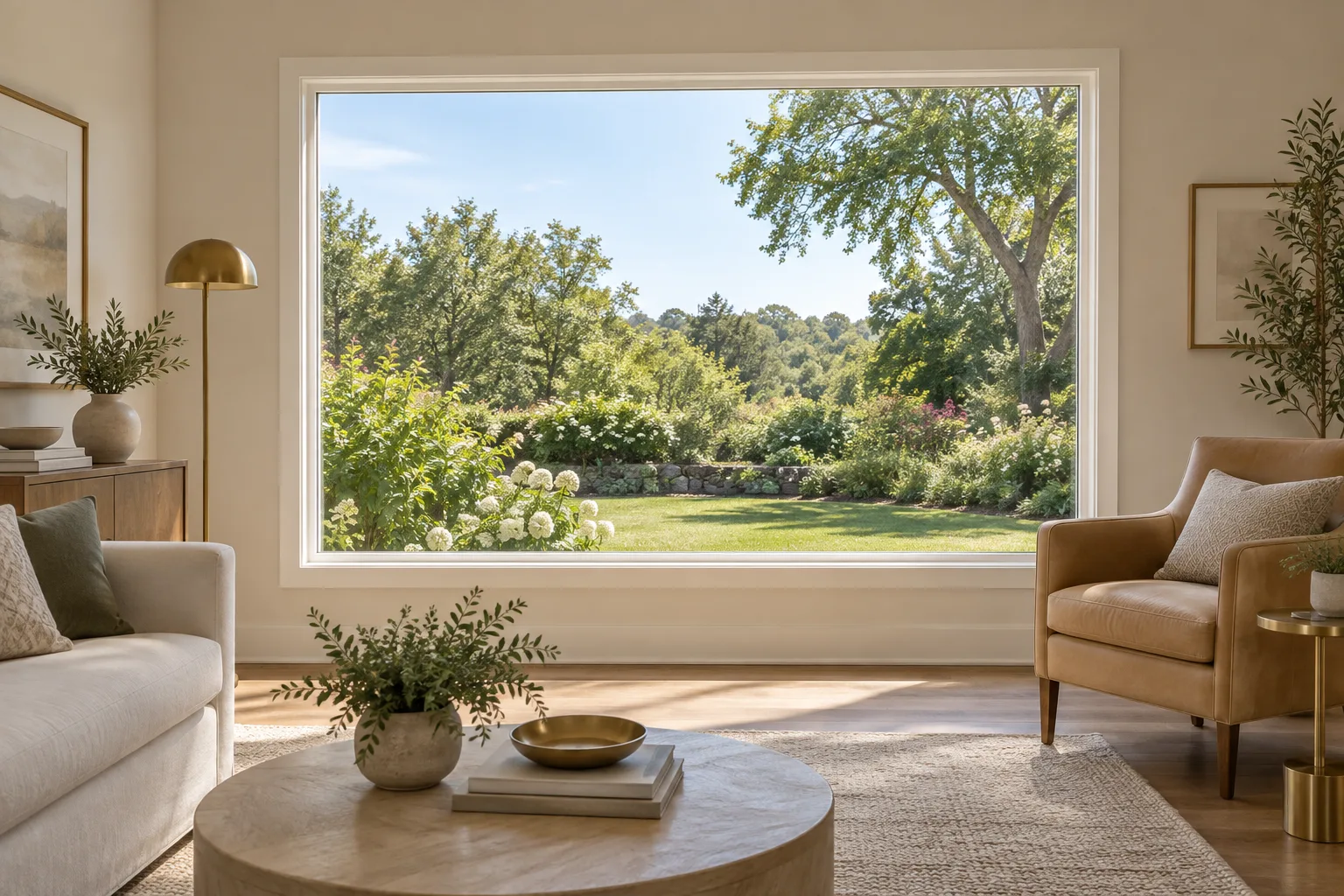
What is a picture window? It is a fixed, non-opening window designed to frame a view; it cannot provide an opening for ventilation. For a home in Lake Mary, Florida, decide whether fixed glass alone suits the room or whether you want it alongside windows that open. Consider what you want to see and where you want an opening you can use in daily life.
This guide explains what “fixed” means, compares common layouts and offers two hypothetical planning exercises. You will also learn what details to request in a replacement proposal, so you can compare the arrangement rather than rely on a general product label. Exact dimensions, frame divisions and available combinations depend on the products in the proposal.
Key Takeaways
- A picture window is fixed, non-opening glass intended to frame a view; fixed operation does not specify the number of glass layers.
- Choose fixed glass alone only when you do not need that unit to open; identify any opening the room should retain.
- A fixed center can be paired with operable side windows, with exact combinations and frame divisions depending on the products selected.
- A useful proposal identifies the fixed and opening units, exact products and sizes, controls, frame divisions and included replacement work.
What Is a Picture Window?
A picture window is a fixed, non-opening window designed to frame a view. “Fixed” describes how it operates; it does not specify how many layers of glass it has.
Because it does not open, a picture window itself cannot provide an opening for ventilation. It may stand alone or be combined with operable windows, depending on the selected products and room plan. Manufacturers show examples such as a fixed center paired with opening side units, including single-hung flankers.
Think of the fixed glass as the view-framing part of the arrangement and the operable unit as the part you can open.
Choose Which Part of the Room Needs an Opening
Start with the job you want the window to do. If your priority is a view through one part of the wall and you do not need that unit to open, fixed glass may fit that part of the plan. If you want an opening nearby, consider how fixed glass and operable units could share the layout.
For example, imagine a living room where the homeowner wants to frame a garden view but also wants a window they can open. Ask: which portion of the view should stay fixed, and where should an opening go? A fixed center between operable side windows is one documented arrangement, though the selected products determine what can be specified.
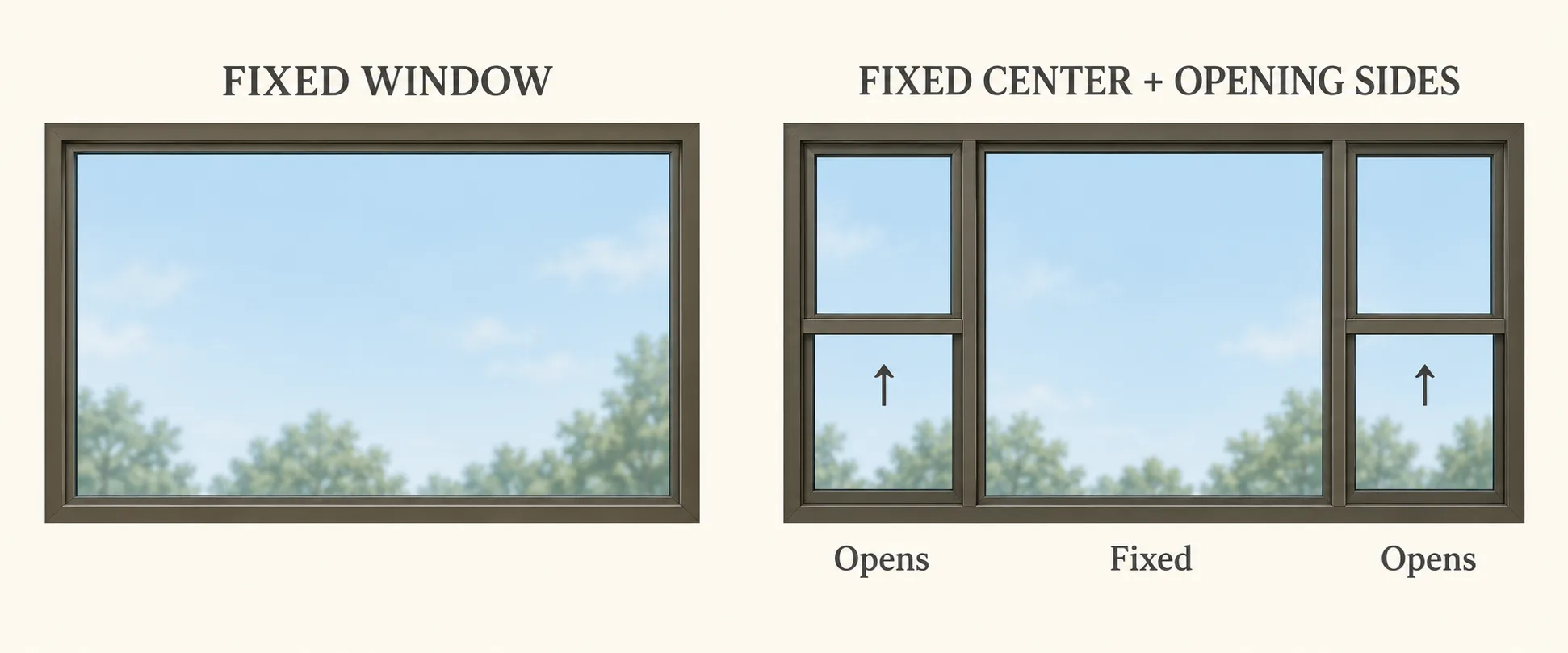
Mark the preferred view and the opening you want on a simple room sketch. That separates the two functions before you compare products.
Compare One Fixed Unit With a Window Combination
Use the comparison to discuss layout options, not to assume a particular configuration or product is available. Confirm products, controls and dimensions in the proposal.
| Layout to discuss | Could suit the plan when… | Confirm in the proposal |
|---|---|---|
| Fixed picture window alone | You want a view-framing unit and do not need that unit to open. | Whether the room plan calls for an opening elsewhere. |
| Fixed center with operable flankers | You want a fixed view area alongside windows that open. | Which side units operate, their controls and how frames divide the view. |
| Retained operable window | You want an opening to remain part of the arrangement. | Whether the proposed replacement retains an operable unit and identifies its operation. |
Andersen describes fixed picture windows paired with operable side units, including single-hung flankers. Marvin also describes non-opening windows paired with operable units in a larger configuration. These examples do not establish that every manufacturer offers the same sizes, materials or combinations.
Make the Proposed Layout Specific
Start with how the room is used and which part of the view you want to frame. Note nearby furniture and whether the room needs an opening in addition to the fixed glass.
As a second hypothetical exercise, imagine a homeowner who often sits near the window and wants the center to frame the view. They sketch the seated viewpoint, then mark the side unit they expect to open and where its control should be. This gives the installer a specific layout to assess against the homeowner’s intended use.
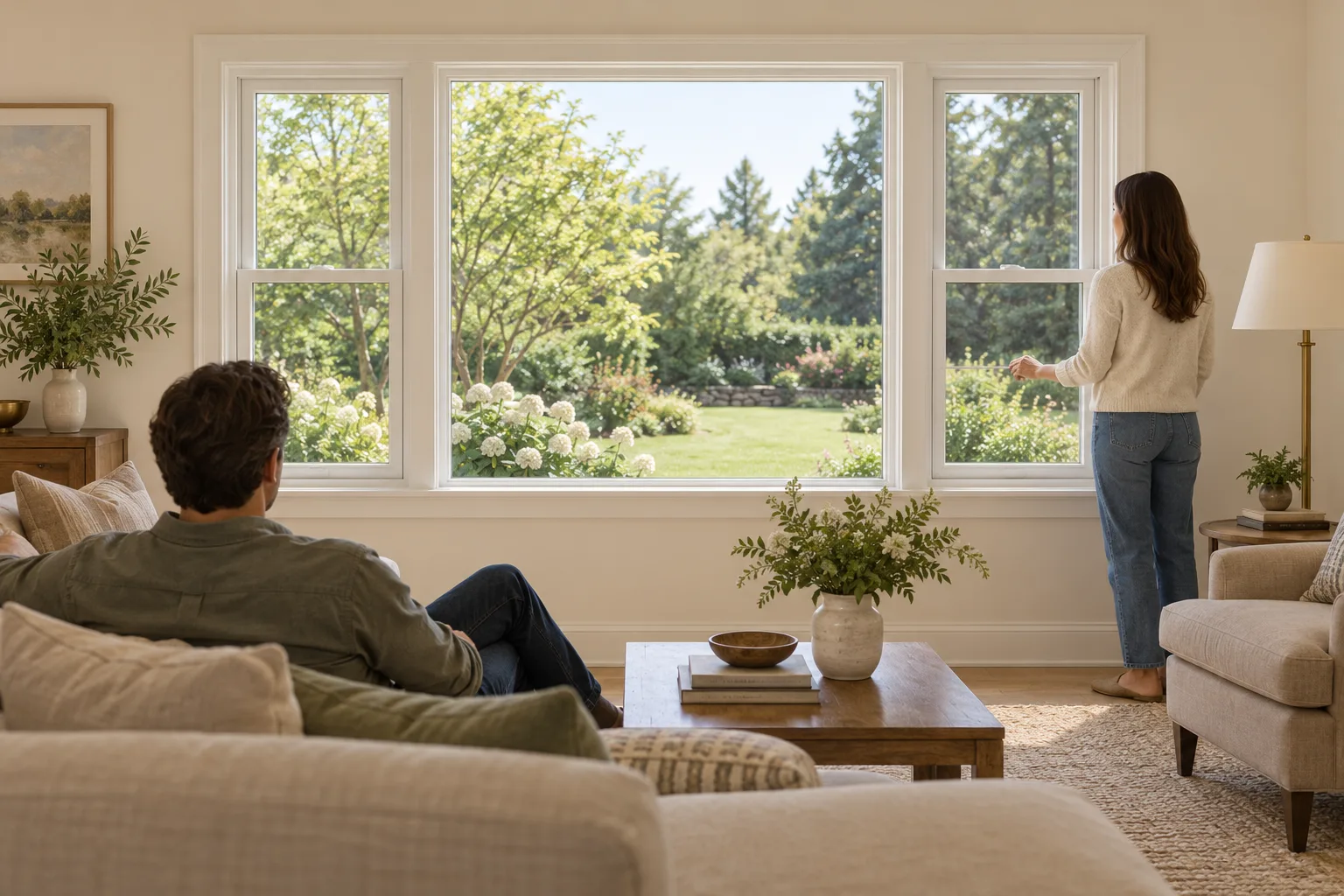
Ask for a written proposal naming the fixed and operable units, frame divisions, exact products and sizes, and what the replacement work includes. The installer must assess whether the actual products and opening suit the project. For a discussion of replacement-window work, see the company’s replacement windows service page.
FAQs
Does a fixed picture window mean single-pane glass?
No. “Fixed” describes operation: the window does not open. It does not tell you how many glass layers the unit has. Ask for the proposed glass configuration separately from whether each unit opens.
Can a picture window open for ventilation?
A fixed window cannot itself provide ventilation. To include an opening, compare the proposed operable units and their locations with the room’s needs; confirm the specific products in the proposal.
Should I choose a picture window alone or with opening side windows?
Either arrangement may suit a room, depending on whether you need an opening and how you want the view framed. Compare the fixed area, operable locations, frame divisions and controls in the proposed layout rather than assuming one configuration fits every room.
Conclusion
A picture window stays fixed; the layout decision is whether the room also needs an opening.
Use that distinction to compare the proposed arrangement with how you want the room to work.