Window & door planning
Vinyl Replacement Windows: An Orlando Buying Guide
Compare vinyl replacement windows by matching product details, glass ratings, installation scope, and written coverage before choosing between proposals.
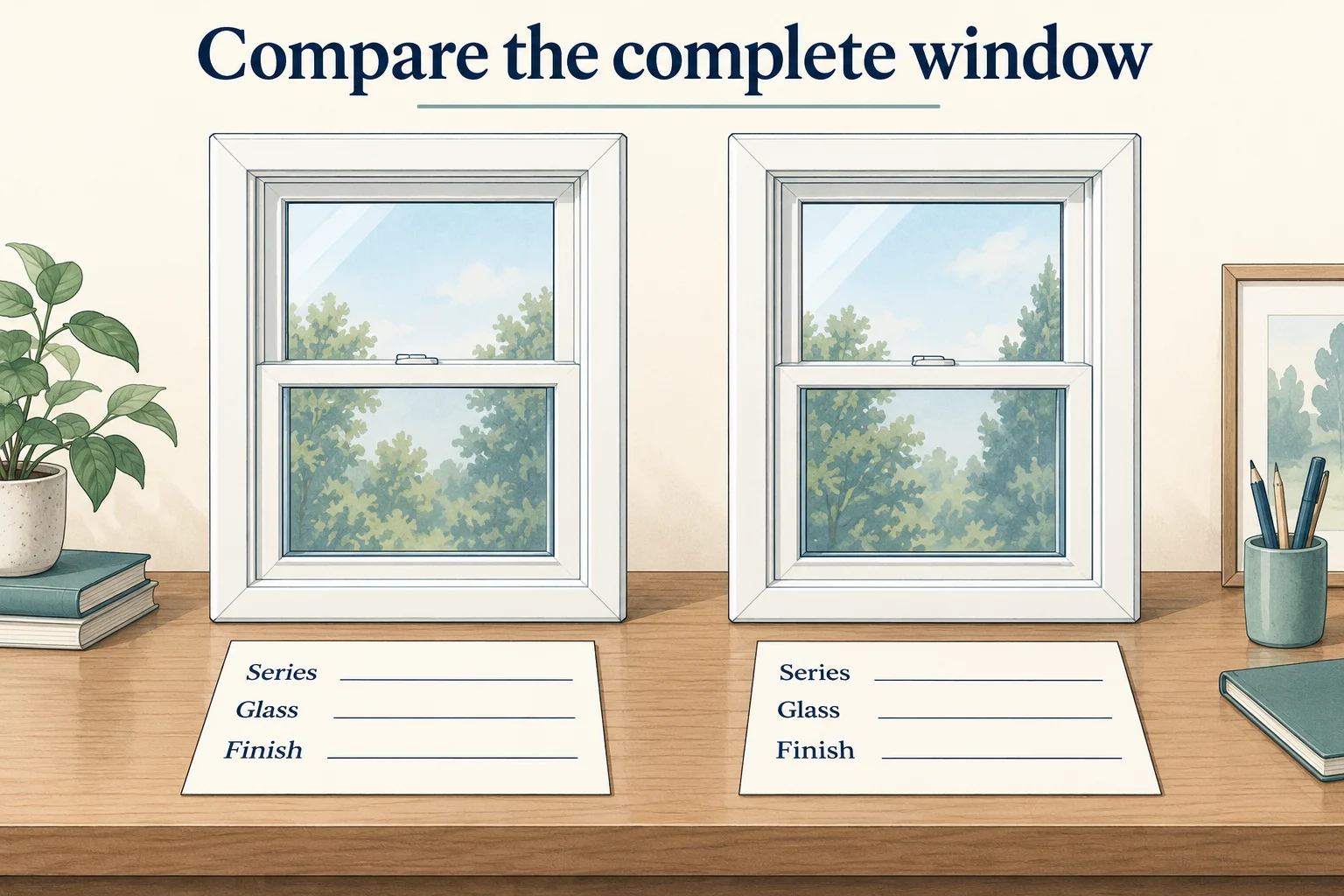
When you compare vinyl replacement windows for your Orlando home, the frame material alone won’t tell you whether two proposals describe the same product or work. “Vinyl” means a PVC frame; series, opening style, glass, finish, installation scope, and written coverage still need to be spelled out. That distinction can prevent a photo or broad sales description from standing in for a comparable quote. Start by matching the product details, then look at the ratings that answer your room’s needs and the work and coverage described on paper. This guide shows what to request, how to compare two proposals without assuming one is better, and what to confirm before deciding. The examples are hypothetical prompts for questions, not claims about products available from a particular installer.
Key Takeaways
- Vinyl replacement windows use PVC frames; material alone does not specify style, glass, finish, installation scope, or coverage.
- Ask for the exact series, opening style, finish, and glass package so similar-looking samples can be compared accurately.
- Read U-factor, SHGC, and visible transmittance separately; each describes a different aspect of heat or daylight.
- Compare written product details, installation scope, and coverage, then resolve unclear answers before choosing a proposal.
What Are Vinyl Replacement Windows?
Choosing among vinyl replacement windows starts with a practical question: does each proposal describe a window and scope that fit the opening and your priorities? The sections below help you make that decision using the details on paper.
Separate the Frame Material From the Complete Window
A vinyl frame is only one part of a replacement window. PVC names the frame material; it does not tell you how the window operates, which glass package it has, or what finish and coverage are specified. Product options can vary, so ask for the proposed product’s exact details rather than treating “vinyl” as a complete specification.
Imagine an Orlando homeowner looking at two white sample windows that appear nearly identical. One proposal identifies a series and opening style; the other says only “white vinyl window.” The samples might look alike, but the descriptions leave different questions unanswered. Neither appearance nor material name settles what is being proposed.
Ask for the series or product line, opening style, finish, and glass package in writing. Check that the sample, proposal, and product information refer to the same configuration. If a detail is absent, ask for it before comparing proposals.
Compare Glass Ratings for Your Room
Window ratings answer different questions, so compare the specific ratings supplied for the proposed product rather than searching for one all-purpose “best” number. The National Fenestration Rating Council (NFRC) explains three distinctions: U-factor describes resistance to heat escaping; lower U-factor means less heat escapes. Solar heat gain coefficient (SHGC) describes solar heat admitted; lower SHGC means less solar heat enters. Visible transmittance describes daylight transmission; higher visible transmittance means more visible light enters.
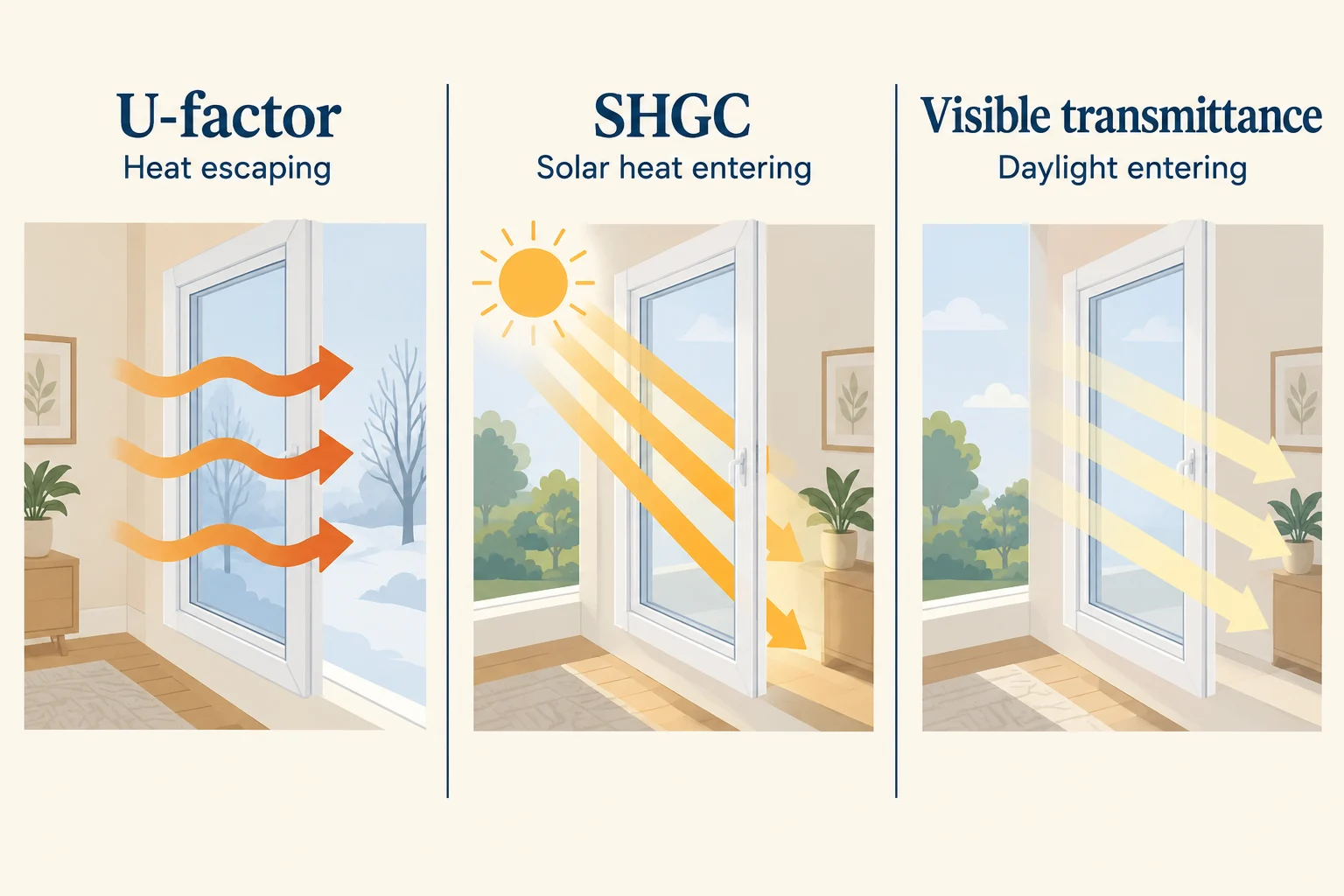
Picture a sunny reading room. A homeowner may want to understand daylight coming through the glass, while also considering solar heat entering the room. Those are related considerations, but they are not the same rating question. Looking only at daylight transmission does not answer the solar-heat question, and vice versa.
Request all three ratings for the product and glass package actually proposed. Compare the same rating across proposals, then decide which concern is relevant to the room. These definitions do not establish a target value, predict savings, or determine what is appropriate for every Orlando home.
Make Two Quotes Comparable
Two quotes are easier to evaluate when they describe the same choices and work. Use a written comparison rather than relying on memory, catalog photos, or a total amount without the details behind it. Fill in each proposal’s answer; mark missing details “confirm” rather than guessing.
| What to compare | Question for each proposal | Proposal A | Proposal B |
|---|---|---|---|
| Product series | Which series or product line is specified? | Confirm in writing | Confirm in writing |
| Opening style | What opening style is proposed for this window? | Confirm in writing | Confirm in writing |
| Glass package and ratings | Which glass package and its U-factor, SHGC, and visible transmittance are listed? | Confirm in writing | Confirm in writing |
| Finish | Which frame finish or color is specified? | Confirm in writing | Confirm in writing |
| Installation scope | What removal, installation, and finishing work is included? | Confirm in writing | Confirm in writing |
| Written coverage | What coverage applies to the product and installation or labor? | Confirm in writing | Confirm in writing |
Suppose one proposal names a glass package and the other does not. Don’t infer that the unnamed package is equivalent; ask for its identity and ratings. If an opening style is unclear, confirm it as a separate product question. Differences in written installation scope or coverage call for clarification, not assumptions that the proposals include identical work or responsibility.
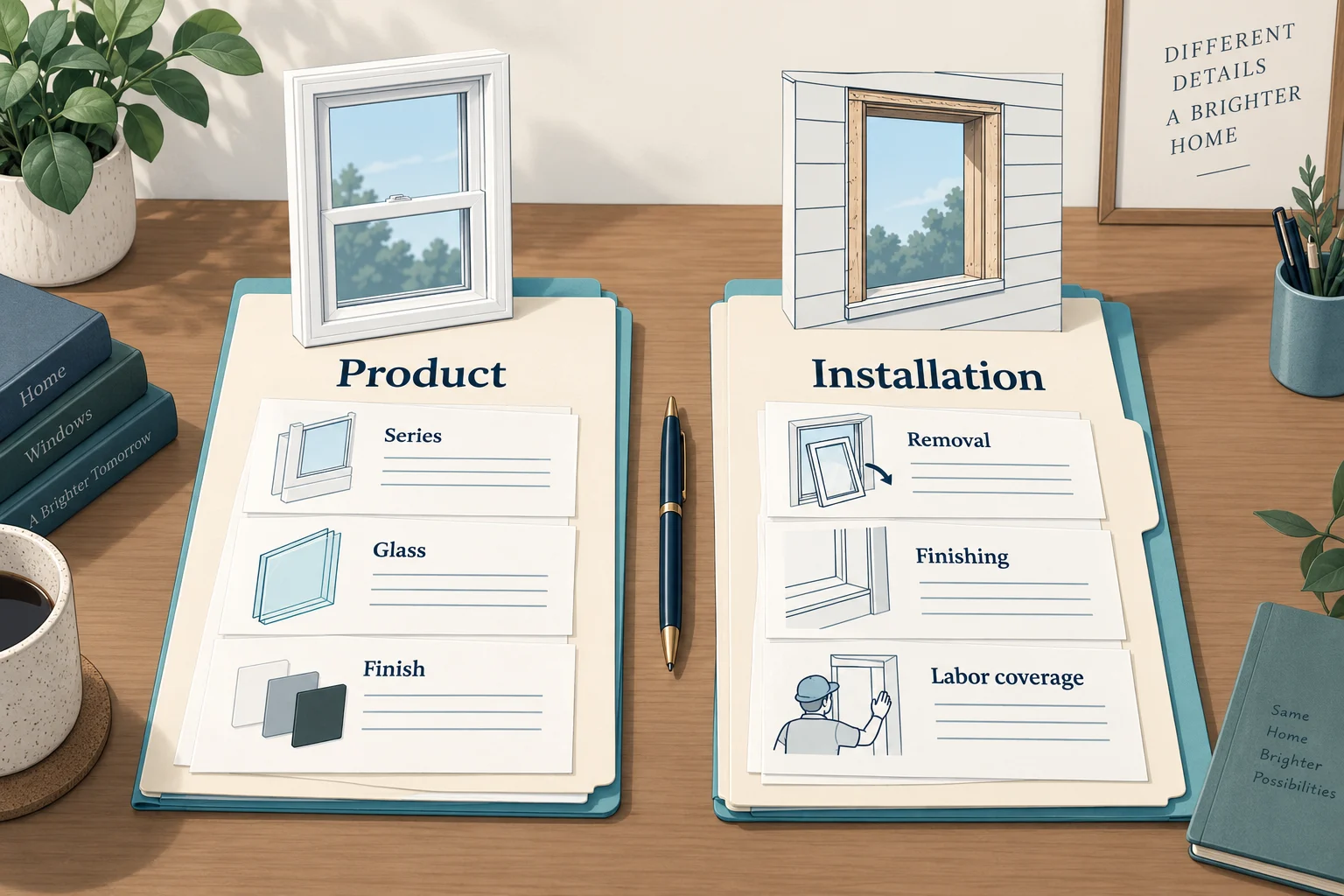
Once both proposals are filled in, decide which differences matter for your opening and preferences, and whether either proposal leaves a requirement unresolved. Keep installation-method questions focused on the scope offered; this comparison does not establish which method is right for a particular opening.
Check Care and Written Coverage
Separate care questions from coverage questions. Pella’s care guidance says vinyl frames do not need painting, staining, or refinishing, but regular cleaning remains useful. Follow the instructions for the specific product rather than interpreting “low maintenance” as “no care.” Product lines can differ in operating styles, colors, glass packages, and options, another reason to identify the proposed line precisely.
Next, read the written warranty and proposal. The Federal Trade Commission advises consumers to check coverage duration, covered parts and repairs, exclusions, who handles claims, and whether labor costs must be paid. Verify product coverage and installation or labor responsibility in the documents; don’t assume a general phrase about the window answers both.
Use a practical document check: match the product identity to the quote; locate the written coverage and note what it addresses; then identify exclusions, the claims route, and any labor costs. Keep the receipt and written documents together. If a promise was made verbally, ask for it in writing so you can review the terms later.
FAQs
What does “vinyl” mean in a replacement-window quote?
Vinyl replacement windows have frames made from PVC, but that label does not identify the whole product. A proposal should also make clear which product series, opening style, finish, and glass package it describes. Two windows can share a frame material without having the same configuration or written coverage.
How do I compare the ratings on vinyl replacement windows?
No single rating answers every room question. U-factor describes resistance to heat escaping, SHGC describes solar heat admitted, and visible transmittance describes daylight transmission. Ask for the ratings of the proposed product, then consider which concern matters for that room. Do not treat one rating as a substitute for the others or as a universal recommendation.
What should I check in a vinyl window warranty?
Read the written warranty alongside the proposal; a general sales phrase may not explain what applies to the product versus installation or labor. For the document-check steps, see “Check Care and Written Coverage.” Keep the written terms and receipt for reference.
Conclusion
Compare the proposed window as a complete product and installation scope, not simply as “vinyl.” Verify what product is specified, what its ratings describe, what work is included, and what written coverage applies.
Before accepting a proposal, mark each comparison-table answer as confirmed, unclear, or different. Ask the contractor to resolve unclear items in writing and explain differences that matter to your opening or preferences.
If you are planning replacement windows in Orlando, you can discuss the opening and written replacement-window scope with Windows and Doors by Martin Toro. Bring the proposals or questions you want to compare.
Explore replacement-window options and discuss the scope for your opening.