Window & door planning
Double-Hung vs. Single-Hung Windows for Orlando Homes
Compare double hung vs single hung windows by operation, cleaning access, product cost and ratings, then choose the features that fit each room.
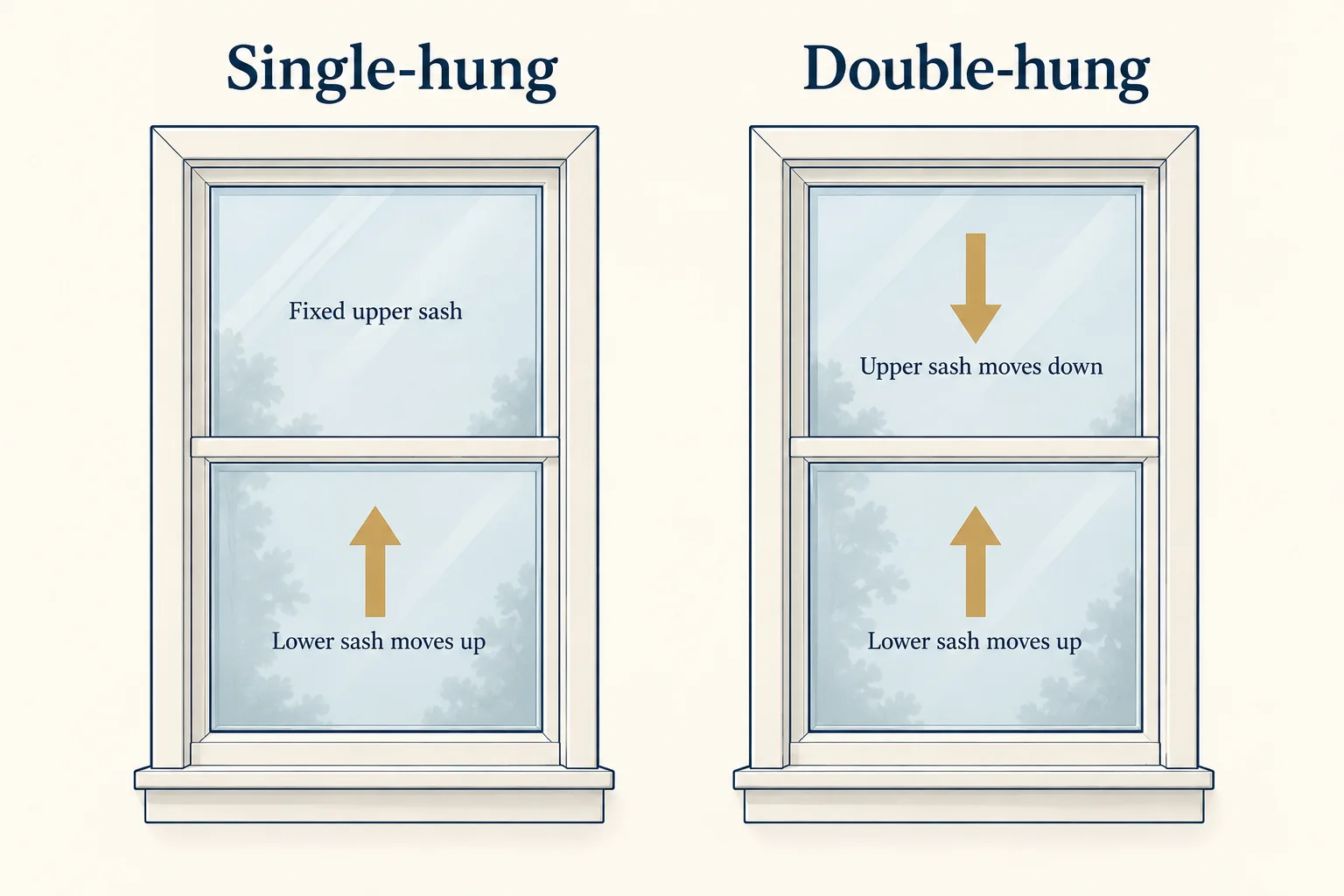
Choosing between double hung vs single hung windows comes down to two practical questions: do you want the upper sash to open, and how will you clean the glass? A single-hung window usually costs less as a product because it has fewer moving parts. A double-hung window lets both sashes move, and some models let both tilt inward for cleaning. That extra flexibility can be useful in one room and unnecessary in another.
The sash style is only part of the decision. Compare cleaning features on the exact model, look at whole-product energy ratings, and make sure quotes cover similar products and work. This guide lays out the differences in a table, then uses two room situations to help you decide where added features may matter and where a simpler option may meet your needs.
Key Takeaways
- Single-hung windows have a fixed upper sash; double-hung windows let both the upper and lower sash move.
- Single-hung products usually cost less because they have fewer moving parts, though quotes vary by product and scope.
- Interior cleaning access depends on whether the specific sashes tilt inward; sliding movement alone does not provide it.
- Compare whole-product U-factor, SHGC and VT to assess heat transfer, solar heat gain and visible daylight.
What Are Single-Hung and Double-Hung Windows?
A sash is the frame that holds the glass. In a single-hung window, the lower sash slides up while the upper sash stays fixed. In a double-hung window, the lower sash slides up and the upper sash can slide down.
Both styles have a moving lower sash. A double-hung window adds the option of opening near the top of the frame. Whether that flexibility or easier interior cleaning matters depends on the room and the specific model.
Compare the Features and Product Cost
Use this table to scan the core tradeoffs. “Opening near the top” means the upper sash slides down to create an opening near the top of the frame; it does not mean the sash tilts. Sliding and tilting are separate motions.
| Decision | Single-hung | Double-hung |
|---|---|---|
| Sash movement | Lower sash slides up; upper sash is fixed. | Lower sash slides up; upper sash slides down. |
| Opening positions | Opening is near the bottom. | Opening can be near the bottom or top. |
| Cleaning access | Depends on whether the moving sash tilts; the fixed upper sash may need exterior access. | May allow interior access if the model’s sashes tilt inward. |
| Relative product cost | Usually lower, with fewer moving parts. | Usually higher, with more moving parts. |
| Energy ratings | Compare the proposed whole product and glass package. | Compare the proposed whole product and glass package. |
| Practical fit | May suit an opening where one moving sash meets the need. | May suit a room where upper opening or two-sash cleaning access matters. |
Treat the cost comparison as a product-level tendency, not a promise about installation cost. The proposed model, materials and work scope matter. Ask for details so you can compare like with like rather than relying on the style label alone.
Consider Cleaning Access, Especially Upstairs
An upstairs window can make exterior glass harder to reach. With a fixed upper sash, a single-hung window may leave that pane less convenient to clean from indoors. A double-hung model with two tilting sashes may let you reach more glass from inside. The cleaning benefit comes from the tilt feature, not simply from having two sashes that slide.
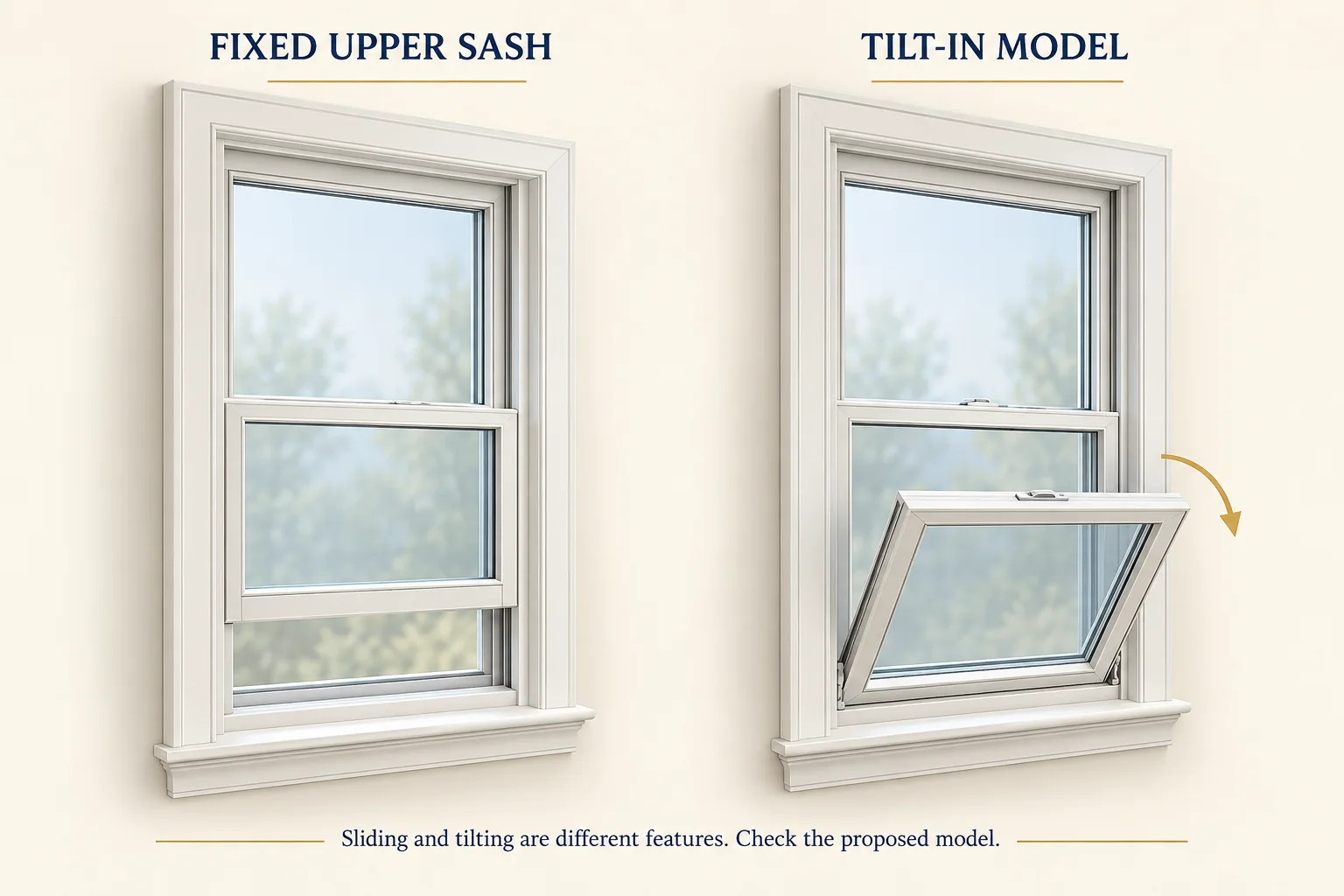
The cleaning-access illustration is a teaching aid: it contrasts a fixed upper sash with a model whose lower sash tilts inward. Use it as a prompt to check the proposed product, not as a specification. Features vary by model. Pella says its wood and vinyl single-hung lower sashes can tilt inward, while its fiberglass single-hung lower sash does not; the upper sash stays fixed. Pella double-hung sashes tilt, and Andersen describes tilt-wash features on its double-hung products. Check the exact model’s operation and cleaning instructions before deciding.
Decide Whether the Extra Opening Is Worth It
A double-hung window adds an operable upper sash. That may be worth paying more for if you want an opening near the top of the frame or a model whose two sashes tilt for cleaning. For example, an upstairs homeowner who wants to clean glass from indoors may value that tilt feature. By contrast, at a reachable window that is rarely opened, the extra moving parts may add little value. Harvey says single-hung products usually cost less because they have fewer moving parts; there is no universal price difference for every product or quote.
Use this short worksheet to compare quotes:
- Dimensions and product model.
- Frame material and glass package.
- Which sashes move and which tilt inward.
- Installation work and interior or exterior finish work included.
Check that quotes cover comparable products and work. A lower product price does not establish a lower installation cost. Decide which features you would use before judging whether the added cost makes sense.
Compare Energy Ratings on the Actual Products
Energy ratings help compare the complete window and glass package. The sash-style label alone does not tell you which product performs better. NFRC whole-product ratings answer different questions: U-factor measures heat transfer, SHGC measures solar heat entering, and VT indicates visible daylight. Lower U-factor means less heat transfer; lower SHGC means less solar heat entering; higher VT means more daylight.
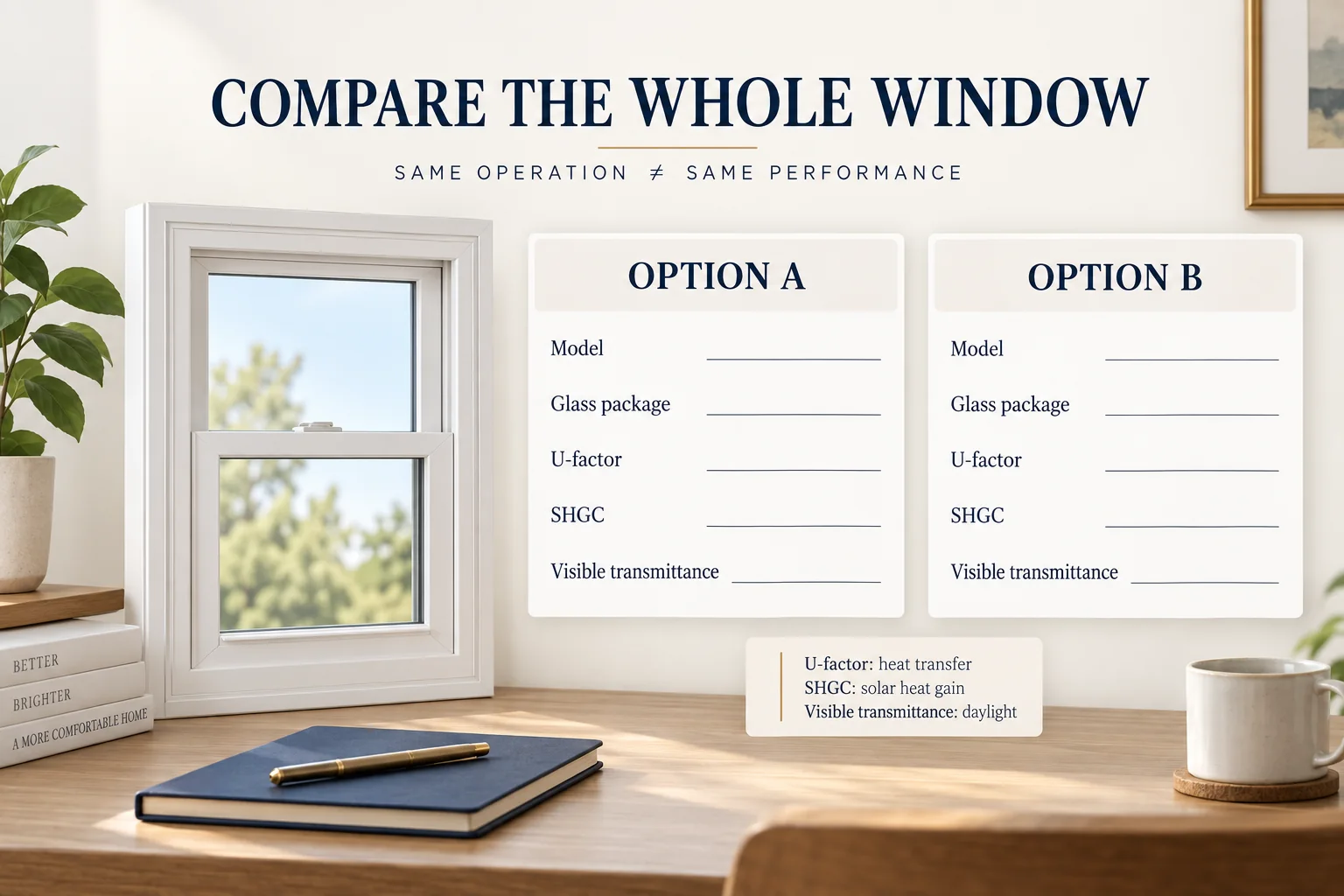
The ratings comparison worksheet is a teaching aid, not a certification label. Record the model, glass package and actual values from each proposed product’s rating information, then compare like with like. If you are comparing heat transfer, a lower U-factor points in that direction; for solar heat entering, look at SHGC. A higher VT indicates more daylight. The ratings do not supply a savings estimate or make one sash style automatically more energy efficient.
FAQs
When Is a Double-Hung Window Worth It?
It may be worth choosing when you expect to use a feature the other style lacks, such as an upper opening. For an opening where that flexibility would go unused, a single-hung window may be a practical fit.
Can a Single-Hung Window Tilt for Cleaning?
Yes. Some single-hung models have a lower sash that tilts inward, while the upper sash remains fixed. This can make the lower glass accessible from indoors, but does not provide access to the fixed upper sash. Tilting is separate from sliding, and features vary by model.
Which Window Ratings Should I Compare?
Compare the ratings for the actual window and glass package to understand different aspects of performance. They can help you distinguish products, but they do not establish that one sash style is automatically more energy efficient.
Conclusion
Single-hung windows usually cost less as products. Double-hung windows add an operable upper sash and may offer useful cleaning access when both sashes tilt. The better choice depends on which features matter in each room, not on the style name alone.
As you compare replacement options, check the proposed model’s operation, cleaning instructions and whole-product ratings. Ask for quotes that spell out the product and work included. When you’re ready, invite Windows and Doors by Martin Toro to measure your openings and review the options with you.
Explore replacement-window options and request a measurement