Window & door planning
Exterior Double Doors: Orlando, Florida Operation and Fit Guide
Learn how exterior double doors differ in daily passage, panel operation, swing, and center hardware before comparing an entry-door replacement assembly.
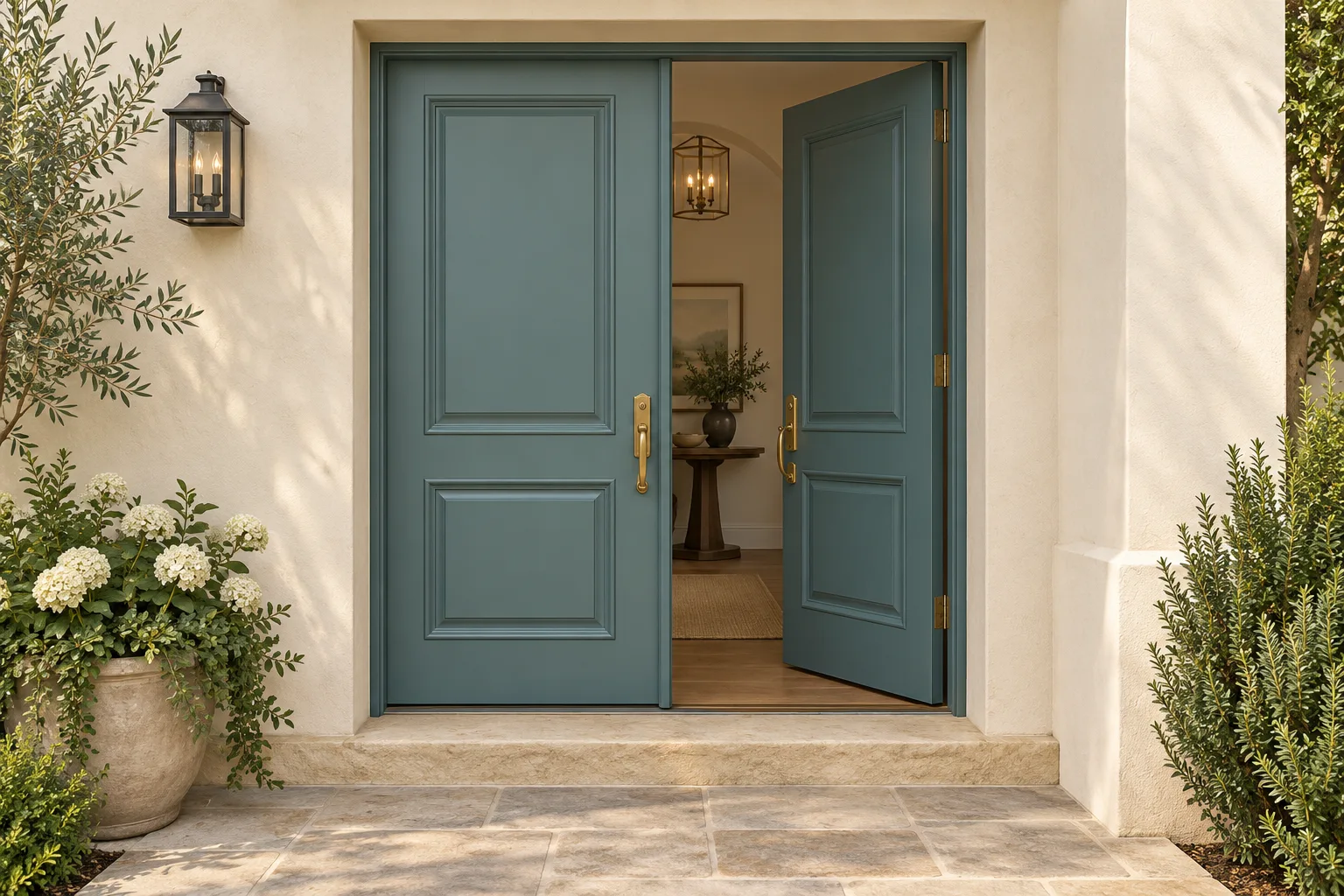
Exterior double doors can look symmetrical while working differently in daily use: one leaf may open routinely, and the other may stay bolted or be fixed. For homeowners comparing exterior double doors in Orlando, Florida, the useful question is not only how wide the frame is. It is which panels move, how much clear passage each configuration provides, and whether the center hardware suits the way you plan to use the doors.
Terminology can mislead, and a matching handle does not prove that a panel opens. This guide explains how to identify the active and secondary leaves, compare everyday and wider passage, and review the astragal, bolts, seals, and sill as parts of a system. Use these distinctions to describe your needs, then have a professional verify measurements, handing, and the selected product instructions before replacement.
Key Takeaways
- Exterior double doors are a hinged pair that may provide everyday passage through one leaf and a wider opening through two operable leaves.
- A secondary leaf may be bolted but releasable or genuinely fixed, so verify its operation rather than relying on labels or matching handles.
- Compare clear passage with one panel open and both operable panels open, and confirm the swing direction and angle for the assembly.
- The astragal, bolts, weatherstripping, bottom seals, and sill are components of a door system and should be reviewed together.
What Are Exterior Double Doors?
Exterior double doors are a hinged pair in which one leaf commonly serves as the everyday passage door and a second may open after its bolts are released. Depending on the product, that second leaf may instead be fixed, so verify the configuration rather than relying on a label.
On a typical operable pair, the active leaf has the main locking hardware. An astragal on the secondary leaf covers the center meeting margin and carries weatherstripping; bolts can hold that leaf closed. Manufacturers may use “inactive” for either a releasable leaf or a nonoperable panel. Ask for a demonstration and follow the selected assembly’s instructions.
The pair can offer two passage options: the everyday opening and a wider opening when both leaves can move.
Identify Which Door Panels Actually Open
A panel’s label or appearance cannot tell you with certainty whether it opens. On a typical exterior pair, the active leaf has the main locking hardware, while bolts may secure the secondary leaf. Manufacturers use “inactive” differently, and dummy hardware may look like a handle without operating a latch.
| Configuration | What to verify | Useful question |
|---|---|---|
| Everyday active leaf | It opens for routine passage while the secondary leaf stays closed. | Which leaf is active, and what hardware operates it? |
| Releasable secondary leaf | It is hinged and can be unbolted; an astragal commonly moves with it. | Where are the bolts, and how does this model operate? |
| Fixed panel | It does not open, even if it resembles the other leaf. | Is this panel operable or fixed on the exact model? |
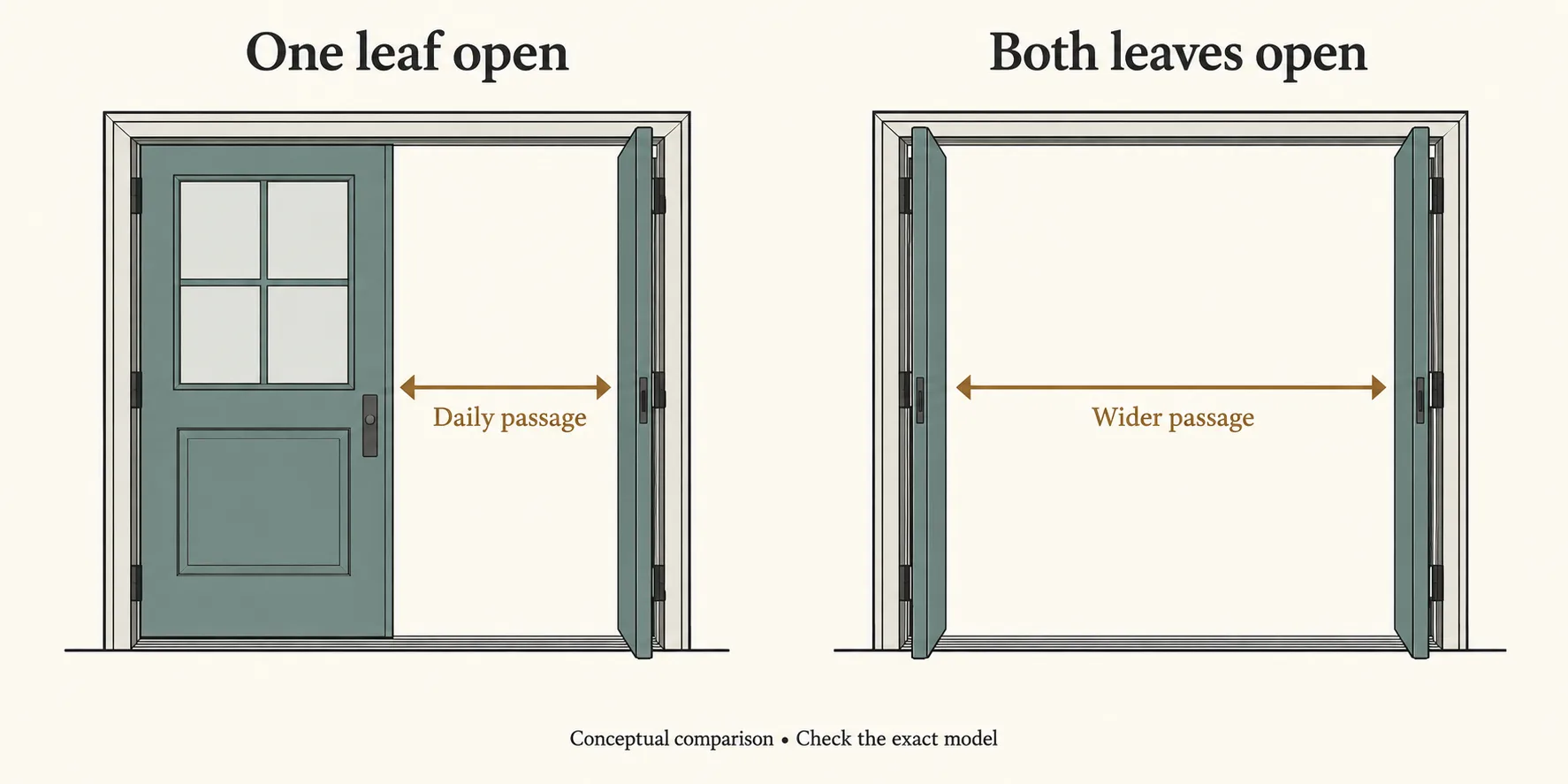
Ask to see the selected assembly opened in each configuration. Follow the maker’s instructions; there is no universal operating sequence for every pair.
Check Daily Passage and Swing Space
Frame width, rough-opening size, and clear passage answer different questions. The frame dimension describes the unit; the rough opening is the space needed for installation; clear passage is usable width through the door in a given configuration. A manufacturer patio-door chart lists these dimensions separately, including clear openings with one or two panels open. Its categories illustrate the distinction, but its product-specific figures are not universal entry-door specifications.
Decide which leaf will handle daily traffic, then ask for its clear width when open. If you may carry large items through, ask for the clear width with both panels open and the opening angle used for each measurement. Mark the swing direction on a floor sketch: an inswing door may intersect a walking path or furniture placement. Request the maker’s handing diagram rather than assuming all labels use the same viewpoint.
Have a professional check the actual opening and measurements for the selected product. Installation guidance also recommends checking that corners are square and consulting the local building department about applicable requirements. Do not treat a patio-door chart as an entry-door size rule.
Review the Center Seal and Replacement Scope
Center hardware and seals are parts of a system, not interchangeable pieces. On a typical pair, the astragal covers the meeting margin and contains weatherstripping; bolts can secure the secondary leaf. At the bottom, the sweep, sill, corner pads, and astragal boot have related but distinct roles. Door bottoms differ for inswing and outswing assemblies, so confirm components match the product. These functions do not guarantee performance in a particular installation.
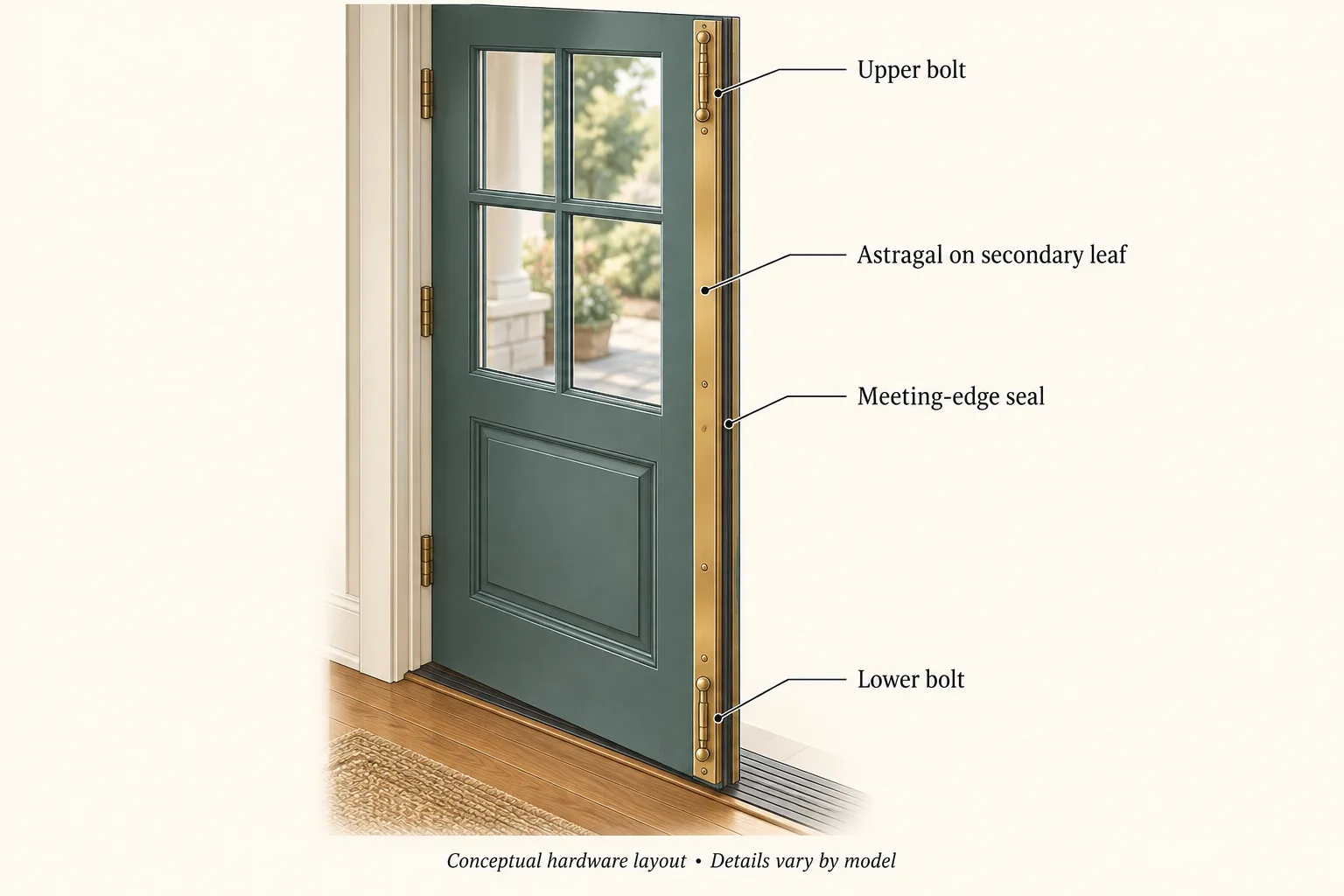
When assessing an existing pair, note whether it closes and latches without forcing it. Record visible gaps, rubbing, damaged seals, or bolts that are difficult to reach or operate. These observations help a professional assess the system; they do not identify one cause or prove a particular part will fix a symptom.
For replacement planning, gather the intended daily leaf, swing direction, opening measurements, and whether the scope includes center hardware and seals. Ask a professional to verify the opening, product requirements, and operating instructions, and to demonstrate the selected assembly.
FAQs
Do both panels of exterior double doors open?
No. One leaf is typically the active passage door, while the other may be a releasable secondary leaf or a fixed panel. Product terminology varies, so confirm the configuration and ask for a demonstration before choosing.
What is the difference between door width and clear opening?
The frame dimension describes the door unit, while the rough opening is the space needed for installation. Clear passage is the usable space through the door in a particular configuration. Ask for clear width with one panel open and with both operable panels open, including the opening angle used.
What does the astragal do on double doors?
The astragal covers the center meeting margin and, on a typical pair, contains weatherstripping. Bolts may secure the secondary leaf, while bottom seals meet the sill. Their arrangement varies, so review the components specified for the selected assembly.
Conclusion
Before choosing exterior double doors, confirm which panels open and the clear passage each configuration provides. Sketch the daily walking path and intended wider opening, then ask a door professional to verify the handing, measurements, and hardware included with the assembly you are considering.