Window & door planning
Prehung Exterior Door Planning in Orlando, Florida
Before choosing a prehung exterior door, compare frame condition, distinct measurements, swing, trim and package contents, then confirm product-specific fit.
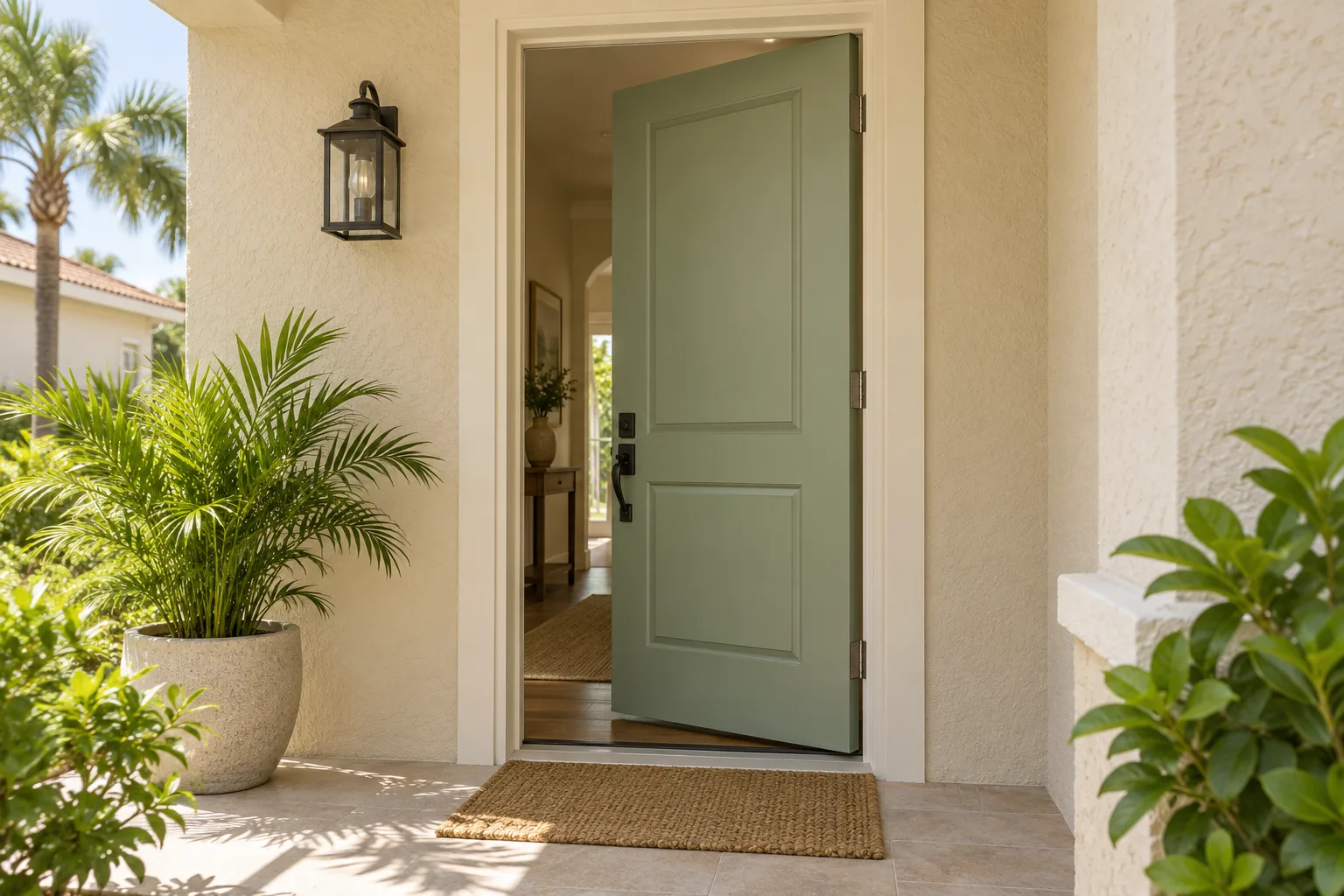
Choosing an exterior replacement door means deciding more than which panel looks right. A prehung exterior door arrives attached to its frame, while a slab-only replacement keeps the existing frame; that difference affects measurements, trim and installation work. For Orlando, Florida homeowners, the key is to assess the frame and opening before settling on a product.
A door that sticks, a cracked frame or signs of water entry are reasons to look more closely, not proof by themselves of what repairs are needed. This guide explains what the assembly includes, how slab, unit and rough-opening measurements differ, and what to verify about swing, hardware and package contents. Use these checks to prepare clear questions and get product-specific guidance before ordering.
Key Takeaways
- A prehung exterior door combines a hinged slab with a frame; a slab-only replacement keeps the existing frame.
- Frame condition, door operation and possible subfloor deterioration can affect whether the opening needs professional assessment.
- Slab, complete-unit and rough-opening measurements describe different things, and product instructions determine fit.
- Confirm swing, hardware preparation, trim and included items rather than assuming the door package is complete.
What Is a Prehung Exterior Door?
A prehung exterior door is a door slab already attached by hinges to a frame made of side jambs and a top header. The slab is the moving panel; the jambs and header form the frame installed into the opening.
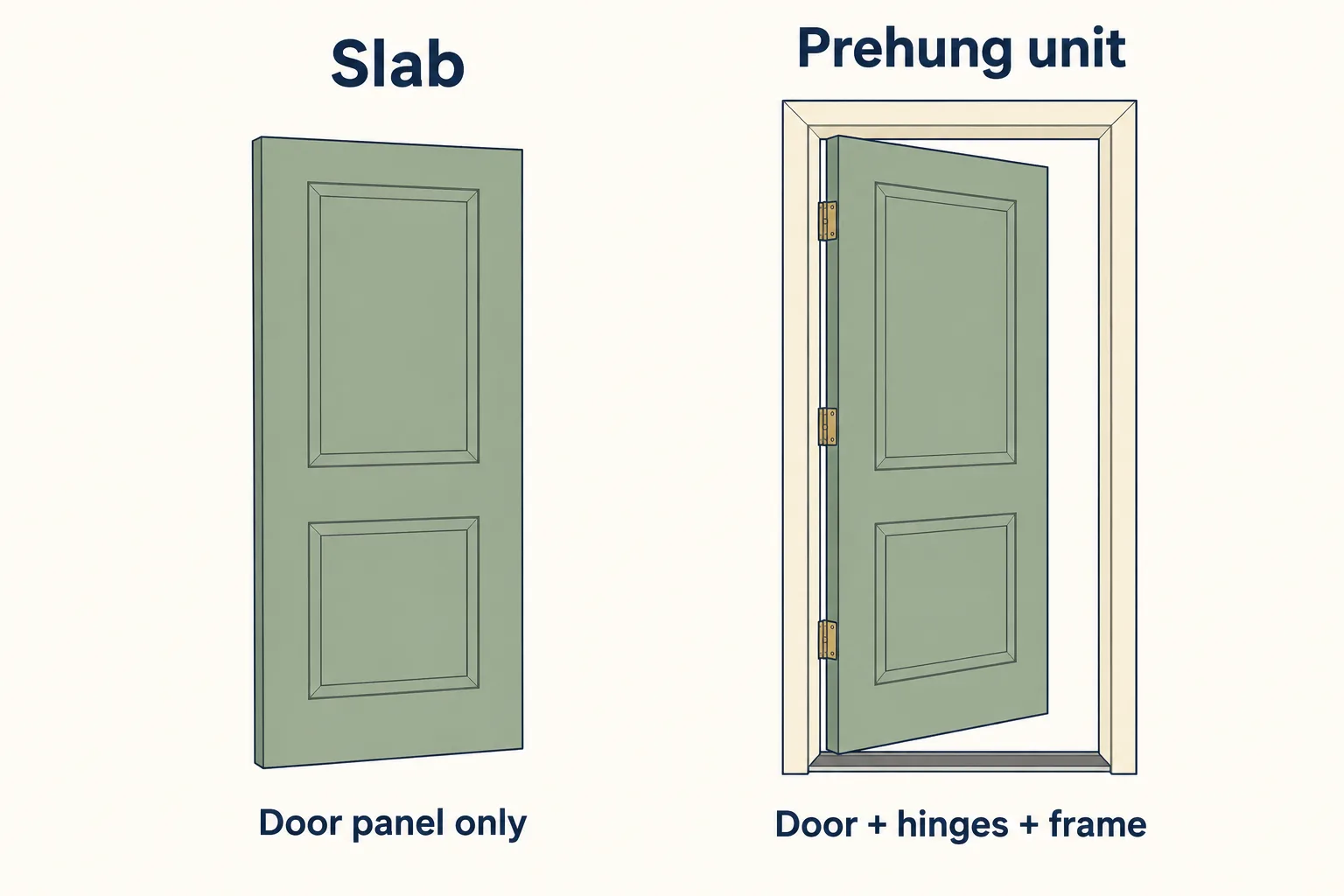
A slab-only replacement uses the existing frame and needs compatible hinge and lock preparations. Prehung describes how the door and frame are assembled, not the door material or a finished installation. Casing covers the gap between frame and wall, and it may not come with the door, so confirm package contents.
Assess the Frame and Opening Before Ordering
First decide whether the existing frame is suitable to retain; appearance alone may not answer that question. A damaged slab may be replaceable on its own, but a cracked or deteriorated frame, a door that will not open or close properly, water entry, or a deteriorated subfloor calls for closer assessment. These observations do not diagnose hidden conditions or establish which repair is needed.
| Replacement option | What to check | Why it matters |
|---|---|---|
| Slab only | Existing frame; slab height and width; hinge locations and size; lock and deadbolt locations and backset | The new panel must suit the retained frame and its hardware preparations. |
| Complete prehung unit | Structural rough-opening width and height; wall depth; frame and opening condition | The assembly replaces the old frame, and product-specific requirements determine fit. |
| Either option | Door operation, visible damage, water entry and subfloor condition | Assessment can clarify whether more than the door needs attention. |
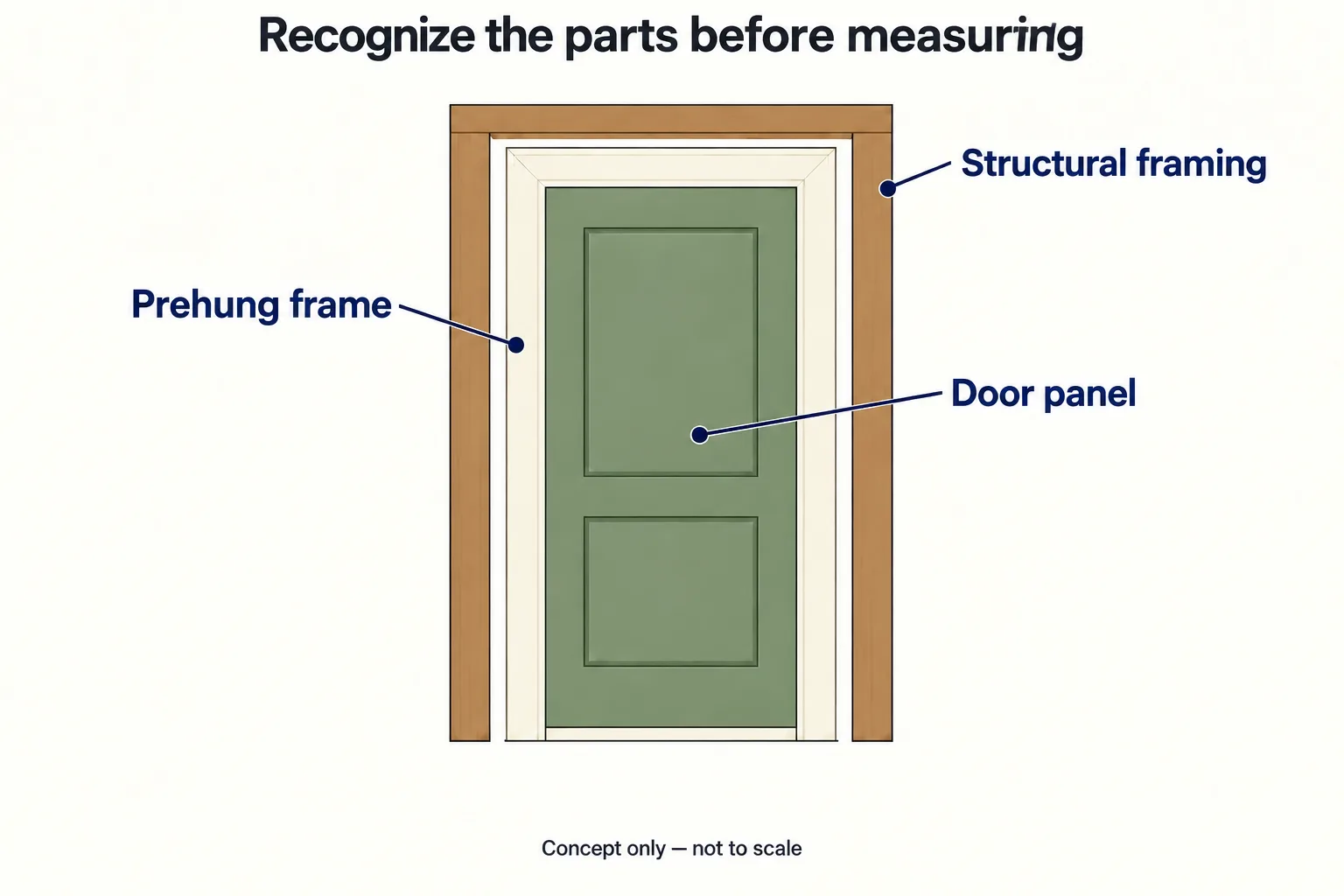
A rough opening is the structural space between framing members, from the header to the floor. It differs from both slab dimensions and complete-unit size. Wall depth is another measurement to record. Keep these references distinct, then verify them against the selected product’s instructions; there is no universal opening allowance for every door.
Confirm Swing and Replacement Scope
Before choosing a prehung replacement, confirm the swing direction and which side will carry the handle. Ask how removal and installation may affect existing casing: replacing the frame involves taking out the old frame, and trim may need removal and reinstallation. The new unit still needs alignment, level and plumb checks, and shimming. Proper fit also depends on checking that the opening is square.
Prepare a short written record for the product or installation discussion:
- Photograph the door, frame, trim, threshold area and visible damage.
- Note how the door opens, its handle side, and whether it operates properly.
- Record whether you are considering a slab or complete unit, plus product or model details if known.
- Keep slab, unit and rough-opening measurements distinct; include wall depth and verify product requirements.
- Ask which hinge, lock and deadbolt preparations are needed, and whether casing or hardware is included.
- List observed water entry, frame damage or subfloor concerns for assessment.
Ask who will assess the opening, what removal and trim work is included, and what comes in the package. This keeps the order discussion focused on the work and items involved.
FAQs
What does prehung mean for an exterior door?
A prehung exterior door is a slab attached by hinges to a frame with side jambs and a header. The assembled unit replaces the old frame as well as the slab. A slab-only replacement keeps the existing frame and requires compatible hinge and hardware preparations.
What measurements do I need for a prehung exterior door?
Record which item you are replacing. A slab needs its own dimensions and hardware locations; a complete unit requires measurements and product requirements for the structural opening, plus wall depth. Verify fit using the selected product’s instructions rather than assuming a universal allowance between the door and rough-opening sizes.
Does a prehung door include trim and hardware?
A prehung unit includes the slab attached to its frame, but do not assume it includes casing or lock hardware. Confirm package contents and installation scope with the seller or installer. Replacing the frame also involves removing the old one and may require trim removal, alignment and shimming.
Conclusion
Before ordering, gather the door’s condition, distinct measurements, swing and package details in writing. Then ask a product or installation professional to assess the opening and confirm the selected unit’s requirements. That gives the discussion a practical starting point without assuming every opening or package is the same.