Window & door planning
Weather Stripping for Exterior Doors in Lakeland, Florida
Identify the seal location and attachment, then check that the exterior door closes smoothly before choosing a replacement weather strip.
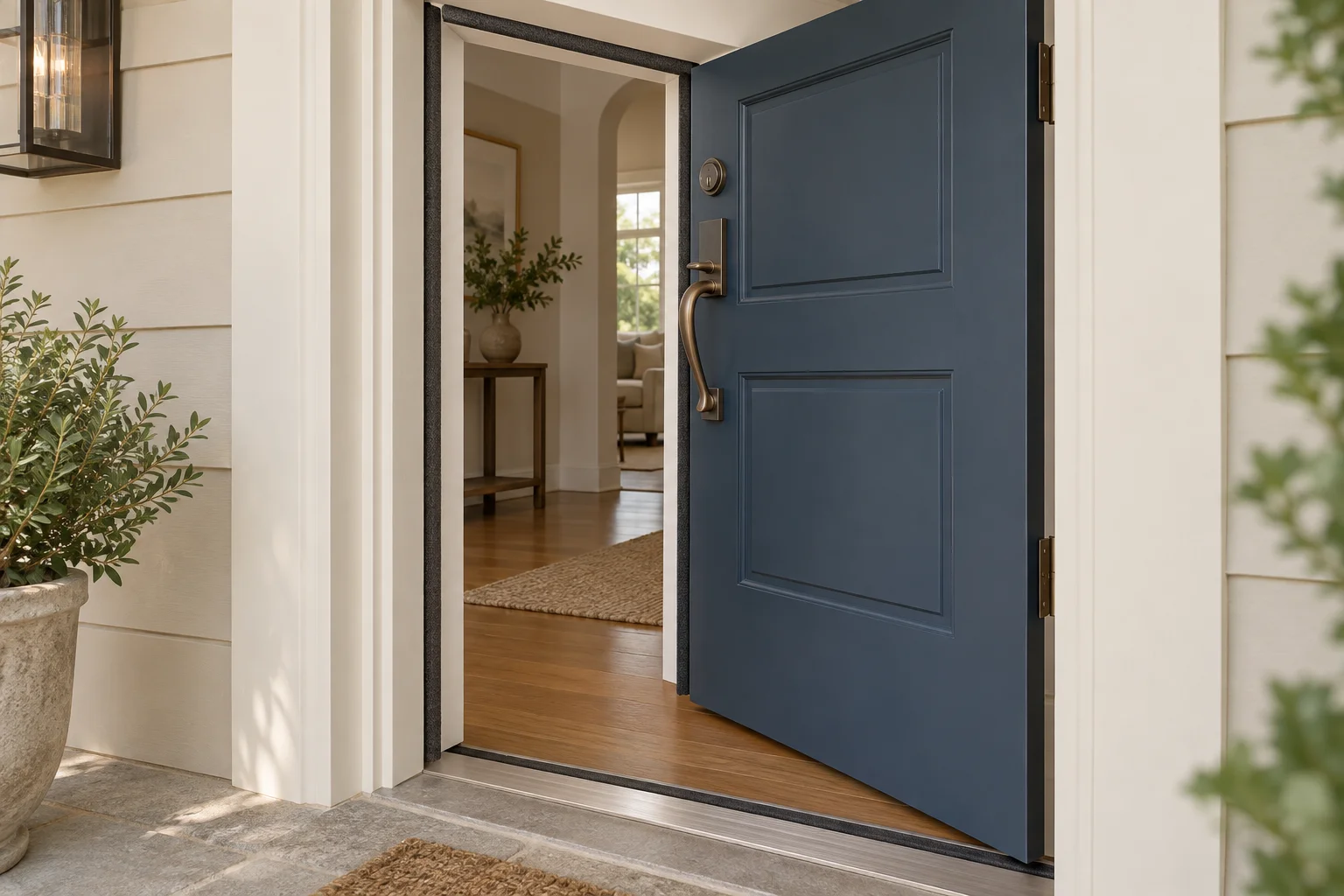
A draft near an exterior door can make a replacement seal seem like the obvious fix, but the wrong strip may leave the gap untouched or make the door hard to close. Choosing weather stripping for exterior doors starts with finding exactly where the seal belongs and how the existing part attaches. Top-and-side jamb seals, a bottom sweep and caulk at the frame-to-wall joint serve different places. The door’s fit and hardware matter, too: visible daylight is a clue, not a complete diagnosis. This guide explains how to distinguish those locations, compare common attachment styles and check operation before you buy. If the seal type or door fit is uncertain, a few careful observations can help you ask a professional a more specific question instead of guessing at a replacement.
Key Takeaways
- Exterior door weather stripping seals moving edges at the jamb or threshold, while caulk addresses stationary gaps around the frame.
- Top-and-side seals and bottom sweeps cover different locations, so identify the gap before choosing a replacement.
- Match the seal’s attachment and profile to the existing groove, surface and door system, not just its material or length.
- After fitting, the door should still open and close smoothly; persistent gaps call for checking alignment or hardware too.
What Is Weather Stripping for an Exterior Door?
Weather stripping for an exterior door is a compressible seal fitted where the moving door meets its jamb or threshold to limit air leakage. The right replacement depends on the seal’s location, its attachment and the door system—not just its material or length.
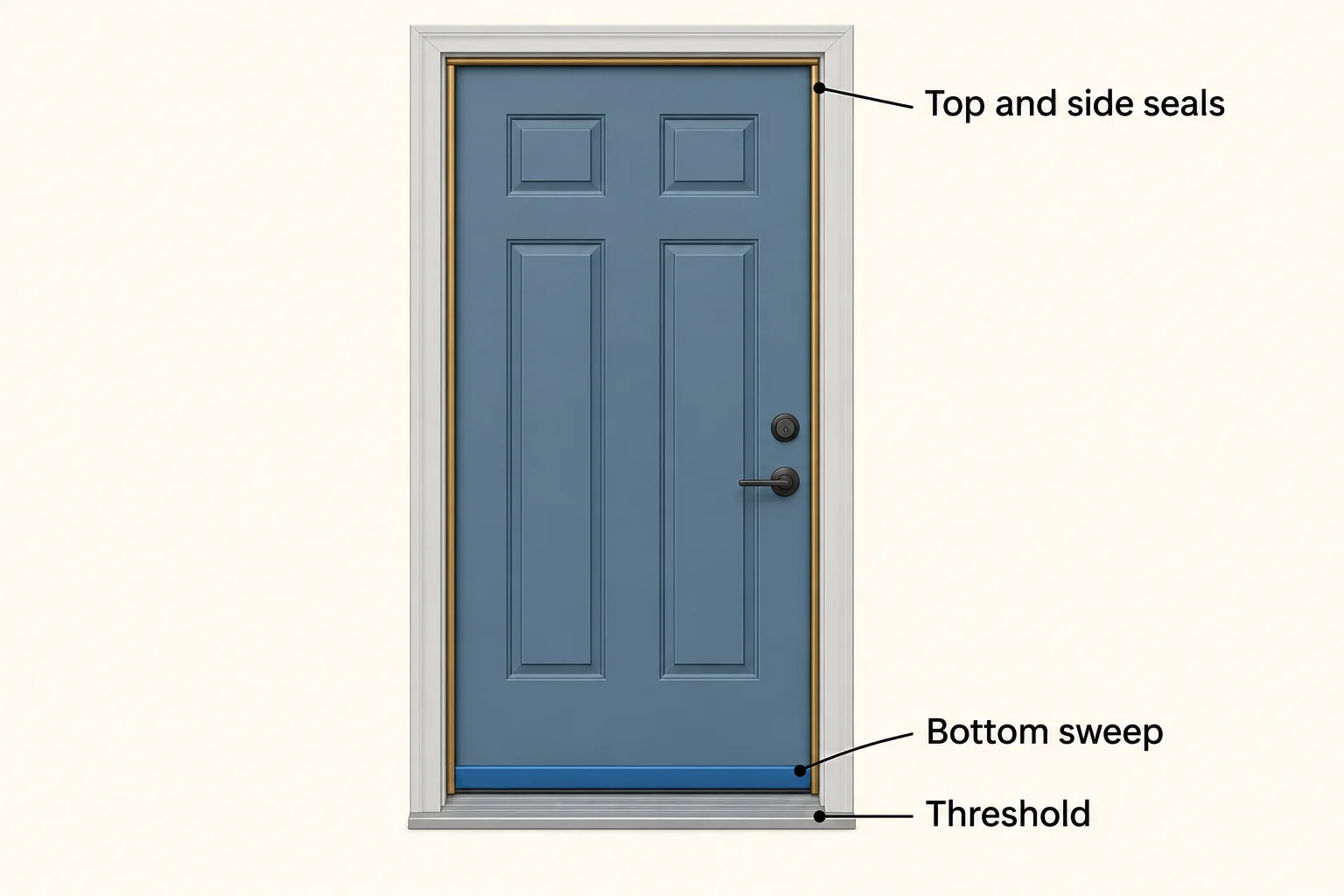
Start by locating the suspected gap. Seals along the top and sides sit between the door and jamb; a sweep seals the bottom edge. The stationary joint between a frame and the surrounding wall is different: caulk may suit that fixed opening, while weather stripping serves moving joints. Visible daylight or a loose fit can signal leakage, but neither proves that the strip alone is the problem.
Match the Replacement Seal to Its Attachment
The seal’s location narrows the choices, but the way it attaches determines whether a replacement can fit. A kerf is a narrow groove in the jamb that receives a push-in seal. Therma-Tru describes a kerf-applied weatherstrip for the top and sides of its own door systems; that example does not establish fit for other doors. Other products use adhesive or screws, while under-door seals slide or screw into place.
| Seal location and attachment | What to check before choosing |
|---|---|
| Top and sides, push-in kerf or channel | Confirm that the jamb has the matching groove and that the replacement profile suits the door system. |
| Top and sides, adhesive or screw-on | Check the intended mounting surface and product instructions; these attachment styles are not interchangeable by name alone. |
| Bottom, sweep or under-door seal | Confirm how it mounts beneath the door and whether it can contact the threshold without dragging. |
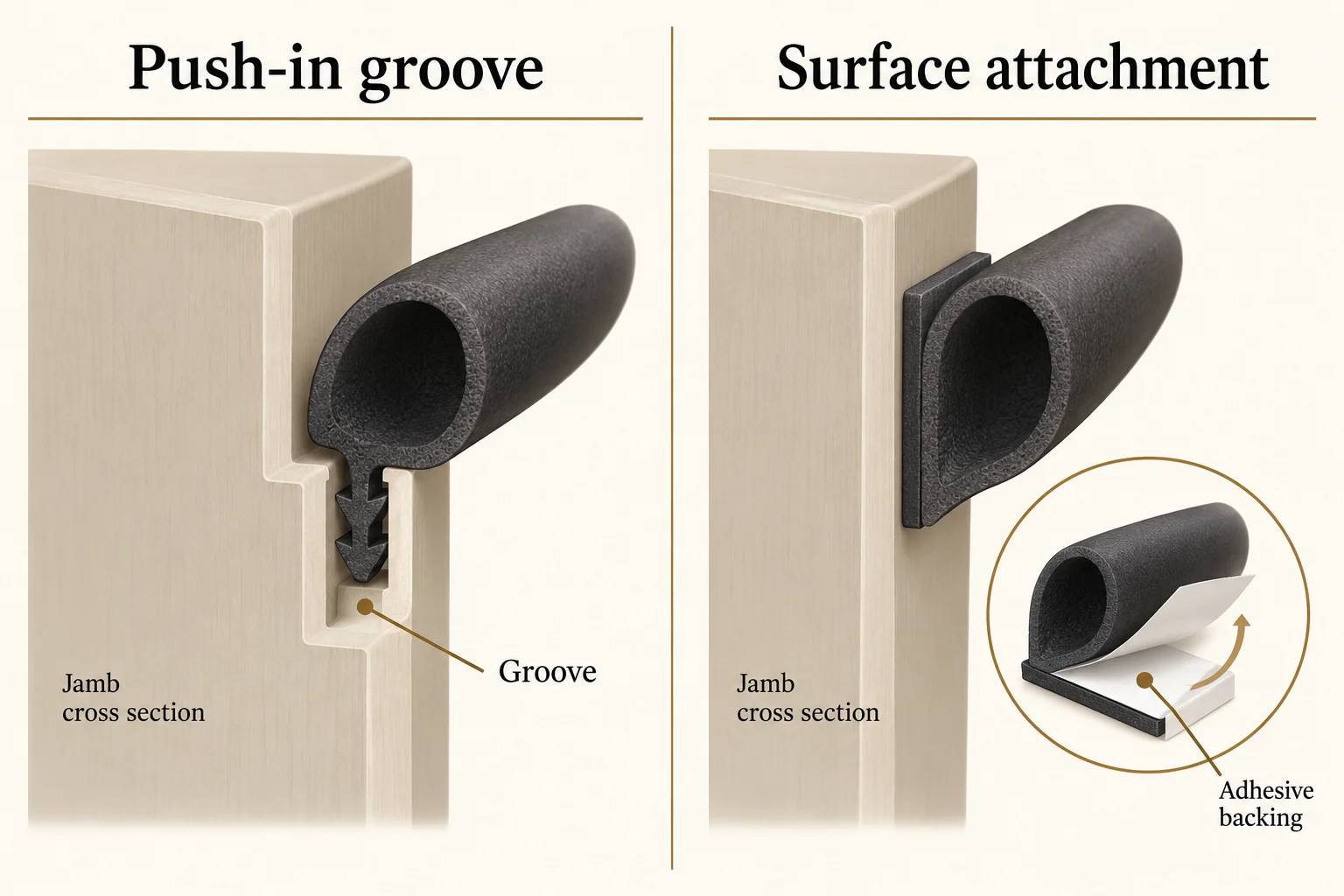
Catalogs may also list magnetic kits intended for steel doors, replacement inserts and separate thresholds. These are distinct product types, not evidence of universal compatibility. Compare the location, profile and attachment first; color or a similar strip length cannot confirm a match. If the existing part is a push-in type, one manufacturer’s replacement guide shows a flat edge pressed into a jamb groove. That illustrates one model-specific method, not a safe removal or installation procedure for every door.
Check Closure and Prepare a Useful Assessment
A seal should contact the closed door while still allowing it to open and close smoothly. A strip that leaves a gap has not solved the fit problem; one that presses too firmly may interfere with operation. Follow the selected product’s instructions, since preparations and attachment methods vary. For example, an adhesive foam-tape product may call for a clean, fully dry mounting surface.
Material also involves tradeoffs rather than a universal best choice. Felt can wear with moisture and friction, and foam tape can wear with heavy use; a bottom sweep can drag on carpet. Those examples help you weigh the location and expected contact, but they do not establish a guaranteed lifespan. A weatherstrip change alone may not noticeably address leakage elsewhere in the home.
Before asking for help, record the door label or model if visible, photograph the full door and close-ups of the gap, and note where the existing seal sits and how it attaches. Describe symptoms such as daylight, a loose fit or difficult closing. Ask the professional to identify the proposed part and spell out the work in writing. If operation or gaps persist, have a qualified professional assess the door, jamb and hardware rather than repeatedly adding thicker strips.
FAQs
What is weather stripping for an exterior door?
Weather stripping is a seal at the moving edge of a door, where it meets the jamb or threshold. A sweep covers the bottom edge; top-and-side seals close the other edges. Caulk is for a stationary gap, such as between the frame and wall. First locate the opening, then identify the seal already installed before shopping.
How do I know which exterior door weather stripping to buy?
Match the replacement’s location and attachment to the existing seal and door system. If you cannot confirm compatibility, ask a professional to identify the part before purchasing; the door’s model or label may help.
Should I replace weather stripping if I see daylight around my door?
A visible gap may reflect the seal, door alignment or loose hardware. Check that the door closes fully and moves smoothly, and look for daylight and worn or detached material. Correcting loose hinges, knobs or strike plates may be appropriate before adding weather stripping. If gaps or operating problems persist, ask a qualified professional to assess the door and jamb fit.
Conclusion
Before buying weather stripping for an exterior door, identify where the seal belongs and how it attaches. Then check whether the door closes smoothly against it. If the fit remains uncertain, gather photos and the door’s identifying details, and ask a qualified professional for a written assessment of the specific part and work needed. Call Windows and Doors by Martin Toro and ask about your project.