Window & door planning
Retractable Screen Door Fit in Oviedo, Florida
Learn how retractable screen doors differ, what to verify about your door and threshold, and which operation and care questions to ask before choosing.

Choosing a retractable screen door for an entry or patio opening in Oviedo, Florida, starts with a basic distinction: the screen may move independently of the main door, but that does not make every screen compatible with every doorway. Roller mesh, pleated screens, and retractable-screen storm doors use different mechanisms and need different fit checks.
Before ordering, identify your door type and model, examine the threshold and available mounting area, and confirm the screen’s operating method. Manufacturer examples show why model details matter: a screen listed for certain patio-door series is not proof of universal fit, and a guide that needs a level track may need a closer look at a sloped threshold. This guide explains what retracts, which compatibility questions to ask, and what to learn about operation and care before deciding.
Key Takeaways
- A retractable screen moves across a doorway and stores away independently of the main door.
- Roller, pleated, and retractable-screen storm-door systems differ in what moves and how they operate.
- Verify the exact door model, opening, mounting area, and threshold instead of assuming universal screen fit.
- Ask for an operation demonstration and product-specific care instructions before choosing a screen.
What Is a Retractable Screen Door?
A retractable screen door is a screen system that moves across a doorway and stores out of the way independently of the main door’s movement. In a typical roller design, mesh travels from a side housing as a pull bar moves along guides at the top and bottom of the opening.
The screen may fit a hinged entry door or a patio doorway, but compatibility depends on the specific product and opening. A retractable-screen storm door is different: in one design, a framed top panel switches between glass and screen. These are different mechanisms, not interchangeable names for one product.
Understand What Retracts
A retractable screen’s name does not tell you which part moves. A roller screen draws mesh from a side housing as a pull bar travels along guides; a pleated system folds differently, and a retractable-screen storm door can switch a framed panel between glass and screen.
| Screen type | What moves | What to verify |
|---|---|---|
| Roller doorway screen | Mesh and pull bar travel from a housing along guides. | Opening, mounting area, threshold, and product-specific fit. |
| Pleated screen | Pleated mesh moves across the opening and may stay in position. | Product instructions, track arrangement, and operating method. |
| Retractable-screen storm door | A framed panel changes between glass and screen. | Whether it is a storm door, its fit, and panel operation. |
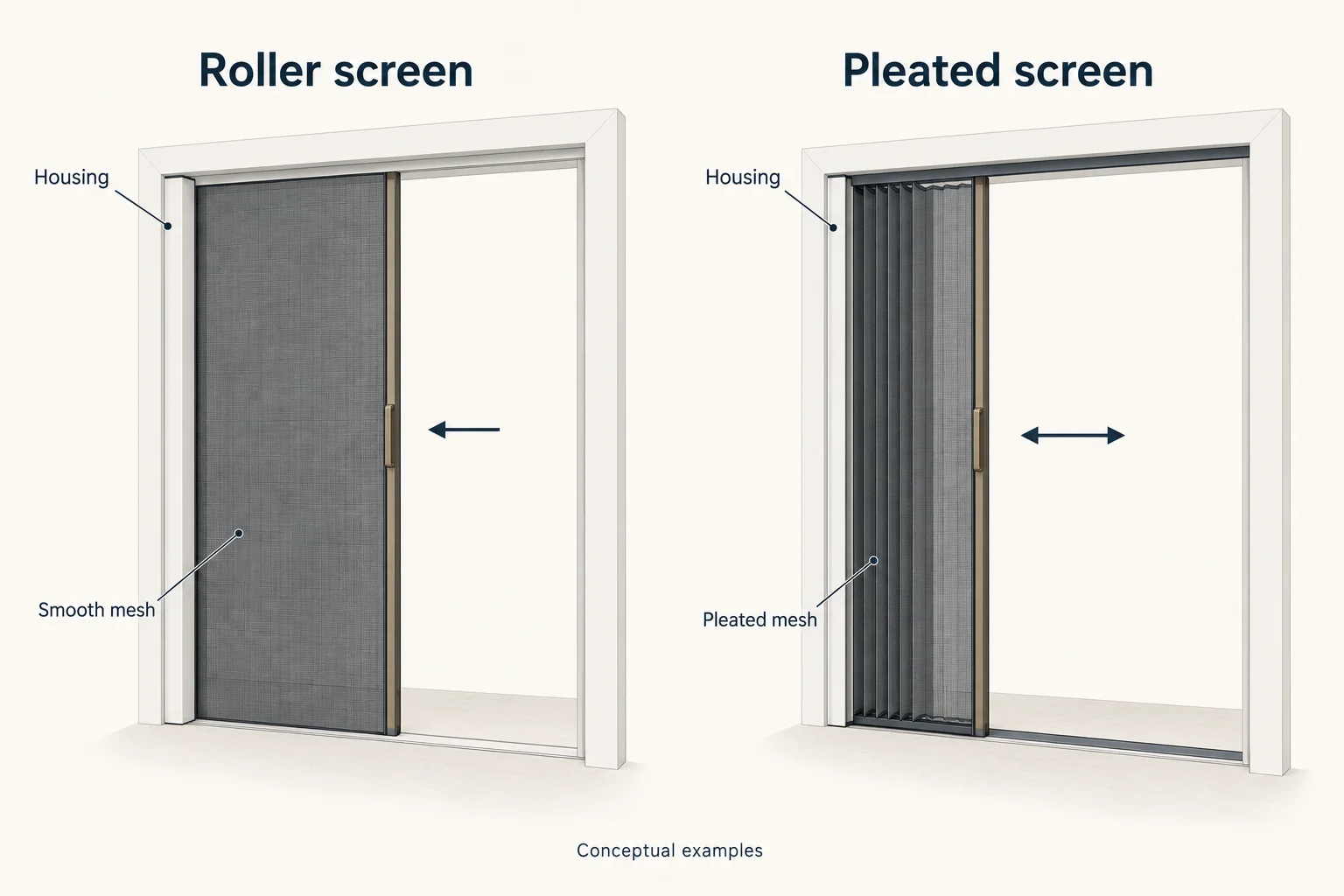
These are product-family distinctions, not guarantees about every product in a category. Genius describes both spring-operated smooth-fabric screens and a pleated Sheer Screen without a tension spring. Window World describes a storm-door product with a dual-function top panel. Don’t assume the latter is mesh stored in a side housing.
Check Door and Screen Compatibility
Fit checks should begin with the actual main door, not a generic screen size. Note whether the opening is a hinged entry door or a gliding patio door, record the model or series if available, and ask what mounting space the proposed screen requires. Photograph the threshold and door label so the seller or installer can review the opening.
Compatibility can be narrowly defined. Andersen lists its retractable patio screen for 200 Series, 400 Series, and A-Series gliding patio doors, including compatible doors manufactured from 1990 to the present. That example is tied to named products, not evidence that the screen fits every sliding door. Verify the exact series and product documents rather than relying on the word “patio.”
The threshold matters too. Genius says the bottom guide should rest level and notes that a sloped threshold requires appropriate product-specific support. Don’t assume the guide can be altered or that one mounting method works for every doorway. Ask for the exact screen model and product drawing, and have the seller or installer assess the threshold and mounting plan.
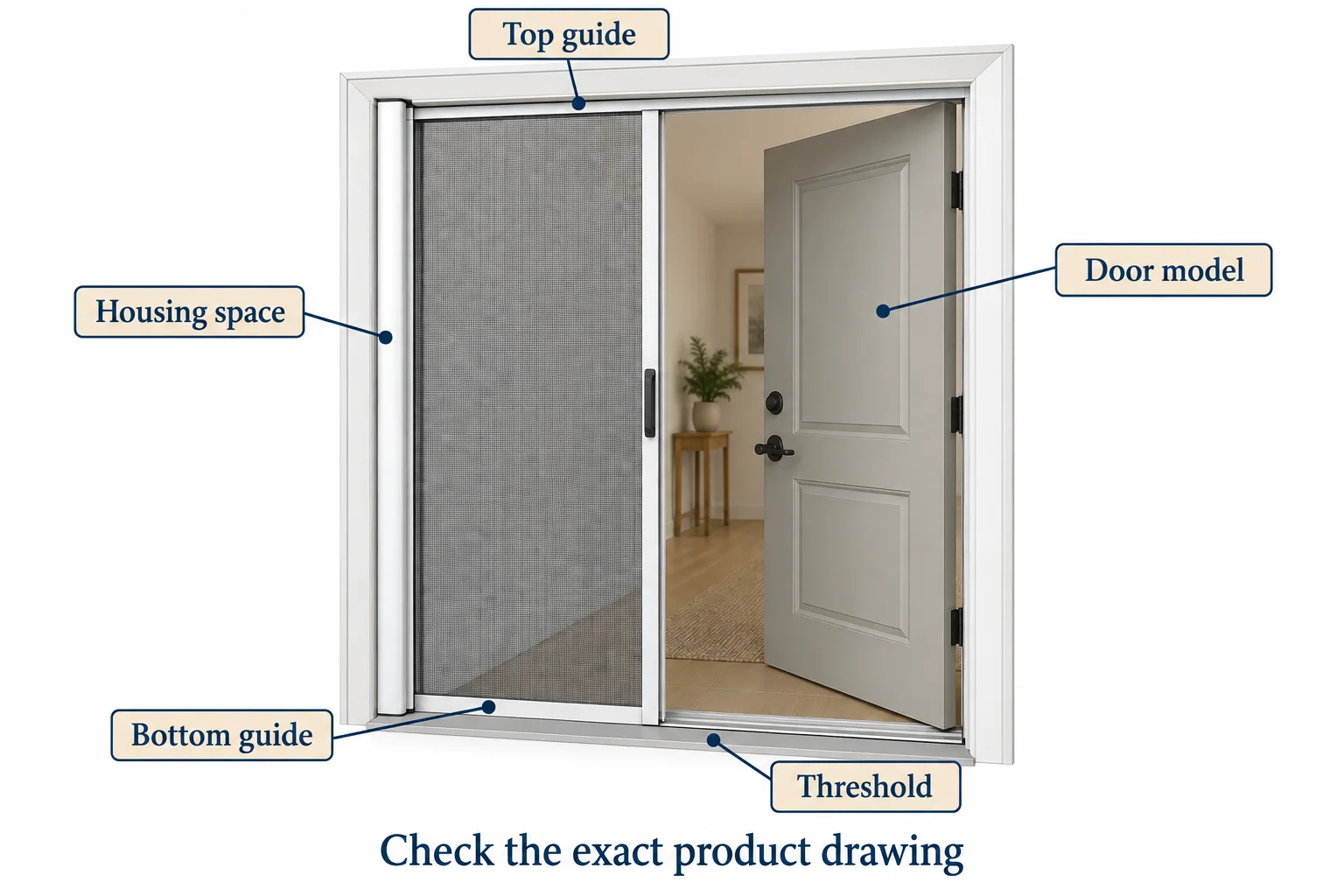
If you are replacing patio doors, check compatibility with the proposed new series before assuming an existing screen will carry over. Record the screen model as well as the door model; the same opening does not establish a match.
Plan Everyday Operation and Care
A short demonstration can reveal whether the selected screen suits your doorway. Ask the seller or installer to show how it latches, releases, and retracts, and what to do if it does not move smoothly. Spring-operated and pleated screens may respond differently, so don’t apply one design’s instructions to another.
Care depends on product guidance. Genius recommends clearing debris from guides and describes cleaning mesh with mild soapy water, a light rinse, and drying before retraction. Phantom advises retracting its screens in very strong wind because mesh can sail or escape tracks; this is not a wind rating or a promise of storm protection. Mesh openness affects airflow and visibility, but an insect screen is not a weather seal.
Before deciding, prepare these details for the product conversation:
- Photos of the doorway, threshold, and any model labels.
- The main-door type and model or series, if known.
- The exact screen model, mounting plan, and product drawing.
- A demonstration of operation and the product’s care instructions.
This list focuses the decision on fit and everyday use.
FAQs
Will a retractable screen fit any patio door?
No. A retractable screen can move independently of a hinged or sliding main door, but that does not mean one screen fits every doorway. Check the exact door series or model, opening dimensions, mounting area, threshold, and screen product instructions. Andersen, for example, lists compatibility for particular gliding patio-door series; that does not establish fit for other brands or models.
Do all retractable screens close or retract the same way?
Not always. Spring-operated roller screens and pleated screens can work differently. A smooth spring-operated model may retract after its magnet releases, while a pleated system without a tension spring may stay where you place it. Ask to see the specific product operate, and follow its instructions rather than pushing or releasing it based on another screen’s design.
How should I care for a retractable screen door?
Keep guides clear of debris and follow the care instructions for the particular screen. One manufacturer advises washing mesh with mild soapy water, rinsing lightly, and letting it dry before retracting it. Another advises retracting its screens in very strong wind. Mesh openness affects airflow and visibility; an insect screen should not be treated as storm protection or a weather seal.
Conclusion
Before choosing a retractable screen, confirm what moves, how it mounts, and whether its guides suit your doorway. A product name alone does not establish fit or weather performance.
Gather photos of your door, threshold, and model label. Ask the seller or installer to identify the exact screen model, demonstrate its operation, and provide the product drawing and care instructions before you decide. Call Windows and Doors by Martin Toro and ask about your project.