Window & door planning
Double vs Triple Pane Windows in Deltona, Florida
Compare double vs triple pane windows by whole-unit ratings, sound needs, glass construction, weight and installed cost—not pane count alone.

If you are weighing double versus triple-pane windows in Deltona, Florida, the extra pane is only one part of the decision. Triple glazing adds a pane and a second space between panes, but that does not automatically make it the better choice for every room or budget. Coatings, the complete window’s energy ratings, sound-control construction, weight and installed cost can all change the comparison.
Start with the reason you are considering an upgrade: slower heat transfer, less solar heat entering, or a quieter room. Then compare the exact glass packages and whole-window ratings rather than relying on a general claim about pane count. This guide explains what changes between the assemblies, how to read key specifications, and what information to request when comparing proposals. You will have a practical way to judge whether the extra pane addresses your goal.
Key Takeaways
- Double-pane windows have two glass panes and one space; triple-pane windows have three panes and two spaces.
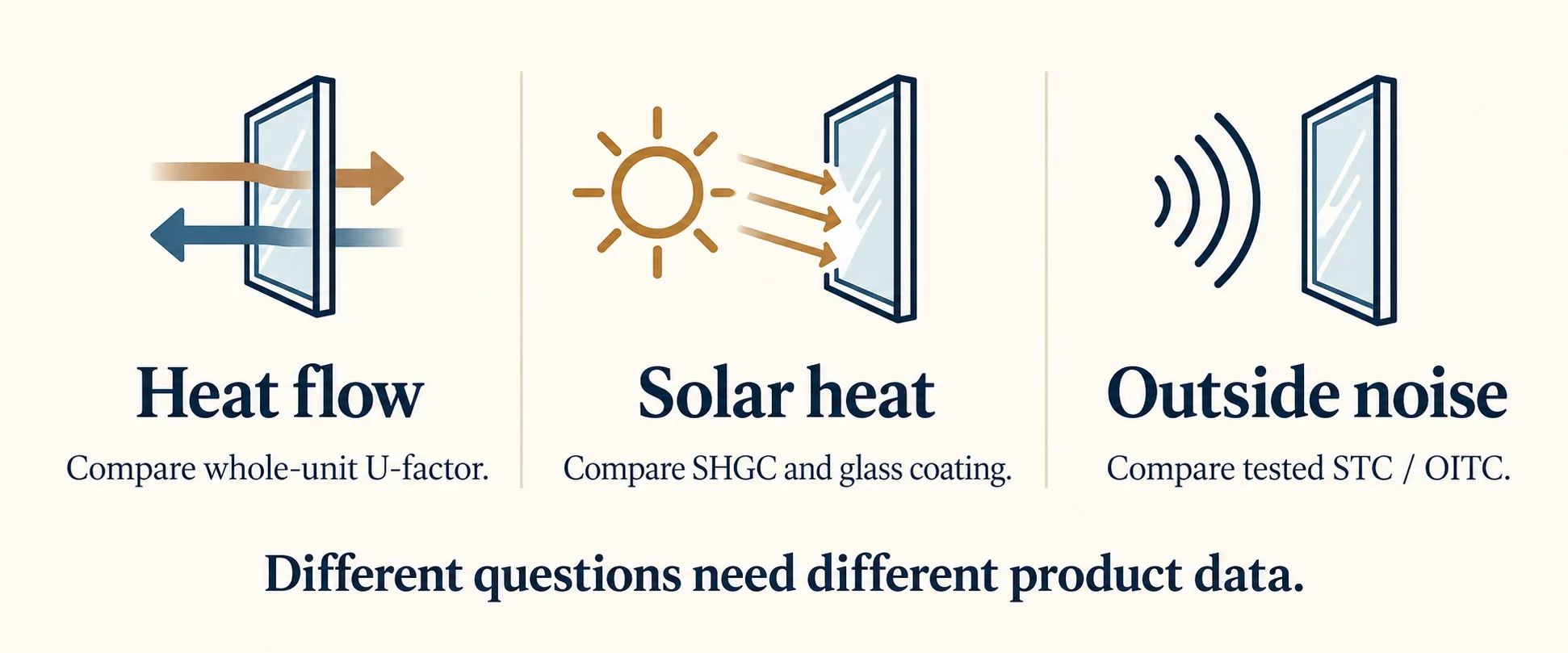
- Whole-window U-factor helps compare heat transfer, while SHGC describes how much solar heat the window admits.
- For noise, compare tested STC and OITC ratings and the glass construction, seals and installation—not pane count alone.
- Compare exact package, dimensions, weight and installed price to decide whether triple glazing fits the room and project.
What Are Double- and Triple-Pane Windows?
Double-pane windows have two glass panes separated by one sealed space; triple-pane windows have three panes and two spaces. The panes are glass layers, while each space between them is a cavity that may contain air or gas.
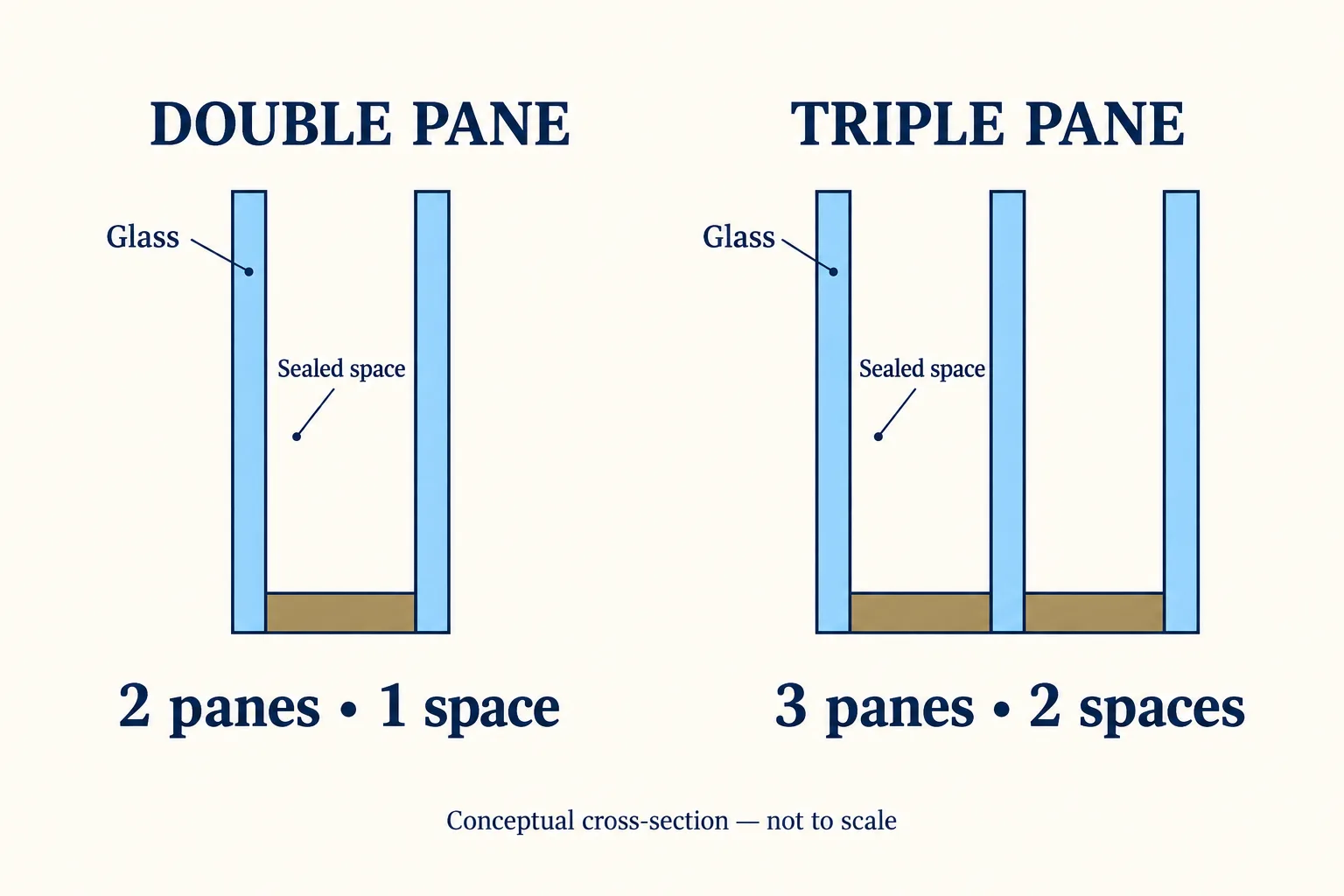
Triple-pane designs vary: conventional units are typically heavier, while thin-triple designs use a thinner third pane. Pane count describes the glass assembly, not the number of movable sashes.
Compare the Complete Glass Package
The useful comparison is between complete, specified window packages—not a generic double-pane product and a generic triple-pane one. Low-E coatings manage radiant heat, and gas fill is another factor that can affect insulation. Different coating options can be offered across both dual- and selected triple-pane packages, so ask for the actual product data.
| Decision point | What to compare | What it tells you |
|---|---|---|
| Glass assembly | Pane count and number of spaces | Two panes have one space; three panes have two. Ask whether the design is conventional or thin triple. |
| Heat transfer | Certified whole-window U-factor | A lower U-factor means heat moves through the window more slowly. Compare the complete unit, not glass-center figures. |
| Solar heat | Coating and SHGC | SHGC indicates how much solar heat the window admits. A coating’s purpose and rating matter alongside pane count. |
| Noise | Tested STC and OITC ratings | Higher ratings indicate greater sound reduction. Compare ratings for the exact units and their glass construction. |
| Project fit | Unit dimensions, weight and installed price | Confirm the exact product, operating style, dimensions and price in each proposal; do not assume an extra pane has a fixed cost. |
The National Fenestration Rating Council (NFRC) certifies residential energy ratings, and its label reports measures including U-factor and solar heat gain coefficient (SHGC). Use the label to compare documented product performance, not to predict a particular utility bill. Request ratings for the full window because glass-only numbers do not represent the complete unit. Pella’s glass options illustrate why the coating name and intended use should be checked rather than inferred from pane count.
Match Sound, Fit and Cost to the Project
For a room affected by traffic or other outdoor noise, ask for tested acoustic ratings for the exact assembly. Compare those results with the noise you want to reduce, and set realistic expectations: no window is fully soundproof.
Glass thickness, differing pane thicknesses, spacing, laminated glass and perimeter seals can affect results. Installation and continuous seals matter too: a poor seal can undermine the selected glass.
Cost and fit deserve their own check. Conventional triple-pane units are typically heavier and cost more than comparable dual-pane units, but actual price depends on product line, window type and options. Thin-triple designs differ from conventional assemblies, so ask for the actual dimensions and weight instead of assuming all triple glazing is alike. No universal price increment or payback period applies to every project.
Ask each proposal to identify the glass package and coating, certified whole-window U-factor and SHGC, tested STC/OITC ratings if sound matters, unit dimensions and weight, operating style, and installed price. Keeping those details together makes it easier to compare equivalent options and see whether the added pane addresses your priority.
FAQs
Are triple-pane windows always more energy efficient?
Neither option is automatically more energy efficient in every application. Triple glazing adds another pane and space, which can improve insulation, but the complete window’s U-factor, coating, gas fill and frame matter. Compare certified whole-window ratings for the exact products under consideration; a pane count by itself cannot predict utility-bill savings for a particular home.
Do triple-pane windows reduce outside noise more?
Compare tested STC and OITC ratings for the exact window assembly. No window is fully soundproof, so use the ratings to assess sound reduction rather than expect silence or choose on pane count alone.
Conclusion
Choose glazing by the performance goal and the complete window specification, not by pane count alone. A third pane changes the assembly, but coatings, ratings, dimensions, sound construction and installed cost all affect whether it fits your project.
Before deciding, ask for comparable written proposals showing the exact glass package and whole-window ratings. To discuss your project, call Windows and Doors by Martin Toro.