Window & door planning
North Facing Windows: Daylight in Celebration, Florida Homes
Learn how north-facing windows can bring daylight into a room, what affects brightness, and how to compare visible-light and solar-heat ratings.
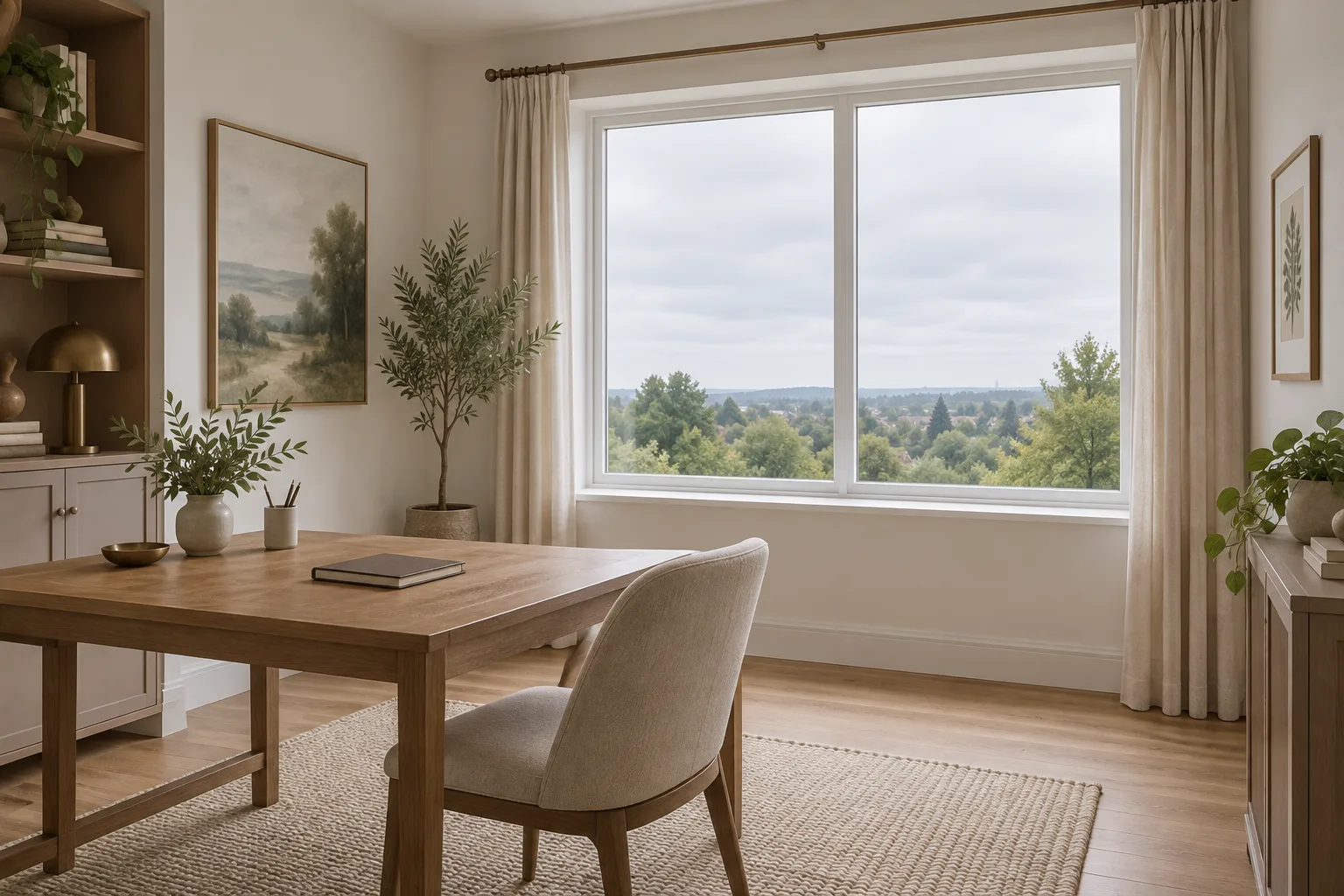
A north-facing window can bring useful daylight into a room, but its direction alone cannot tell you how bright the space will feel. In Celebration, Florida, start by observing the room: what shades the window, whether coverings are open, how interior surfaces reflect light, and where you sit or work. Those details help distinguish a room condition from a product question before you consider changes.
This guide explains what north-facing exposure generally means, gives you a four-part observation checklist, and clarifies two ratings that are easy to confuse: visible transmittance and solar heat gain coefficient. You’ll also learn what to record so you can compare the specific window and glass specifications you are considering instead of relying on direction alone.
Key Takeaways
- North-facing windows can admit useful daylight with less summer heat and minimal glare, but room conditions affect the result.
- Exterior shade, coverings, interior finishes and furniture position can change how daylight reaches and spreads through a room.
- Visible transmittance measures visible light transmission, while solar heat gain coefficient measures transmitted solar heat.
- Record room use, observed conditions and proposed product details before comparing window specifications.
What Are North-Facing Windows?
North-facing windows are windows oriented toward the north that can admit natural light with less summer heat and minimal glare, depending on the room and its surroundings.
The U.S. Department of Energy describes window orientation as one part of daylighting. Nearby buildings, trees or overhangs may shade an opening, while glazing and interior design also affect the light that reaches and spreads through a room. These are general tendencies, not a promise about brightness or glare in every space.
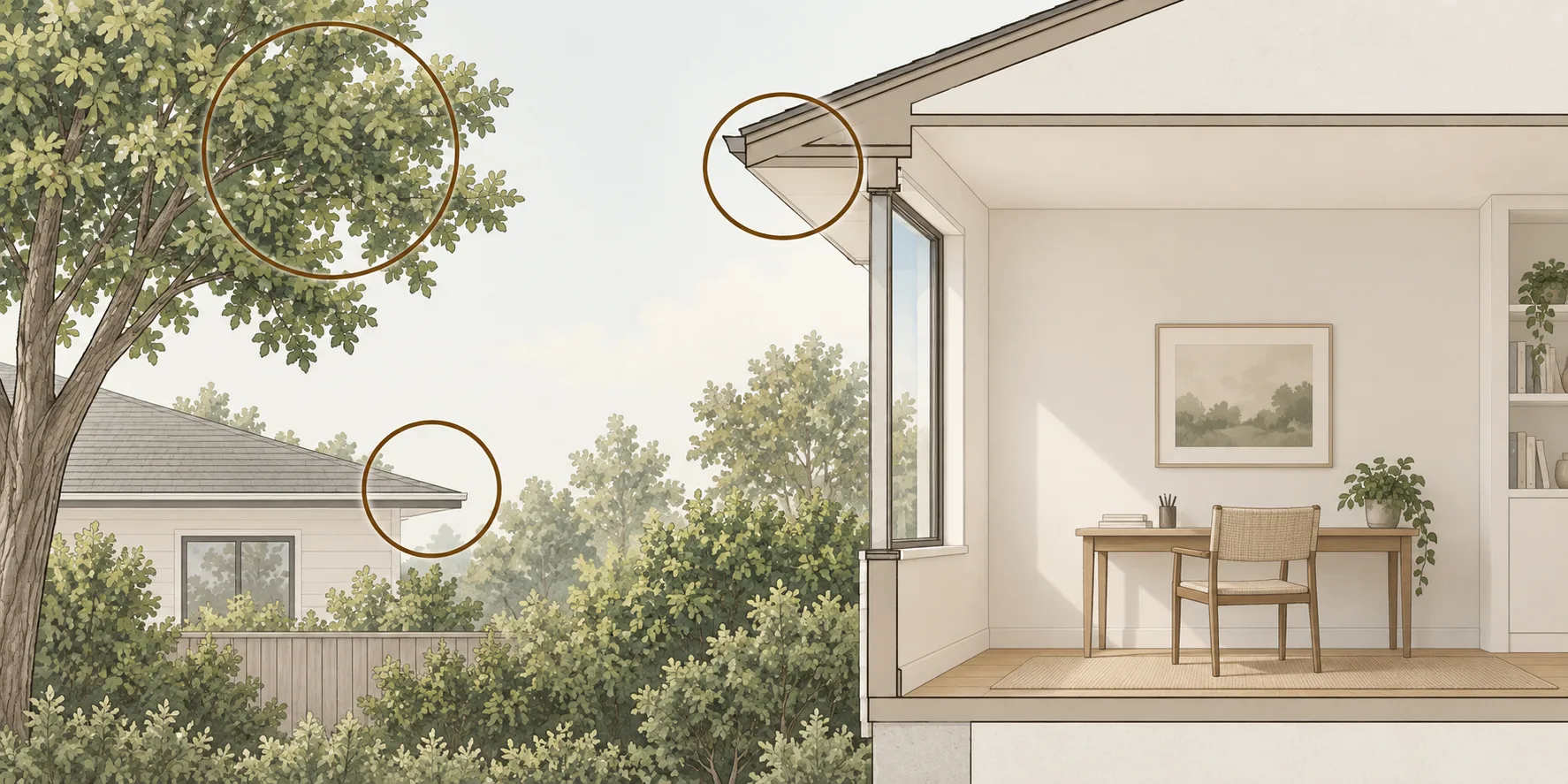
Treat direction as a starting point, not a brightness guarantee. A room observation can help you distinguish what the window faces from what blocks or redistributes its light.
Understand North-Facing Daylight
Nearby buildings, trees and building elements can shade a window. Glazing area, ceiling height, shading, climate and views also affect daylight. Check the particular space at the times you use it rather than assuming compass direction explains everything you see.
Check What Blocks or Spreads Room Light
Use these checks to record observations, not to assume a single cause for dim or uneven light. Look at the room when you use it, and note what changes when coverings are open. Light-colored finishes can help distribute daylight; reflective surfaces around the window can also contribute to glare. These observations are not instructions to remove trees or alter a structure.
| Check | What to observe | What to record |
|---|---|---|
| Outside the window | Trees, nearby buildings, overhangs or other shade | Which features shade the opening and when you notice them |
| Coverings | The room with blinds, shades or drapes open and closed | Covering position and the difference you observe |
| Interior surfaces | Whether nearby walls and finishes are pale or dark | Where light seems to reflect or appear limited |
| Room use and position | Your desk or chair location and usual time in the room | Where you need light and when you use that spot |
Compare Light and Heat Ratings
Visible transmittance (VT) and solar heat gain coefficient (SHGC) describe different window properties. VT measures how much visible light a window transmits; a higher VT indicates more transmitted light. SHGC measures how much solar heat a window transmits; a lower SHGC indicates less transmitted solar heat. Neither value alone predicts how bright a room will feel.
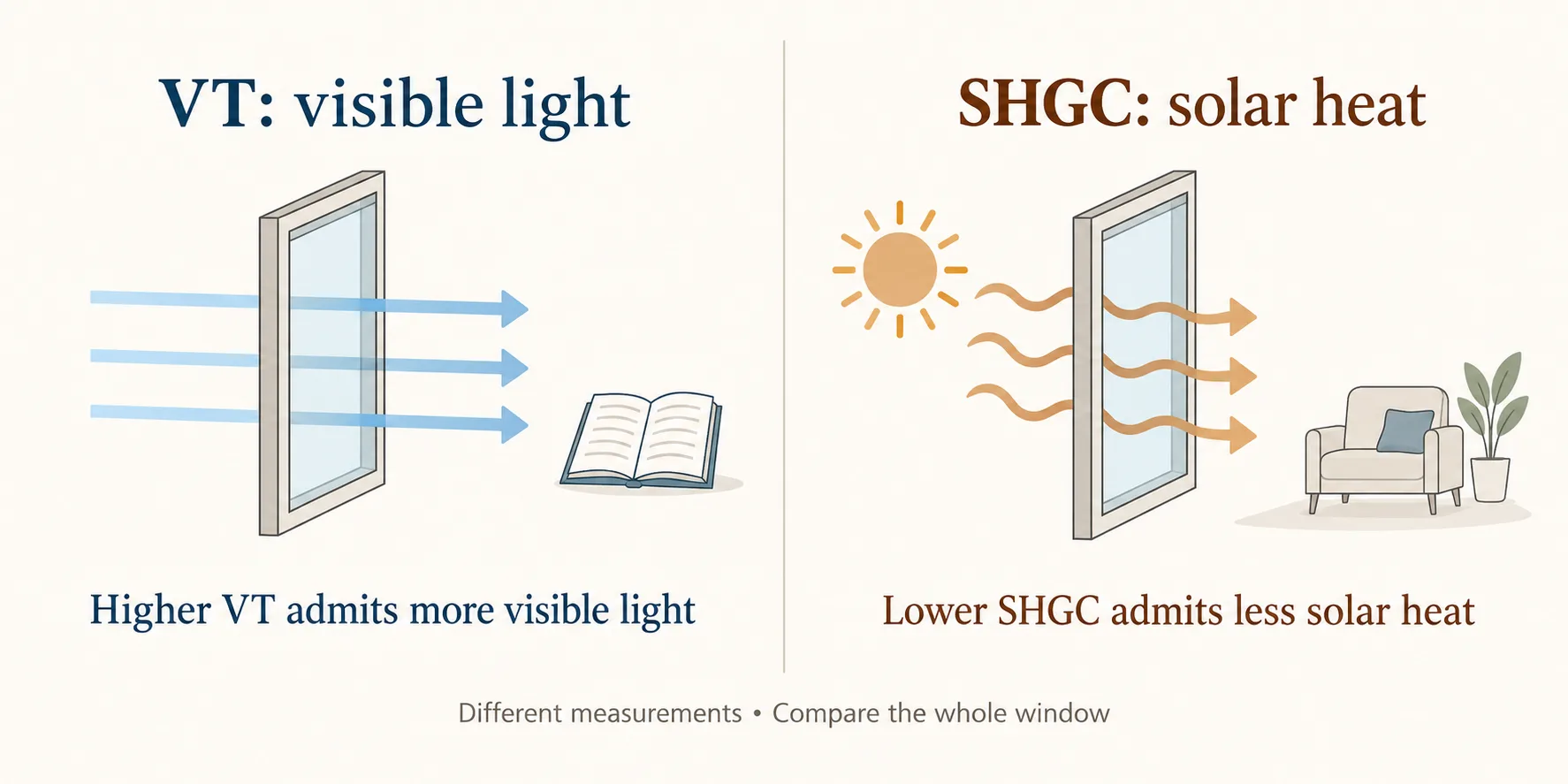
Compare documented whole-window ratings for equivalent proposed products. Whole-window VT includes the frame, which does not transmit visible light, so it differs from center-of-glass VT. Glazing, coatings and panes can affect both ratings. A lower SHGC does not mean a room receives no solar heat: heat gain can include direct and diffuse radiation and reflections from surrounding surfaces. Check which rating applies to the complete product you are comparing.
Prepare a Room-Specific Window Brief
A concise room brief can make a product comparison more specific. Record the window’s direction, the room’s activity and usual time of use, current coverings, exterior obstructions, and viewpoints from which you observe the space. Add the exact proposed window and glass specifications when available.
For example, if a desk area seems dim, note whether an overhang shades the window, whether blinds are usually closed and where the desk sits. This record gives you observations to discuss without assuming that orientation alone or a particular change will solve the issue. Keep the comparison focused on your room and the documented product details.
FAQs
Do north-facing windows provide enough natural light?
North-facing windows can admit natural light with less summer heat and minimal glare as a general tendency, but they do not guarantee a particular brightness. Nearby obstructions, coverings, glazing and interior finishes also affect the result. Observe the room during the hours you use it before deciding that orientation alone explains how bright it feels.
What window rating should I check for natural light?
Visible transmittance, or VT, describes how much visible light a window transmits. Solar heat gain coefficient, or SHGC, describes how much solar heat it transmits. They measure different properties, so compare documented whole-window ratings for the specific products under consideration. Neither rating alone predicts how bright a particular room will feel.
Conclusion
North-facing windows can provide useful daylight, but direction alone does not determine how a room feels. The room’s surroundings, coverings, finishes and window specifications all matter.
Use your observations and the exact proposed glass details to guide the comparison. Then call Windows and Doors by Martin Toro and ask about your project.