Window & door planning
How to Clean Window Screens in Lake Mary, Florida
Learn how to clean window screens gently: choose in-place dusting or a compatible wash, follow product guidance, then dry, refit and inspect for fit.
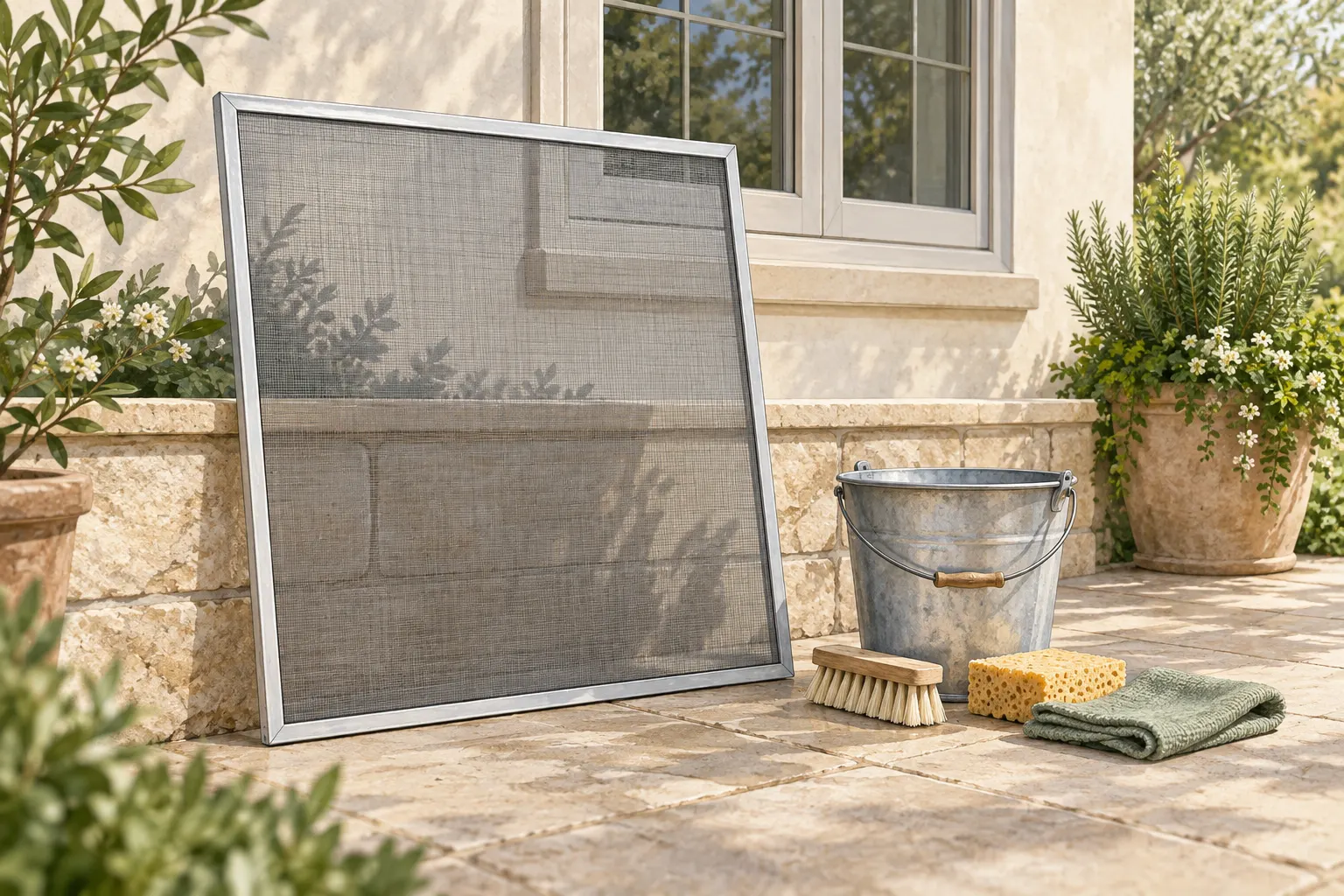
Dusty window screens can make a simple cleaning job feel uncertain: should you brush them in place, remove them for a wash, or leave them alone? The answer depends on the screen’s condition and construction. A light vacuum touch-up can clear ordinary dust, while a compatible removable screen can be washed gently with mild soap and water. Fine mesh and retractable designs need extra care, and their handling instructions may differ from those for a standard framed screen.
This guide explains how to choose a method, wash a removable screen without bending its frame, and dry and refit it carefully. You’ll also learn what to check before starting and why the original opening matters when several screens are involved. Follow the instructions for your specific product whenever they differ from general cleaning guidance.
Key Takeaways
- Window-screen cleaning ranges from a soft-brush dusting in place to a gentle wash for compatible removable screens.
- Check mesh and screen design before choosing a method; delicate and retractable products may need specific instructions.
- Wash compatible screens with mild soap, gentle pressure and a light rinse instead of stiff brushes or power washing.
- Dry screens completely, return each to its original opening and check for secure edges, gaps or damage.
What Is Window-Screen Cleaning?
Window-screen cleaning means removing loose dust with a soft brush or carefully washing a compatible removable screen with mild soap and water, then rinsing and drying it fully. The right method depends on the mesh and screen design, so check product instructions before handling or removing it.
Treat the mesh as a surface to clean gently, not scrub hard. A vacuum with an upholstery brush can remove light dust in place; a removable framed screen may need a fuller wash.
Choose a Cleaning Method for Your Screen
Start with the screen’s condition and design, then choose the least forceful suitable method. For light dust, a vacuum upholstery brush can clean a screen in place. A framed screen that product instructions allow you to remove can be washed with mild soap and water.
| Screen condition or design | Suitable approach | Check before starting |
|---|---|---|
| Light dust on an intact screen | Use a vacuum with an upholstery brush in place. | Keep contact gentle; removal may not be necessary. |
| Washable, removable framed screen | Follow its release instructions, then wash gently. | Identify how the screen comes out; methods vary. |
| Fine or ultrafine mesh | Use extra care and product-specific guidance. | Fine mesh can be more delicate than fiberglass or aluminum. |
| Retractable screen | Follow its operating and cleaning instructions. | Cleaning position and drying requirements can differ by model. |
Do not force unfamiliar hardware or treat every screen as a removable panel. Pella distinguishes fine mesh from conventional screen material and gives retractable products their own operating positions. Screens also do not prevent a child or pet from falling through an open window, so keep safety in mind while a screen is removed.
Wash Removable Screens Gently
For a compatible removable screen, prepare a soft brush or sponge, lukewarm water and mild soap. If cleaning several screens, note which window each came from before removal; returning them to their original openings helps preserve proper fit. Support the frame so you do not bend it.
Rinse gently, then wipe or brush the mesh and frame with light pressure. Clean both sides, using fresh wash water if it becomes dirty. Rinse away soap with a gentle stream. Do not scour the mesh: stiff bristles or power washing can damage fragile screening.
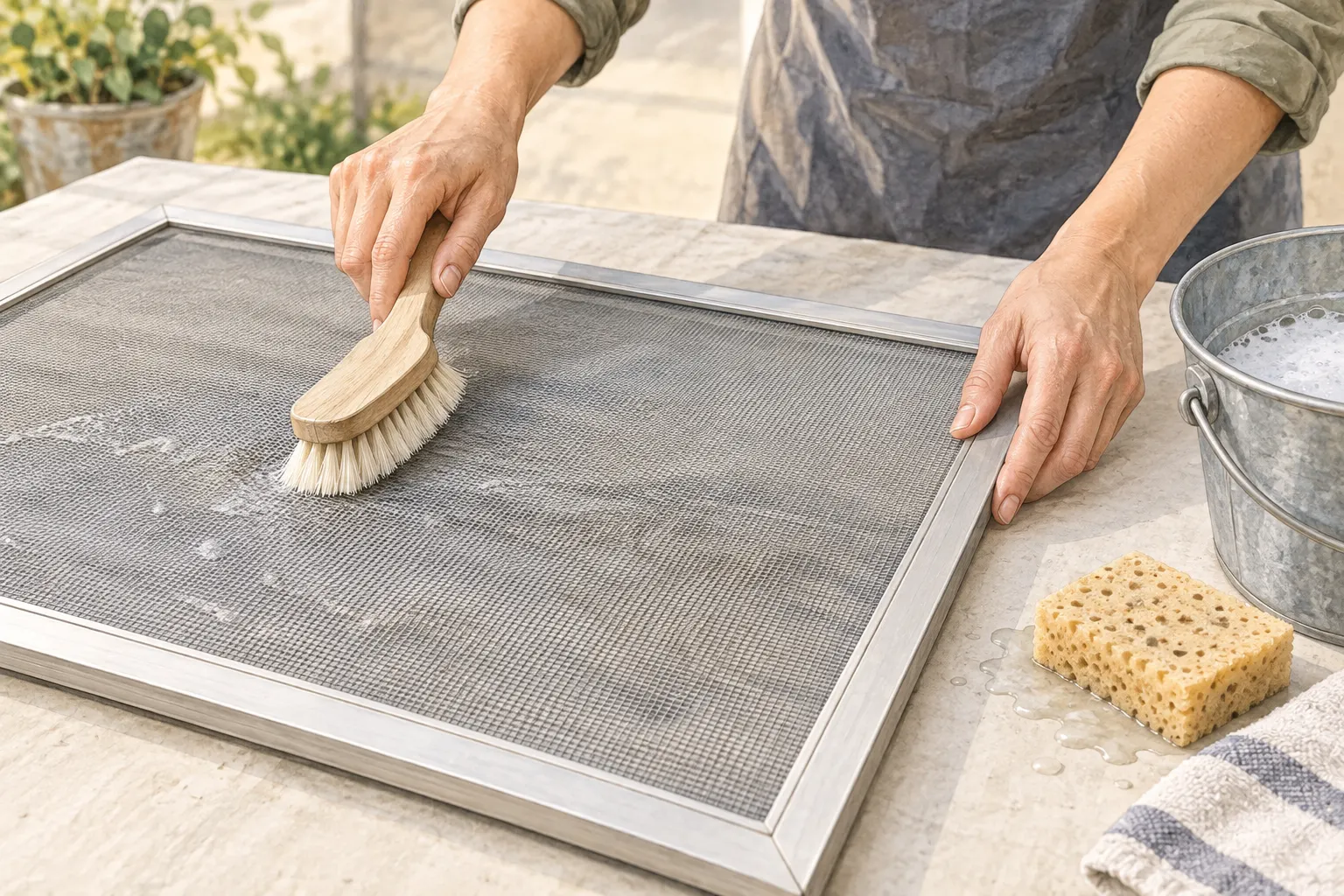
Follow the screen maker’s instructions over this general sequence. Some screens are best cleaned in place, while others have specific removal or operating steps. Do not assume glass-cleaning directions also apply to screen mesh.
Dry, Refit and Check the Result
Let a washed screen air-dry completely before reinstalling it. Pella also advises letting washed retractable screens dry before storage. Do not rush this step.
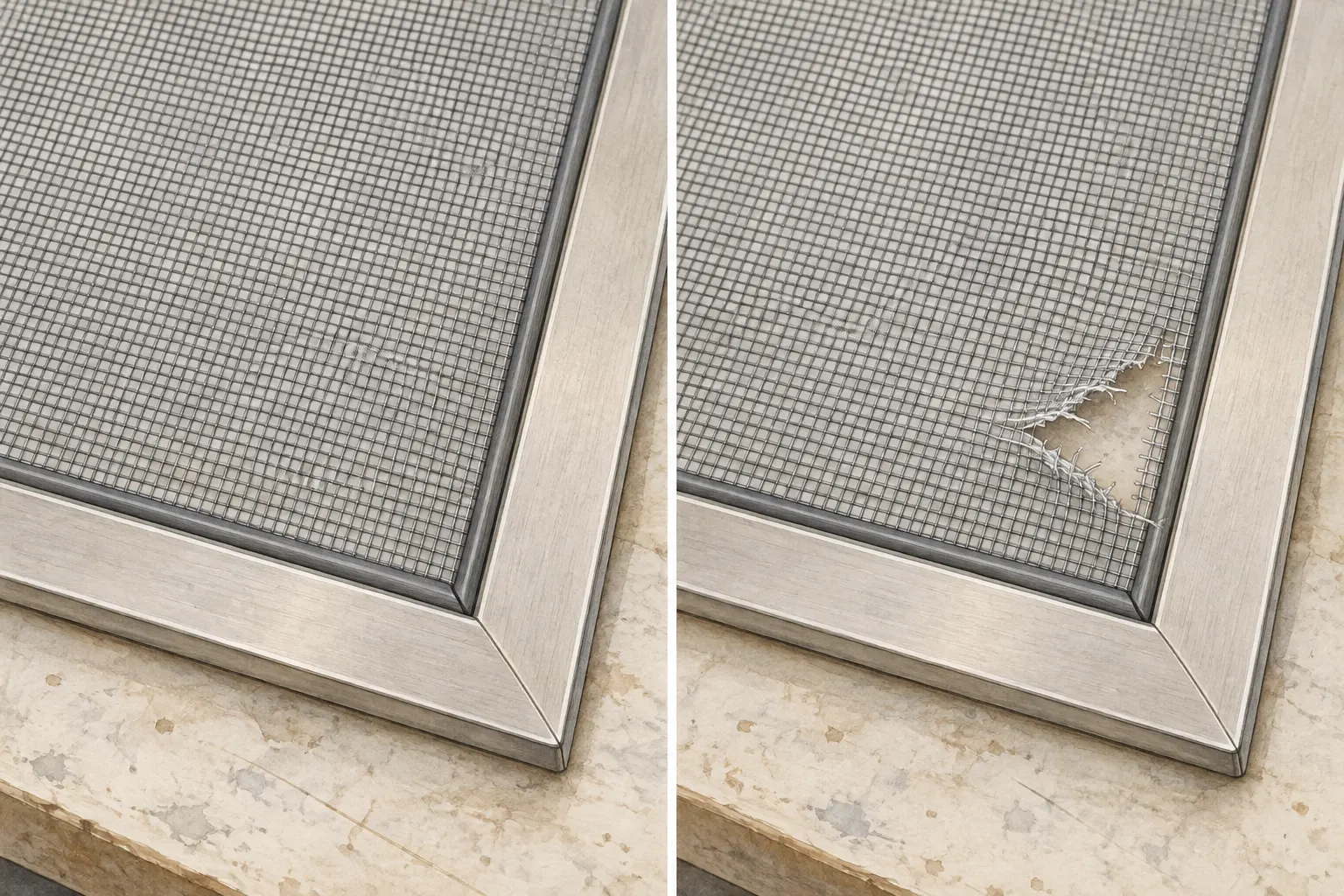
Return each removable screen to its original opening, and check that every edge sits securely without gaps. Look for tears, damage or bending. If you find damage, do not scrub harder; cleaning removes dirt, not physical defects.
Manufacturers differ on suggested frequency: Andersen advises twice-yearly cleaning, while Phifer suggests annual cleaning and more often with dust or weather exposure. These are product-maker recommendations, not a universal schedule. Check your screen’s guidance and let its condition inform when it needs attention.
FAQs
How do you clean window screens without removing them?
For light dust, gently use a vacuum with an upholstery brush on the screen in place. For a fuller wash, remove it only if the product instructions explain how, then clean and dry it before reinstalling. Retractable screens and delicate mesh may need specific handling, so do not assume a removable framed-screen method applies to them.
What is the safest way to wash window screens?
Use lukewarm water and a little mild soap with a soft brush, sponge or cloth. Rinse gently and let the screen dry completely. Avoid stiff brushes and high-pressure washing, which can damage mesh. Follow the screen maker’s instructions, especially for fine mesh or retractable products.
How do you dry and reinstall window screens?
Let a washed screen dry completely before reinstalling it or storing a retractable screen. Return each removable screen to its original opening, then check that the edges sit securely without gaps. Look for tears or other damage; more scrubbing will not fix damaged mesh.
Conclusion
Careful handling and mild soap help clean compatible framed screens without stressing the mesh.
Before starting, identify the screen type and check its condition. After cleaning, confirm the screen fits securely in its original opening. For questions about your project, call Windows and Doors by Martin Toro and ask about it.