Window & door planning
Weather Stripping for Patio Doors in Lake Mary, Florida: Seal Fit
Learn how to spot worn seals, check sliding door gaps and clearance, and compare weather stripping for patio doors in Lake Mary, Florida.
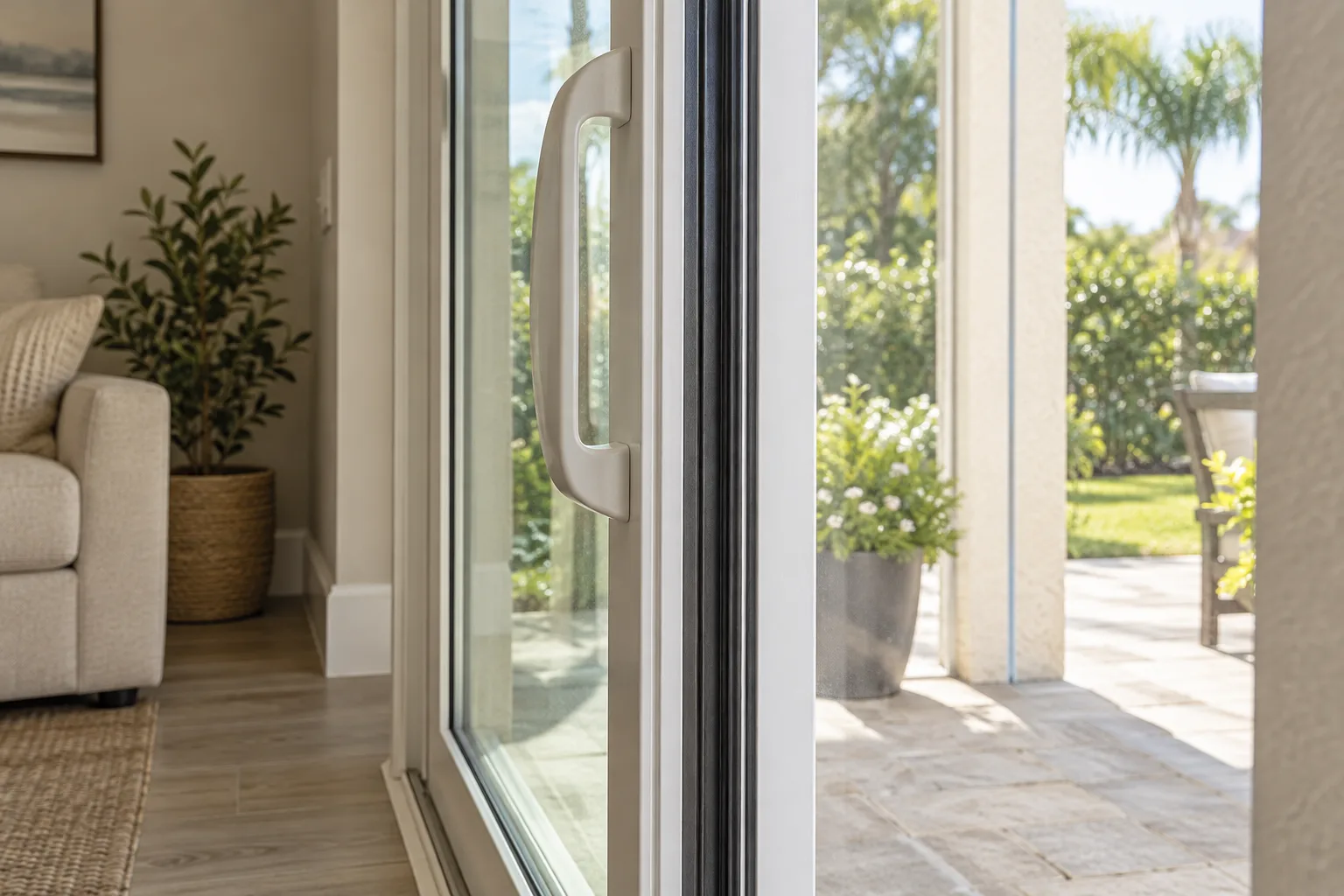
Weather stripping for patio doors seals moving gaps where air and water can pass. It cannot fix every leak around a door. For a sliding door, locate the draft at the panel edges, meeting point, sill, or behind the frame trim. That distinction matters in Lake Mary, Florida. A worn door seal and a gap in the surrounding wall need different repairs.
Key Takeaways
- Weather stripping seals moving door joints, while caulk, foam, or backer rod can seal gaps between the frame and wall.
- A sliding panel that does not close evenly can leave new weather stripping unable to make continuous contact.
- Check the full door perimeter and frame trim before choosing a replacement seal or assuming the door needs replacement.
- Ask to see how the proposed repair addresses both the moving panel and any suspected gap behind the frame.
How weather stripping for patio doors seals moving joints
Weather stripping is the flexible seal where door parts meet as the door closes. On a sliding patio door, it works along joints between the moving panel and the frame or fixed panel. On a hinged door, a sweep at the bottom can seal against the sill. The seal compresses or brushes against a neighboring surface, limiting the opening while still allowing the door to move. The exact shape and placement depend on the door design, so a strip that looks similar may not fit or seal properly.
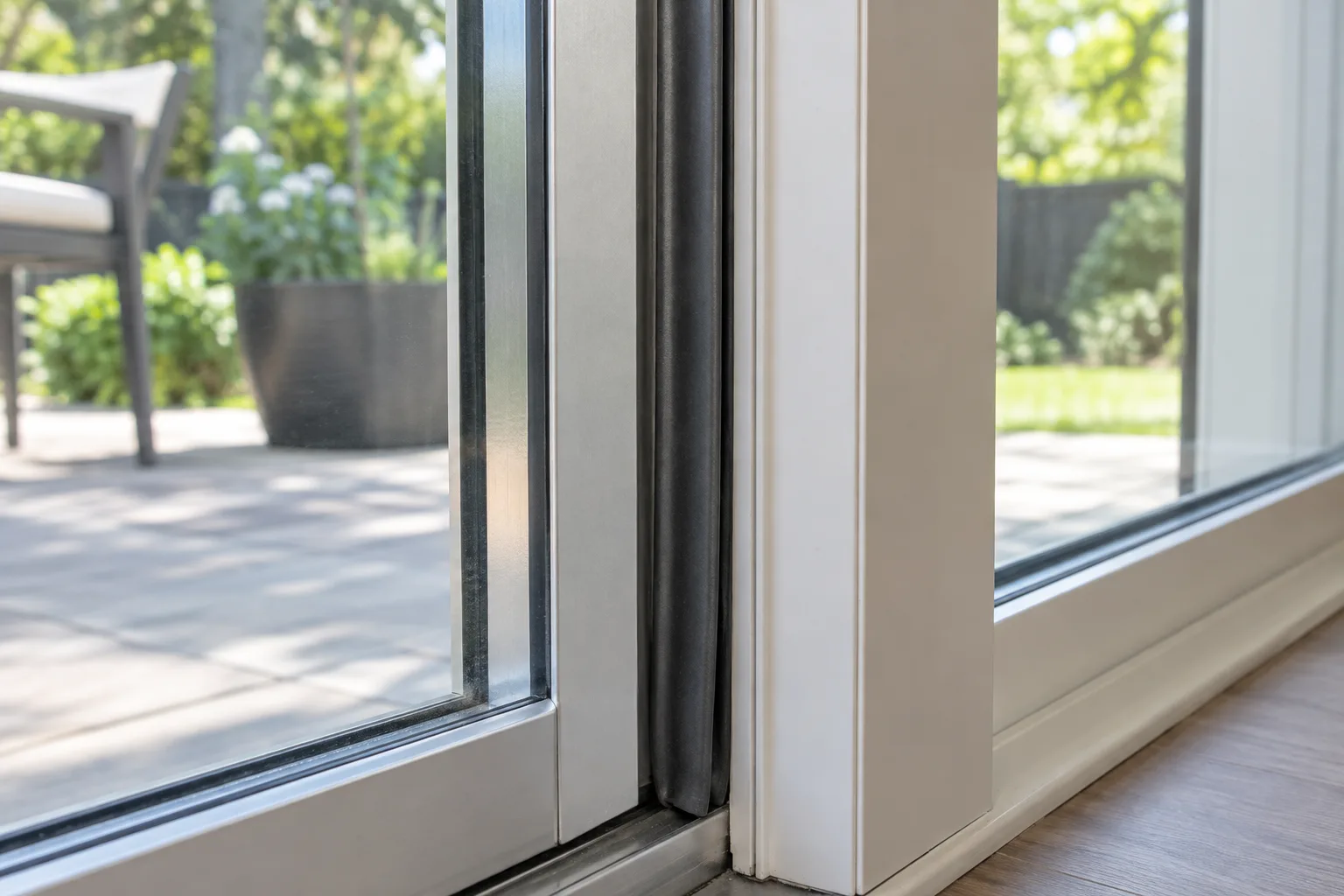
Replace weather stripping when the door closes squarely and the seal is split or flattened. The leak should follow the door’s moving joint. With the door closed, inspect the full perimeter for light, visible gaps, loose material, or a seal that no longer touches the opposing surface. ENERGY STAR lists visible gaps around door trim as a sign of possible air leaks. It also lists dust or pests entering through gaps and peeling paint around the door frame as possible signs. These clues help locate a problem, but they do not prove the weatherstrip is at fault. A loose panel, misaligned latch, worn roller, or damaged frame can keep a sound seal from meeting its surface.
Before buying material, note where the old seal sits and how it attaches. Photograph its profile and position, then compare those details with replacement material made for that door system. A thicker strip is not automatically better. It can make a sliding panel harder to operate or prevent a latch from engaging. If the door drags, rattles, or needs force to latch, address the fit before treating the weatherstrip as the only fault. A seal must meet the adjacent surface evenly from top to bottom to close the gap without obstructing movement.
Tell a door seal leak from a frame or wall gap
The source of the leak determines whether you need weather stripping, a frame repair, or both. Weather stripping is for a joint between moving or closing door parts. The gap between the stationary door frame and the wall is a different joint, usually hidden by interior or exterior trim. The Department of Energy describes gaps between door units and framing as potential sites of uncontrolled air leakage. It says those rough-opening gaps can be filled with caulk, canned spray foam, or foam backer rod.
Use the leak’s location and behavior to narrow the diagnosis. Air at the panel edge while the door is shut points to the moving joint or panel fit. A draft under the trim suggests the stationary frame-to-wall connection also needs inspection. ENERGY STAR says leaks around doors can cause uncomfortable drafts. It recommends checking the air seal behind the door trim. Removing trim can disturb paint, so it should not be a casual first step. ENERGY STAR warns that home repairs can create dangerous lead dust. If work will disturb paint in a home built before 1978, ENERGY STAR advises consulting EPA lead-safety resources first.
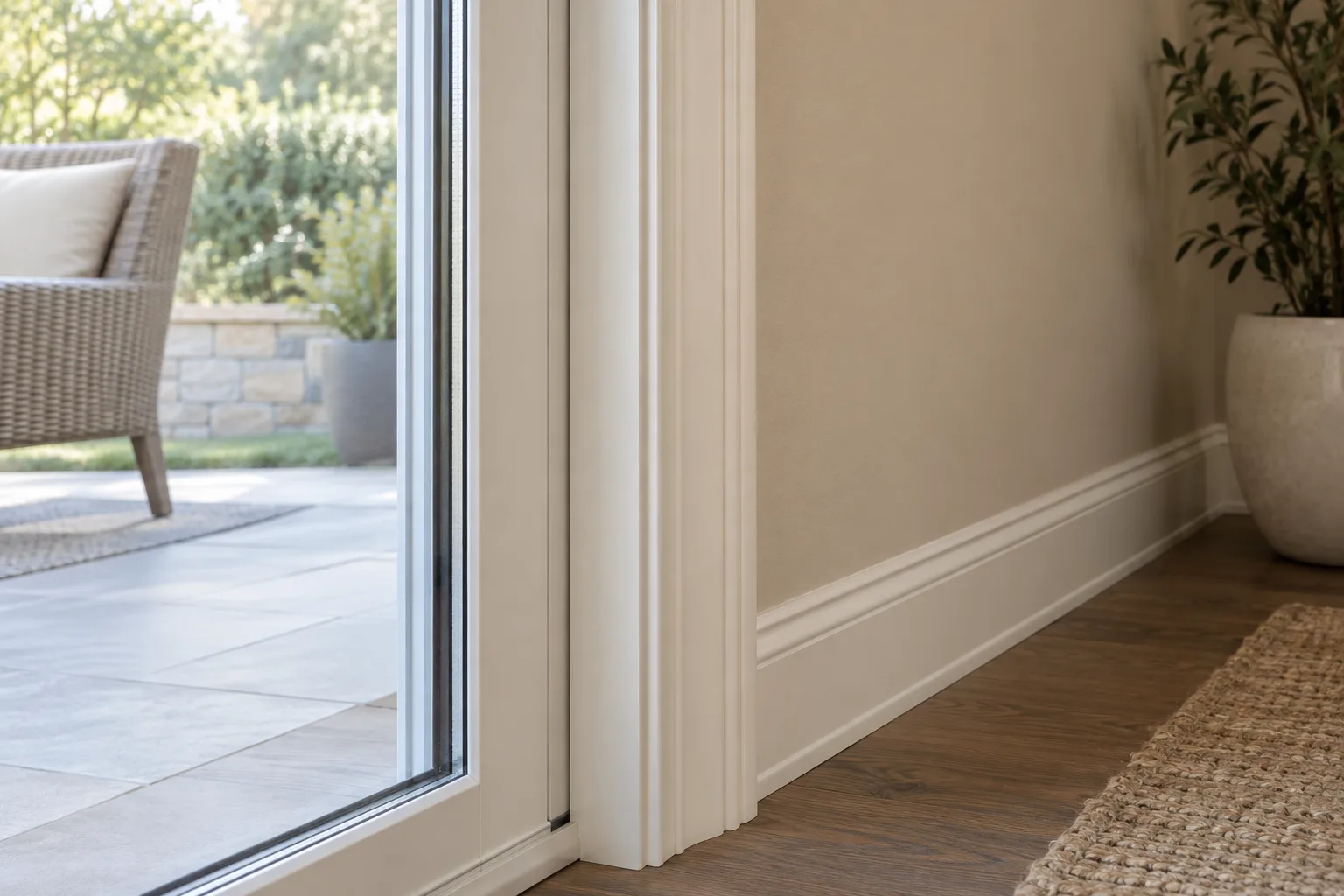
Water near the threshold also deserves a separate look. A weatherstrip can limit water passing at a door joint. However, flashing directs water away from the wall opening. Flashing is layered material around an opening that drains water out rather than into the wall cavity. If water appears after rain, trace its path and note whether it follows the panel, threshold, jamb, or wall trim. Persistent water intrusion or damp material calls for inspection of the full opening. Water intrusion around doors and windows can go unnoticed until damage has occurred inside the wall.
Check the patio door’s seal and fit
A few simple checks can help separate a poor seal from a poor fit. With the door closed, inspect each edge and the meeting point between panels. Look for a continuous contact line. Then check whether the latch closes the panel without lifting, pushing, or pulling it into place. ENERGY STAR describes a paper test for windows: close the sash on a piece of paper and see whether it moves easily. That check is not validated for patio doors in the supplied guidance. Treat it only as a rough clue, not a diagnosis.
Check whether the panel sits evenly in the frame. Look for continuous contact between the seal and frame. Then inspect the floor and frame trim for dust, light, peeling paint, or water marks. Tie each observation to where it appears. Pella’s guide identifies the interior parts and hardware of a sliding patio door. Inspect how the door moves separately from how it seals.
Use the comparison to choose what to investigate first. A damaged seal is the likely focus when the door moves smoothly and the gap follows the weatherstripping. Replacing the strip is then the focused repair. If the panel sits unevenly, check its alignment and hardware too. A draft behind the trim points to the frame-to-wall seal, not thicker material at the panel edge.
Match the symptoms to the likely repair
| What you notice | Likely area to check | Repair direction |
|---|---|---|
| Split or flattened seal | Moving panel joint | Match replacement weatherstrip |
| Uneven panel or hard latch | Panel fit or hardware | Correct fit, then check seal |
| Draft under or beside trim | Frame-to-wall gap | Inspect the rough-opening air seal |
| Water after rain | Door joint or wall opening | Trace water path; inspect flashing |
The symptoms overlap, so treat the table as a way to focus an inspection rather than a final diagnosis. For example, replacing a torn panel seal may address air at that joint, but a draft beneath the trim still points to a separate frame-to-wall connection. The repair should match each leak path.
A quick comparison can keep the repair focused. Identify the symptom, then match it to the joint that could cause it before selecting a material or asking for an estimate.
FAQs
How do I know if my patio door needs new weather stripping?
Look for a split, loose, flattened, or missing seal along the closed door’s moving joints. Also check whether the panel sits evenly and latches without force. Drafts or visible gaps can signal air leakage, but they may also come from poor panel fit or a gap behind the frame trim.
Can I use caulk instead of weather stripping on a sliding patio door?
Caulk is generally for stationary gaps, such as the space between a door frame and the rough opening in the wall. Weather stripping seals a joint that must open and close. The Department of Energy lists caulk, spray foam, and foam backer rod for rough-opening gaps, not as replacements for a sliding panel seal.
Why does my sliding patio door still leak after replacing the weatherstrip?
The new seal may not touch evenly if the panel is misaligned, the latch does not pull it closed, or the rollers or track affect its position. The leak may also come from behind the frame trim or from water entering at the wall opening. Check each location separately before choosing another seal.
Conclusion
Find the exact leaking joint first. Match the repair to that joint, then check that the panel closes and latches smoothly. For a closer look at a Lake Mary, Florida patio door, call Windows and Doors by Martin Toro.
Call Windows and Doors by Martin Toro and ask about patio and sliding doors
Sources
- ENERGY STAR: Signs of window and door air leaks and how to check them
- Pella: Patio door parts, weatherstripping, and rollers
- Building Science Education, U.S. Department of Energy: How flashing directs water away from door openings
- Building Science Education, U.S. Department of Energy: Air sealing gaps around door and window frames