Window & door planning
Vinyl vs Wood Replacement Windows in Kissimmee, Florida
Compare vinyl vs wood replacement windows in Kissimmee, Florida by checking both-side samples, care needs and complete-model proposals.
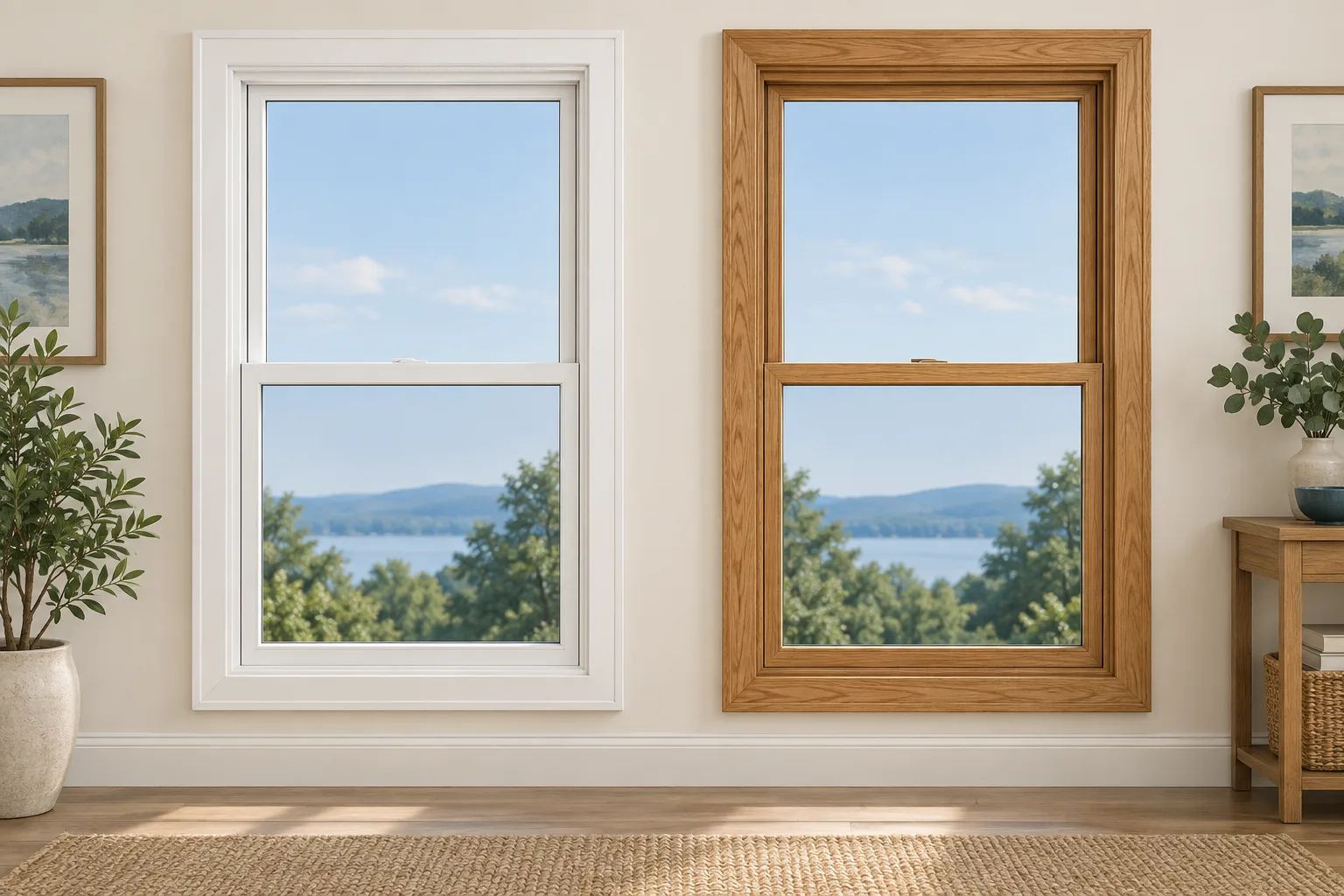
When comparing vinyl vs wood replacement windows in Kissimmee, Florida, look beyond frame appearance. “Wood” may mean exposed natural wood, wood with exterior cladding, or a wood-look finish on vinyl; each offers a different combination of appearance and upkeep. The right comparison depends on which surfaces you want to see, how much finish care you are prepared to do, and what the complete proposed window includes. Inspect samples from both sides, since the room-facing finish may differ from the exterior.
A material name by itself does not tell you the exact finish, care requirements or energy rating of a window. Compare actual interior and exterior samples, then ask for written proposals that identify the model, glass, work scope and installed price. This guide explains the three constructions, how their finishes affect routine care, and what to compare before choosing a replacement window for your home.
Key Takeaways
- Vinyl uses PVC frames; wood windows may have exposed wood or exterior cladding.
- Exposed wood needs finish care, while vinyl avoids routine frame repainting and exterior cladding reduces exterior refinishing needs.
- Compare real wood and wood-look vinyl samples; the latter is a manufactured finish, not exposed wood to sand or stain.
- A written proposal should identify the exact model, finishes, glass, care instructions, scope, installed price and complete-product ratings.
What Are Vinyl and Wood Replacement Windows?
Vinyl replacement windows use frames made from PVC, while wood windows have wood components that may remain exposed or be covered on the exterior with cladding. Vinyl can also carry a wood-look laminate, which imitates grain but is not exposed natural wood.
The practical difference is the surface you see and the care it calls for. Vinyl does not require routine frame painting, exposed wood needs finish attention, and exterior cladding reduces the need to refinish wood outside. In every case, inspect the actual proposed product and its maker’s care instructions.
Distinguish Vinyl, Exposed Wood and Clad Wood
Compare the proposed model with samples showing its room-facing and exterior surfaces.
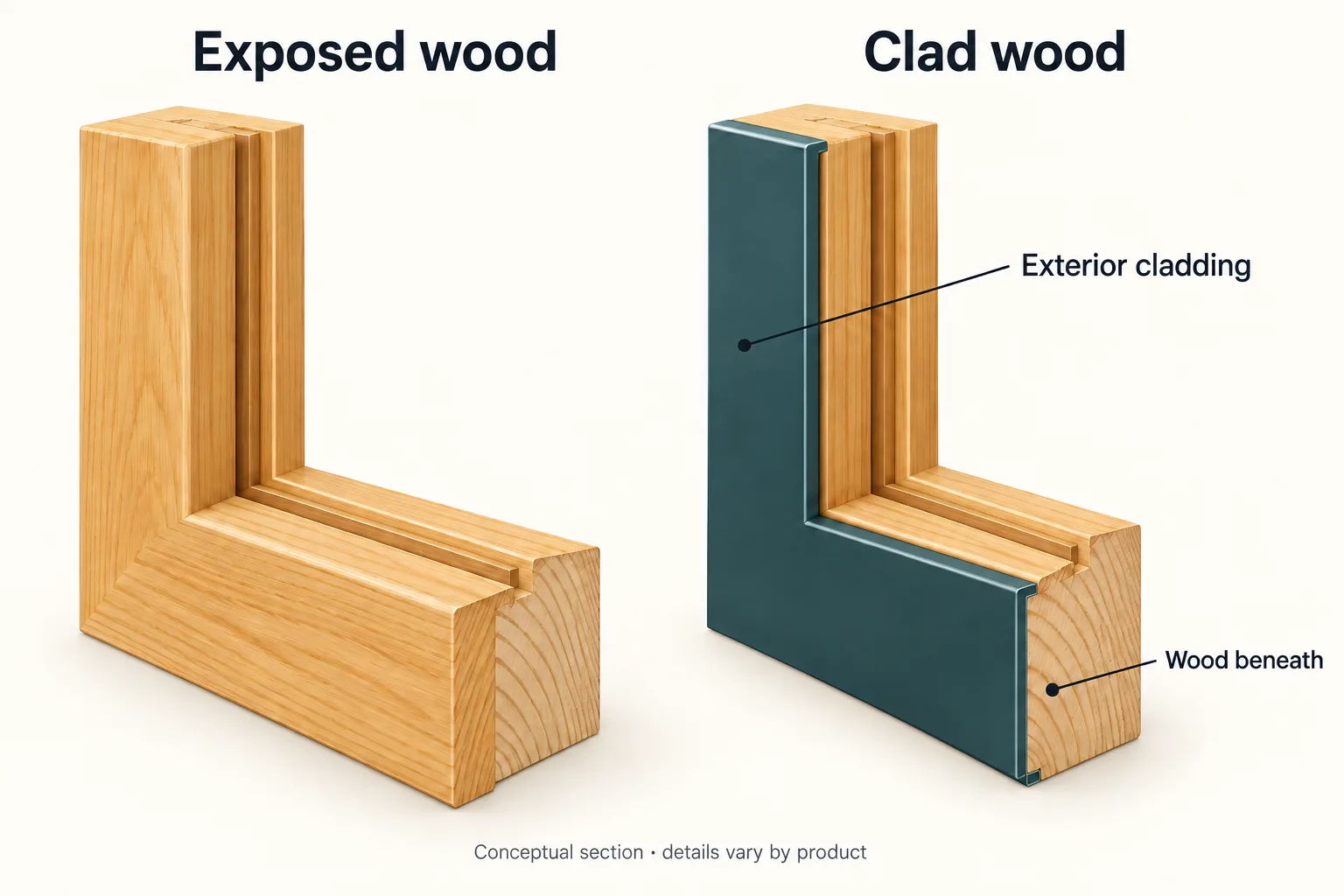
| Construction | What to inspect | Practical distinction |
|---|---|---|
| Vinyl | Frame surface and any wood-look laminate | PVC; no routine frame painting is required. |
| Exposed wood | Wood on the interior and exterior | Natural grain and finish options; exposed finish needs care. |
| Clad wood | Interior wood and exterior covering | Wood remains, while exterior cladding reduces outside refinishing needs. |
A label or sample viewed from one side cannot show the whole construction. Ask to see both surfaces and confirm which finish appears on each side of the exact proposed model.
Compare Finish Choices and Routine Care
Choose finishes by looking at samples in the rooms where the windows will go, then match your preference to the care you will accept. Natural wood can be stained or painted, and some products offer unfinished or primed options for finishing on site. That flexibility comes with a qualification: exposed wood needs inspection and finish care, and site finishing must follow the product’s own instructions.
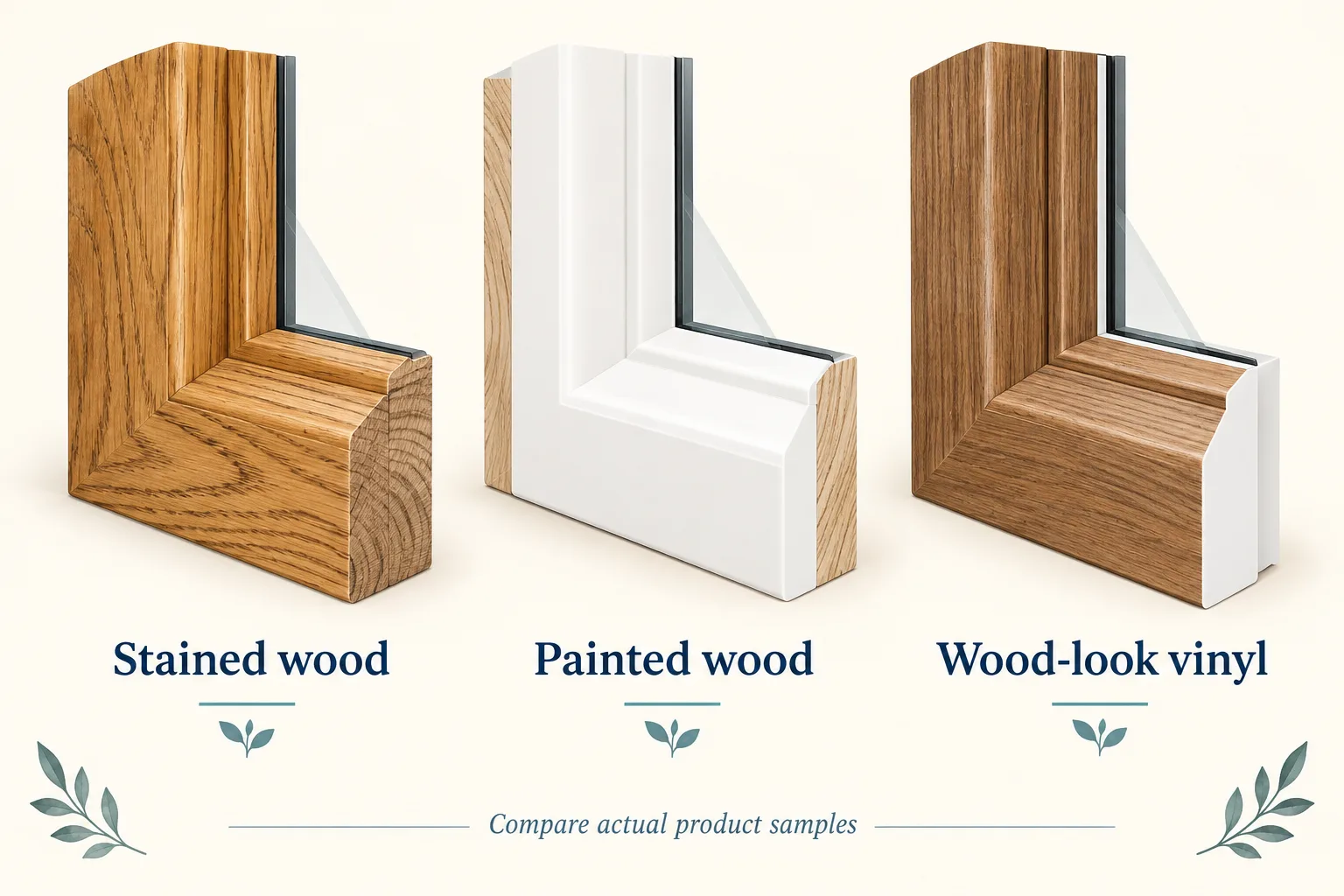
Vinyl avoids routine frame sanding, staining or repainting. Some vinyl products offer wood-grain laminates, but the appearance does not turn the surface into natural wood or make it suitable for wood-finishing methods. Cladding changes the exterior upkeep, not the fact that wood may remain inside. Ask for actual interior and exterior samples instead of choosing from the word “wood” alone.
All windows still need maker-directed care. That can include cleaning glass and frames, keeping tracks and drainage paths clear, and checking seals, locks and moving parts. Do not treat lower frame-finish upkeep as maintenance-free operation; confirm the exact model’s cleaning and hardware instructions.
Compare the Exact Window Proposals
Compare proposed windows, not material names or an assumed efficiency winner. For a like-for-like comparison of wood replacement windows vs vinyl replacement windows, match the operating style, glass configuration and work scope. The U.S. Department of Energy defines U-factor as heat flow through the entire window assembly: a lower value means less heat transfer. Solar heat gain coefficient, or SHGC, describes solar heat transmission; a lower SHGC means less solar heat enters. These ratings apply to the selected complete product, not to wood or vinyl in general.
Request proposals for the same operating style, glass configuration and work scope where possible. Ask each to identify the exact model, interior and exterior finishes, any finishing work, care instructions and installed price. If the proposals differ, note the differences before comparing totals; otherwise, you may be judging unlike products or scopes.
Before a replacement consultation, write down which rooms matter most for natural interior grain, which exterior finish you prefer and how much routine finish care feels acceptable. Bring those preferences so you can weigh appearance, upkeep and ratings against a like-for-like comparison.
FAQs
Can wood-look vinyl be stained like a wood window?
No. A wood-look laminate is a manufactured surface that imitates wood grain, not exposed natural wood. Do not assume it is suitable for sanding or staining like a natural wood surface. Look at physical samples, ask what the proposed finish is made of, and follow the exact product’s instructions for cleaning and care.
What does clad wood mean for a replacement window?
Clad wood windows retain wood components, often visible on the interior, while another material covers the exterior. That exterior covering can reduce the need to refinish exposed wood outside, but it does not make every surface the same material. Confirm the interior and exterior construction and finish on the exact model being proposed.
Conclusion
Vinyl, exposed wood and clad wood offer different combinations of appearance and upkeep, so the material label alone cannot decide which replacement window suits your home. In a vinyl vs wood replacement windows comparison, consider the exact construction, interior and exterior finish, care instructions and complete-product ratings.
Before requesting proposals, note which rooms call for natural wood grain, which finishes you prefer and how much future finish care you will accept. Then ask for written proposals that identify the exact models, glass, work scope and installed price, and compare them side by side. That gives you a practical basis for choosing without assuming one material is best for every window.