Window & door planning
Thermal Crack in a Window: Winter Garden, Florida Homeowner Guide
Thermal crack window clues can suggest, not prove, a cause. Learn how to document damage safely and compare product-specific replacement scope.
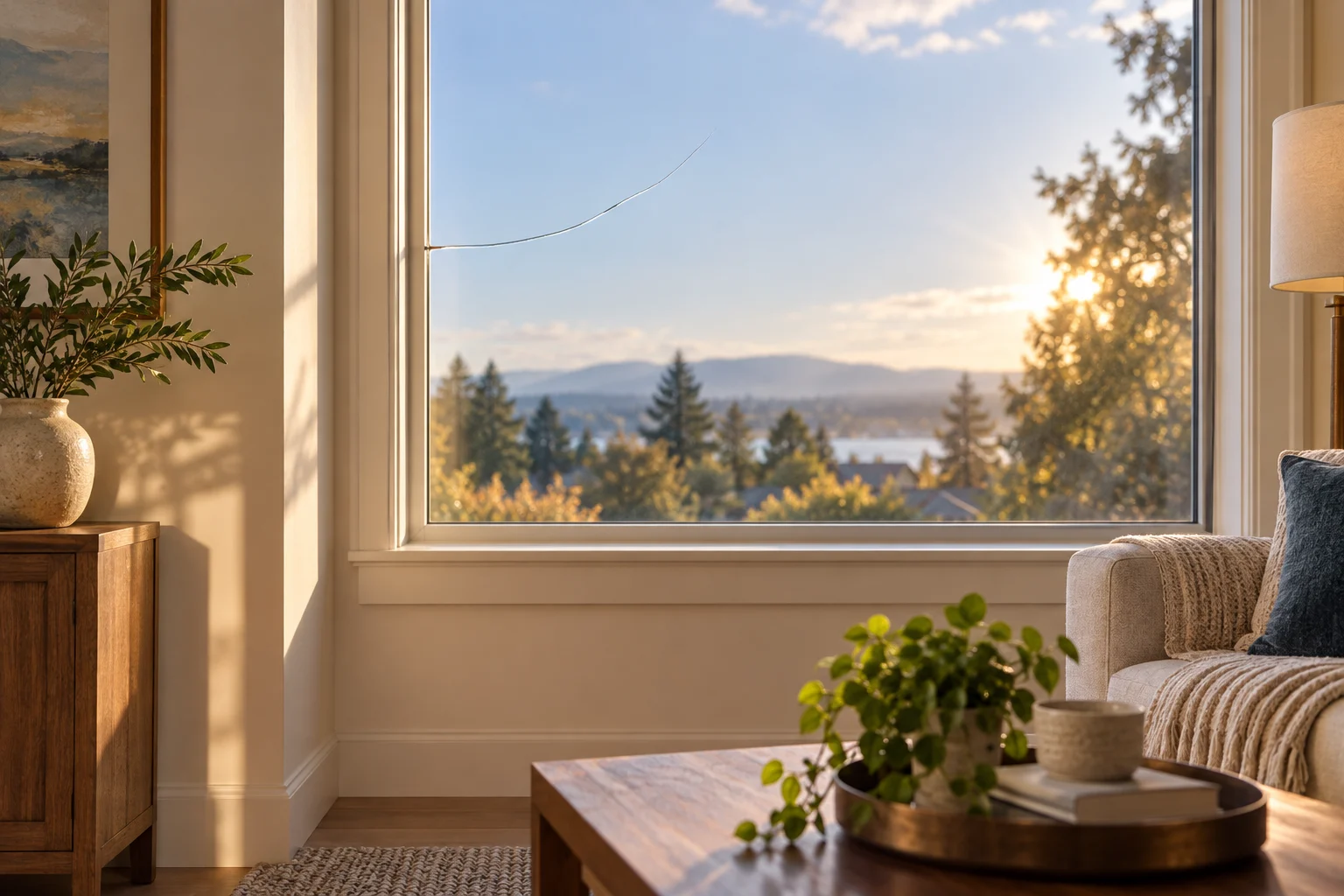
A window crack can be unsettling, especially when nobody saw anything hit the glass. Uneven heating is one possible cause, but a pattern that resembles thermal stress does not prove what happened. Where the crack begins, nearby shade or coverings, and the product’s manufacturer and series can help frame the question without turning a visual clue into a diagnosis.
For homeowners in Winter Garden, Florida, the safest first step is to keep people away from damaged glass and record what is visible from a safe position. This guide explains how uneven heating may stress glass, what crack patterns can suggest, which product details to gather, and why replacement scope varies. You’ll have practical observations to discuss before deciding whether guidance concerns glass, a sash or a larger assembly.
Key Takeaways
- A thermal crack may form when uneven heating stresses glass, but a visible pattern alone cannot confirm the cause.
- A crack beginning perpendicular to an edge can suggest thermal stress; a central origin may suggest impact, but neither proves it.
- Safe observations, shade changes and visible product markings help document the situation without handling damaged glass.
- Replacement scope varies by product, so check whether guidance covers glass, a sash or a larger assembly.
What Is a Thermal Crack in a Window?
A thermal crack in a window may form when uneven heating makes different parts of the glass expand at different rates, creating stress. A visible crack alone cannot confirm heat caused it.
Patterns, shade and coverings offer context, but impact, pressure and other stresses may also be involved. Do not touch, press or move damaged glass to investigate.
Replacement scope depends on the product and may involve glass, a sash or a larger assembly. Document the crack rather than treating it as a diagnosis or repair plan.
How Uneven Heating Can Stress Window Glass
Uneven heating can make one part of a pane expand more than another, creating stress. A framed edge may stay cooler than a sunlit center. Glass color, coatings, coverings, warm-air registers and framing can also affect heating, so these details are context, not proof.
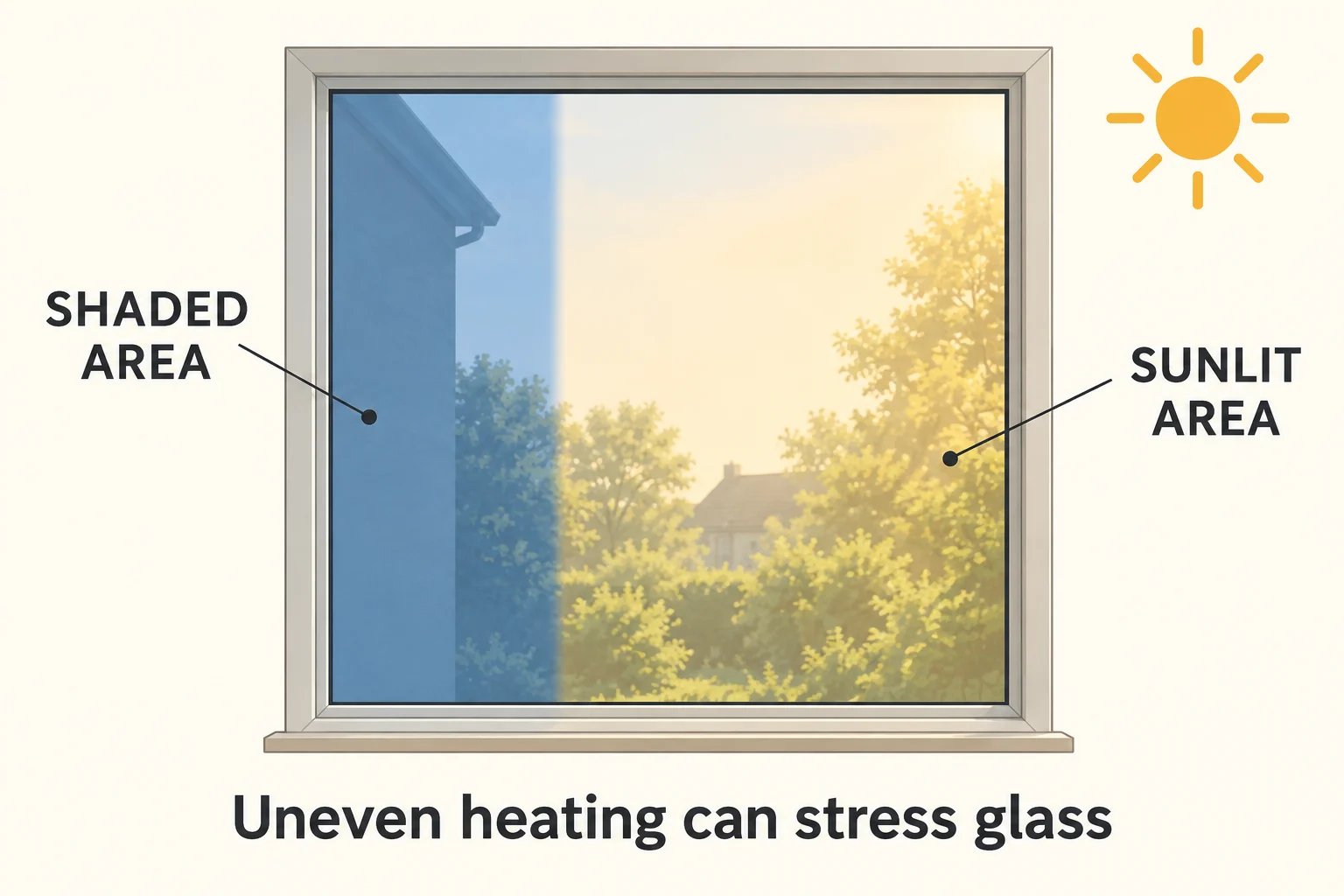
Note changes such as tree removal or nearby construction that altered shade, indoor blinds or drapes, and warm air directed toward the glass. Impact, pressure, abrupt sash slamming or structural movement may also be relevant, even if nobody witnessed an event.
Do not treat film, tint or a particular blind position as a universal fix. Advice depends on the product. Andersen warns reflective or decorative film on its glass may trap heat and increase breakage risk; that warning is not a rule for every window.
Recognize Clues Without Assuming the Cause
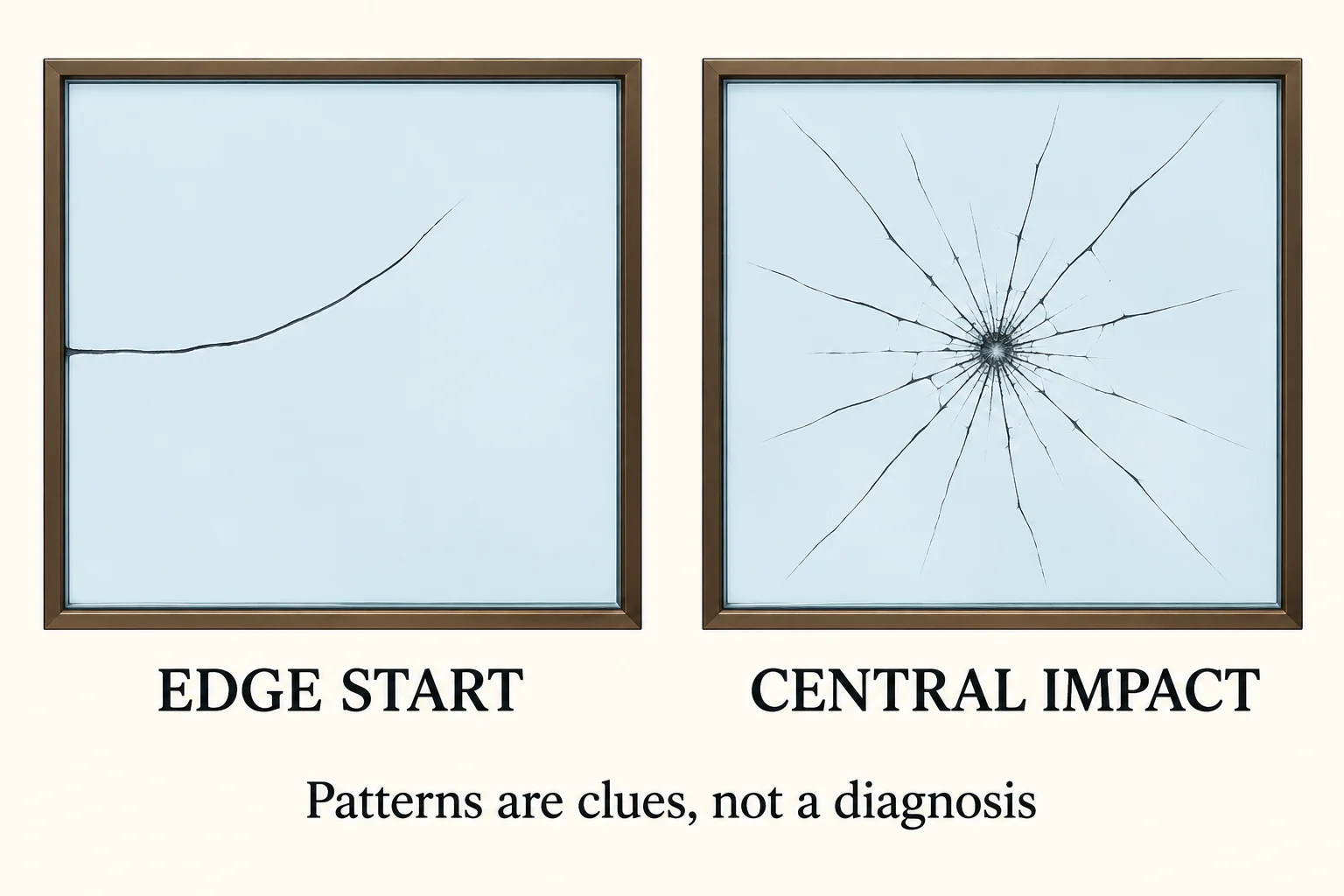
Crack patterns can suggest what to investigate, but cannot settle the cause remotely. Thermal-stress cracks may begin perpendicular to an edge and change direction. Impact damage often radiates from a central point, while pressure cracks may curve. Trim can hide the edge, so interpret clues cautiously.
| Observation | Possible clue | What remains unconfirmed |
|---|---|---|
| Crack begins perpendicular to a visible edge | Thermal stress may be possible | Heat may not be the cause; the edge may be hidden |
| Lines radiate from a central point | Impact may be worth considering | The origin may be obscured or the pattern incomplete |
| Crack curves or forms an hourglass-like shape | Pressure may be possible | Pattern alone does not identify the source |
| Origin is hidden or nobody saw the event | Several causes remain possible | No witnessed impact does not prove heat stress |
Do not remove trim or touch the crack to inspect it. A photo from a safe position can preserve details, but cannot confirm the cause.
Record Glass and Product Details Safely
Keep people, especially children, away from cracked or broken glass. Do not press the pane, test sash movement, stand on furniture, lean a ladder against glazing or attempt removal. Observe only from safe access; do not approach unstable-looking glass for a closer photo.
Record when you first noticed the damage. If safe, photograph the full window and crack from a distance. Note nearby shade or coverings, recent tree removal or construction, and directed warm air. These details provide context, not a cause determination.
Write down the manufacturer and series if known. Some products have identifying glass etching; locations and code formats vary. Andersen notes a digital photo can be enlarged to read markings. Do not touch damaged glass or remove trim to find a label, and do not mistake a tempering code for complete glass identification.
Compare Glass, Sash and Window Replacement Scope
A crack can worsen, so do not assume a small one is only cosmetic. Suitable replacement scope depends on product, series and manufacturing date; it may involve glass, a sash or a larger assembly.
Manufacturer guidance illustrates the differences. Pella describes glass and/or window replacement as needed. Andersen says many of its products call for whole-sash or patio-door-panel replacement, while some older direct-set casement or awning picture windows allow separate glass replacement. These examples apply to those products, not every window.
Compare recorded details with guidance for the matching product. Check which component the recommendation covers and whether the series and vintage match. Do not assume every cracked pane needs a whole window or that glass alone is always right.
FAQs
What does a thermal crack in a window look like?
A thermal crack may form when uneven heating makes parts of a pane expand at different rates. A crack beginning perpendicular to an edge can be a clue, but appearance does not prove the cause. Impact, pressure and other stresses can also crack glass. Record safe observations and identify the product before drawing conclusions.
Can I ignore a small crack in window glass?
No. A small crack can worsen, and its size does not establish that the glass is safe to ignore. Keep people away from damaged glass; do not touch or press it, test movement or attempt removal. Record visible details only from safe access, then identify the product and discuss a next step.
Does a cracked window always need full replacement?
It depends on the product, series and manufacturing date. Replacement may involve glass alone, a sash or a larger assembly. Andersen, for example, describes whole-sash or panel replacement for many products, while some older direct-set picture models allow separate glass replacement. Check guidance for the exact product before assuming the scope.
Conclusion
A crack pattern is a clue, not a diagnosis. Record visible details safely, identify the product, and compare guidance for its series and vintage. Then call Windows and Doors by Martin Toro to ask about your project.