Window & door planning
Heat Control Window Film: Winter Garden, Florida Home Guide
Learn how heat-control film relates to glass fit, daylight, room exposure, and window condition before deciding what to ask about your project.
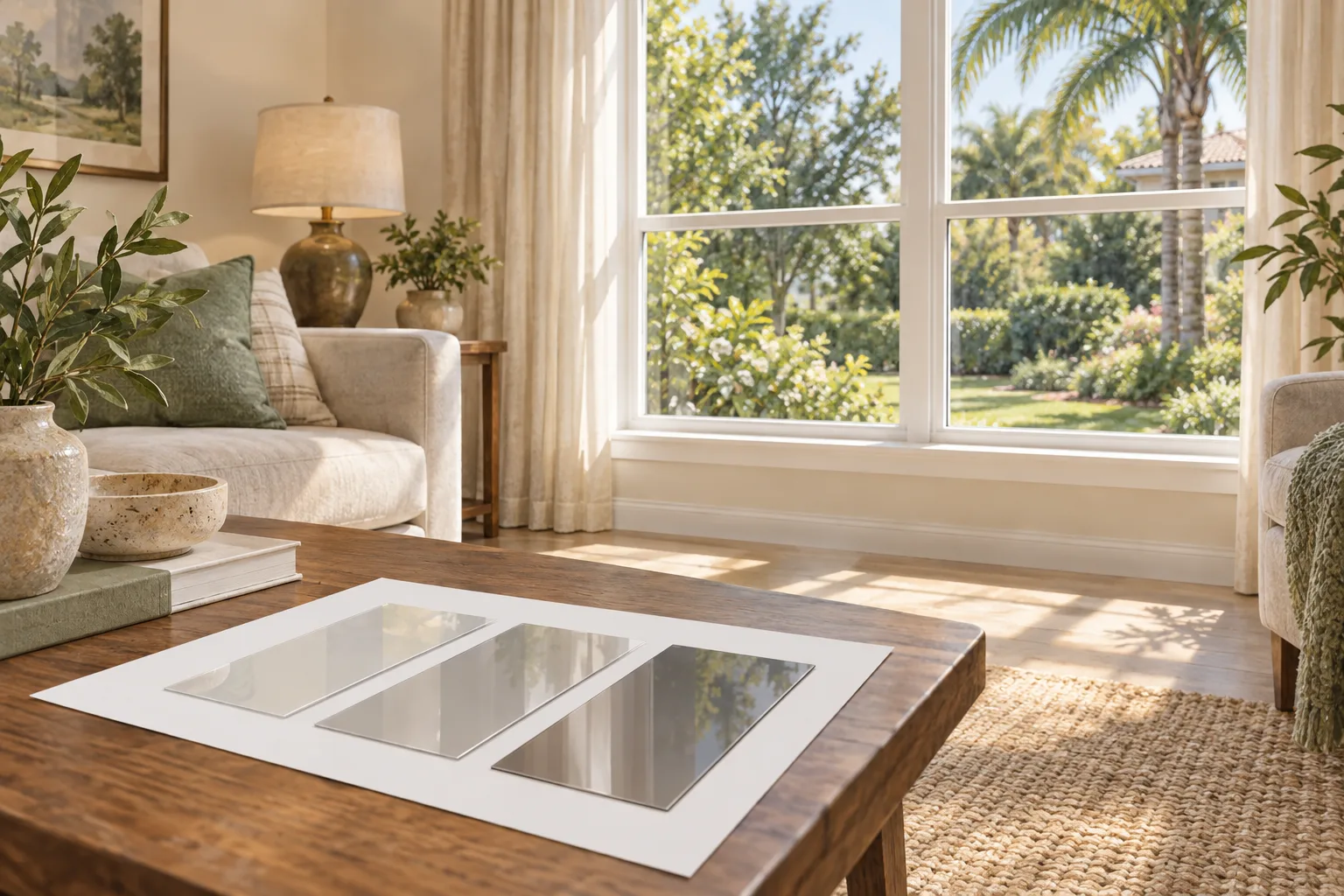
If a room feels hot when the sun reaches its windows, heat-control window film may seem like a simple fix. But choosing by tint or by the phrase “heat control” alone can miss the key question: does the specific film suit your existing glass and the change you want in the room? Solar-control films target incoming solar heat at the glass; low-E films also address heat loss. Neither label means the film repairs a worn seal or a window that does not operate properly.
For a home in Winter Garden, Florida, start with the window, not a product claim. This guide explains what heat-control film changes, what details to gather for a compatibility review, and how to weigh daylight, view, and sun exposure. It also shows when to ask about the window itself instead of assuming a surface treatment is the answer.
Key Takeaways
- Heat-control window film changes how glass manages solar heat; low-E film may also address heat loss.
- A product-specific compatibility review should account for the exact glass, pane, frame condition, and other window details.
- Daylight, reflection, view, shade, and sun exposure matter when comparing a proposed film for a room.
- Film changes glazing, not the frame, seals, or operation; window concerns may call for a whole-window assessment.
What Is Heat-Control Window Film?
Heat-control window film is a surface film chosen to manage solar heat entering through glass. Some low-E films also reflect heat back toward the room, addressing heat loss as well. Products differ in purpose, appearance, and glass compatibility, so the label alone cannot tell you which film suits a particular window.
A film can absorb some solar energy as well as reflect it. Feeling warmth on the film does not, by itself, show how well it performs.
Check the Film Against Your Existing Glass
Before comparing products, gather information about the actual window for a film-to-glass review. Pane count alone does not establish compatibility. Relevant details can include glass type and thickness, window size, shadows, frame condition, and scratches or chips. Dual-pane and low-E glass call for product-specific review rather than an assumption that a film will fit.
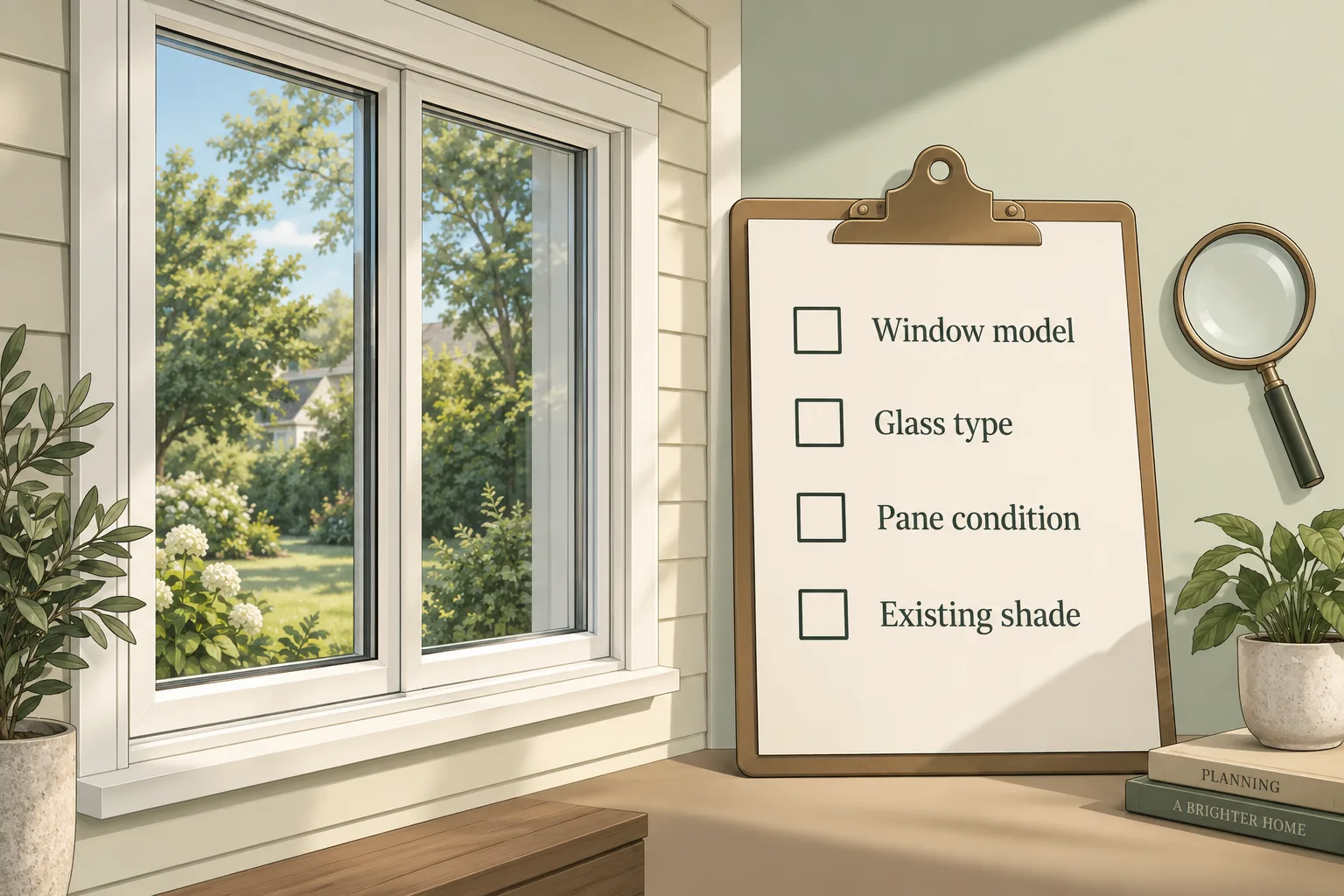
Use this checklist to prepare:
- Note whether the window appears to have one or multiple panes, and whether you know its glass type.
- Record visible chips, scratches, frame concerns, or unusual shading around the glass.
- Ask which exact film and glass combination is being considered, and request the product-specific compatibility assessment.
- Confirm which side of the glass the product instructions specify. Application side varies by product; there is no universal rule.
- Request the exact product identification and coverage terms in writing, rather than relying on a broad label or verbal summary.
A fit assessment can involve several conditions, not just tint darkness or pane count. If important details are unknown, ask how they will be evaluated before treating a product suggestion as a fit decision.
Compare Room-Level Tradeoffs
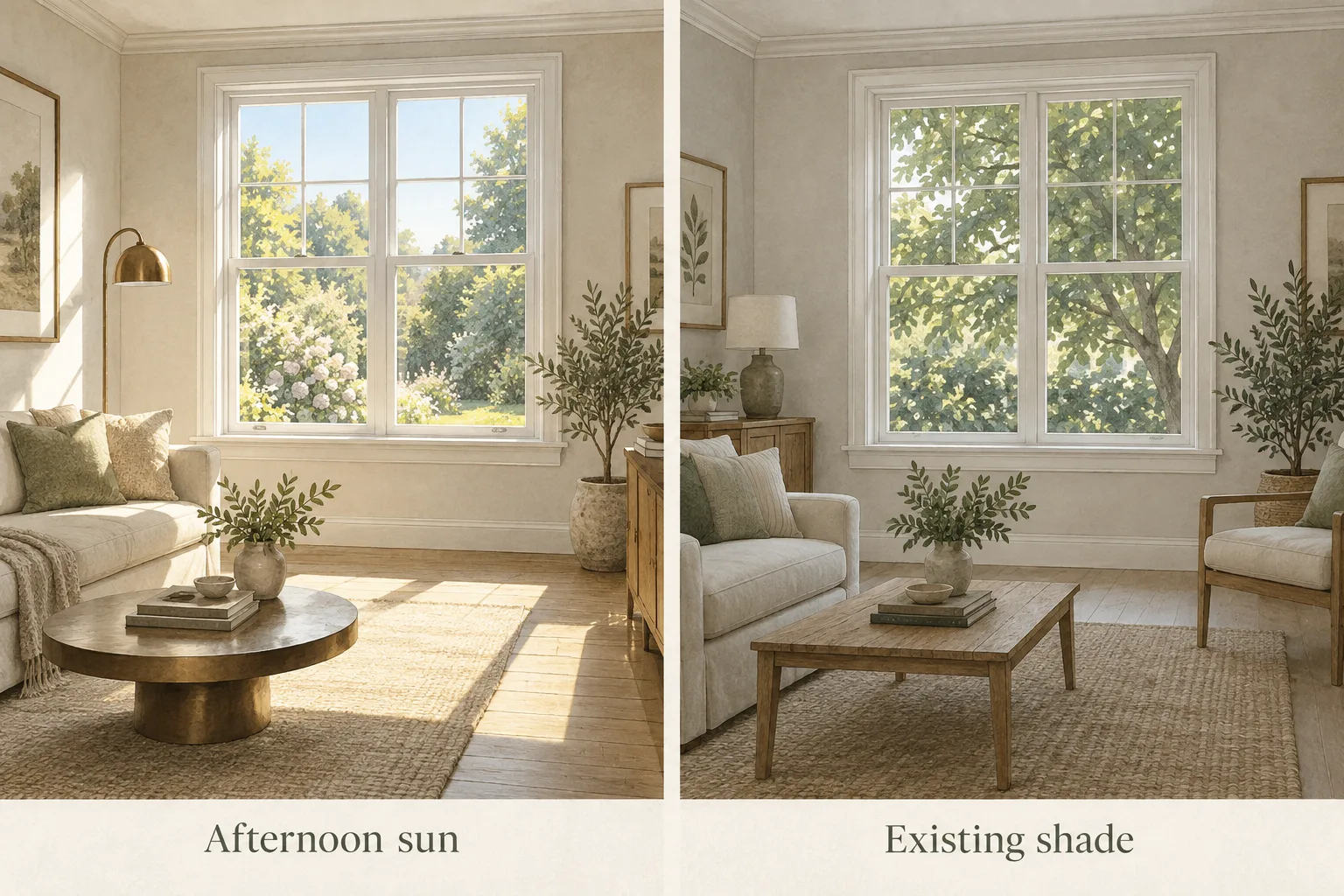
Start the comparison with the room’s purpose. A bright afternoon room with direct sun presents a different planning question from an already shaded room. These examples help you describe what you want to change; they are not predictions of a particular product’s performance. Existing shade and window orientation matter, so avoid choosing on darkness alone.
| What you notice | What to clarify before deciding |
|---|---|
| Strong sun reaches the glass in the afternoon | Ask what the proposed film is designed to address and how it suits that window’s glass. |
| The room is already shaded | Ask whether the intended change is still worth considering for this room, given its exposure. |
| You want less solar heat but value a clear outward view | Compare the actual proposed film’s appearance and reflectivity, not just its category name. |
| You want to keep the room bright | Request an appearance sample and discuss how the specific film may change daylight and the view. |
| You are considering a low-E product | Clarify how its heat-loss purpose differs from a solar-control film’s incoming-solar-heat purpose. |
| The product description is broad or incomplete | Request the exact product identification, glass-fit review, and written coverage terms. |
A sample helps you judge the specific option rather than infer its appearance from a product name. Ask the reviewer to connect the proposed film to your priorities, such as sun exposure, daylight, reflectivity, or view, and explain any tradeoffs. Do not rely on a universal performance percentage or assume every film behaves alike.
Decide Whether the Window Itself Needs Attention
Film changes glazing performance; it does not replace the rest of the window system. Frames, seals, and operation remain separate considerations. If a window is difficult to operate or has visible condition concerns, ask for a whole-window assessment before assuming a surface treatment will resolve the issue.
FAQs
Is solar-control film the same as low-E film?
No. Solar-control film addresses incoming solar heat at the glass, while low-E films also address heat loss by reflecting heat back toward the room. Films differ in appearance and suitability for particular glass. Ask which specific product is proposed and what goal it is meant to address before comparing options.
Does window film always go on the inside?
No. Application side depends on the exact product; instructions for one film should not be applied to another. Identify the window and glass, then request product-specific guidance for that combination. This matters especially when the window has dual-pane or low-E glass.
Can window film fix a problem with the whole window?
Not necessarily. Film changes the glazing, but it does not repair a frame, seal, or operating problem. If the window has condition or operation concerns, request an assessment of the whole window before assuming a surface treatment will address them. That can help clarify whether film or a window-level response fits the concern.
Conclusion
Heat-control film changes the glass, but it does not resolve every concern about a window. Start by identifying the glass and stating what you want to change in the room. Then ask for a product-specific fit review, an appearance sample, and written coverage terms. If the window has condition or operation concerns, request an assessment of the whole window before treating film as the answer. Call Windows and Doors by Martin Toro and ask about your project.