Window & door planning
Window Screen Repair: A Kissimmee, Florida Homeowner Guide
Learn how to assess window screen repair needs, choose a compatible patch or new mesh, check spline and frame fit, and inspect the screen before reuse.
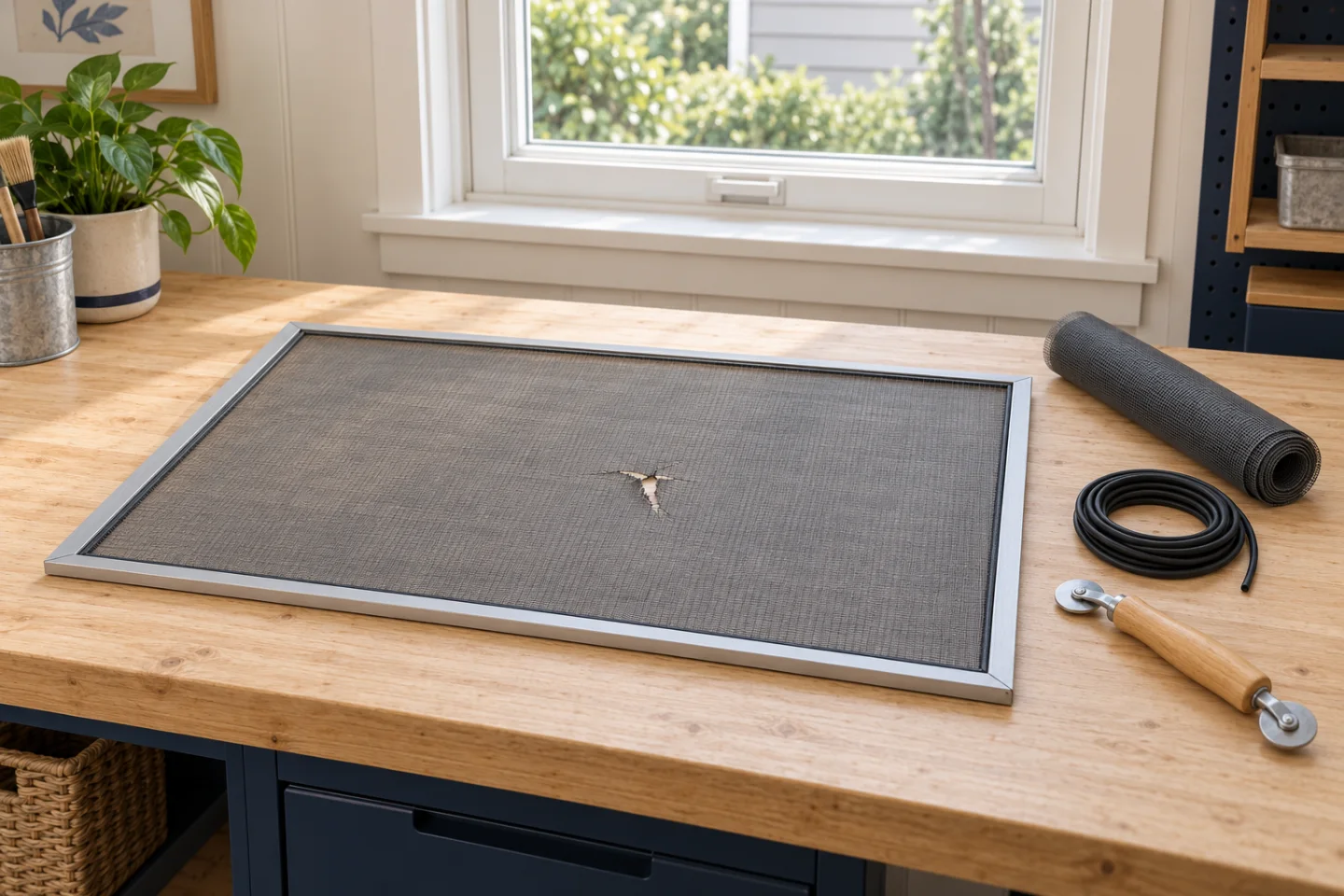
A torn screen does not always need the same fix: a small mesh hole, a widespread tear, a loose edge, and a bent frame raise different questions. Window screen repair starts with identifying which part is damaged and whether the removable screen still fits its frame. That distinction matters before you choose a patch or buy mesh and spline, since those materials need to suit the actual frame and screen type.
For homeowners in Kissimmee, Florida, begin by inspecting the screen and frame rather than judging the damage by one visible hole. A close look can show whether the mesh, its attachment, or the frame needs attention. Insect screens are not fall protection; keep that limit in mind whenever a window is open.
Key Takeaways
- Window screen repair addresses mesh damage or attachment while considering whether the removable screen frame still fits.
- A localized hole may suit a compatible patch, while broader tears can call for new mesh.
- Spline diameter must match the frame groove and selected mesh; material instructions may specify different sizing.
- Check edges, corners, frame fit, and retention before reuse, and never treat an insect screen as fall protection.
What Is Window Screen Repair?
Window screen repair means addressing damaged mesh or its attachment so a removable insect screen fits its frame and can be checked before reuse. Depending on the damage and frame condition, that may mean a compatible patch, new mesh, or examining the frame rather than treating the mesh alone.
The mesh is the fabric, the channel is the narrow groove around the frame, and the spline is the cord that holds mesh in that groove on applicable frames. A screen helps keep insects out while allowing ventilation; it is not fall protection.
Identify Mesh Damage and Frame Problems
Check the screen assembly separately from the glass and window sash. Look for holes, tears, loose edges, or several damaged spots; then check whether the frame is straight and fits as it should. A bent frame can interfere with opening or closing and may need attention beyond new mesh. Some wooden frames use staples or nails rather than spline, so a spline-based method will not apply to every screen.
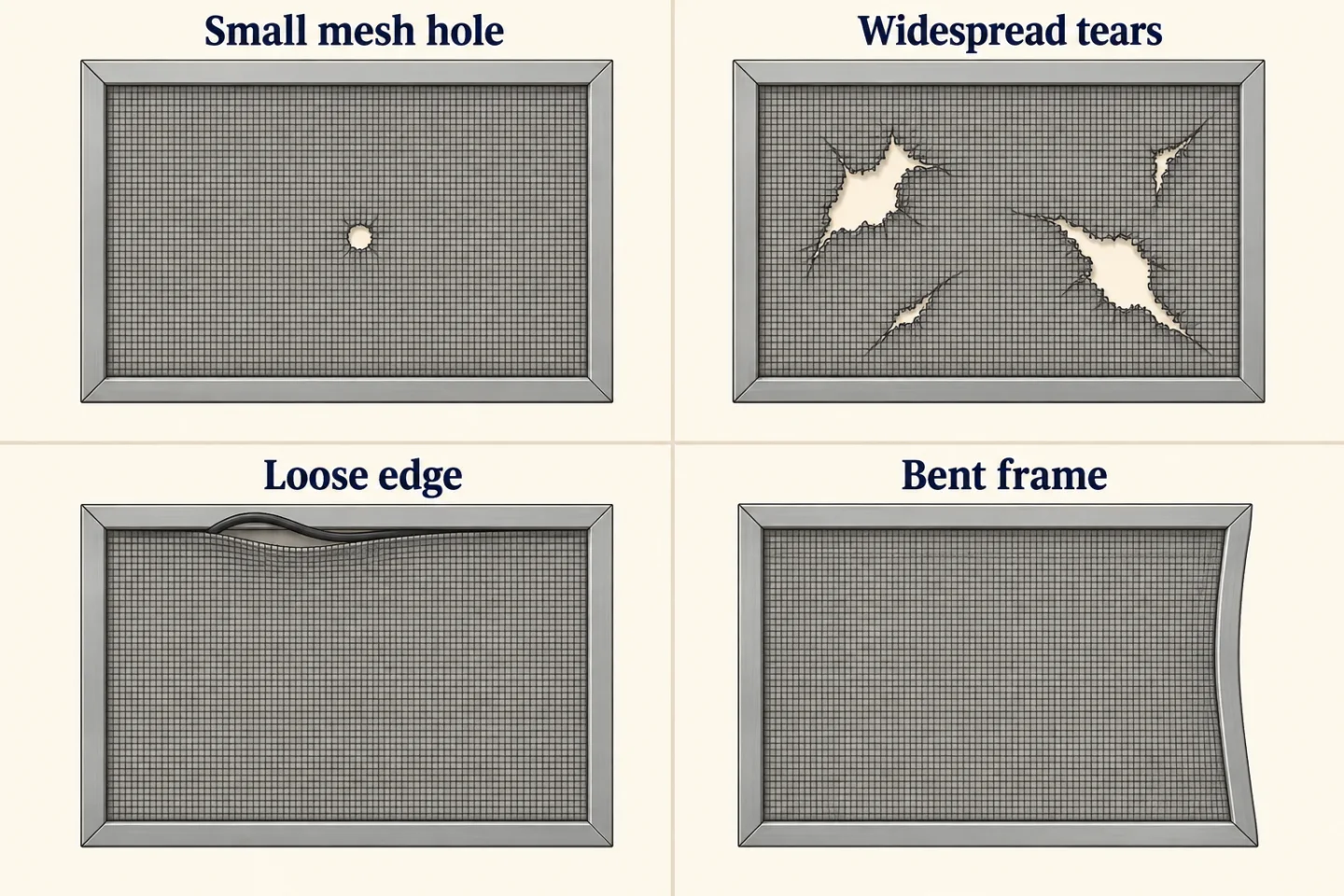
| Condition | What to look for | Repair direction | Check before reuse |
|---|---|---|---|
| Small localized hole | Intact mesh around one defect | Consider a compatible patch | Confirm the patch suits the mesh |
| Large or multiple tears | Damage across a wider area | Consider replacing the mesh | Inspect the frame and full perimeter |
| Loose mesh or spline edge | Mesh slipping from its groove | Check the cord, channel, and mesh fit | Confirm the spline sits securely |
| Bent or poorly fitting frame | Frame looks distorted or will not sit correctly | Assess the frame, not just the mesh | Do not force it into place |
Decide Between a Patch and New Mesh
A small hole with sound mesh around it may be patchable; widespread tears or multiple damaged areas may make new mesh more appropriate. The available instructions give no universal hole-size cutoff, so consider the surrounding fabric and repair-material compatibility. A patch fixes mesh, not a bent frame or loose frame fit.
Phifer describes a specific aluminum-mesh patch kit that hooks into the existing weave. This is an example for a compatible kit, not a general method for adhesive patches or every mesh. For new mesh, follow the chosen product and frame instructions. If the frame is bent or mesh will not stay retained, pause before choosing a mesh-only repair.
Match the Mesh, Groove, and Spline
On a spline-held screen, the cord fits into a channel around the frame to retain the mesh. Note the frame groove and identify the mesh before buying materials. Phifer explains that spline sizing depends on mesh: its guidance generally matches diameter to groove width, but specifies a smaller size for certain listed materials. The old cord may not suit a different mesh, so follow product instructions rather than assuming a thicker spline will work.
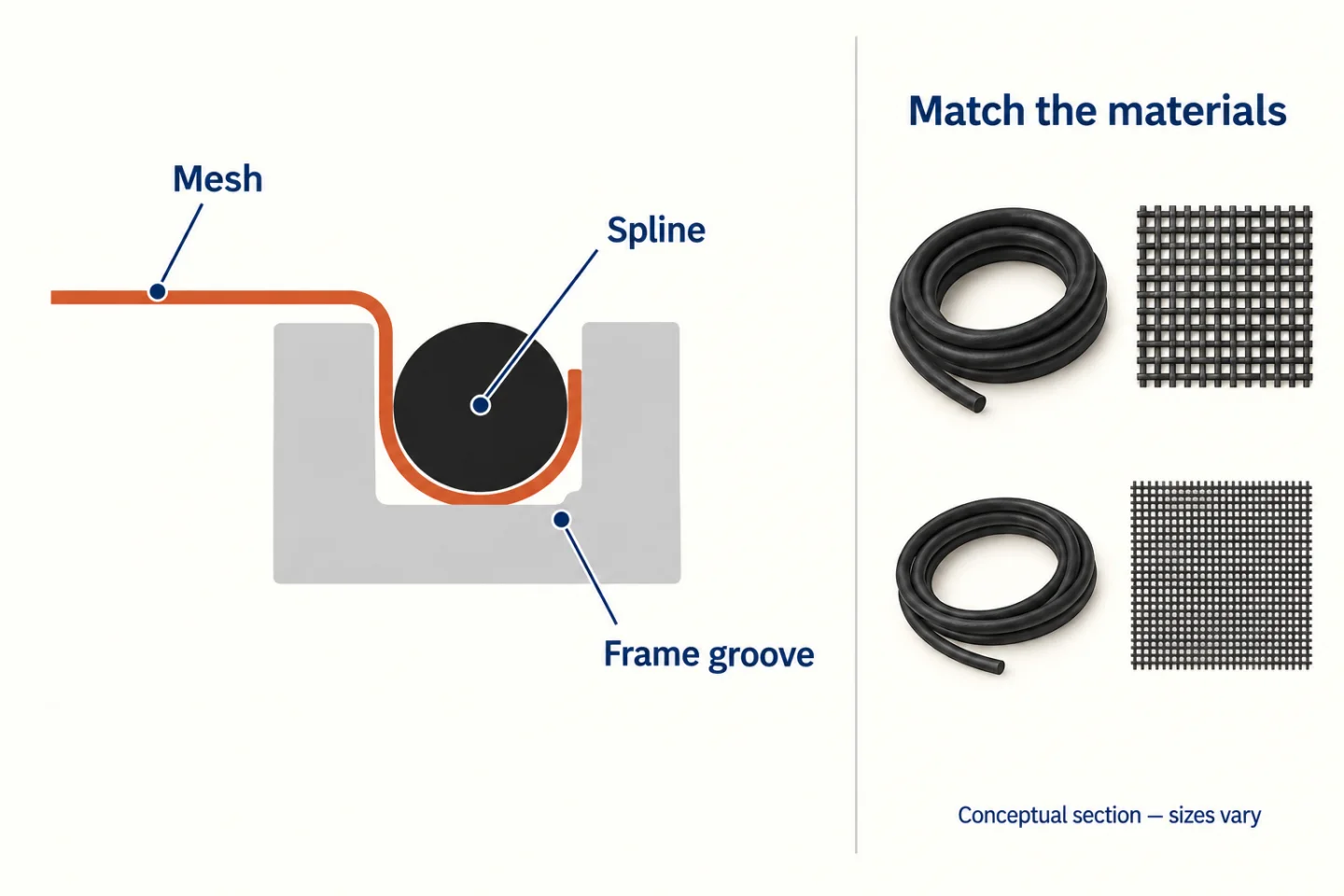
For an applicable removable frame with spline, work on a flat surface. Remove the old cord and mesh, clear debris from the channel, and align new fabric according to its instructions. Roll the matched spline into the groove, including the corners; keep the fabric taut without overstretching it. Trim excess mesh only after securing it around the perimeter, taking care not to cut into the installed fabric or corners. Staple- or nail-held frames need a suitable method for that construction.
Check the Finished Screen Before Reuse
Before reinstalling a screen, inspect the perimeter and corners for holes, slipping mesh, or unseated spline. Check that the fabric is taut but not overstretched, then confirm the frame and its original retention parts fit as intended. Pull tabs and other hardware may help with reinstallation, depending on the window design. Follow window-specific instructions because removal and retention vary.
Do not force a bent frame or one that does not fit. An insect screen can help keep insects out while allowing ventilation, but it must never be treated as a barrier against falls. Keep children away from open windows and move climbable furniture away from them.
FAQs
Can I patch a hole in a window screen?
A small, localized hole with intact surrounding mesh may suit a patch designed for that mesh. A broad tear or several damaged areas may call for new mesh. Check whether the screen frame remains straight and fits properly; patching mesh will not address a frame problem.
What is window screen spline?
Spline is a cord that holds mesh in a groove around some screen frames. Its diameter must suit the frame channel and chosen mesh. Phifer notes that sizing can vary by material, so do not assume the old spline or a thicker cord will fit. Check the screen or material instructions before selecting replacement spline.
Does a window screen protect children from falling?
No. An insect screen should not be relied on to prevent a fall. Keep children away from open windows and avoid placing climbable furniture nearby. Check the window and screen instructions for the correct way to remove and reinstall a screen, and do not force a frame that appears bent or will not fit properly.
Conclusion
A screen decision starts with the frame, not just the hole. A localized defect may suit a compatible patch, while broader tears or a bent frame call for a different assessment. Record the frame details and check the selected mesh and spline instructions before choosing materials.
For help discussing your project, call Windows and Doors by Martin Toro and ask about it.
Explore replacement-window information related to your window project