Window & door planning
Pet Door for a Sliding Glass Door: Orlando, Florida Fit Guide
Compare a sliding-door pet panel with an in-glass opening, then check track fit, pet measurements and remaining passage before choosing an approach.
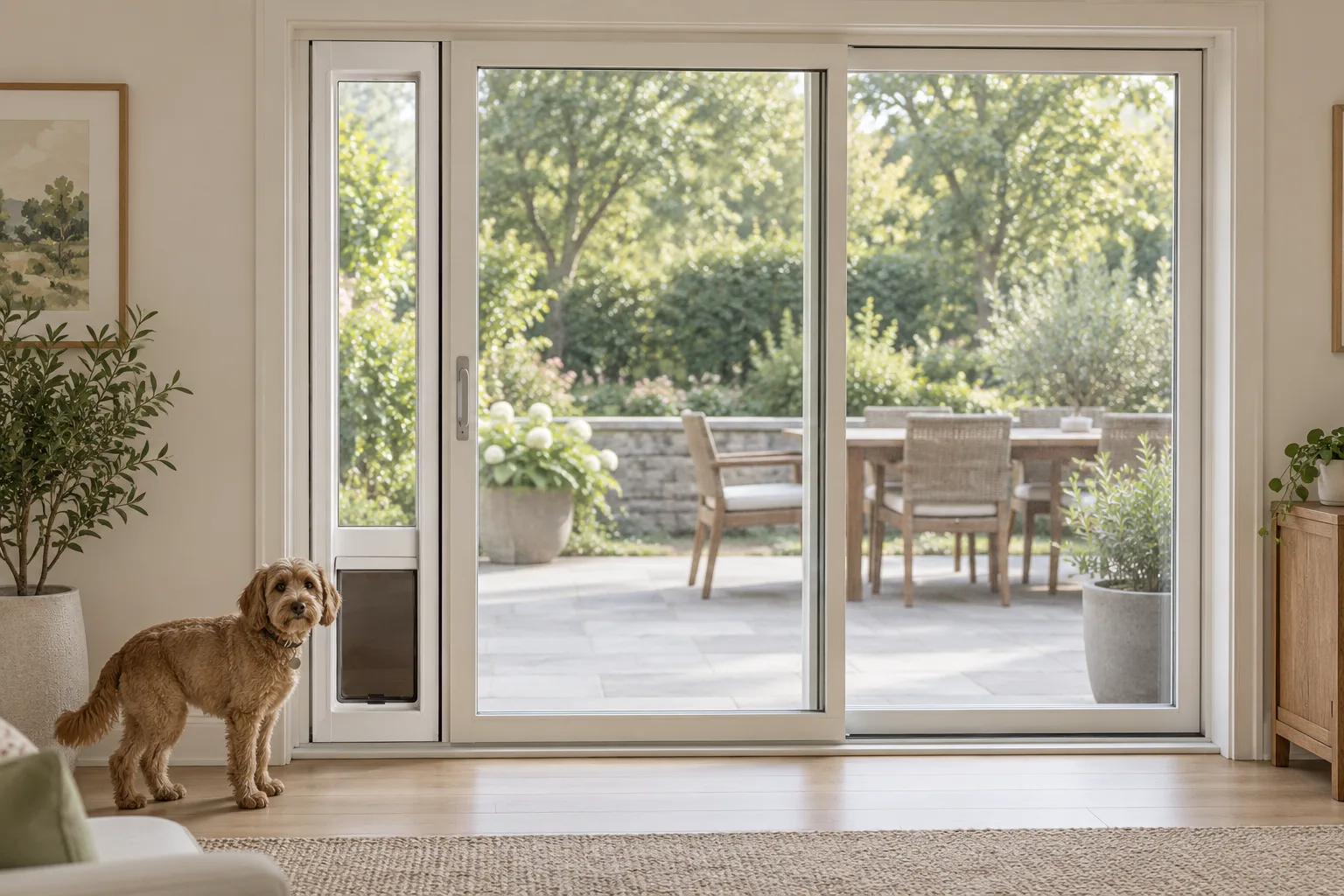
A pet door can give your dog or cat a way outside, but adding one to a sliding glass door may change both the opening and how the door fits. The first choice is between a full-height track insert and a pet opening in a replacement glass unit. Then check three measurements that are easy to confuse: the door track, the pet’s comfortable opening and the passage left for people. A flap that suits your pet does not prove that its panel fits your frame—or that you will have enough room to walk through. For Orlando, Florida homeowners, the practical approach is to compare exact product specifications with the door, pet and everyday use. This guide explains the differences, what to measure, and which installation details to confirm before buying.
Key Takeaways
- A sliding-glass pet door uses either a track-mounted panel with a flap or an opening in a replacement glass unit.
- Track dimensions help determine panel fit, while pet measurements help identify a comfortable flap opening.
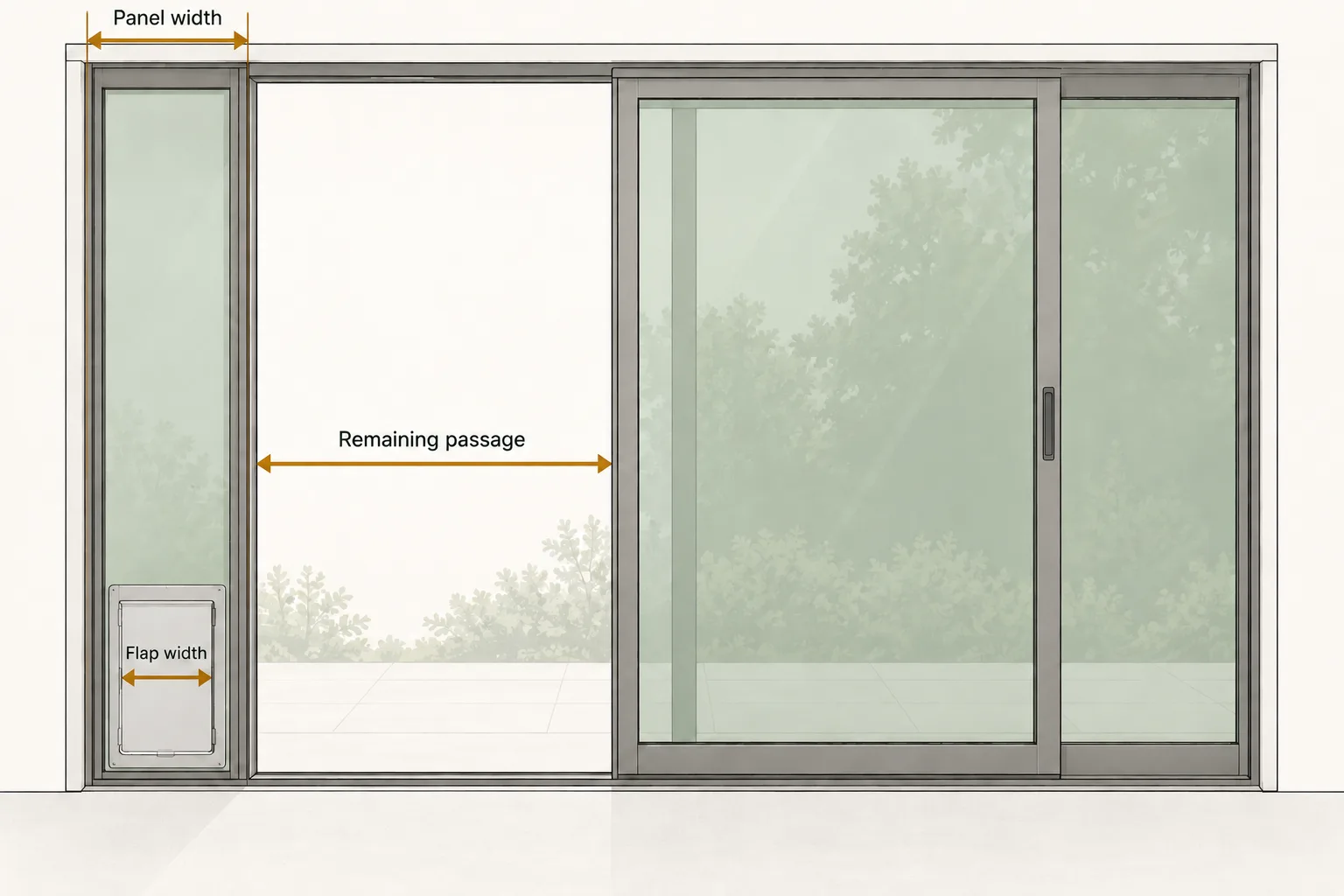
- An insert reduces the human passage according to its overall width, not just the width of its pet flap.
- Glass openings, seals, locks and alarm sensors need model-specific planning rather than assumptions about universal installation.
What Is a Pet Door for a Sliding Glass Door?
A sliding-glass pet door is either a track-mounted panel with a pet flap or an opening built into a replacement glass unit. With a panel insert, the sliding door closes against the insert, which takes up part of the original walking opening. A replacement glass unit does not add a separate full-height panel, but requires glass-specific planning. The right approach depends on the existing door, your pet’s measurements and the clear passage you need.
Compare a Patio Insert With an In-Glass Pet Opening
A track insert and an in-glass opening provide pet access in different ways. The insert seats in the existing top and bottom tracks, taking up part of the walking opening. An in-glass option uses a fabricated replacement glass unit with a pet opening instead of a separate full-height panel. That distinction affects both the passage and who needs to verify the work.
| Approach | What changes | Fit and passage check |
|---|---|---|
| Track insert | A separate panel seats in the existing door tracks. | Its overall width reduces the human opening; verify track and frame compatibility. |
| Replacement glass unit | A glass specialist assesses a unit made with a pet opening. | It avoids a separate full-height panel, but requires product and glass verification. |
| Existing glass, cut in place | Do not assume an installed unit can be modified. | Consult a glass professional or manufacturer; tempered or double-pane glass cannot be cut after manufacture. |
These are different project scopes, not universal product specifications. A panel that fits one track or frame type may not suit another. For an in-glass opening, ask a glass professional or the glass manufacturer to assess the actual assembly before ordering. Do not treat an existing pane as a do-it-yourself cutting project.
Measure the Door, the Pet and the Remaining Passage
Start with the door. Follow the chosen product’s instructions to measure track height and width, then compare both dimensions with the exact panel’s adjustment range and frame requirements. Track width and material can matter, so a panel advertised for sliding doors is not proof of compatibility with yours. Check the maker’s guidance for the track and frame type you have.
Next, measure each pet that will use the flap. Check comfortable standing height and chest width against the product chart rather than choosing by weight alone. If pets differ in size, check the largest measurements and confirm that the actual model offers a suitable opening. A cardboard opening cut to the proposed flap dimensions can help you test whether each pet can pass comfortably before you buy.
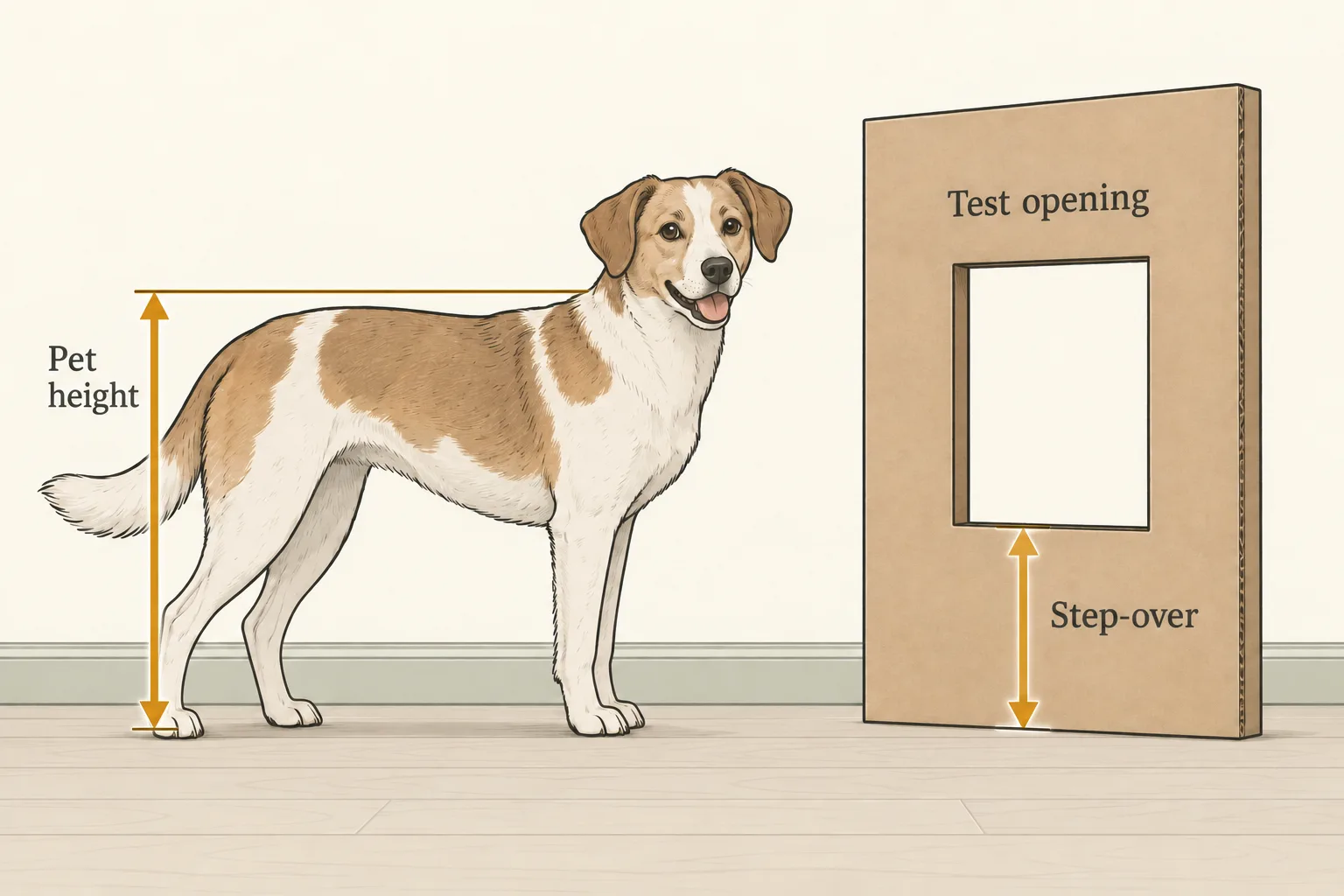
Also check the rise, or step-over: the distance from the ground to the bottom of the flap opening. Consider the outdoor floor drop as well as the indoor approach. A flap opening’s dimensions are not the same as the insert’s overall width. With an insert, compare that overall width against the original opening to estimate how much human passage remains. Decide whether that space works for everyday use before ordering; there is no single clearance number that fits every doorway.
Check Locks, Seals and the Installation Scope
Confirm how the specific panel seats and is secured, how the sliding door closes against it, and how the lock works. Installation instructions may distinguish height adjustment, fastening, locking and sealing, so do not assume that a “tool-free” description means every component installs without holes. Follow the complete instructions for the exact model.
Inspect the closing interfaces: the meeting area between the slider and insert, and the overlap with the fixed glass. Use the supplied sweep or seals as instructed. These details help you understand what the installation includes; they do not establish a security or energy-performance guarantee. Keep lock hardware clear of the glass, and contact your alarm provider before installation to ask whether a sensor needs repositioning.
For a fit discussion, prepare a photo of the whole door, close views of the tracks and latch, the door or glass label if available, your measurements and the proposed model. Ask whether the panel matches the track and frame, what securing and sealing steps the model requires, and whether glass-specialist work is needed. Confirm availability of any specialty pet-door or glass work separately from general patio-door replacement planning.
FAQs
How do I know whether a patio pet panel fits my sliding glass door?
A panel fits only if its track and frame requirements match your door. Check the exact model’s adjustment range and verify the pet opening and remaining passage separately before ordering.
Can I cut a pet door opening into my existing sliding glass door?
No. Existing tempered or double-pane glass cannot be cut for a pet opening after manufacture. A glass professional or manufacturer must assess the actual unit and proposed replacement before ordering.
Conclusion
Before ordering, write down the track dimensions, the opening your pet needs and the human passage you want to preserve. Compare them with the exact model’s specifications, then confirm whether your project involves a track insert, glass-specialist planning or both. If installation details are unclear, ask the product maker or an appropriate professional to review the door and proposed model before you buy.