Window & door planning
Sliding Door Track Care for Orlando, Florida Homes
Identify the binding panel, clean accessible track areas, then assess model-specific roller or component needs before deciding whether replacement is warranted.

A sliding patio door that drags can make its track look like the obvious problem, but resistance alone does not tell you what has failed. Debris in an accessible sill channel, roller alignment and screen hardware are different possibilities, and the screen may use a different design from the glass panel. Before replacing anything, identify which panel binds and what remains after careful cleaning. This guide explains how to distinguish the moving glass panel from the insect screen, clean accessible track areas without assuming one lubricant suits every part, and decide when to ask for a service assessment. It also explains what to have ready when discussing the door, so the assessment can focus on the track, rollers or another component instead of treating every stiff door as the same problem.
Key Takeaways
- A sliding door track guides the moving glass panel, while the insect screen is separate and may have its own care instructions.
- Accessible debris removal is a sensible first check, but cleaning and lubrication guidance depends on the door model and component.
- If the glass panel still drags after accessible cleaning, roller alignment or another issue may need assessment before replacement.
- For a useful service discussion, note which panel binds, how it moves and whether its edge meets the frame evenly.
What Is a Sliding Door Track?
A sliding door track is the sill channel that guides the moving glass panel across a patio-door opening. The insect screen is a separate component, and its track and rollers may follow different instructions from the glass panel’s hardware.
Before choosing a remedy, identify which panel binds and where it drags. Resistance alone does not show that the track has failed; debris, roller adjustment or another component may be involved. For homeowners in Orlando, Florida, a sensible first step is to inspect and clean only accessible areas, then assess what remains.
Identify the Track and the Panel That Binds
Operate the glass panel and screen separately, if both are present. Notice which one resists movement and whether the glass panel’s edge appears to meet the side frame evenly. Do not assume the screen track is the glass-panel track: Andersen’s gliding insect-screen instructions address the screen as its own assembly, while Pella’s manual notes that screen mechanisms can differ from glass-panel rollers.
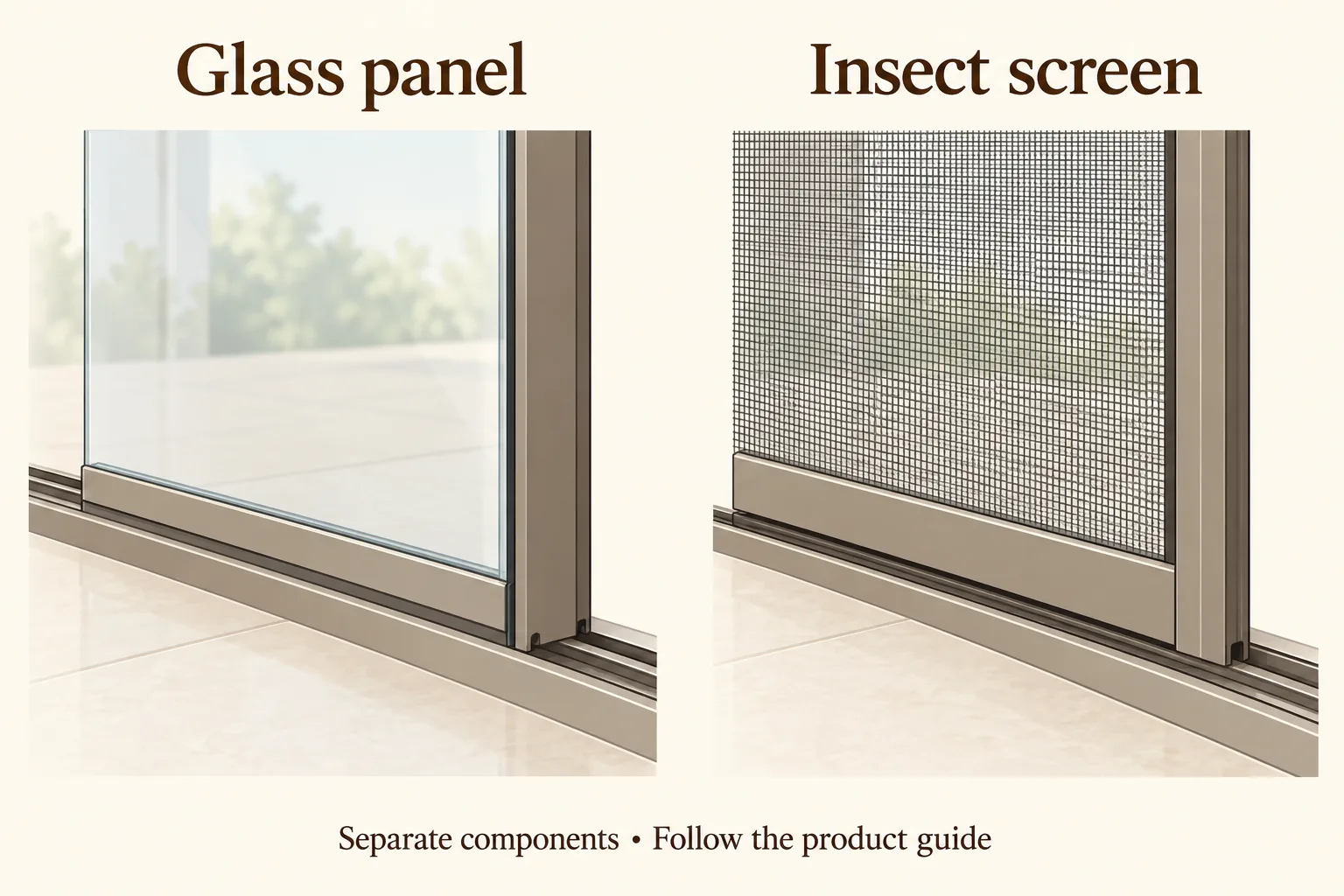
Resistance is a symptom, not a diagnosis. Andersen’s seasonal checklist recommends checking both track and rollers; Pella describes debris below the panel as one possible cause of drag and roller adjustment as a separate possibility. These examples support checking components in sequence, not concluding that every difficult door needs the same adjustment. Use instructions for the actual product, since model designs differ.
Clean the Accessible Track Before Choosing a Lubricant
For an accessible sill channel, begin with loose debris: JELD-WEN’s vinyl-door care guide recommends a vacuum or damp cloth. Keep designed drainage openings unobstructed, but do not remove inserts or probe passages based on guesswork. Consult the model’s instructions for access and cleaning details; do not mix cleaners or use abrasive or sharp tools.
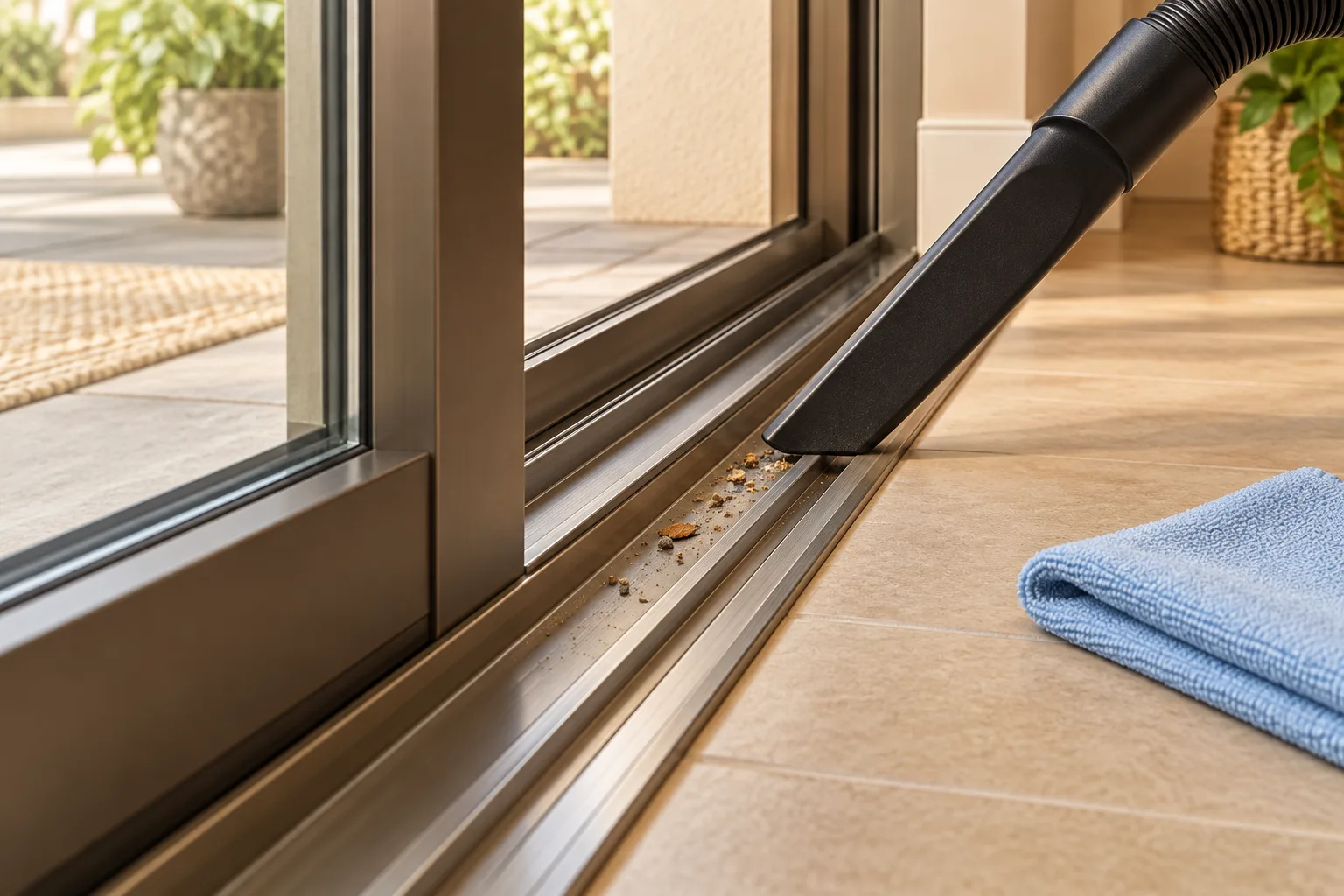
Lubrication is not a universal next step. Manufacturer guidance varies by component: Andersen warns against oil-based cleaners or lubricants on the insect screen because oily residue can collect dust, while JELD-WEN’s wood-door instructions describe light oil at the roller wheel shaft as a separate operation. Neither instruction establishes that the product or method suits another door part. Avoid applying a spray across the track or onto fuzzy weatherstrip, and check model-specific guidance before lubricating anything.
Decide When the Door Needs a Service Assessment
| What you observe | What it may point to | Sensible next step |
|---|---|---|
| Loose debris in the accessible sill channel | Track cleaning may be appropriate | Vacuum or wipe the accessible area as the product guide directs. |
| The screen binds, but the glass panel moves | A screen-specific issue may be involved | Consult the screen instructions; do not apply glass-panel care steps automatically. |
| The glass panel still drags after cleaning | Rollers, alignment or another component may need assessment | Use the exact model instructions or ask a qualified provider to assess it. |
If cleaning does not restore easy movement, note where the glass panel drags, whether its edge meets the side frame evenly and whether the latch engages. Pella describes roller adjustment and possible follow-up adjustment to the strike, but its instructions are model-specific. Do not turn that description into generic screw directions or remove a heavy panel for routine cleaning; JELD-WEN warns that panel removal can be dangerous and may require additional help or equipment.
When arranging an assessment, have the manufacturer and model available if known. Photos of the track and opening, a description of the symptom and any previous care can help explain what you observed. Ask whether the recommendation concerns the track, rollers or a wider patio-door replacement assessment, and confirm whether the provider offers the standalone repair you need.
FAQs
What should I check before replacing a sliding door track?
First identify whether the moving glass panel or the insect screen is binding, then remove loose debris from the accessible sill track according to the door’s care instructions. If the glass panel still drags, ask for an assessment of the rollers and track before deciding on replacement. Resistance alone does not identify a failed component.
Does a sliding door that sticks need a new track?
Not necessarily. Manufacturer guidance distinguishes track cleaning from roller adjustment, and a hard-to-move panel alone does not identify the cause. Clean accessible debris first, then follow the instructions for the exact door model or seek a qualified assessment if movement remains difficult. Removing a heavy panel is not a routine cleaning step.
Conclusion
Before replacing a sliding door track, identify whether the issue involves debris, roller alignment, the screen or another component. Start by finding the door’s manufacturer and model, then arrange an assessment if accessible cleaning does not resolve the drag. Ask the provider to identify the affected component and explain whether the recommendation is a repair or a replacement evaluation.