Window & door planning
Door Threshold Checks for Orlando, Florida Homes
Identify the stationary sill, moving door-bottom seal and alignment concerns before choosing adjustment, a model-specific part or a broader assessment.

If you notice daylight, a draft or water near the bottom of an exterior door, it can be tempting to assume the threshold has failed. But the stationary sill, the seal attached to the moving door and the opening’s alignment are different things to check. Replacing the wrong component may leave the issue unresolved.
For Orlando, Florida homeowners, the useful first step is identifying what part is involved and how it fits together. Manufacturer guidance shows that some sills have model-specific adjustable or replaceable components, while door-bottom seals are separate parts attached to the slab. This guide explains those distinctions, outlines checks that can help clarify the problem, and shows what to gather before deciding whether the next step is adjustment, seal replacement, sill-component work or a broader assessment.
Key Takeaways
- A door threshold is the stationary sill at the opening; the door-bottom seal moves with the door slab.
- Daylight, drafts or water are clues to investigate, not proof that the stationary sill has failed.
- Sill adjustment, replaceable components and moving-seal replacement depend on the specific door system.
- Record the model, symptoms and photographs to help a professional assess component compatibility and opening alignment.
What Is a Door Threshold?
A door threshold, also called a sill, is the stationary part at the bottom of a doorway that meets the closed door. The door-bottom seal is separate and moves with the door slab.
Some systems also have a sill cap or other replaceable parts, but their design and serviceability vary by model. Manufacturer documentation describes adjustable sills, self-adjusting caps and replaceable sill decks as distinct features, not universal options.
Identify the Threshold and Door-Bottom Seal
Identify which parts stay still and which move when the door opens. The threshold or sill remains at the base of the opening; the door-bottom seal attaches to the slab. Corner pads, where present, seal the junction of sill, panel and frame, so a corner problem may involve more than the sill alone.
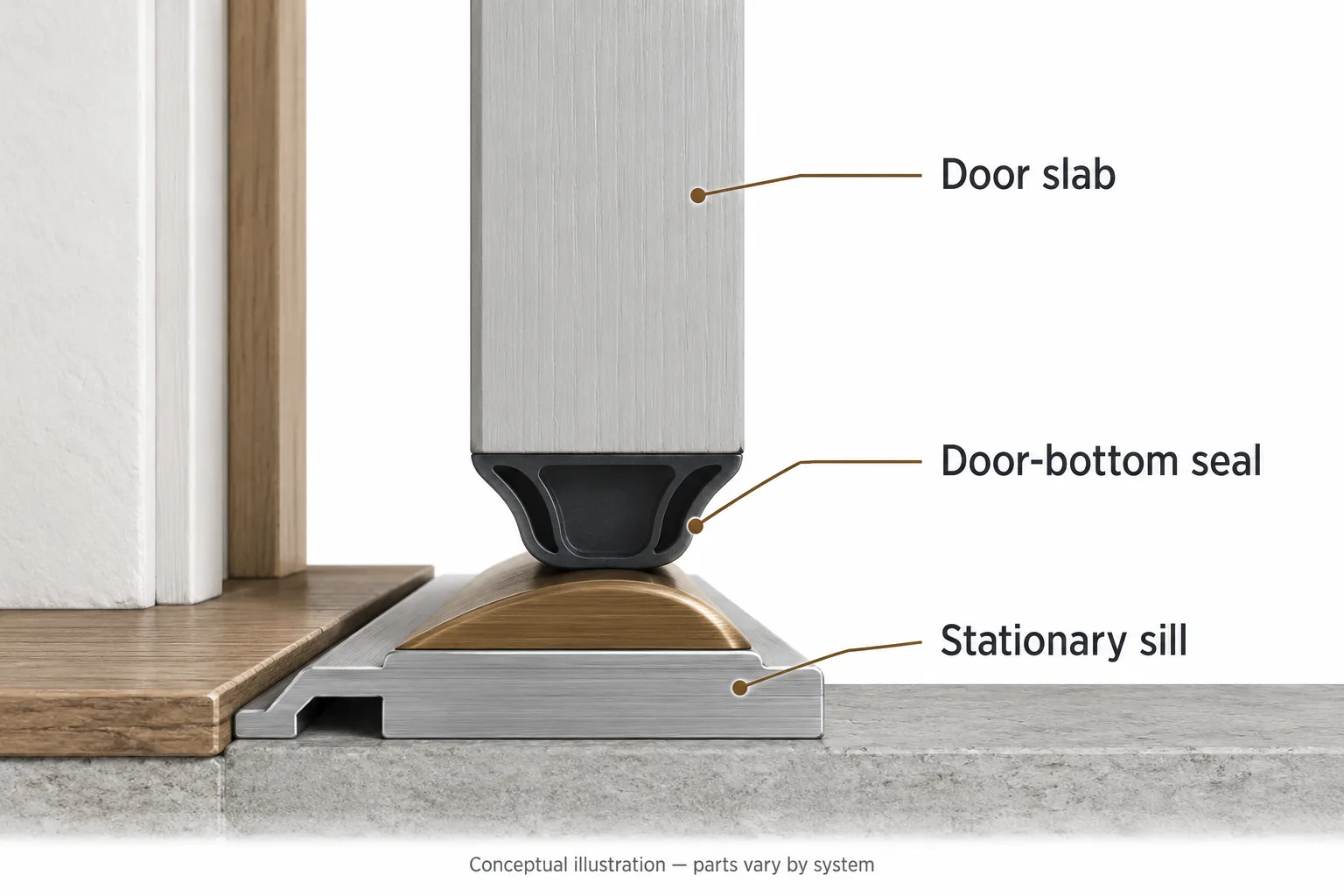
Sill designs vary by system. Some inswing sills are adjustable, some systems use a cap that self-adjusts as the door closes, and some allow a damaged deck to be replaced without removing that particular sill or unit. These features are not universal. If possible, identify the manufacturer and model before asking whether a component is available or serviceable.
| What you notice or have | What it may clarify | What to ask |
|---|---|---|
| Worn or loose seal on the slab | Whether the moving door-bottom seal needs attention | Can this seal be replaced for this model? |
| Sill with an identifiable adjustment feature | Whether instructions allow adjustment | What method applies to this system? |
| Damage to a named sill component | Whether that component is replaceable | Can it be serviced without replacing the unit? |
| Unclear fit or suspected misalignment | Whether the opening needs assessment | Can you check the opening and door alignment? |
Check Fit Before Choosing a Repair
A draft, visible daylight or water near the bottom is an observation, not a diagnosis. Look at the seal’s condition and contact with the sill, the sill’s corners and how the door sits in the opening. These checks can help distinguish a moving-seal or fit issue from sill damage or an alignment concern.
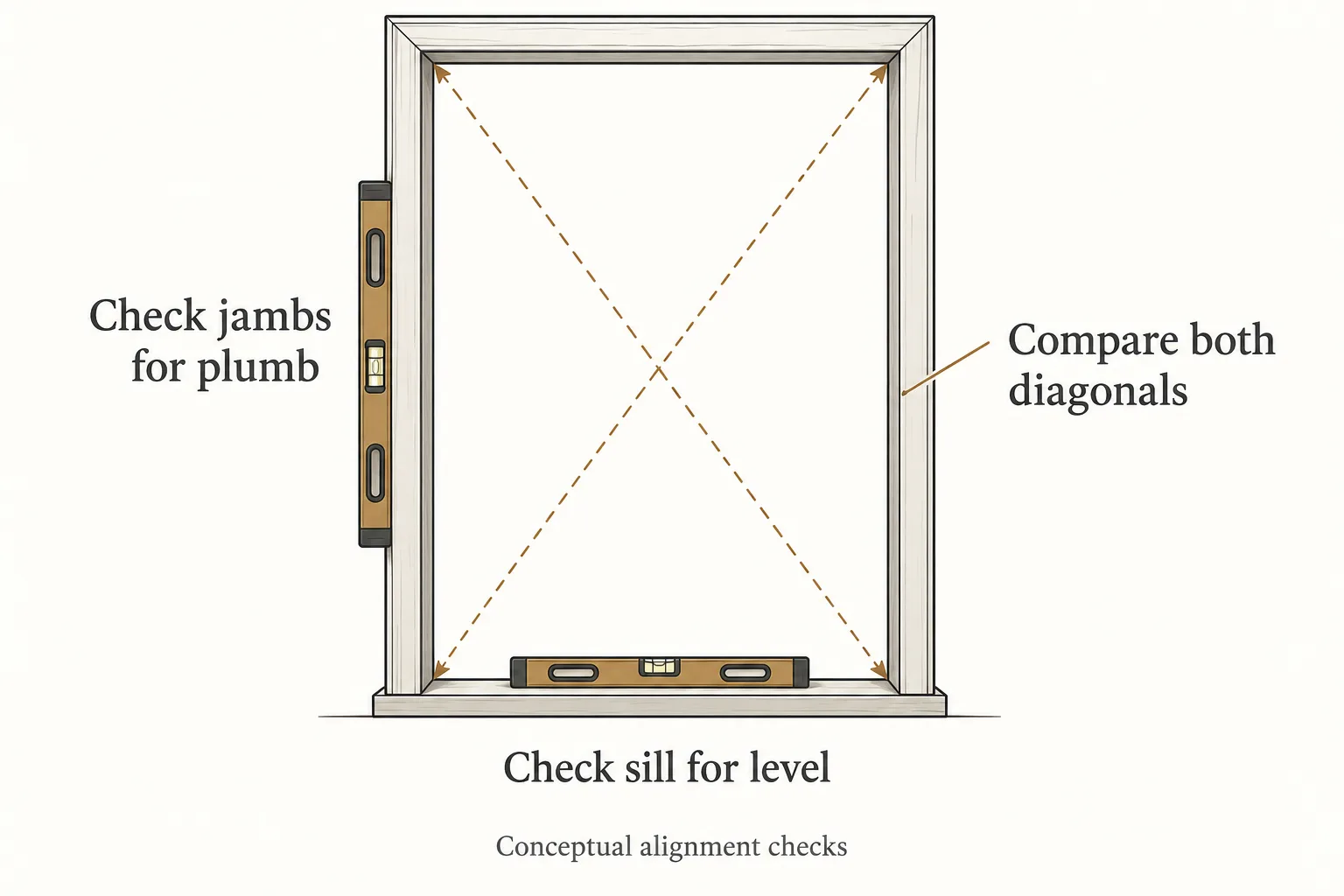
Opening alignment matters because a replacement seal cannot correct every fit problem. Manufacturer guidance checks whether jambs are plumb, the head and sill are level, and opposite corner-to-corner diagonal measurements match. If you are unsure how to assess those conditions, ask a professional rather than assuming the opening is square.
Some manufacturer instructions describe a snug-contact check with a dollar bill between the door bottom and sill: it should be difficult to pull out without tearing. This model-specific fit check is not a water test or a leak guarantee. Follow the actual system’s instructions if its sill is adjustable; there is no universal screw setting or height.
A new door-bottom seal may require threshold adjustment to fit. Do not assume the original setting suits a different seal or that adjustment will address water entering elsewhere.
Prepare for a Component or Entry-Door Assessment
Gather details that can help determine whether the issue calls for adjustment, moving-seal replacement, model-specific sill work or a wider opening assessment. Note the manufacturer and model if available, photograph the full doorway and affected bottom area, and record when the symptom occurs and whether the door opens and closes normally.
Ask the professional to identify the part at issue and confirm that a proposed component fits the system. Mention any uncertainty about how the door sits in the opening, since alignment checks differ from seal replacement. An assessment can help clarify the repair scope before you order a whole sill.
If the assessment indicates broader entry-door work, compare entry-door options as a separate decision. Keep that scope distinct from threshold adjustment or seal replacement.
FAQs
Do drafts or water at the bottom mean I need a new threshold?
Not necessarily. Daylight, drafts or water near the bottom of a door are signs to investigate, but they do not establish that the stationary sill is the cause. Check the moving door-bottom seal, its contact with the sill, the corners and the opening’s alignment. If the cause or part compatibility is unclear, seek a professional assessment before ordering a replacement.
What is the difference between a door threshold and a door-bottom seal?
A door-bottom seal attaches to the moving door slab, while the threshold or sill stays at the base of the opening. If the seal is worn, that component may need attention instead of the sill. A replacement bottom can affect its fit against the threshold, so follow instructions for the specific door system rather than assuming parts are interchangeable.
What should I tell a professional before a threshold assessment?
Tell the professional which part concerns you and ask them to confirm compatibility. Mention uncertain alignment before ordering a whole sill based on symptoms alone. For a fuller checklist, see the preparation section.
Conclusion
Before replacing a door threshold, identify which part may be failing and whether the opening is aligned. A draft or leak is a reason to investigate, not proof that the stationary sill needs replacement.
Note the door model, affected area and when the symptom appears. Then ask a professional to confirm component compatibility and assess uncertain alignment before ordering a whole sill. Call Windows and Doors by Martin Toro and ask about your project.