Window & door planning
Sliding Door Security Bar in Mount Dora, Florida: Use and Fit
Learn how to choose and position a sliding door security bar, check fit and operation, and understand its limits for a Mount Dora, Florida home.
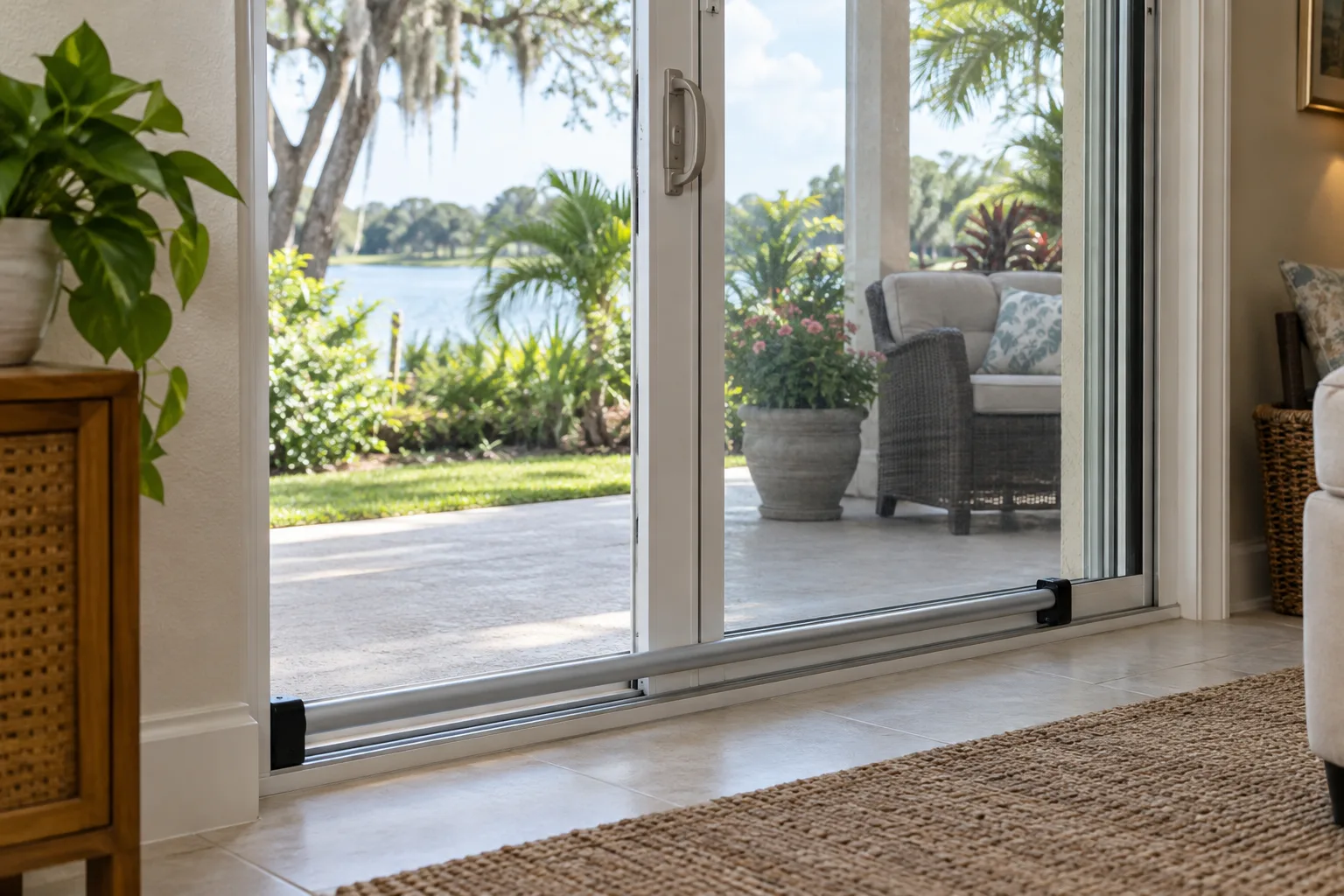
A sliding door security bar adds a physical stop against a patio door opening. It must fit the track and leave a clear exit when removed. In Mount Dora, Florida, choose a bar sized for the door’s usable track width. Then check that the door still closes and locks normally. A bar is one layer of security, not a substitute for a working lock or safe escape route.
Key Takeaways
- Choose a bar that fits the closed door’s track without blocking normal locking or creating a trip hazard.
- A security bar can resist opening, but it does not secure glass or prevent every way into a home.
- Measure the usable track width and test the bar after installation, including how quickly someone can remove it.
- Keep an exit route usable, especially in rooms where the sliding door may be needed during an emergency.
How a Sliding Door Security Bar Helps
A sliding door security bar braces the moving panel against the frame or track. This makes the panel harder to slide open. It does not strengthen glass or repair a worn lock. Use it as a secondary barrier while the built-in lock remains engaged. The City of Sacramento Police Department says additional locks and security measures can prevent a sliding glass door from opening or being lifted from its track. The Seattle Police Department recommends securing sliding doors against forced locks and removal from the frame. Together, this guidance supports a layered approach. Maintain the door’s lock and add a correctly fitted bar if it suits the opening. Address track or frame weaknesses separately.
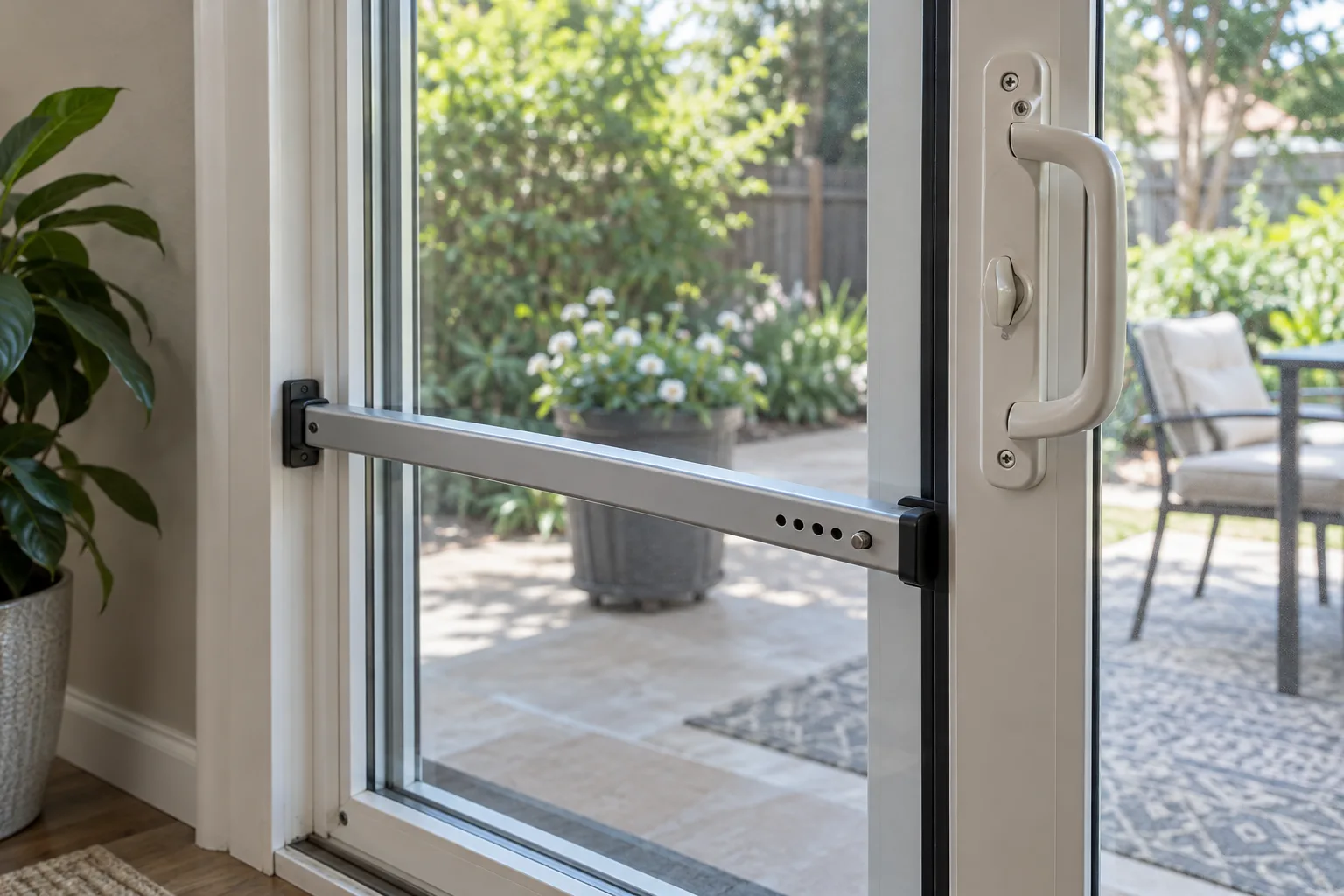
A security bar works best as a visible, removable obstacle when you want to keep a freely sliding door shut. For example, someone may use one at night in a room that is not needed for escape. However, a fixed bar in a room’s only practical escape route can create a safety problem. The National Institute of Justice standard sets forced-entry resistance requirements and test methods for residential sliding glass door units. Its tests cover locking-device stability and resistance to panel removal. That scope shows why door security involves more than stopping the moving panel. A bar can limit sliding, while the lock, fixed panel, frame, and glass raise separate security considerations.
How to Measure for a Secure Fit
Measure the open track before choosing a bar. Close and lock the door. Then identify the clear span for a removable brace. Keep it clear of the handle, lock, and track hardware. Compare that measurement with the bar’s stated adjustment range. If the bar only reaches the opening when wedged or angled, it is a poor fit. Also check what the bar contacts. The brace should rest on sturdy parts of the frame or panel, as its instructions specify. It should not press against a handle, screen, or loose trim. If the door or frame shifts under gentle pressure, address that movement before relying on a bar.
How a Bar Compares With Other Sliding Door Measures
Use the comparison below to narrow the type of barrier to the job you need it to do. The descriptions are general selection guidance; product designs and door tracks vary.
| Option | Main role | Check before use |
|---|---|---|
| Sliding security bar | Limits panel sliding | Track span and removal |
| Built-in door lock | Holds door closed | Engagement and alignment |
| Upper-track screw | Limits panel lifting | Door construction and clearance |
| Auxiliary door lock | Adds a locking point | Compatibility and operation |
The options solve different problems, so one does not automatically replace another. A bar is the straightforward choice when the panel slides despite a sound lock; a sticking lock calls for lock attention, while lifting concerns need a measure designed for the upper track. Keep every added measure compatible with normal door operation and a usable exit.
When to Address the Lock or Track
Sacramento Police says screws fitted in the upper track can prevent a sliding panel from being lifted out. It also mentions auxiliary patio-door locks. A lower bar limits sliding; upper-track hardware addresses lifting. Before adding screws or changing the track, check the door’s construction and hardware instructions. For listed Andersen gliding-door models, faulty or difficult locks may need adjustment or a replacement handle set. Andersen says its reachout lock uses a hook that engages a receiver on a second door or the frame. That example applies to Andersen models; choose replacement parts for the actual door model.
How to Keep an Exit Clear and Test the Bar
A second barrier should not make a room difficult to leave. Seattle Police says each room should have a door or window that allows a quick, easy fire escape. It also recommends setting and practicing household escape routes. Before leaving a bar in place overnight, consider who uses the room. Can each person remove it promptly without tools? Practice removing the bar with everyone who may need the exit. Store it where they can reach it easily. If a child, older adult, or guest could struggle with the bar, choose a setup they can operate. Otherwise, use another security measure. Do not block the door with furniture or leave a brace where someone could trip in the dark.
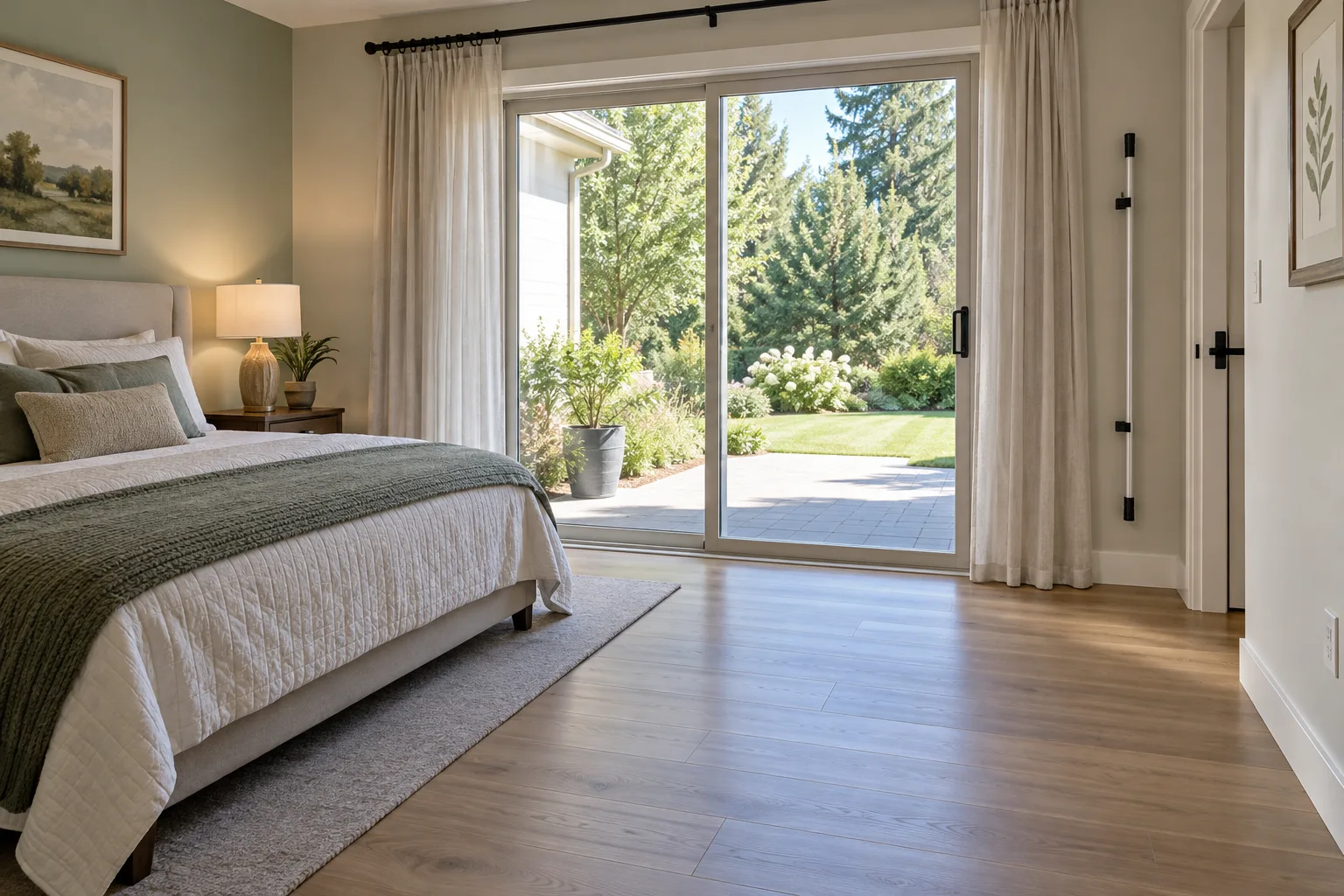
A useful check is to close and lock the door, install the bar as directed, and try the handle gently. The panel should meet the brace without pushing the bar out of place. Then remove the bar and confirm the door opens smoothly for an exit. Repeat the check after cleaning the track or changing the door’s adjustment. If the bar slips, binds the door, or sits loosely, stop using it until you identify a better fit. The Sacramento Police Department notes that sliding doors can be vulnerable to both forcing and lifting, so one test cannot establish that every entry weakness is addressed.
FAQs
Will a sliding door security bar stop a break-in?
A sliding door security bar can make the moving panel harder to open, but it cannot guarantee that a break-in will be stopped. It does not reinforce glass, fix a weak frame, or necessarily prevent the panel from being lifted. Use it as one part of a broader door-security plan.
How do I measure for a sliding door security bar?
Measure the clear track span available for the bar with the door closed, and compare it with the product’s adjustment range. Check that the bar will not press on the handle or interfere with the lock. Then install it as directed and confirm the door remains secure and the bar removes easily.
Can I use a sliding door security bar on a bedroom patio door?
Yes, if the bar fits the door and everyone who may need the exit can remove it quickly. Seattle Police recommends keeping at least one quick, easy escape opening per room and practicing household escape routes.
Conclusion
For a Mount Dora, Florida home, start with the door’s track measurement. Then choose a bar that blocks sliding without complicating the lock or escape. Test both its resistance and removal before relying on it. Call Windows and Doors by Martin Toro about your own project. Describe the sliding door concerns you want to address.
Call Windows and Doors by Martin Toro and ask about patio and sliding doors
Sources
- City of Sacramento Police Department: Home burglary prevention and sliding glass doors
- Seattle Police Department: Home security and burglary prevention
- National Institute of Justice: Physical security of sliding glass door units
- Andersen Windows: Adjusting and replacing gliding patio door locking hardware