Window & door planning
Sash Window Locks: An Apopka, Florida Fit and Function Guide
Identify the window model, check that its sashes close and lock correctly, then compare hole spacing, offset, sweep, and keeper before choosing a sash lock.
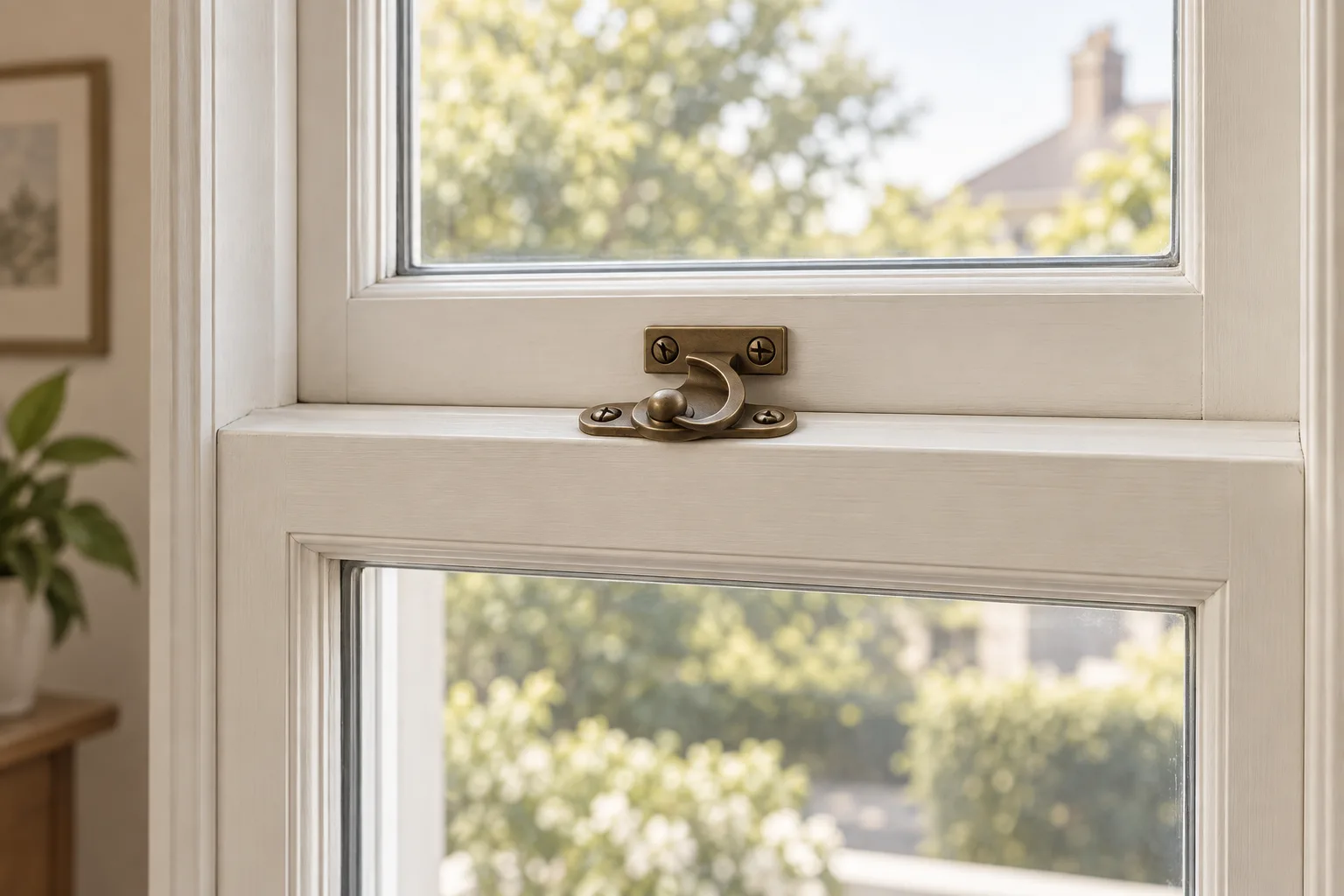
A window lock can look simple, yet a replacement may still be the wrong fit. Sash window locks secure a movable sash, but the window’s model and the hardware’s dimensions matter as much as its appearance. A lock, keeper, balance, tilt latch, and vent stop can serve different purposes; some model-specific hardware combines functions. Before ordering, identify the part and check how the window closes. Then compare the lock’s screw-hole spacing, offset, and locking sweep with the existing hardware and the manufacturer’s model information. This guide explains how to recognize the parts, check closing and locking operation, and record useful fit details. Those steps help you make an informed comparison without assuming a similar-looking part will work in an unidentified window.
Key Takeaways
- A sash window lock secures a movable sash by engaging a keeper when the window is closed.
- Single-hung windows have one movable sash, while both sashes move on double-hung windows.
- Return the sashes to position before locking, and confirm that an optional automatic latch engages.
- Compare the window model, screw-hole centers, housing offset, and locking sweep before choosing hardware.
What Are Sash Window Locks?
A sash window lock is moving hardware that secures a closed window sash by engaging a stationary keeper. The sash is the framed part of the window that holds the glass; the keeper is the fixed piece the lock catches. Designs vary by window model, so identify the window and compare fit details rather than relying on appearance alone.
Identify the Lock and What It Does
First identify the window type. A single-hung window has a fixed upper sash and a movable lower sash; both sashes move on a double-hung window. On Andersen hung windows, a lock between the sashes has a movable handle that engages a stationary keeper to secure them together. The sash holds the glass, while the keeper receives the lock.
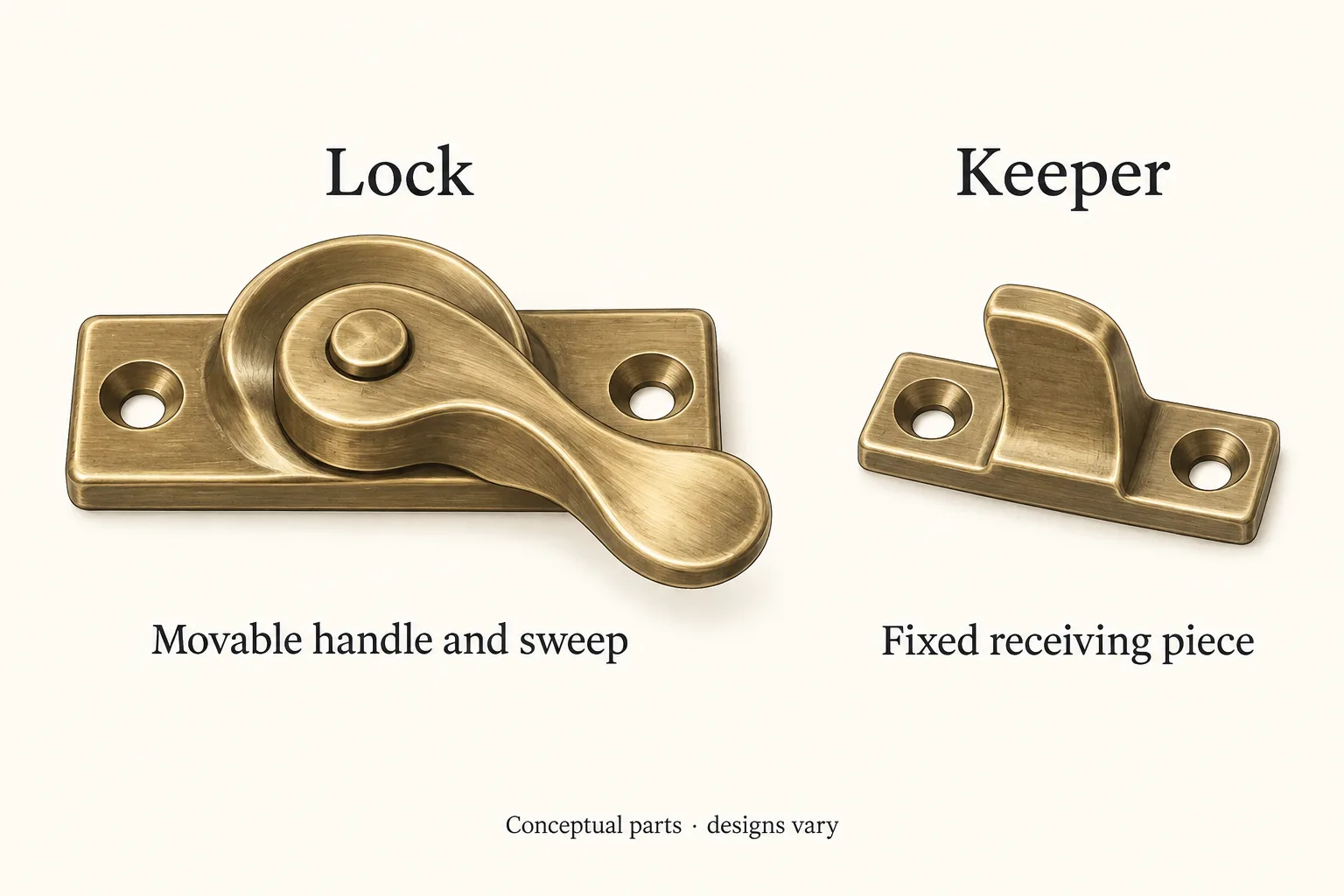
Do not confuse a sash lock with hardware that supports or releases a sash. Balances support sashes in position and connect on both sides; they are not the lock. Andersen describes its hung-window locks as not handed, while balance handing is determined from an exterior view. Tilt latches release a sash for tilting on some models, and a vent stop or opening-control device restricts sash movement. These functions are not interchangeable.
There are model-specific exceptions. On Andersen A-Series windows, the lower sash’s circular lock also participates in tilting that sash for cleaning, while the upper sash has hidden tilt latches on its top. This example does not establish how an unidentified window operates. Identify its Series or model and consult the matching manufacturer information before interpreting an unfamiliar handle or choosing a part.
Check Closing and Locking Operation
Before checking whether a lock engages, return the window sashes to their closed positions. Pella’s hung-window instructions say to return the upper and lower sashes to position before locking. On models with AutoLock, confirm that the latch has engaged rather than assuming it locked automatically. The instructions advise closing and locking the window when it is not being used for ventilation, particularly in high winds or rain.
If a lock does not engage, that observation alone does not diagnose the cause or establish that a balance or other part needs replacement. Do not force unfamiliar hardware or improvise a repair based on another model’s instructions. Identify the window and use its applicable manufacturer guidance. Screens do not prevent children or pets from falling through an open window, so keep them away from open windows.
Compare the Fit Before Ordering
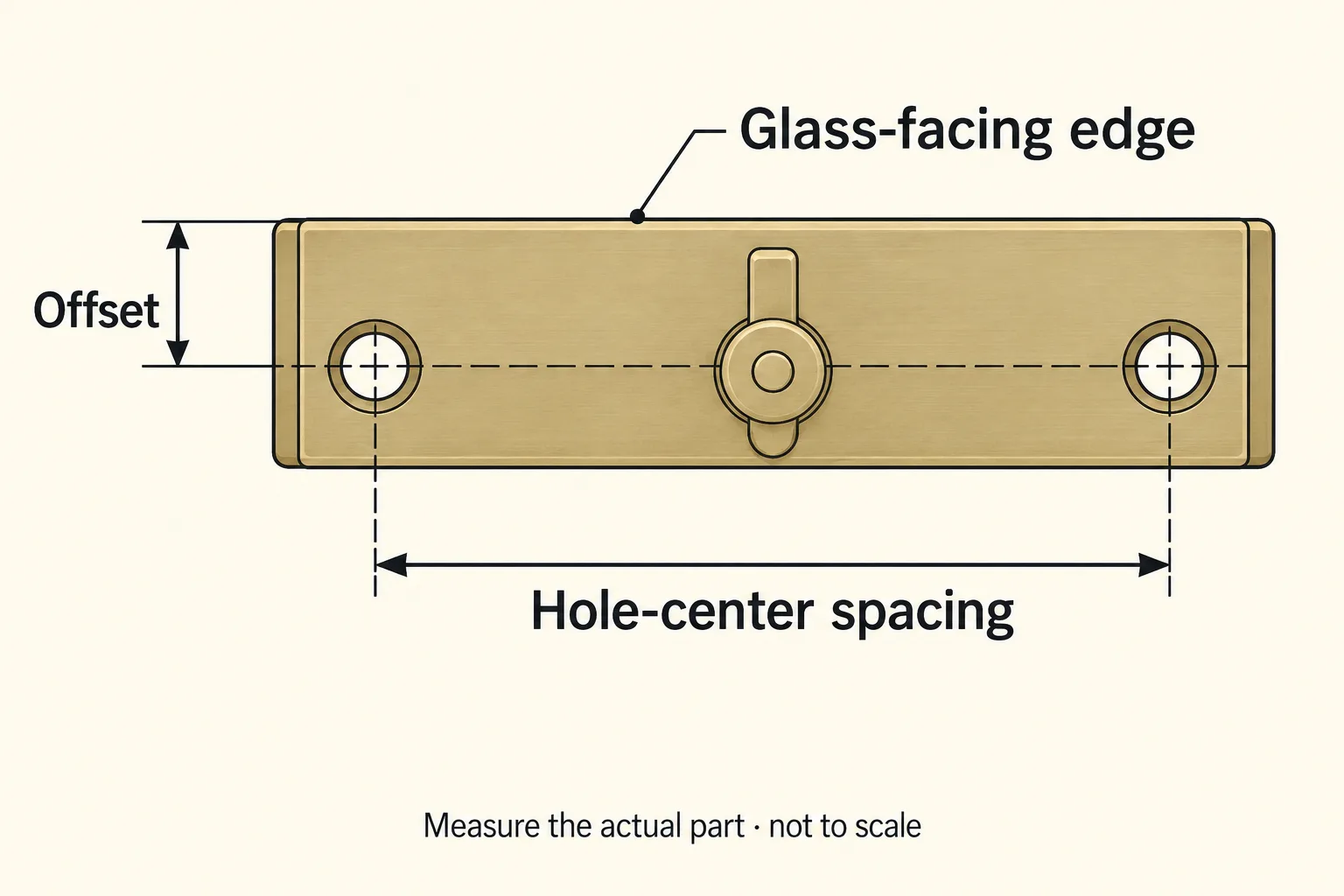
Record the window’s Series or model and compare the physical details below before selecting a part. Measure screw-hole centers from the center of one screw hole to the center of the other. The offset is a separate measurement: from the screw-hole centers to the back, glass-facing edge of the lock housing. It is not the housing’s overall base length.
| What to compare | What to record | Why it matters |
|---|---|---|
| Window identity | Manufacturer and exact Series or model, if known | Manufacturer parts and guides can differ by Series. |
| Screw-hole spacing | Distance between screw-hole centers | Similar locks may have different mounting-hole spacing. |
| Housing offset | Distance from hole centers to the glass-facing housing edge | A matching hole distance alone may not match the lock’s position. |
| Locking parts | Sweep shape and keeper shape | The moving lock must correspond to the receiving hardware. |
Take clear photos of the installed lock and keeper, and note any visible model markings. Compare those observations with the exact manufacturer guide before ordering. A vendor identification discussion illustrates why: a similar-function candidate still differed in hole spacing and offset. Treat these as separate fit checks, not universal dimensions or drilling instructions; appearance and function alone do not establish compatibility.
FAQs
What does a sash window lock do?
A sash lock is moving hardware that secures a closed sash by engaging a stationary keeper. On many hung windows, the lock sits where the upper and lower sashes meet. The sash holds the glass, and the keeper receives the lock. The exact design and location can vary by model.
Are sash locks, balances, tilt latches, and vent stops the same thing?
No. A lock secures a sash, while a balance supports a sash in position. Tilt latches release a sash for tilting on certain models, and a vent stop limits how far a sash can open. Some model-specific hardware combines functions, so identify the window before interpreting an unfamiliar handle or ordering a part.
How do I match a replacement sash lock?
Compare the exact window Series or model, screw-hole spacing measured center to center, the offset to the housing’s glass-facing edge, and the locking sweep and keeper shape. Hole spacing is not the same as the lock’s overall base length. Similar-looking parts can differ in these details, so appearance alone does not prove compatibility.
Conclusion
Identify the window’s Series or model, check that the sashes return to position, and confirm that the lock engages. Then compare the hardware’s measured fit details; a similar appearance is not proof of compatibility. For help discussing your project, call Windows and Doors by Martin Toro.