Window & door planning
Parts of a Door in Winter Park, Florida: Know the Components
Learn the parts of a door, from the frame and jamb to the slab, hinges, and lockset, and see how each component contributes to fit, movement, and closure.
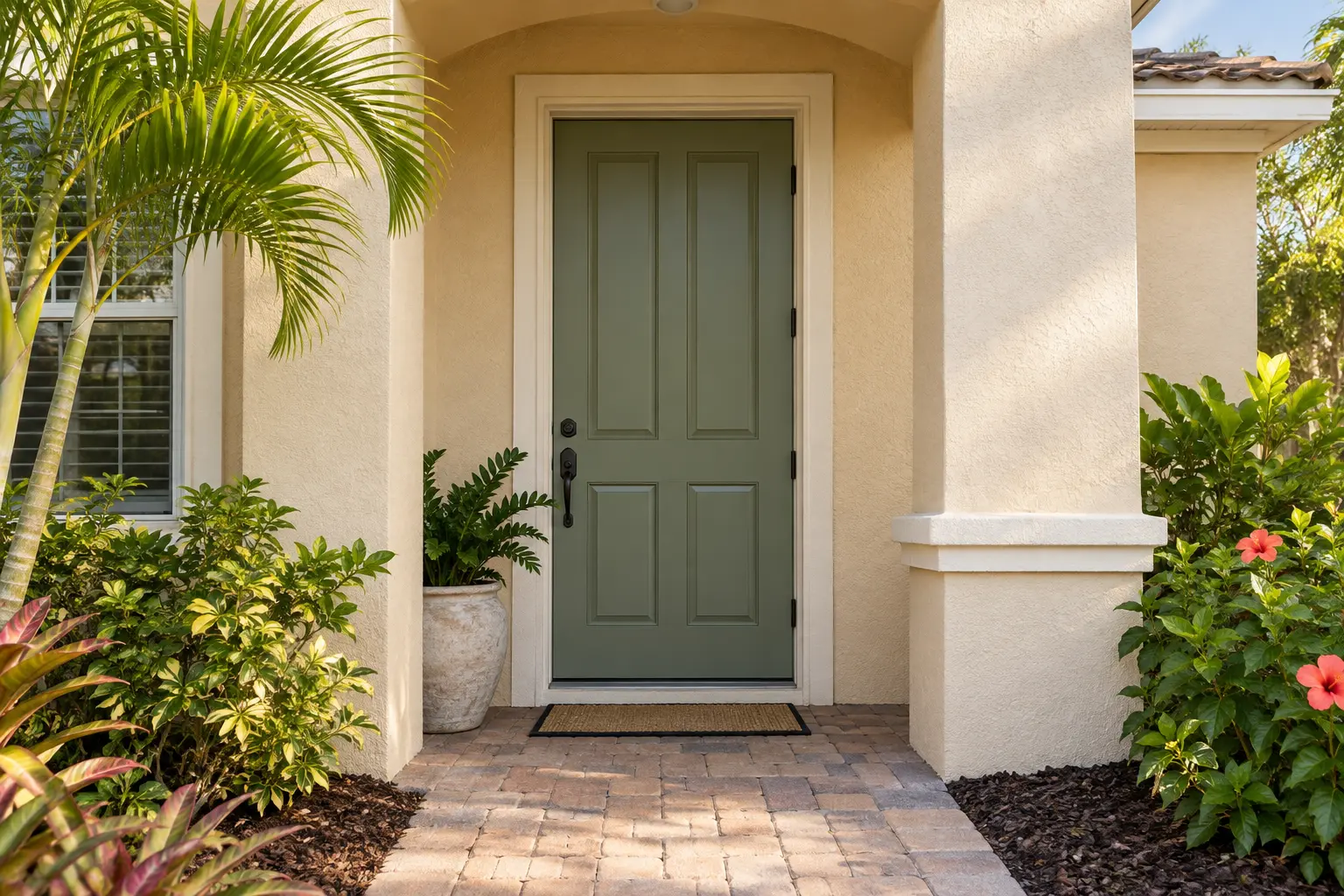
Parts of a door include the panel, frame, hinges, lock, and the pieces that seal the opening. Knowing how they fit together helps you describe a repair or replacement and compare what a project includes. In Winter Park, Florida, the right choice depends on whether you are changing the door alone or the entire entry unit.
Key Takeaways
- The panel moves, while the frame supports it and connects it to the opening in the wall.
- A slab is the panel alone; a pre-hung unit includes the panel, frame, hinges, and often weatherstripping.
- The sill, threshold, weatherstripping, and door sweep help manage gaps where wind, water, and insects can enter.
- A useful replacement comparison starts with the existing frame, the opening direction, and the features you want to keep.
What Is the Door Panel, and How Does It Move?
Start with the panel, the part that swings open and closed. On a paneled door, rails run horizontally and stiles run vertically. They shape or border sections of the panel. Their meaning varies with door construction. A smooth, flush wood door may not have distinct rails and stiles. The lock is usually mounted near a stile, so its position matters when matching hardware or choosing a replacement. For example, a homeowner replacing a scratched panel while keeping a sound frame may compare slab options. That keeps the decision focused on the moving panel. Check whether its size, hinge positions, and lock preparation fit the existing opening.
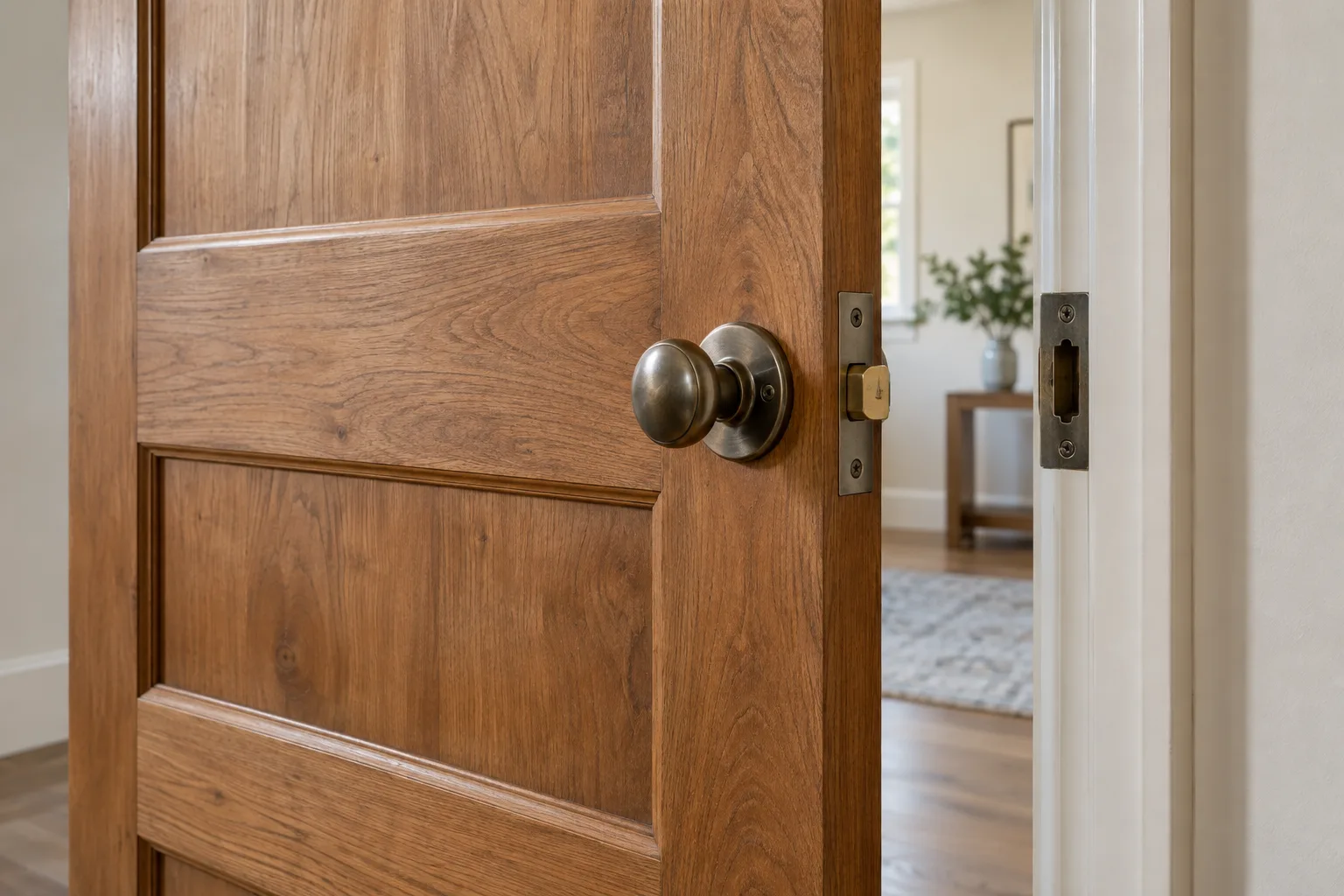
A slab is the door panel without hinges or hardware. A pre-hung door includes the slab, frame, hinges, and often weatherstripping. A slab replacement keeps the existing frame in place. A pre-hung replacement changes the frame as well. Before comparing options, identify which parts are staying and which are being changed. Measure the existing panel and frame separately. The rough opening is the space in the wall where the door is installed. Replacing the unit means accounting for the rough opening as well as the panel size.
Parts of a Door: Frame, Hinges, Sill, and Threshold
The frame holds the panel and includes two side jambs, a head jamb at the top, and a sill at the bottom. Hinges connect the panel to the frame, allowing it to swing. The sill sits beneath the door, while the threshold covers the sill at the entry. A slight outward slope helps direct water away from the opening. When measuring, keep the panel, frame, and rough opening distinct. For a replacement unit, the frame dimensions and the wall opening both affect whether the new assembly fits.
How Do Weatherstripping, Door Sweeps, and Trim Help?
Weatherstripping sits between the panel and frame, and a door sweep lies along the bottom above the threshold. Together with the threshold, these parts help seal gaps against wind, water, and insects. As you inspect an entry, look for visible light or uneven gaps around the closed panel and along its bottom edge. Those clues help you describe where the seal appears incomplete; they do not identify the cause by themselves. Trim around the outside of the frame is another separate component. Brickmould, for example, is exterior trim that helps cover the gap between the frame and the wall.
Where Can Glass Be Placed in a Door Entry?
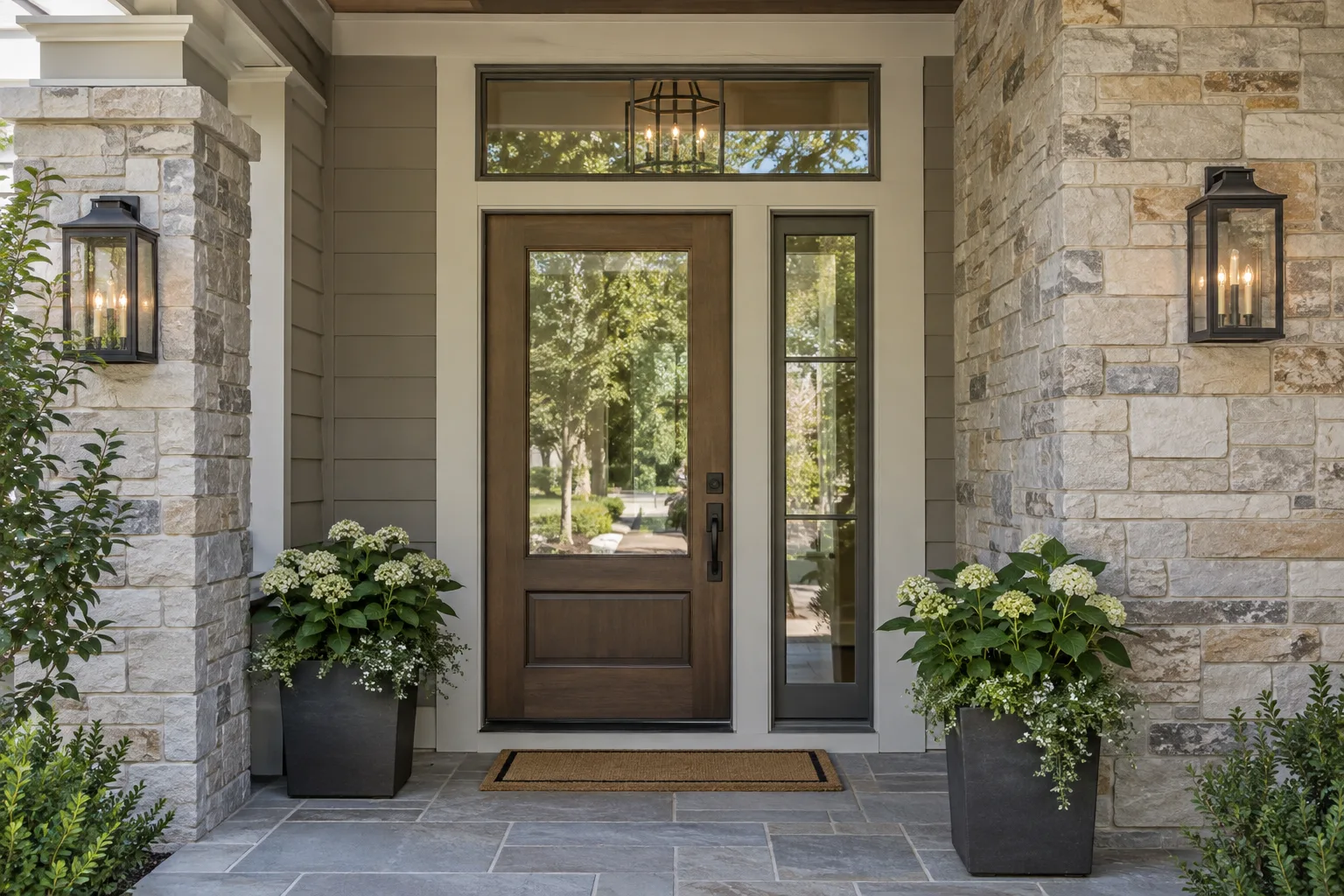
A lite is a window or glass panel built into the door panel itself. A sidelight is a window beside the door, and a transom is a window above it. These placements change the entry’s appearance and where daylight enters. Grilles, also called muntins or dividers, are bars applied to glass to create grid or ornamental patterns. The table compares common glass locations. First choose where you want light to enter, then decide how much glass belongs in the door panel and how much around it.
| Glass location | What it is | Decision to consider |
|---|---|---|
| Lite | A glazed insert in the moving panel. | Opens with the panel. |
| Sidelight | A glazed section at the entry’s side. | Places glass beside the opening. |
| Transom | A glazed section over the entry. | Places glass above the opening. |
Choose by location and use: glass in the panel moves with the door, while sidelights and transoms remain around it. That difference can help narrow a design before comparing patterns or the amount of glass.
Glass fitted within the panel is called a lite. It travels with the panel as it swings open. Beside the entry, a sidelight is a window. A transom is a window above the entry; these windows stay outside the moving panel. For privacy, compare the glass pattern and placement with what someone can see from inside or on approach. For daylight, decide whether you want glass in the panel, beside it, above it, or in several positions. A mullion joins two units together. At an entry, it can connect the frame to a sidelight or transom, or join additional windows into one design.
FAQs
What is the difference between a door slab and a pre-hung door?
A slab is the panel alone, while a pre-hung door includes the panel, frame, hinges, and often weatherstripping. The distinction helps you compare a panel replacement with a full unit replacement. If you plan to keep the existing frame, note its condition and the panel’s dimensions and hinge locations before comparing slab options.
What are the parts of a door frame called?
The frame has two side jambs, a head jamb across the top, and a sill at the bottom. At an entry, a threshold covers the sill. When describing a fit issue, say whether it appears at a side, the top, or the bottom. That gives a clearer starting point for discussing the frame and the seal.
What keeps water and drafts from coming through under a door?
The threshold, weatherstripping, and door sweep help seal the entry against wind, water, and insects. Weatherstripping sits between the panel and frame, while the sweep lies along the panel’s bottom edge. Because those parts meet at different edges, look around the sides and top as well as beneath the closed door when describing a gap.
Conclusion
The panel, frame, hardware, and seals each play a different role. First decide which parts your project needs to change. For a home in Winter Park, Florida, call Windows and Doors by Martin Toro. Discuss the parts you have identified.
Call Windows and Doors by Martin Toro and ask about entry doors