Window & door planning
Glass Block Windows: Options for Orlando, Florida Homes
Compare glass-block and acrylic materials, privacy, and vent choices, then document the opening and request a written specification before ordering.
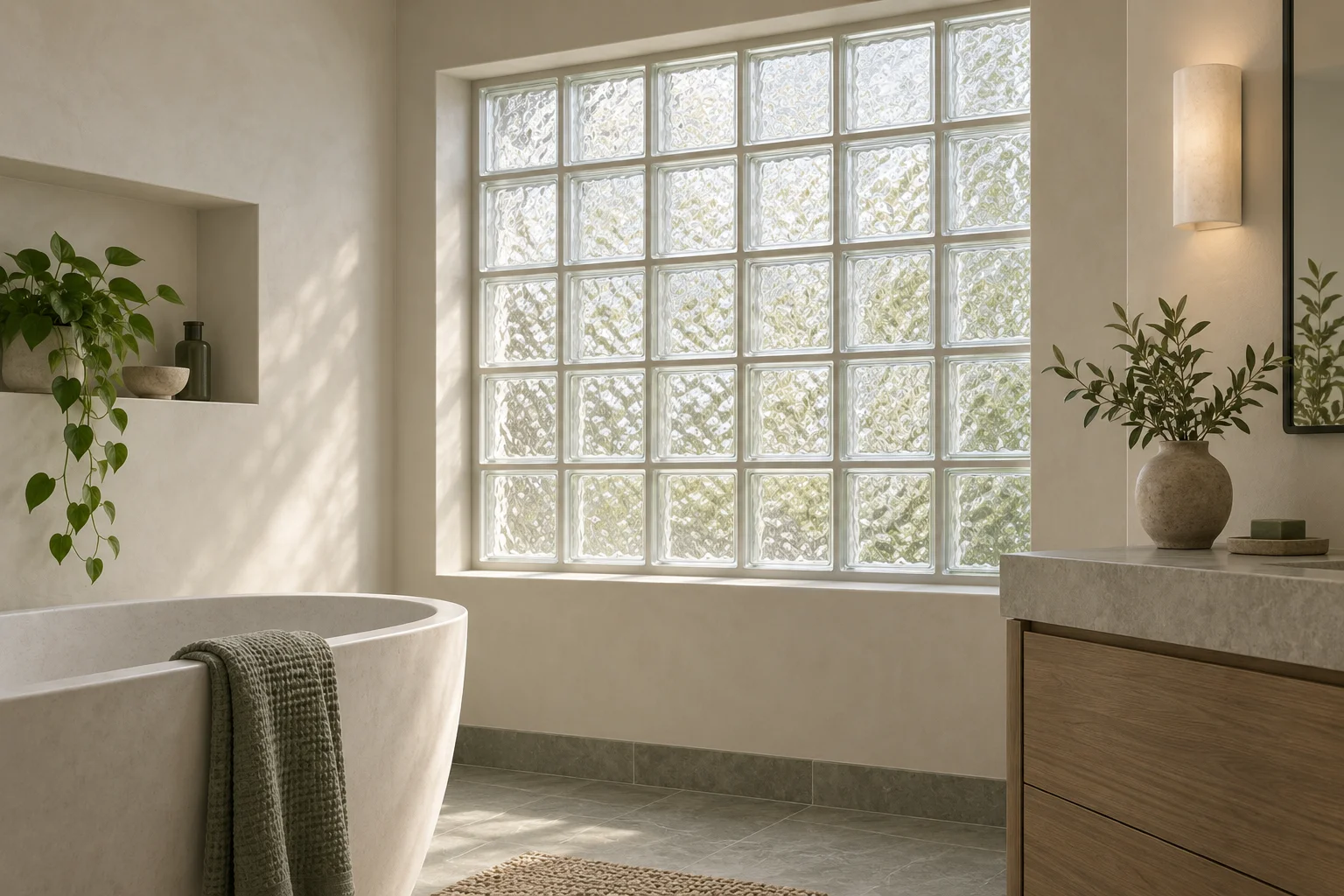
Glass-block windows can bring daylight into a room while obscuring a clear view, but the name does not tell you everything you need to know. Some panels use true glass blocks; others use acrylic resin that can look similar. Many glass-block panels are fixed, but some assemblies include a separate vent, while acrylic catalogs offer operating styles.
For homeowners comparing options in Orlando, Florida, the important questions are what the panel is made of, how its surface affects visibility, and whether the opening actually ventilates. This guide explains those distinctions, shows how to compare configurations, and gives you a practical list of details to document before requesting a proposal. Confirm the exact material and opening method in writing rather than assuming either from appearance.
Key Takeaways
- Glass-block windows use individual glass blocks, while similar-looking acrylic block windows are made from resin.
- Surface patterns and finishes can change daylight and visibility, so compare actual samples instead of assuming complete privacy.
- Some glass-block assemblies include a separate vent, while acrylic catalogs also offer operating window styles.
- Photograph the opening and request written details for material, pattern, dimensions, frame and ventilation before ordering.
What Are Glass Block Windows?
A glass-block window is a panel made from individual glass blocks, usually arranged to admit light while changing how clearly people can see through it. Some similar-looking products use acrylic resin instead of glass, so appearance alone does not identify the material.
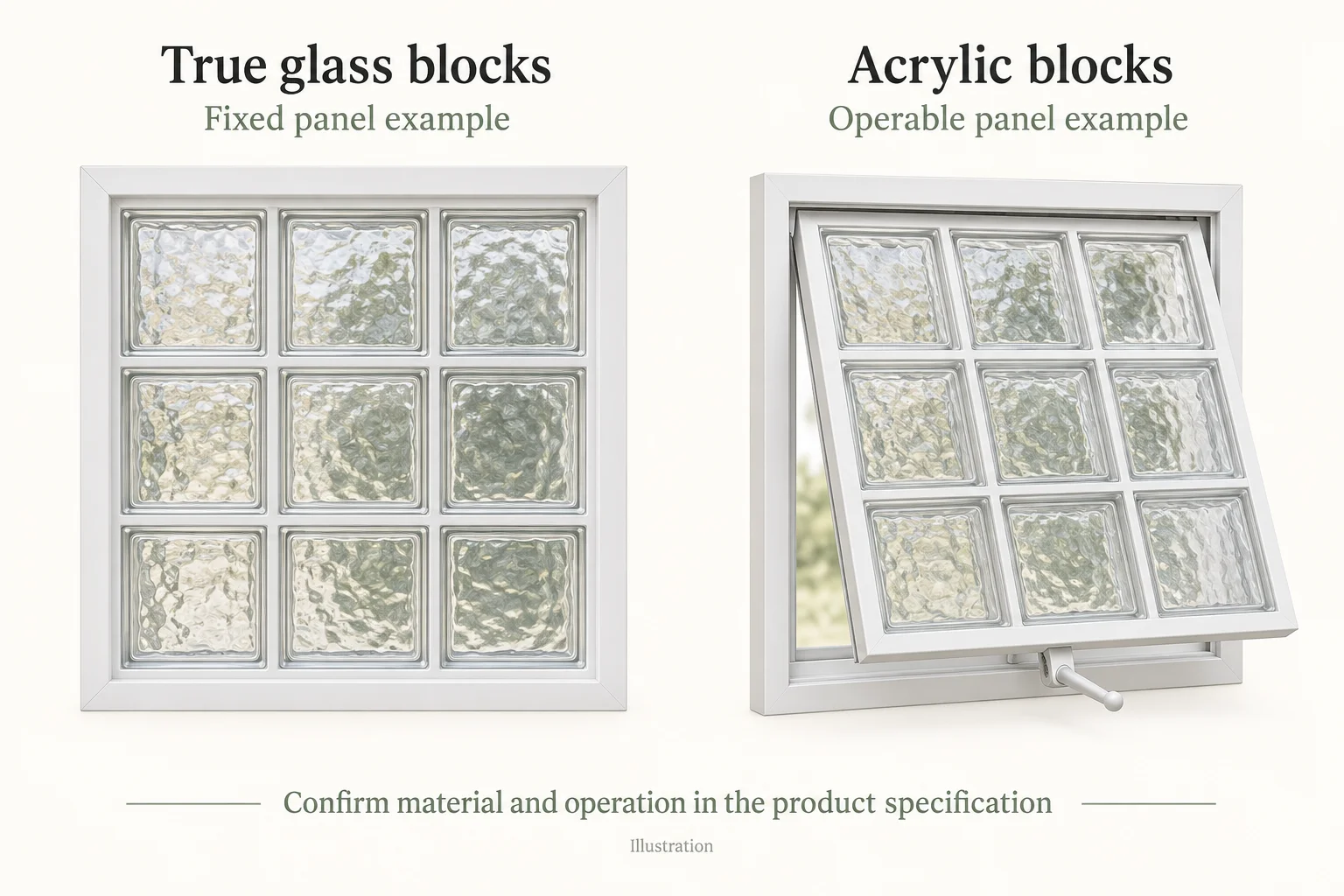
True glass-block windows and acrylic block windows are distinct product categories. Manufacturer catalogs distinguish fixed true-glass-block panels from acrylic windows offered in fixed and operating styles. Confirm both the material and exact configuration in the product description or proposal.
Compare Privacy and Ventilation
A block pattern can admit daylight while distorting or obscuring the view, but the result depends on the product’s surface and finish. Glass-block surfaces include smooth, wavy and designed textures; some finishes manage light transmission and privacy. Those descriptions do not guarantee total privacy or a precise amount of light.
If privacy matters, look at physical samples in the room and lighting conditions where the window will be used. Consider what you need to see from inside, what you want to obscure from outside, and whether daylight or a view matters more. A product name or texture description cannot settle those choices on its own.
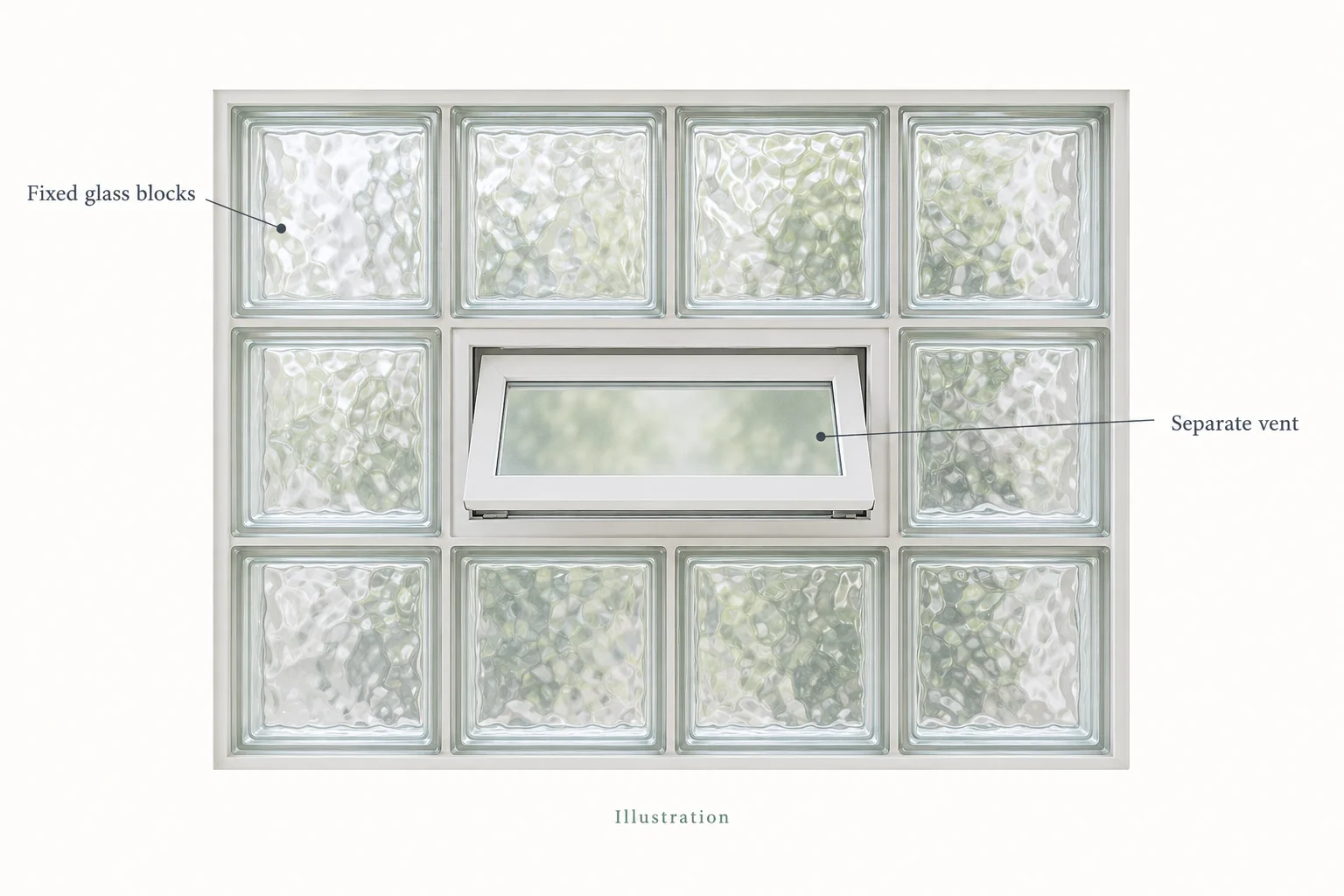
Ventilation is a separate decision. One glass-block product example shows fixed blocks surrounding a separate rectangular vent, with vent options depending on the overall window size. The blocks remain fixed; the vent is the part intended to provide fresh air. Acrylic catalogs, by contrast, include operating styles such as awning, casement and hopper windows. Do not assume every block panel has a vent, or that the listed configurations are interchangeable.
| Option | Material and opening action | What to verify |
|---|---|---|
| Fixed true-glass-block panel | Glass blocks; fixed panel | Confirm the glass material, pattern, finished dimensions and frame. |
| Glass-block panel with separate vent | Glass blocks plus a distinct vent option | Confirm that a vent is included, its location and how it opens. |
| Operable acrylic block window | Acrylic resin; operating style varies | Confirm acrylic material, exact style, dimensions and opening action. |
Treat the table as a question list, not a ranking: suitability depends on your goals and the opening. Ask for the complete configuration in writing so you can compare like with like.
Prepare the Opening and Product Questions
Before discussing a replacement, record what you need the window to do. Note the room and how it is used, then describe the balance you want among daylight, visibility and ventilation. A bathroom, for example, may call for different privacy priorities than a utility room; that is a planning question, not proof that one product suits every room.
Photograph the full opening from both inside and outside. If you have product labels or paperwork, photograph those too. These records can help distinguish the existing panel and frame from what you want next. Do not infer the material from a block-like appearance, and do not treat a small separate vent as equivalent to a larger opening.
When comparing proposals, ask for the exact material, pattern or finish, finished panel dimensions, frame, and whether the product is fixed or includes a separate vent or operating sash. Have the responsible installer assess the opening and explain applicable requirements before you order. A written specification helps reveal when proposals describe different products, even if both use a similar-looking block design.
For example, one homeowner might compare a fixed true-glass-block panel with a block panel that includes a separate vent. Another might compare those choices with an operable acrylic block window. The useful comparison is not a general claim that one option is better; it is whether the stated material, privacy goals and opening method match the room and the homeowner’s priorities.
Bring your photos and written questions so the conversation can start with the opening and product you are considering.
FAQs
Do glass-block windows open for ventilation?
Some glass-block window assemblies include a separate fresh-air vent, but the blocks themselves do not open. Other panels are fixed. Ask where the vent is located and how it opens, and confirm these details in the product specification; not every glass-block window includes a vent.
Are acrylic block windows the same as glass-block windows?
No. Acrylic block windows are not the same as glass-block windows: acrylic resin is not glass, even when the products look similar. Catalogs list fixed true-glass-block panels and acrylic windows in fixed or operating styles. Ask the seller to identify the material and exact operating style in writing rather than relying on appearance or a general label.
What should I ask before choosing a glass-block window?
Compare the material, privacy and daylight you want, whether a separate vent matters, and the exact dimensions and frame in a written proposal. Photograph the existing opening from inside and outside, then ask the responsible installer to assess it and explain applicable requirements before ordering. This keeps the comparison focused on the actual product and opening.
Conclusion
Compare material, visibility and opening method rather than choosing by a block-like appearance alone. Your next step is to photograph the opening and write down the exact panel, frame and ventilation questions you want answered. A clear written specification makes it easier to compare proposals for your Orlando, Florida home. Call Windows and Doors by Martin Toro and ask about your project.