Window & door planning
MDF Doors in Lakeland, Florida: Where They Fit at Home
Learn how mdf doors compare with solid wood, where they work well indoors, and what to consider for moisture, finish, and upkeep in Lakeland, Florida homes.
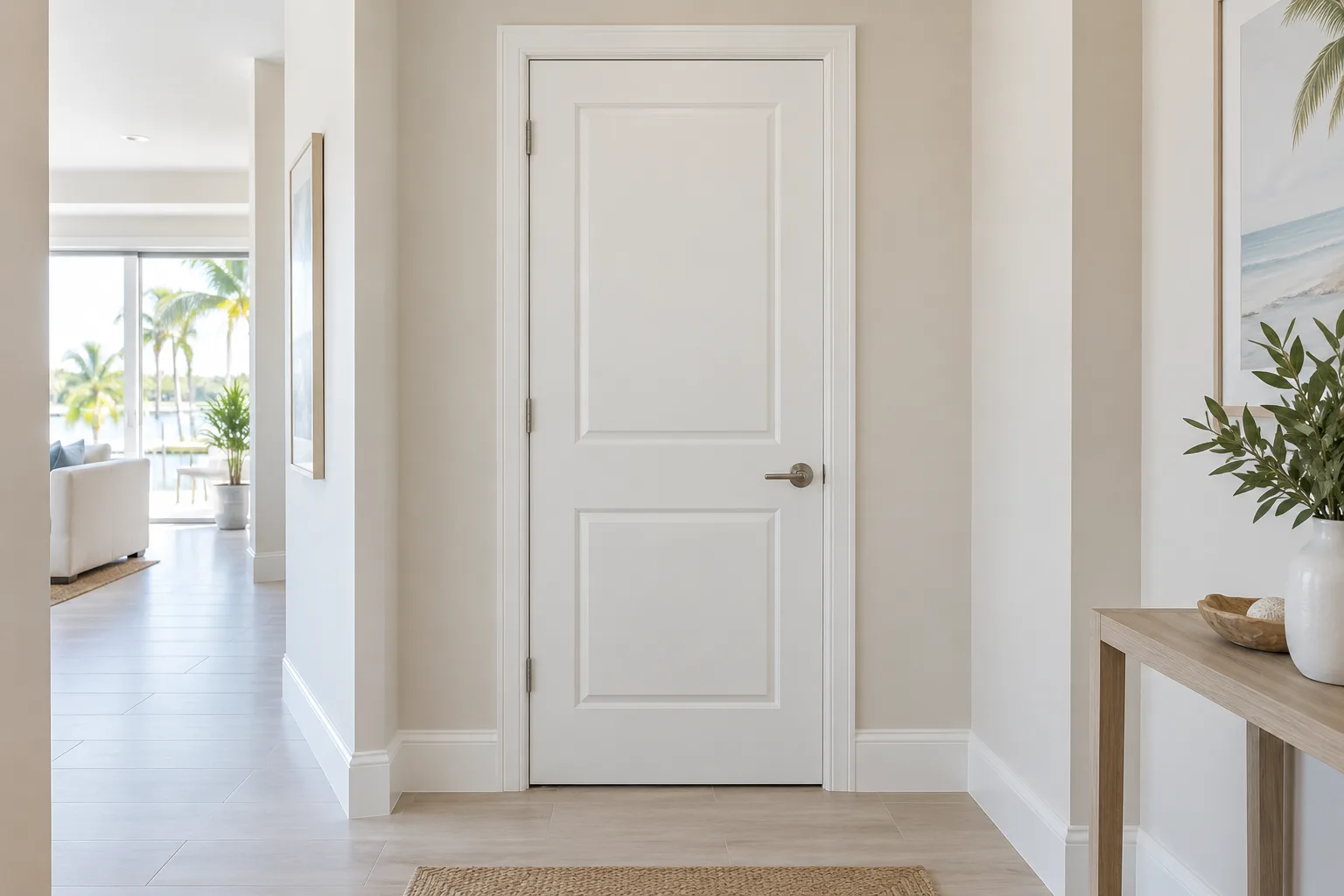
MDF doors suit dry interior rooms when you want a smooth, paintable finish; they are a poor default for wet or exterior locations. MDF means medium-density fiberboard, an engineered wood made from compressed wood fibers and resin. In Lakeland, Florida, compare the door’s full construction, finish, and intended location. The MDF label alone does not tell you what its core or edges contain.
Key Takeaways
- Choose MDF when a smooth painted surface matters more than visible natural wood grain.
- Compare the core, edges, and hardware support because MDF doors use different construction methods.
- Keep standard MDF away from standing water and protect exposed edges from repeated moisture.
- Use a door made for its location; an interior MDF door is not automatically suitable outdoors.
How MDF Doors Are Constructed and Finished
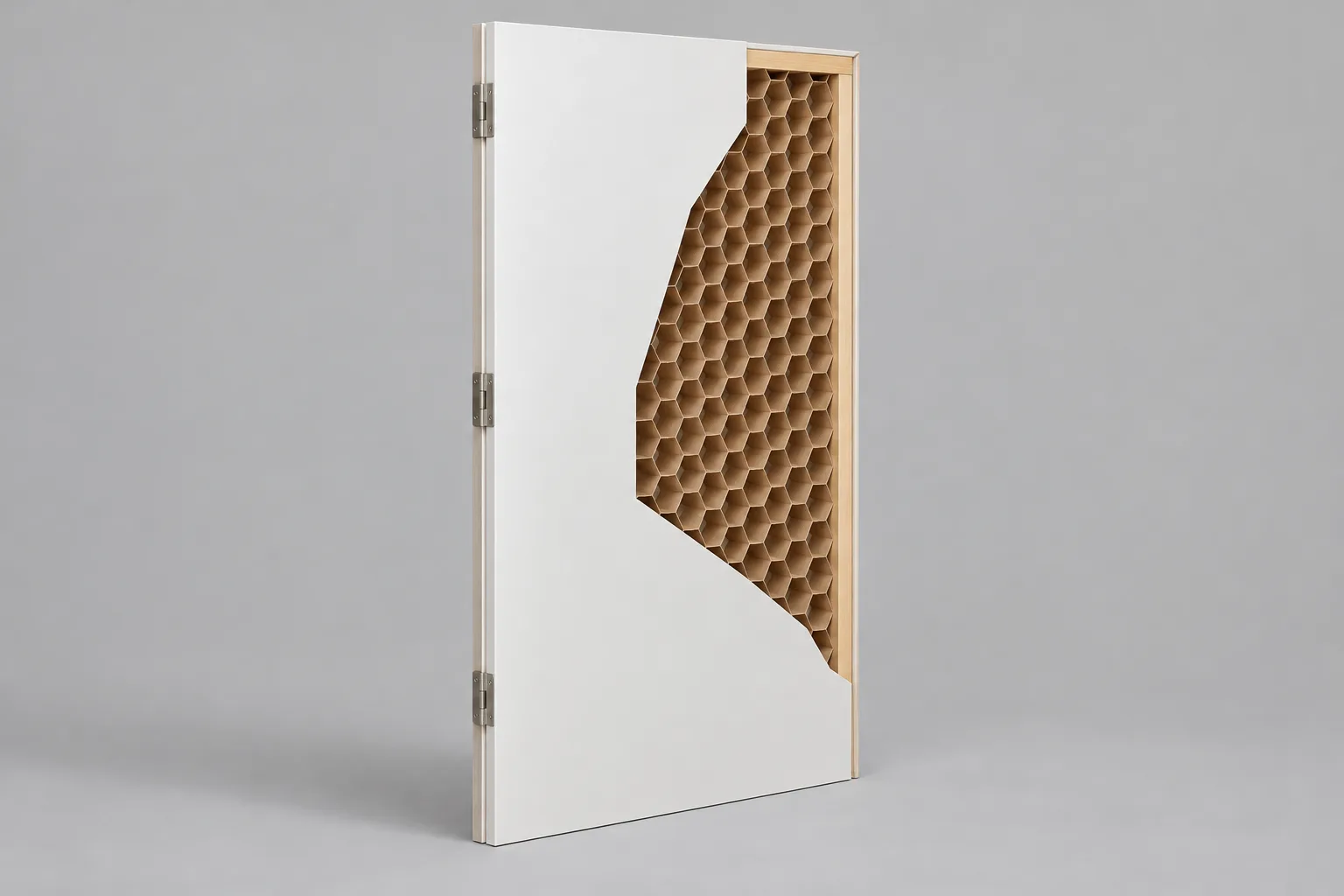
MDF describes a material, not one standard door design. The European Panel Federation: interior doors explains that MDF can form the frame or skins of a flush door, which may also contain a lightweight paper honeycomb core. Other designs use solid MDF panels or MDF faces over an engineered core. So check the product’s construction details instead of assuming every MDF door is solid throughout.
That distinction matters when you compare weight, feel, and hardware support. The European Panel Federation: interior doors notes that a door frame holds the skins apart and provides fixing points for hinges, handles, and locks. A door with a lightweight core may feel different from a solid-core design. Compare the exact product’s weight and construction with the room’s needs and planned hardware.
MDF’s smooth surface and machining properties support a quality paint finish. The European Panel Federation’s interior doors guide describes these benefits. Sun Mountain’s high-quality MDF interior doors provide a manufacturer-specific example. The company uses MDF panels and factory-primes its doors for onsite painting. Before painting, ask what preparation the door needs and whether it arrives primed or finished.
The finish changes a room’s look. Matching painted doors create a consistent appearance in a hallway or bedrooms, especially when the trim shares the paint color. Choose a wood or veneer surface when visible grain is part of the design. Masonite’s interior door construction guide describes wood-panel doors with MDF panels and veneered wood stiles and rails, showing how mixed materials can create a wood appearance.
Which Door Surface Fits Each Room
Compare these common options by the finish you want and how the room uses the door. A painted bedroom door and a stained office door may have similar shapes, but they call for different surface choices. The table gives a starting point; the specific product’s construction and location rating should settle close calls.
| Door choice | Surface look | Typical fit |
|---|---|---|
| MDF | Smooth, paintable | Dry interior room |
| Solid wood | Natural grain | Grain-led design |
| Veneered | Real-wood face | Wood look, mixed construction |
| Hollow core | Finish varies | Closet or light-use room |
Choose an interior-rated MDF door for a painted bedroom or office. For a stained room where grain matters, compare solid wood and veneer, then check which material forms the visible face. In a lightly used closet, a lightweight hollow-core door may suit the need. Choose it when a more substantial feel is not important. The European Panel Federation describes moisture-resistant MDF grades for humid conditions. That grade alone does not establish suitability for direct splashes or standing water.
Where MDF Doors Can Handle Moisture
Moisture is the main reason to be selective about MDF. The European Panel Federation says prolonged exposure to extreme damp can make standard MDF swell. It describes moisture-resistant grades for humid conditions, but that designation alone does not show that a door can withstand direct splashes or standing water.
A dry bedroom and a bathroom beside a shower face different moisture exposure. For example, consider where steam, splashes, and wet towels reach the bathroom door, especially its bottom edge and cutouts. Also, read the door’s stated use and care guidance. The European Panel Federation says moisture-resistant MDF grades suit humid conditions; however, that designation alone does not establish suitability for direct splashes or standing water.
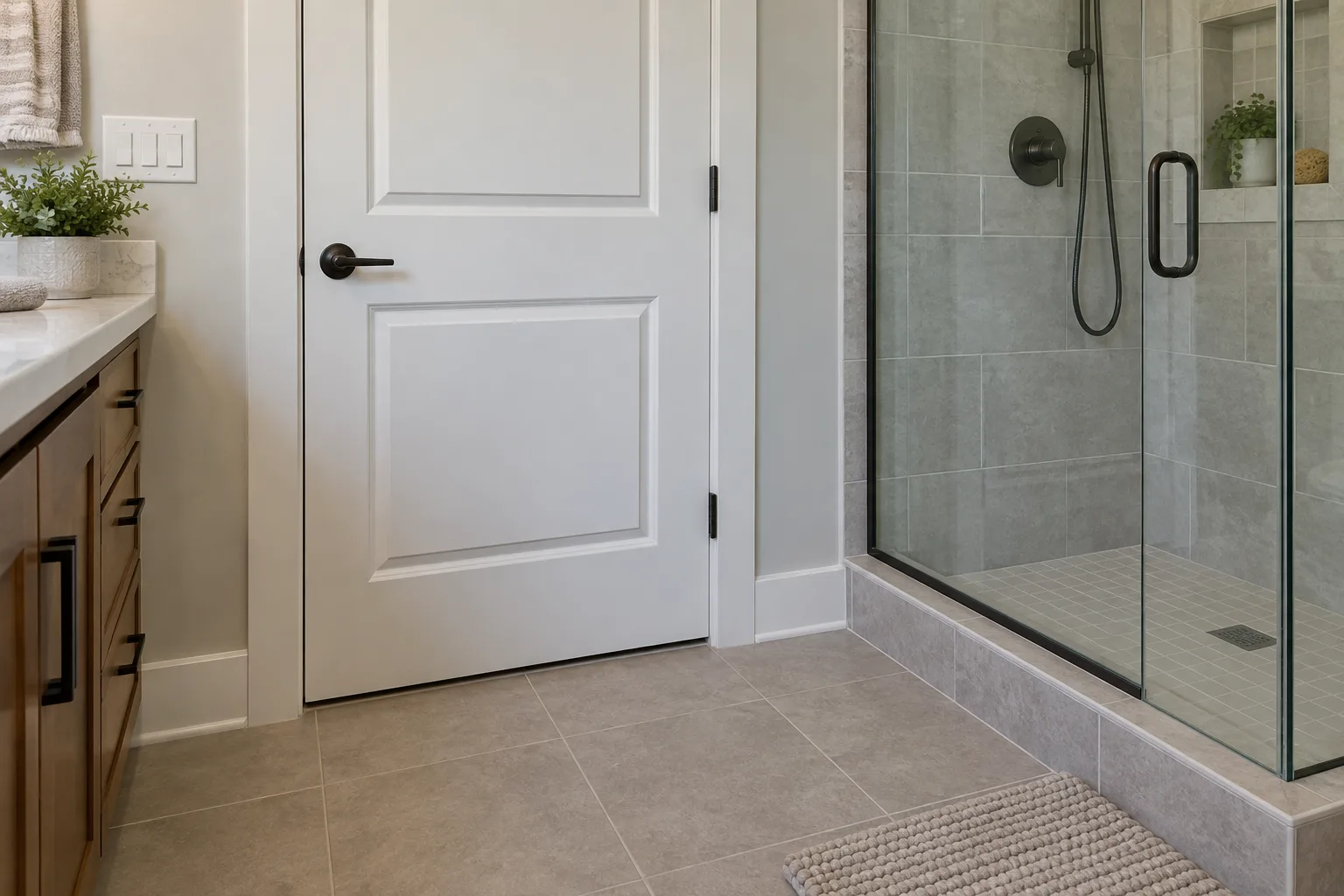
Because MDF edges can absorb moisture faster than broad surfaces, protect them from exposure. The European Panel Federation explains that moisture moves through MDF and that door skins can cover frame edges. So check the finished door’s edge sealing, then follow the maker’s instructions for painting, cleaning, and handling.
Painting an interior MDF door does not make it suitable for an entry. Choose a door designed for exterior use and the conditions at that opening. Sun Mountain’s MDF door information covers interior applications, so follow the selected exterior door maker’s finish and maintenance directions.
How to Check Door Fit and Hardware Support
Fit and hardware are the next checks when replacing a door. Measure the slab’s width, height, and thickness, and note the swing and hinge positions. The slab is the moving panel; the jamb is its surrounding frame. Also inspect the frame and floor, since an opening that is out of square can affect how a replacement fits and closes.
Then compare the door’s weight with its hardware support. Sun Mountain describes solid poplar edge caps for hinge mounting on its own MDF interior door model. That construction detail applies to that model, not every MDF door. For your selected door, request its construction details and check support at hinge and lock locations. Do this especially when replacing a lighter door with a heavier one.
For example, compare the door’s face, core, hardware support, and finish before choosing by label alone. Is it solid MDF, MDF-faced, or mixed-material? What is inside the core, and how are the hinge and lock positions supported? Also, check whether it arrives primed or finished and what care it requires. Then match its surface, weight, and moisture limits to the room.
FAQs
Are MDF doors a good choice for bedrooms?
MDF doors can work well in dry bedrooms when manufacturers design them for interior use. The European Panel Federation notes that MDF has a smooth surface suited to painted finishes. Compare the door’s core and edge construction too, since those details affect its weight and the support its hinges and other hardware need.
Can MDF doors be used in bathrooms?
Some MDF doors suit humid settings, but the European Panel Federation says standard MDF is not necessarily waterproof. Check the door’s stated use and care guidance, and consider shower steam, splashes, and wet floors. Protect exposed edges and keep standing water away from the door.
What is the difference between an MDF door and a solid-core door?
MDF names a material; solid core describes the door’s interior construction. The European Panel Federation describes MDF as a wood-based panel material. An MDF door may use MDF for its frame or skins around a lightweight core, or contain solid MDF panels. Read the construction details to compare its face, core, edges, and frame.
Conclusion
Choose MDF for a smooth painted finish in a dry interior room; choose wood or veneer when visible grain leads the design. For bathrooms, check the product’s stated moisture guidance and protect vulnerable edges. In Lakeland, Florida, call Windows and Doors by Martin Toro and ask about your own windows or doors.
Call Windows and Doors by Martin Toro and ask about interior doors