Window & door planning
Interior Sliding Doors for Poinciana, Florida Homes
Learn how interior sliding doors compare by track style, privacy, and room use, including bedroom and trackless options, for homes in Poinciana, Florida.
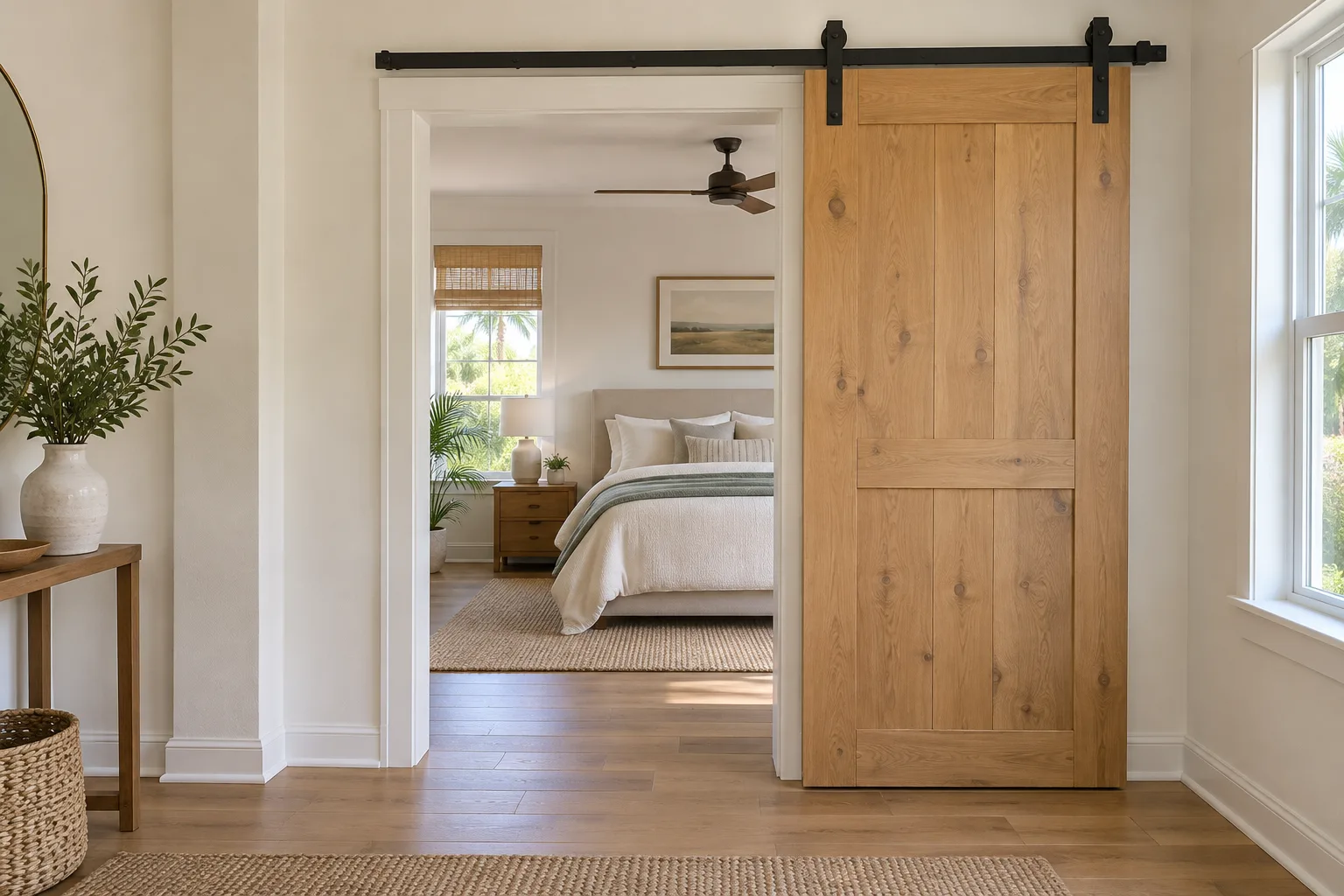
Interior sliding doors suit rooms where a swinging panel would block furniture or use floor space. Choose a wall-mounted slider when the adjacent wall is clear, or a pocket door when the wall can hold the panel. For a bedroom, compare privacy and sound as well as space. In Poinciana, Florida, start with the room’s layout and daily use.
Key Takeaways
- Choose a wall-mounted slider when clear wall space can hold the open panel beside the doorway.
- Choose a pocket door when the wall can accommodate its cavity and you want the doorway clear.
- For bedrooms, weigh privacy, sound, and light alongside the space each sliding door needs.
- Measure the opening, trim, wall space, floor level, and hardware clearance before comparing door options.
How to Choose a Sliding Door for Your Room
Start with the room’s main constraint. A slider avoids the swing area of a hinged door, but its panel still needs somewhere to go. For example, a dresser beside a bedroom entrance may block a swinging door; a slider can solve that problem if the adjacent wall is clear. Marvin says door choices depend on traffic flow, space, privacy, light, and design. It also notes that a larger swinging door takes more space, and furniture needs clearance from its path. Mark the swing area on the floor, then compare it with the wall or cavity a slider would need.
Check privacy and sound separately when choosing a sliding panel. Raydoor describes pocket doors as providing secure closing doors. For a bedroom beside a busy living area, decide whether blocking sightlines is enough. Then consider whether sound separation matters just as much. Rustica recommends considering sightlines, sound, and gaps around a sliding panel in bedrooms and bathrooms. Rustica notes that a solid panel can conceal shelving, while glass can share light between living spaces. Choose a panel for the room’s use as well as its appearance. Glass may brighten a dark hall, but it can offer less visual privacy.
How Wall-Mounted and Pocket Doors Use Space
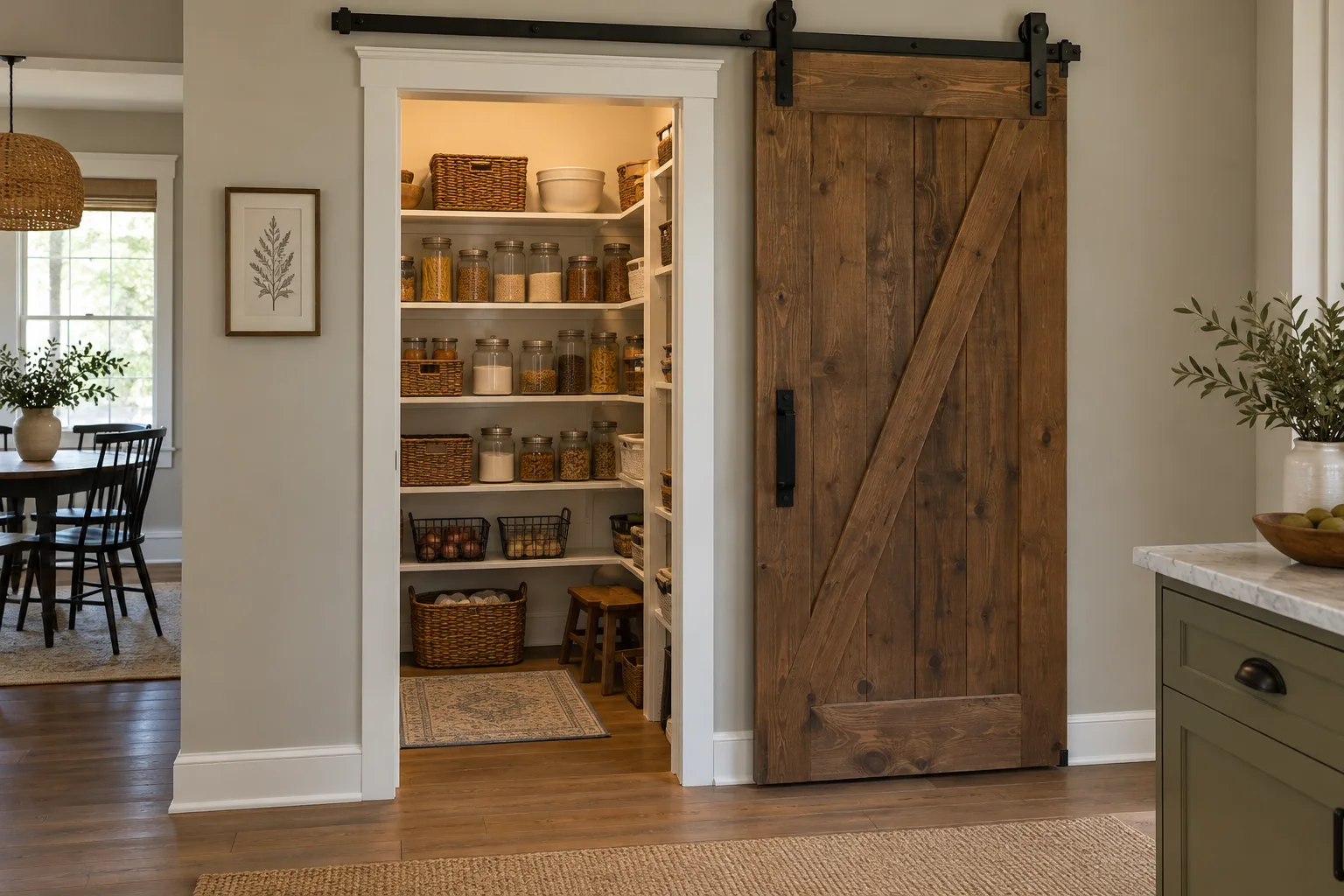
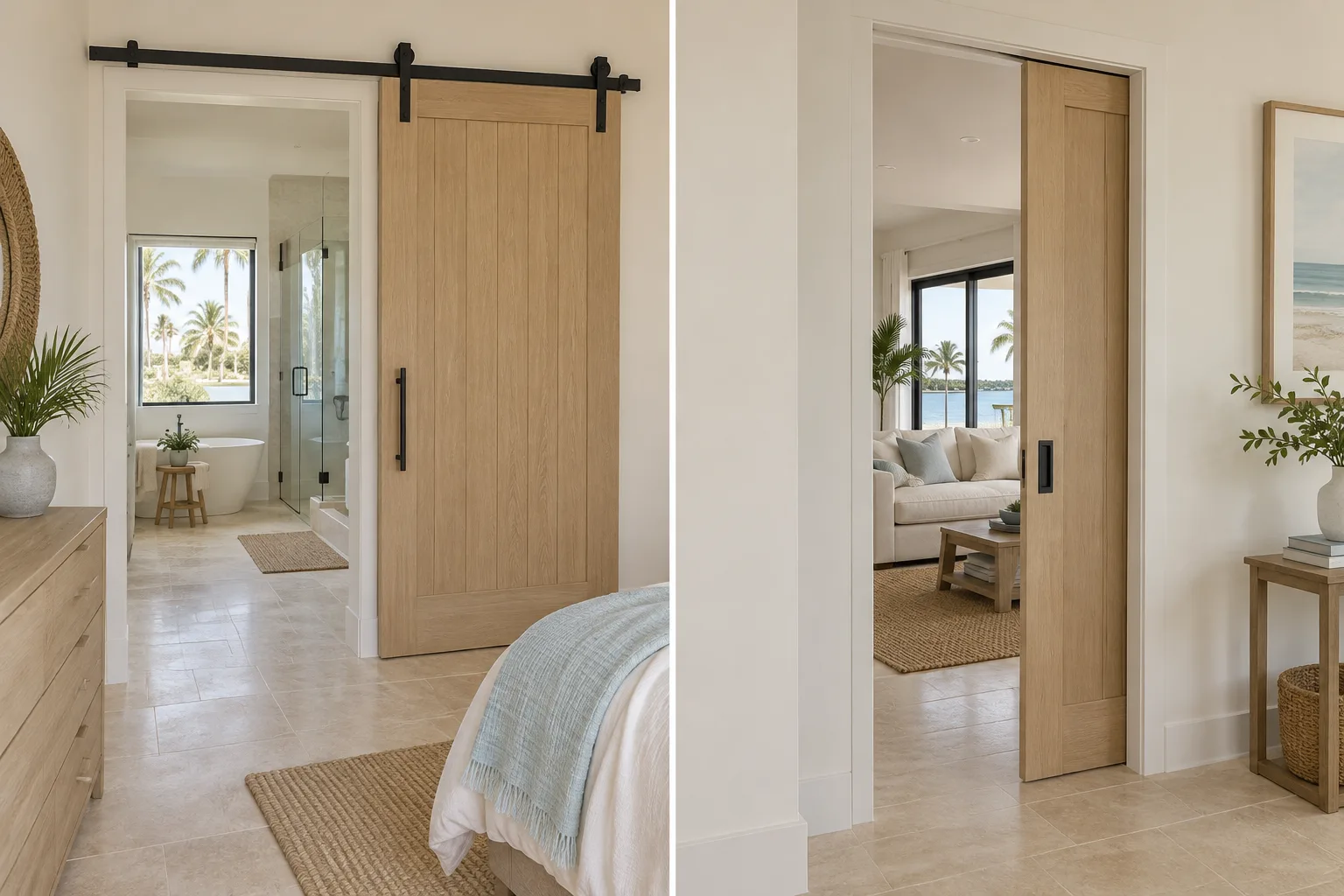
A wall-mounted slider travels beside the opening and remains visible when open. It needs uninterrupted wall space for both the panel and its track. Rustica advises planning for overlap and trim clearance because panel dimensions differ from the finished opening. Include switches, artwork, and furniture when measuring the panel’s route. This option can suit a pantry or closet with a clear wall beside it. However, a single panel may cover part of the opening when parked. For closet access, picture drawers and shelves in use, then check whether the remaining opening is wide enough for what you need to reach.
A pocket door slides into a cavity inside the wall, leaving no panel parked beside the doorway. It can help where a swinging door would crowd a narrow hall or compact room. Raydoor says pocket doors can suit spaces where swinging doors lack clearance and nearby wall space cannot accommodate a slider. In a remodel, framing, wiring, plumbing, and finish work can affect whether the wall has room for the panel. Before choosing one, identify the wall section it would occupy. Also consider how someone could reach the panel if it needs adjustment or repair.
What to Know About Trackless Sliding Doors
A trackless sliding door still needs guidance. Raydoor describes a design with a floor guide inside the pocket. Raydoor also says traditional floor tracks are available for its systems. Ask where the guide sits and whether it crosses the walking path. That affects how the floor feels and how easily you can clean the threshold. For accessibility, consider the full route, including clear passage and floor transitions. The ADA’s 2010 Standards set minimum requirements for specified government, public accommodation, and commercial facilities. They do not set a general requirement for every private home. Pauli + Sohn’s interior system has a floor guide adjustable to glass thickness. That is a product-specific feature, not a universal standard.
What to Measure Before Choosing Interior Sliding Doors
Before comparing proposals, record the finished opening, trim projection, floor level, clear wall beside the opening, and available space above it. Rustica notes that panel weight, thickness, and mounting support affect hardware fit. These details help you compare the door and its required support against the room you actually have. Then check the full path of travel. For a wall slider, confirm the panel clears trim. Also check that it has room to park. For a pocket door, consider the wall cavity. Ask to see the panel move through its full range. Watching only the opening motion leaves final coverage and clearance unanswered.
How to Compare Sliding Door Options
Use the comparison to narrow the choice by the space each design needs. A wall-mounted panel requires a clear route beside the opening; a pocket door uses space inside the wall. For a closet, the deciding factor may be usable access to shelves, because overlapping panels can leave part of the opening covered.
| Option | Panel when open | Space needed | Good fit |
|---|---|---|---|
| Wall-mounted slider | Beside opening | Clear adjacent wall | Pantry or room |
| Pocket door | Inside wall | Wall cavity | Tight hall |
| Bypass slider | Panels overlap | Wall or opening width | Wide closet |
| Swinging door | Projects into room | Clear swing area | Open floor space |
The choice turns on where you can spare space and how much of the opening must stay clear. A closet may favor bypass panels if a single slider would block too much access. A narrow hall may favor a pocket door if its wall can hold the cavity; otherwise, a wall-mounted panel needs clear parking space.
FAQs
Are interior sliding doors suitable for a bedroom?
Yes, they can suit a bedroom when the panel provides the privacy you need and the layout works. Check sightlines, gaps, and sound expectations. A solid panel can block views, while glass shares light between rooms; neither choice alone determines sound separation.
What is a trackless sliding door?
A trackless sliding door generally has no continuous floor track, but it still needs a guide to control the panel. Raydoor describes a system with a guide inside the pocket. Ask where a specific door’s guide sits and whether it crosses the walking path.
How do I measure for an interior sliding door?
Measure the finished opening, trim projection, floor level, clear wall beside the opening, and available space above it. Also note the panel’s weight and thickness, since these affect hardware fit and mounting support. For a pocket door, check whether the wall can contain the panel.
Conclusion
Choose the door that fits the room’s available space, privacy needs, and usable opening. In Poinciana, Florida, measure the doorway and note what matters most in daily use. Call Windows and Doors by Martin Toro to ask about your own project.
Call Windows and Doors by Martin Toro and ask about interior doors