Window & door planning
Tempered Glass Windows: What to Check in Orlando, Florida
Tempered glass is a treatment, not a full window specification; compare pane construction and get the proposed product and glass details in writing.
If a replacement proposal lists tempered glass, you may still not know what glass is actually going into the window. “Tempered” describes a treatment, while terms such as laminated and double-pane describe different properties or construction. Those labels can overlap, so they are not necessarily competing choices. For a homeowner in Orlando, Florida, the useful question is not just whether glass is tempered, but what the complete proposed package includes.
This guide explains what tempering means, compares it with other glass terms, and gives you practical questions to ask before approving a replacement. You’ll also learn what to record if you’re trying to identify glass already in your home—and why a missing marking does not settle the question. A clear written scope helps you compare proposals without treating one label as a complete performance claim.
Key Takeaways
- Tempered glass is heat-treated and rapidly cooled; the term describes a treatment, not a complete window specification.
- Laminated glass uses an interlayer to retain pieces, while double-pane describes an assembly of separate glass lites.
- Tempered, laminated, and insulating construction describe different details, so one window package may combine them.
- Record visible markings and ask the manufacturer or installer to identify the product and each pane’s treatment in writing.
What Is Tempered Glass?
Tempered glass is glass that has been heated and rapidly cooled, changing its strength and the way it breaks. The term describes a treatment, not a complete window specification.
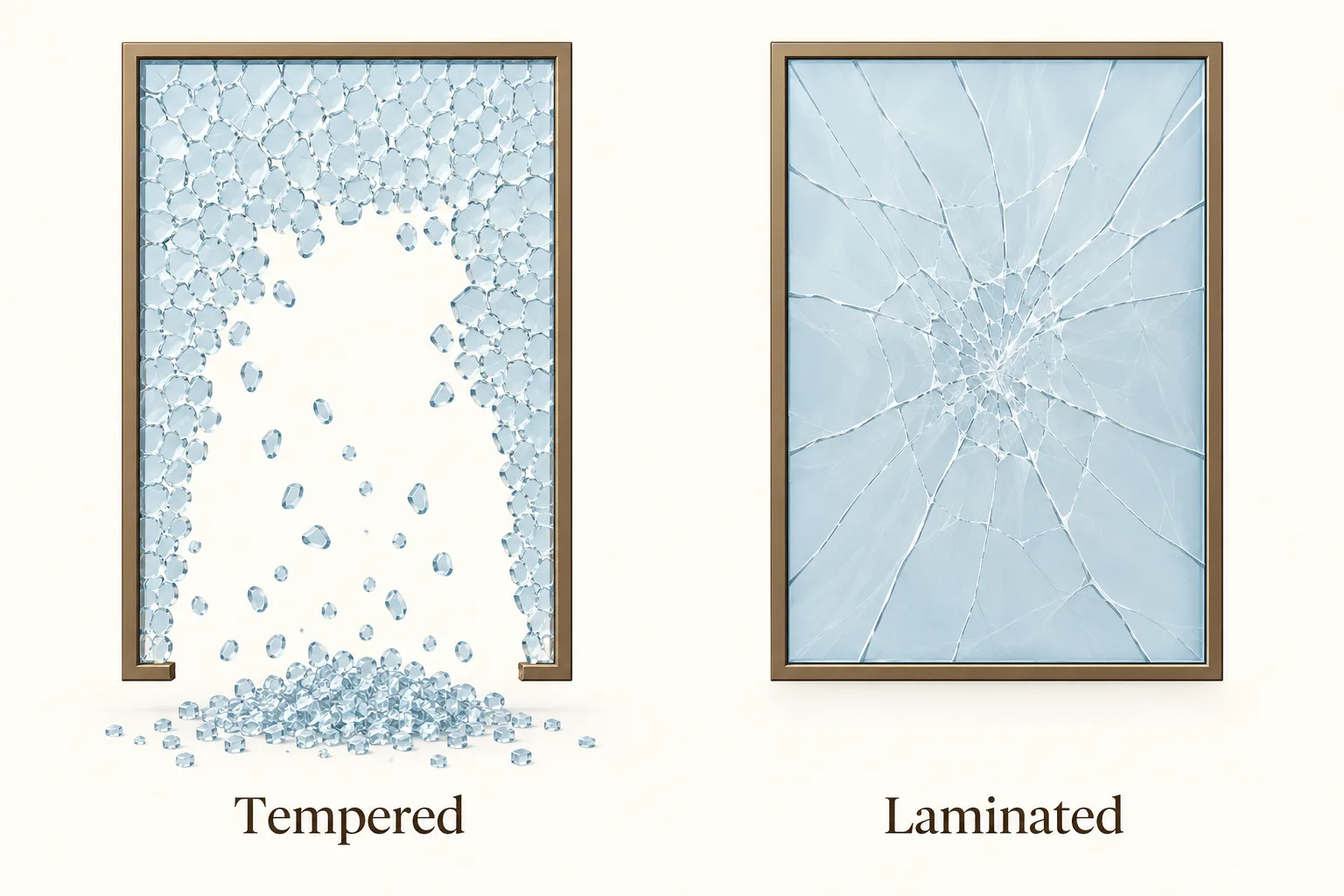
Fully tempered glass generally breaks into small pieces, but it can still break, and breakage can leave an opening. Laminated glass differs: its plastic interlayer can retain broken pieces. Tempering alone does not establish that a window provides hurricane protection, security, or guaranteed safety. Think of “tempered” as one detail in a product description, not the whole description.
Separate Treatment From the Glass Package
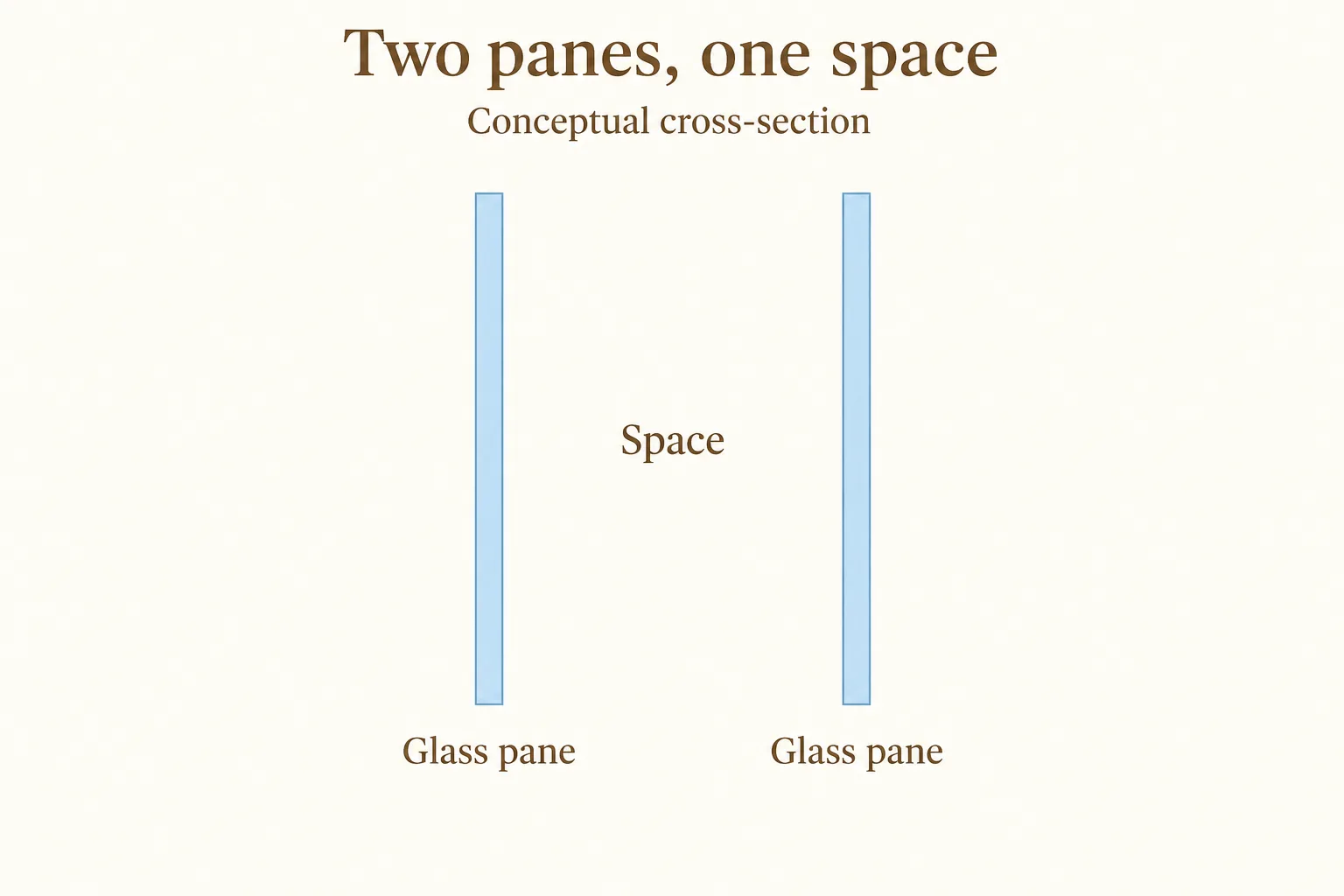
Glass labels answer different questions. Tempered describes how a lite was treated; laminated describes layers joined by an interlayer; insulating or double-pane describes an assembly of multiple lites separated by a space. A replacement specification can include more than one of these features, so compare the actual construction rather than choosing among labels as if they were mutually exclusive.
| Term | What It Describes | What to Verify in the Proposal |
|---|---|---|
| Tempered | Heat treatment that changes the glass’s strength and break pattern. | Which lite is tempered; do not assume every pane is. |
| Laminated | Glass pieces joined by a plastic interlayer that can retain fragments after breakage. | Whether laminated construction is specified and where it is used. |
| Insulating or double-pane | Two or more glass lites separated by a space in an insulating unit. | The number of lites and the construction of each one. |
These terms do not provide a complete rating for a window. Low-E refers to a coating, and obscure glass uses texture to reduce visibility; those also describe different properties. A product may combine distinct treatments or features, but the label alone does not establish energy performance, safety, security, or hurricane protection. Ask for the exact manufacturer, series, and glass package rather than inferring benefits from a single term.
Verify the Specification Before Replacement
Before comparing proposals, gather details for the specific opening. Note the room and window location, save existing paperwork, and photograph any visible corner marking without removing or disturbing the glass. If the marking is absent or unreadable, treat the glass type as unconfirmed; a mark’s absence is not a diagnosis.
Ask the manufacturer or installer to identify the actual product and state in writing which panes receive each treatment. Also clarify whether the proposal covers only glass or a complete-window replacement. A short label such as “tempered glass” does not identify the product series, full assembly, or which lite receives the treatment.
For example, “tempered window” leaves open what product is proposed and whether the description applies to one or every lite. A more useful scope names the manufacturer and series, describes the glass package, and identifies which lites receive each treatment. You can then compare that scope with another proposal without assuming either includes features that were never listed.
Have the responsible professional confirm the requirements for the specific opening. These questions clarify scope but do not determine local code compliance. Do not remove glass or attempt a break test to identify it.
FAQs
What Does Tempered Glass Mean in a Window?
Tempered glass has undergone a heating and rapid-cooling process that changes its strength and break pattern. It is a treatment applied to glass, not a complete description of a window. The window may also have multiple panes or other features, so check the proposed glass package and which lite receives the treatment rather than relying on the label alone.
Is Tempered Glass the Same as Double-Pane Glass?
No. Tempered and double-pane describe different things. Tempered refers to heat treatment; double-pane refers to an insulating assembly with two pieces of glass separated by a space. A tempered lite can be included in an insulating unit, but the label does not tell you whether every pane is tempered. Ask for the exact glass construction in writing.
How Can I Tell Whether My Window Is Tempered?
A missing or unreadable marking does not confirm the glass type. If a visible corner marking is present, photograph it without removing or disturbing the glass, and keep any existing product paperwork. Ask the manufacturer or installer to verify the specific product and glass package; do not diagnose the glass from an absent mark or by testing it yourself.
Conclusion
“Tempered glass” identifies a treatment, not the complete window or glass package. Compare the written details for each opening, including the number of lites and which receive each treatment. Before approving replacement work, ask the responsible professional to identify the proposed product and confirm the scope and requirements for your specific opening.