Window & door planning
Front Door With Sidelights in Altamonte Springs, Florida
Compare sidelight glass by inspecting samples from both sides, reviewing the entrance layout, and confirming what an entry-door replacement proposal includes.
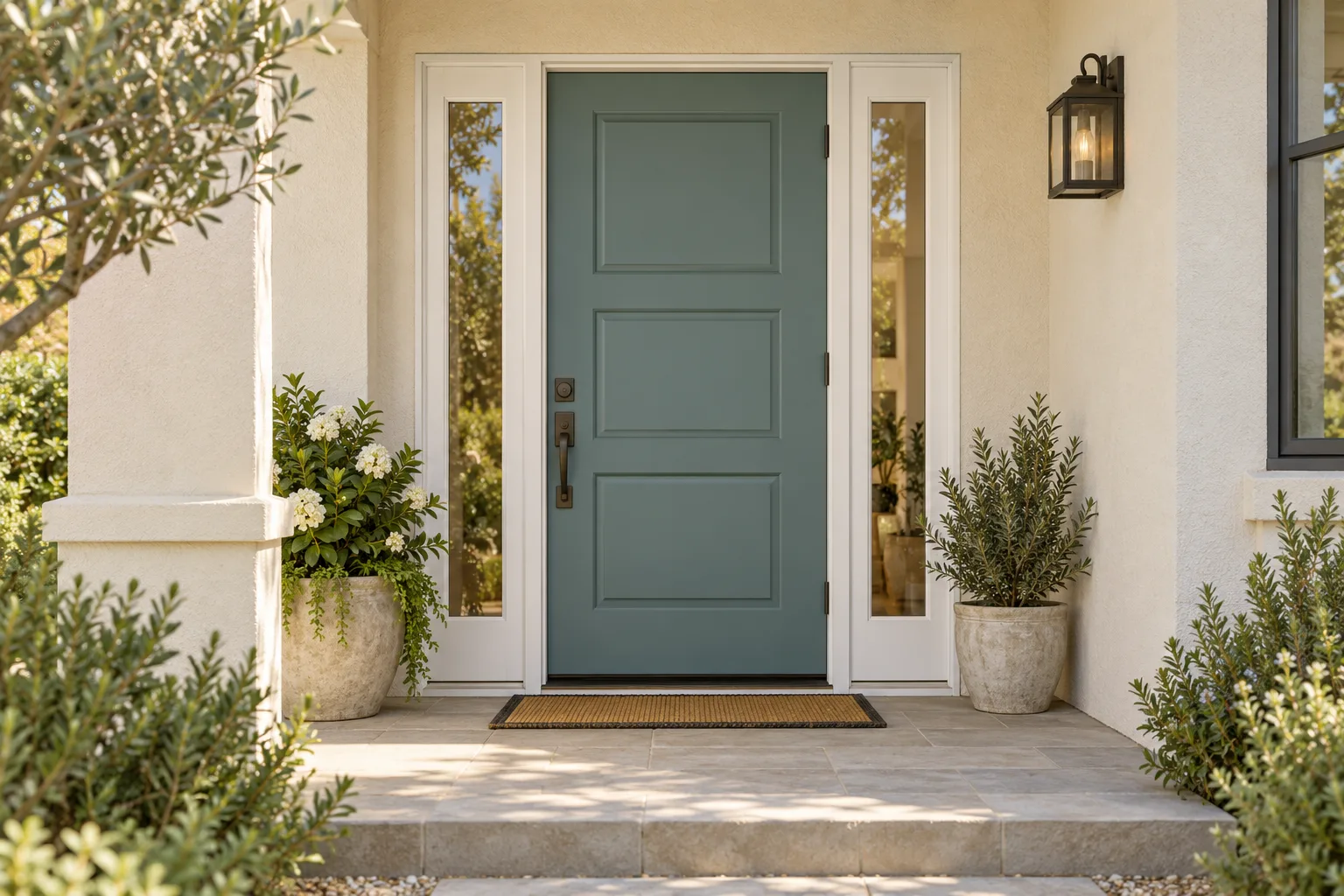
A front door with sidelights has glazed panels beside the door, and the glass can affect what someone sees through the entrance. Choosing well takes more than picking a style name or browsing a catalog photo. Consider three separate decisions: panel placement and glass area, the view through the selected glass, and what the replacement proposal includes. In Altamonte Springs, Florida, start with your sightlines and the exact proposed glass—not assumptions about a label. This guide explains how to inspect a sample from different positions, compare the full entrance layout and confirm the written scope. You’ll learn what to ask before settling on an entry door with sidelights, without treating appearance as a guarantee of privacy or fit. The best choice depends on how you use the entry.
Key Takeaways
- A front door with sidelights has vertical glazed panels beside the door; layout and glass type are distinct decisions.
- Privacy-oriented and decorative glass can include clear areas, so inspect the exact sample from relevant positions and lighting.
- A marked-up entrance elevation helps compare the proposed door, sidelights and glass boundaries with your preferred sightlines.
- Confirm what is being replaced, identify the proposed panels and glass, and clarify frame, trim and finishing responsibilities.
What Is a Front Door With Sidelights?
A front door with sidelights has one or more vertical glazed panels beside the door. Panel placement and glass area are layout choices; clear, privacy-oriented and decorative glass are choices about appearance and view. Consider them together, but don’t assume one determines the other.
Before comparing samples, name the view you want: open, more screened, or patterned. That gives you a consistent question to use as you review alternatives.
Understand the Glass Beside the Door
Product configurations can differ in both glass area and pattern. Compare those features separately instead of relying on a style name to describe the whole entrance.
Available choices vary by product. Pella distinguishes full-light and craftsman-light configurations by glass area. Therma-Tru describes clear, privacy and decorative options, while ProVia notes that decorative designs can combine clear beveled, colored and privacy glass. So “decorative” alone doesn’t tell you which parts of a panel are clear.
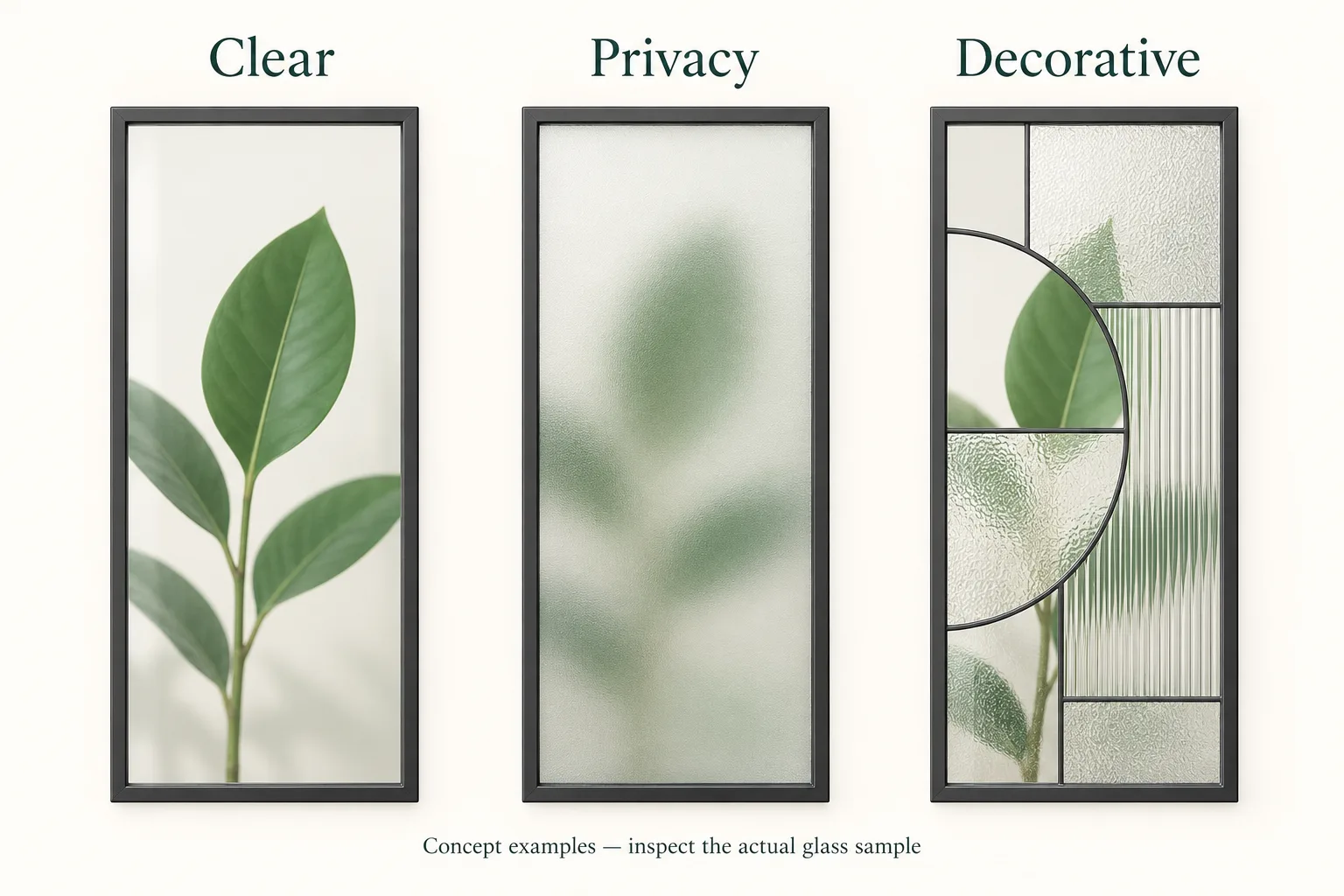
Use a sample to investigate the view and a drawing to evaluate the layout. Neither a category name nor an illustration establishes how a specific panel will look in your entrance.
Choose Glass for the View You Want to Keep
Choose glass by the view you want to keep or limit, then evaluate the exact sample instead of relying on a category name. Privacy-oriented glass does not guarantee that someone can’t see through it. ProVia notes that appearance can change with viewing distance and the balance of interior and exterior light; its product photos may show objects directly behind glass in a well-lit setting.
Imagine a visitor approaching a front hall with a view toward the living area. Stand where that visitor would stand and note what you would rather reveal or screen. Inspect the proposed sample from inside and outside, at different distances and under lighting relevant to your entry. The view from the walkway may differ from the view close to the door.
A decorative pattern with clear portions may affect the view differently from a sample that appears consistently obscured. Ask which parts of the sample are clear, patterned or privacy glass, and look through those areas from positions that matter to you. You are judging a particular product under particular viewing conditions—not a universal privacy rating.
Compare the Whole Entrance Layout
Evaluate the entrance as one composition before settling on glass. Request a front elevation—a straight-on drawing—that marks the door, each sidelight and the boundaries of their glass. This lets you compare the amount and placement of glass with your preferred sightlines.
Pella’s full-light and craftsman-light examples show that glass area can differ. Use those terms as prompts to review the proposed layout, not substitutes for a drawing of the specific entrance. Compare the drawing with the opening being assessed and point out what you want to see or screen. Don’t assume an arrangement will fit an existing opening without assessment.
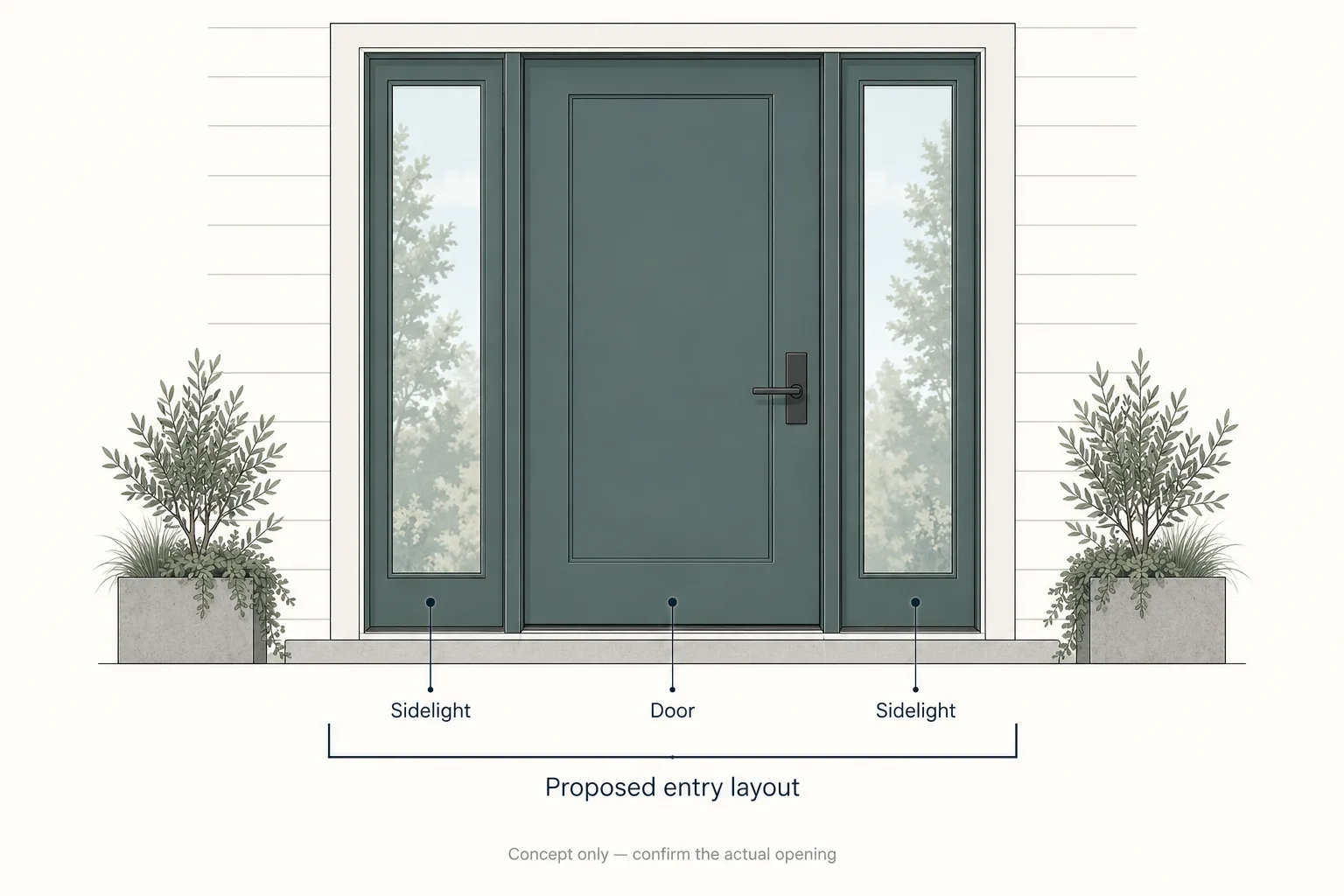
If ventilation matters, ask whether the exact proposed sidelight operates and request a demonstration. Some manufacturers offer vented sidelights, but not every model opens or suits this entrance. The product identification and demonstration help clarify what is under consideration.
| Your priority | What to review | Question to ask |
|---|---|---|
| Limit the view into the entry | Exact glass sample from both sides and relevant distances | What can I see through this sample from the approach and inside? |
| Keep a view through the panel | Proposed glass and marked-up entrance elevation | Which parts are clear, and how does the layout frame the view? |
| Explore ventilation | Exact product identification and operation demonstration | Does this proposed sidelight open, and can you show me how it works? |
Confirm the Proposed Replacement Scope
A useful proposal states what changes and what is expected to remain. Ask whether the door, sidelights or both are included; request identification of the proposed panels and glass; and clarify who handles the frame, trim and finishing. If you hope to replace only the door and retain existing sidelights, treat compatibility as something to assess—not an assumption based on appearance.
Consider two hypothetical proposals that both say “decorative sidelight.” One includes an illustration showing clear and patterned areas; the other gives only the style name. The illustration helps you visualize the intended design, but it is not a view through the installed glass.
A shared style label does not make two proposals equivalent. Compare the selections side by side, and ask for clarification wherever the documents leave the intended result unclear.
For an entry project in Altamonte Springs, Florida, Windows and Doors by Martin Toro can discuss entry-door options. Bring a photo of the entrance and ask for a written scope identifying the proposed glass and work included.
FAQs
Do Sidelights Always Provide Privacy?
No. Sidelights may use clear, privacy-oriented or decorative glass, and decorative designs can combine clear and privacy elements. A label or catalog image doesn’t establish what you’ll see through a specific panel. Inspect the proposed glass from both sides, at relevant distances and under lighting similar to your entry before deciding whether its view suits your home.
What Is the Difference Between Full-Light and Craftsman-Light Sidelights?
Full-light sidelights have more glass area, while craftsman-light sidelights have smaller glass panes. The proposed layout still depends on the specific door system. Ask for a front elevation that marks the door, each sidelight and the glass boundaries. Compare it with the existing opening and your preferred sightlines; don’t assume an arrangement will fit without an assessment.
Can a Sidelight Open for Ventilation?
Some manufacturers offer vented sidelights, described as small swinging panels with removable screens. That doesn’t mean every sidelight opens or that a specific model suits your entrance. If ventilation matters, ask for the proposed product identification and a demonstration before approving the scope.
Conclusion
Choosing a front door with sidelights means weighing the view through the glass, the entrance layout and the replacement scope. A style name or catalog photo cannot settle those choices.
Before approving a proposal, compare the exact glass sample with a marked-up elevation. Confirm what stays, what changes, and who handles the frame, trim and finishing.
For an entry-door project in Altamonte Springs, Florida, Windows and Doors by Martin Toro can discuss entry-door options. Bring a photo of your entrance and note the sightlines you want to keep or limit.
Explore entry-door options with Windows and Doors by Martin Toro