Window & door planning
Fiberglass vs. Steel Exterior Doors for Lakeland Homes
Compare fiberglass vs steel exterior doors by finish, care and full-entry scope, then use a practical checklist to weigh options for a Lakeland home.
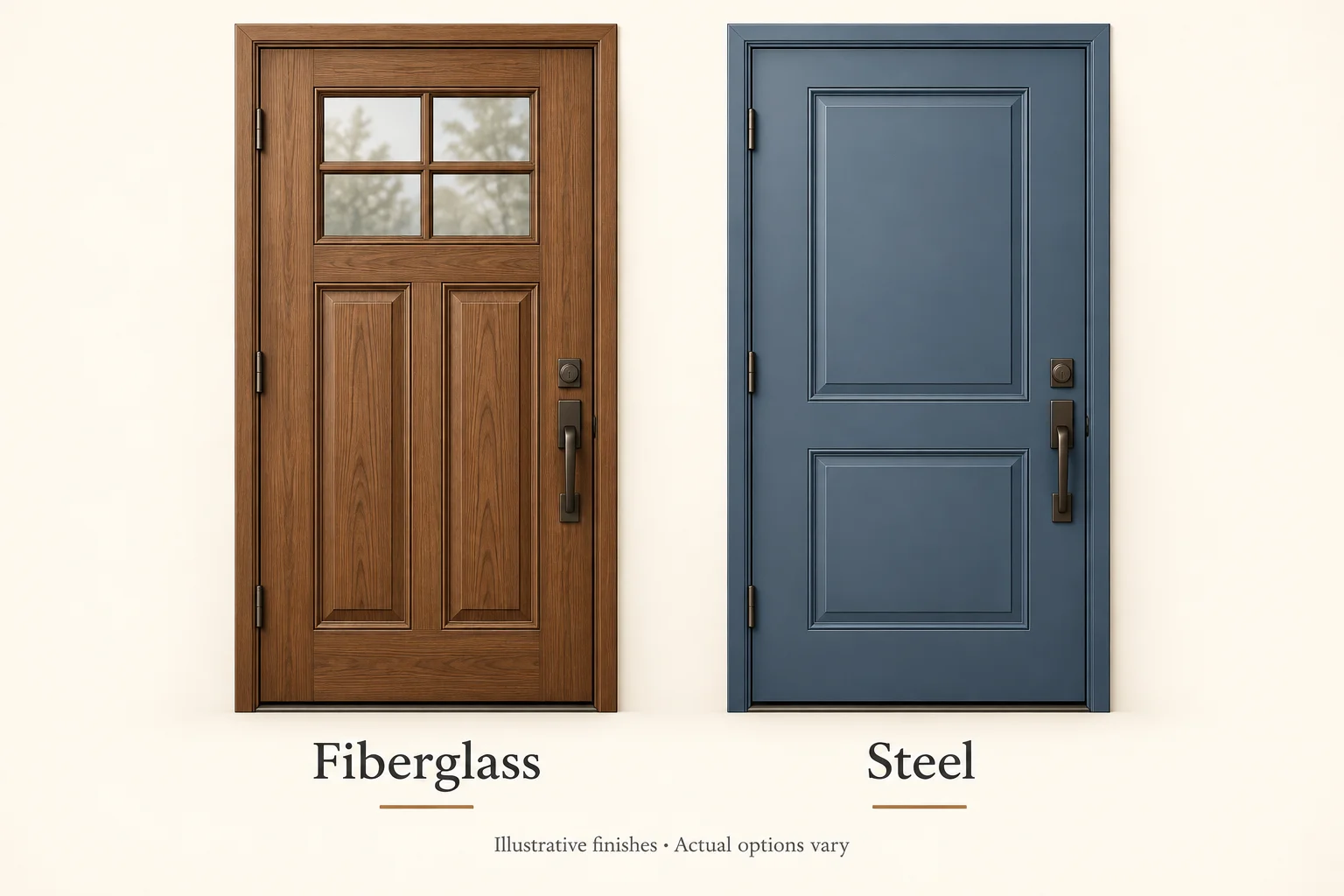
For a Lakeland homeowner comparing fiberglass vs steel exterior doors, appearance is only a starting point. Both materials can come in different textures and finishes, so a woodgrain look or a smooth painted surface does not settle the choice. Compare what the door is made of, how its finish fits your preferences, what care its instructions call for, and what comes with the complete entry. A homeowner drawn to a stained woodgrain look may weigh the available samples differently from someone set on a painted door. Neither preference alone proves which material is right. This guide explains the difference between fiberglass and steel doors, lays out a practical six-point comparison, and shows how to compare proposals for the same glass, frame, hardware and installation scope. The goal is a decision grounded in the actual products, not a universal winner.
Key Takeaways
- Fiberglass is a glass-fiber-reinforced plastic composite; steel doors use a steel face skin, with construction varying by model.
- A woodgrain look is not proof of wood or fiberglass; check the material and compare actual finish samples.
- Both materials need product-specific care, and damage to a steel coating may require attention to prevent rust.
- Compare proposals for the same glass, frame, hardware and installation scope before weighing their material choices.
What Are Fiberglass and Steel Exterior Doors?
Fiberglass is a composite material made from plastic reinforced with glass fibers; steel doors use a steel face skin, and some models include insulation and separate reinforcement behind it. A steel door is not necessarily a solid block of steel.
These terms describe the door material, not every component of the entry. A complete proposal may include a door panel, glass, frame and hardware. Those choices can differ even when two doors share the same material.
For each option, write down the panel material and the components included in the proposal. You can then see which details still need confirmation before comparing the entries.
Compare Finish and Everyday Preferences
Fiberglass and steel both allow finish choices, so start with the look you actually want rather than a label. Fiberglass can be molded to reproduce woodgrain and may be offered in stained or painted finishes. Steel doors can also have smooth or woodgrain textures. Available choices vary by product.
Imagine one Lakeland homeowner who wants a stained woodgrain look at the front entry. They can compare actual samples side by side and consider how each stain and grain pattern looks with the home’s exterior.
Now imagine a homeowner who wants a painted blue door. Either material might be worth considering if the selected product offers the desired color and texture. They can look at actual samples, then check the product information instead of assuming a smooth surface means steel or that a painted finish belongs only to one material.
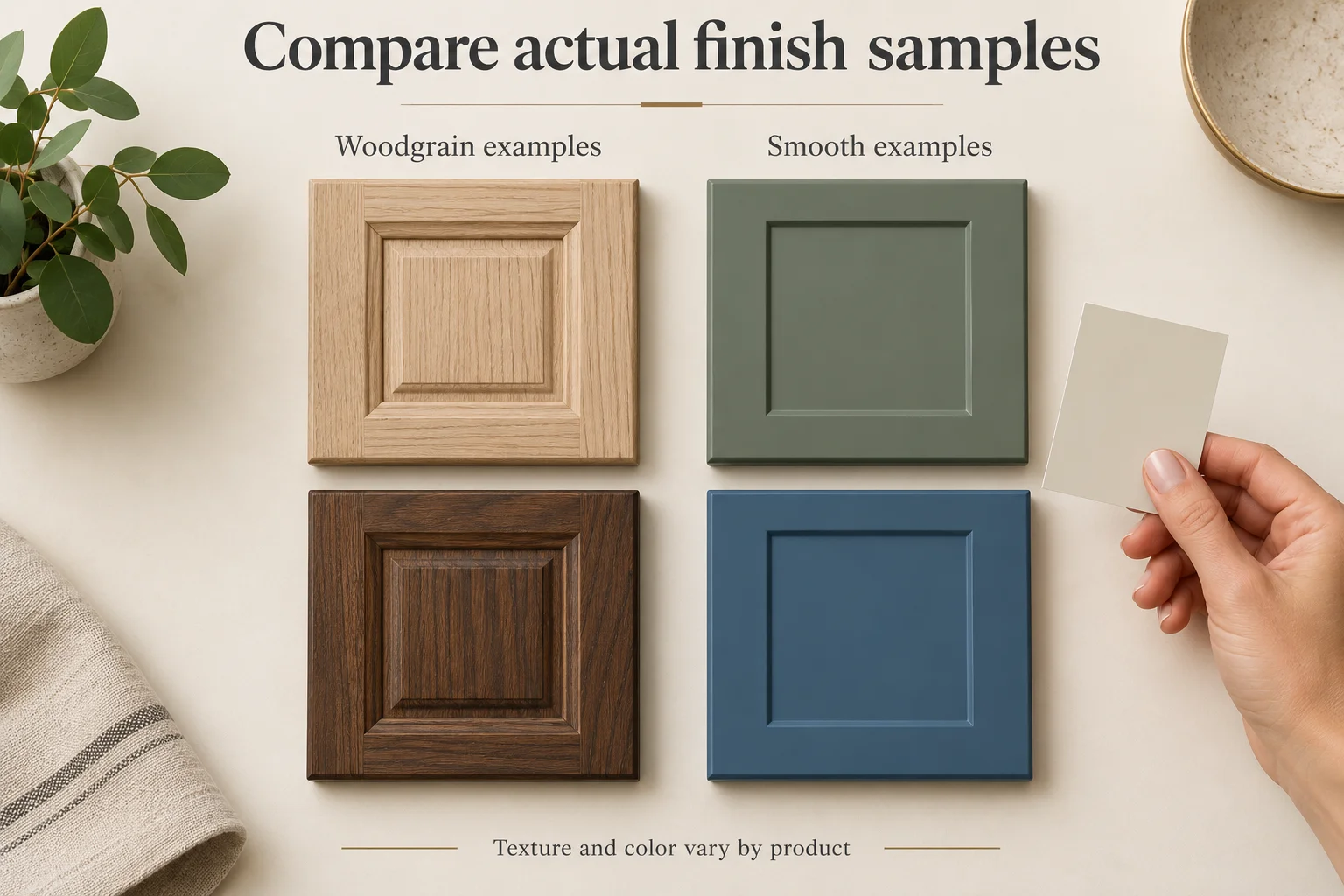
Use samples to judge color and texture in context, and the product specification to verify construction. Also note whether your preferred glass, grids or other selected details appear on the actual option being discussed.
Plan for Care and Finish Damage
Both materials need care, and a finish should not be mistaken for immunity to wear. ProVia’s guidance for its fiberglass and steel doors includes mild-soap-and-water cleaning, rinsing and drying, keeping weatherstripping clear of dirt and grit, and attending to the finish, hinges and lockset. Follow the instructions for the actual door; care and touch-up methods are product-specific.
Consider an everyday scuff near the entry. The sensible next step is not to guess how serious it is or reach for a generic repair method. Check the product’s care guidance and ask which touch-up approach is compatible with its finish. For steel, coating damage that reaches through galvanization can allow rust if the area is not properly primed and painted. That possibility is a reason to clarify care—not to assume every mark causes rust or that steel is unsuitable.
Fiberglass is described as resistant to denting and scratching, not immune to damage. Treat that as a distinction, not a promise about what any particular scuff or impact will do.
Compare Complete Proposals Before Choosing
A material label alone cannot make two proposals comparable. The panel is only one part of the entry, and selected glass, frame, hardware and installation scope can change what each proposal covers. Ask for these details in writing before you compare.
| Priority | What to verify | Useful comparison question |
|---|---|---|
| Woodgrain | Actual material and offered texture or stain | Is this specific woodgrain option available on the door shown? |
| Painted finish | Available colors, surface texture and finish | Can I review a sample of the selected painted finish? |
| Surface wear | Product-specific finish information | What does the care guidance say about finish damage? |
| Routine care | Cleaning, weatherstrip and hardware instructions | Can I see the instructions for this exact product? |
| Glass and configuration | Selected glass and other specified details | Do both proposals describe the same glass and configuration? |
| Comparable scope | Door, frame, hardware and installation details | Are the listed components and installation scope consistent? |
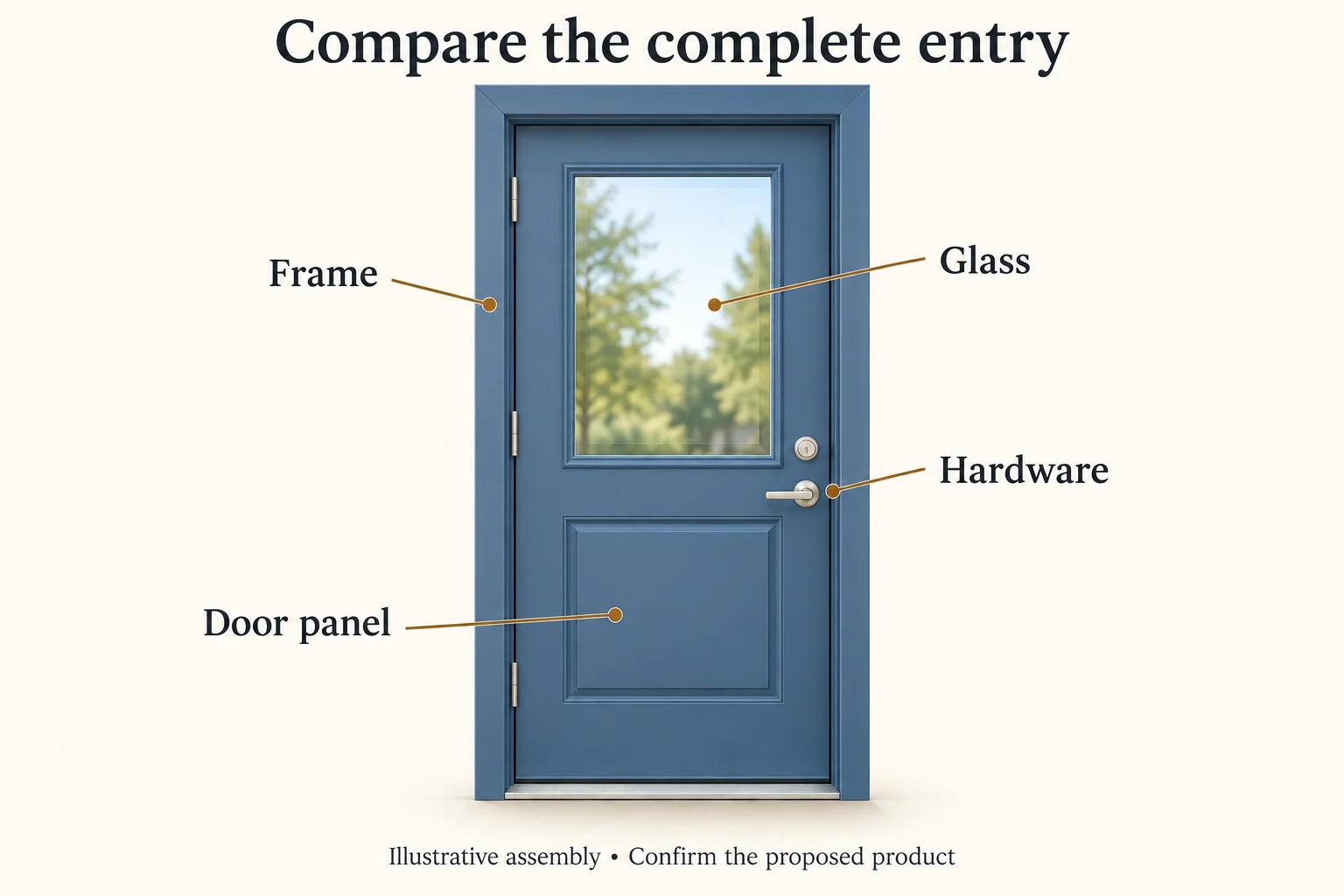
A practical way to use the table is to choose your two or three non-negotiables first. For example, if the finish matters most, shortlist only options whose actual samples meet your preference. Then compare care instructions and confirm that each proposal covers the same configuration. If one quote leaves a component vague, ask for clarification before deciding; avoid treating a material name as a substitute for a complete scope.
FAQs
Does a woodgrain finish mean the door is fiberglass?
No. A woodgrain appearance can be made in fiberglass, and steel doors may also come in woodgrain textures. Fiberglass can be molded to reproduce woodgrain; texture and finish alone do not establish what the door is made from. Check the product description or proposal for the actual material.
Do fiberglass and steel doors need maintenance?
Yes. Both materials need care, but the precise instructions and compatible finish touch-up depend on the specific product. Ask the seller or installer for the care information for the exact door under consideration, and keep it with the proposal so you can refer to it after installation. Do not assume that one material or finish is maintenance-free.
What should I compare in entry-door proposals?
Compare the specified door, glass, frame, hardware and installation scope, not just the material label. Then weigh the finish you prefer and the care instructions for the actual products. If a proposal leaves these details unclear, ask for them in writing before comparing the options.
Conclusion
Fiberglass and steel entry doors can both offer varied appearances, but the finish does not tell the whole story. Choose by matching the material, finish, care expectations and complete system details to your priorities.
Before deciding, identify the glass, frame, hardware and installation scope you want included in each proposal. Lakeland homeowners can discuss entry-door options for their opening with Windows and Doors by Martin Toro and compare a clearly defined proposal.