Window & door planning
Door Threshold Replacement in Lakeland, Florida: Fit and Function
Learn how to spot threshold problems, compare replacement options, and prepare for a door threshold replacement in Lakeland, Florida.
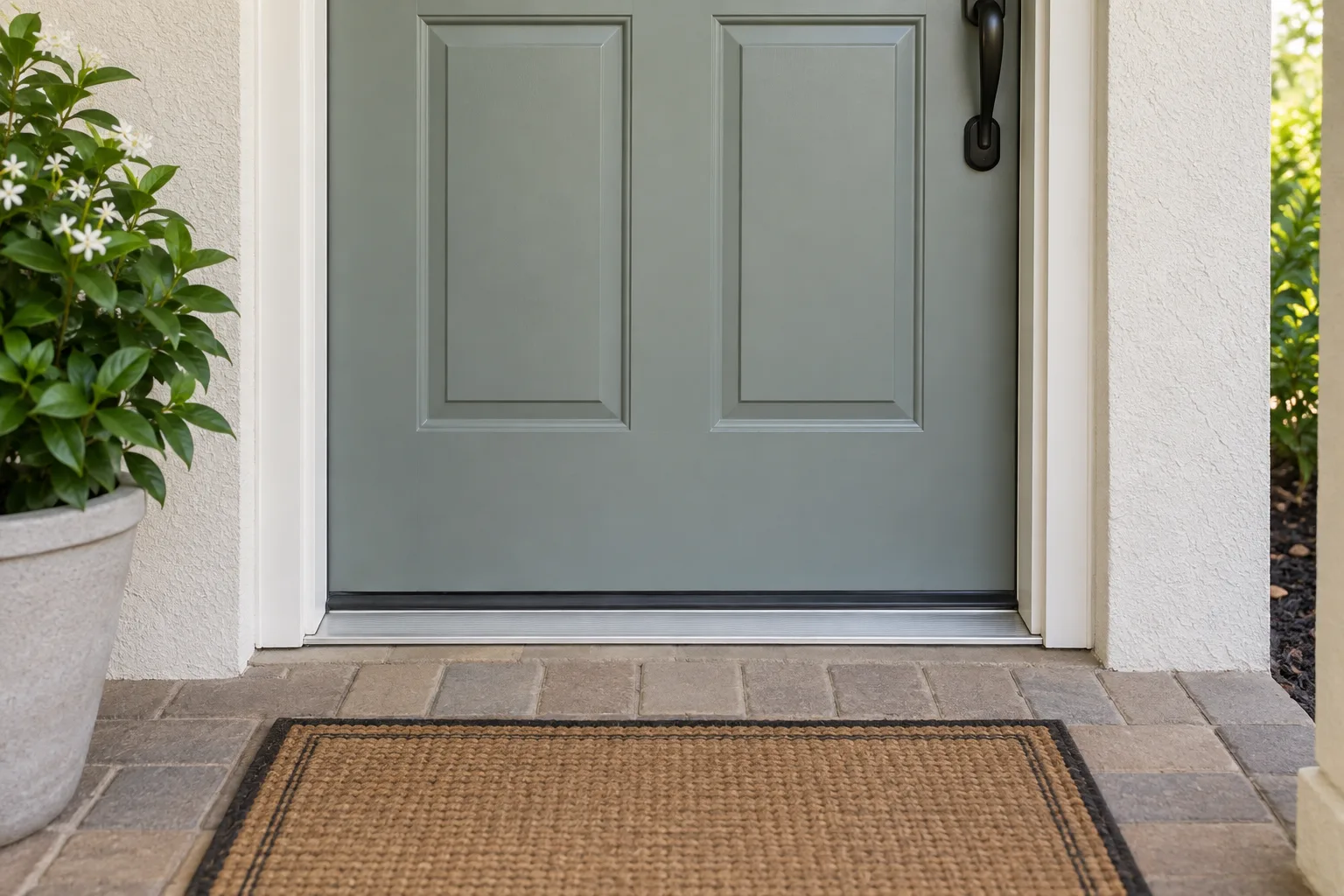
Door threshold replacement works best when the new threshold fits the doorway and directs water away from the house. A worn threshold can compromise the weather seal. Damage beneath it can require more than a surface repair. This guide explains how to spot the problem and compare replacement choices. It also explains what the work should address in Lakeland, Florida.
Key Takeaways
- Replace a worn threshold before gaps compromise the weather seal or hidden damage spreads into the doorway.
- Match the replacement to the existing opening, jamb shape, door sweep, and desired step across the entry.
- Check the subsill and framing beneath a removed threshold because visible surface damage may not show the full repair.
- Compare proposals by the condition of the opening, water management, fit, and finish as well as the threshold itself.
When a Door Threshold Needs Replacement
Replace a threshold when it no longer makes a sound transition between the door and floor. It should also help keep weather outside. Look for loose or rotted wood, a noticeable gap under the door, or water staining. A door that catches at the sill is another sign. Fine Homebuilding says a worn exterior threshold compromises the weather seal, so delaying a needed repair can leave the entry less protected.
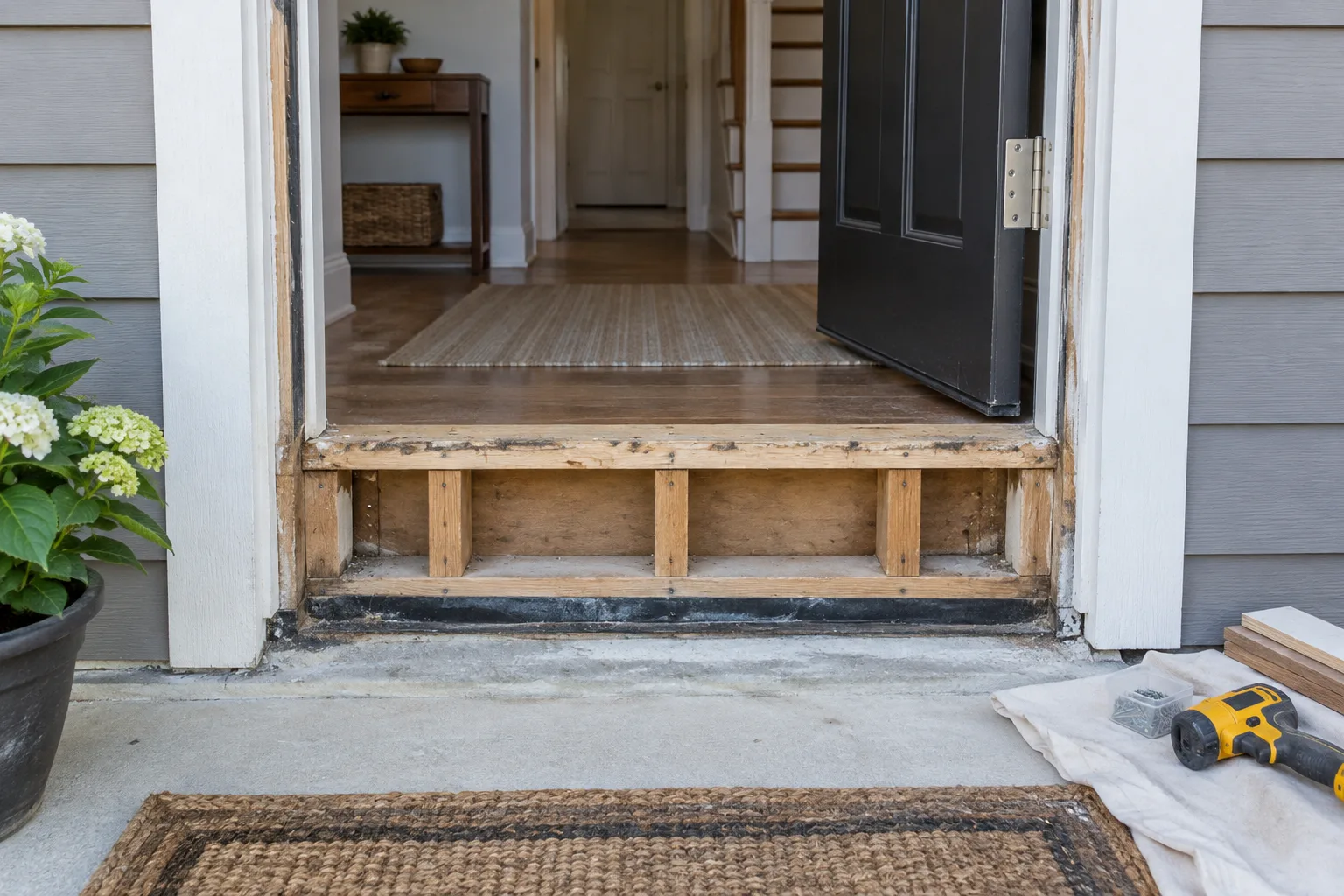
However, the threshold may not be the only damaged part. This Old House advises probing the wood below a removed threshold for decay, since damage can extend into the subsill or nearby framing. That inspection matters because a new cap cannot correct soft or deteriorated support underneath it. If the entry has leaked, ask that the underlying wood be checked as part of the repair plan.
How to Choose a Threshold That Fits and Seals
The right replacement matches the opening and restores a useful seal without creating an awkward step. Thresholds are not simply flat boards: an exterior profile can slope outward to direct water away, while its edges meet the jamb and casing. The exact shape varies, so measure the length, width, and thickness of the existing piece before choosing a replacement.
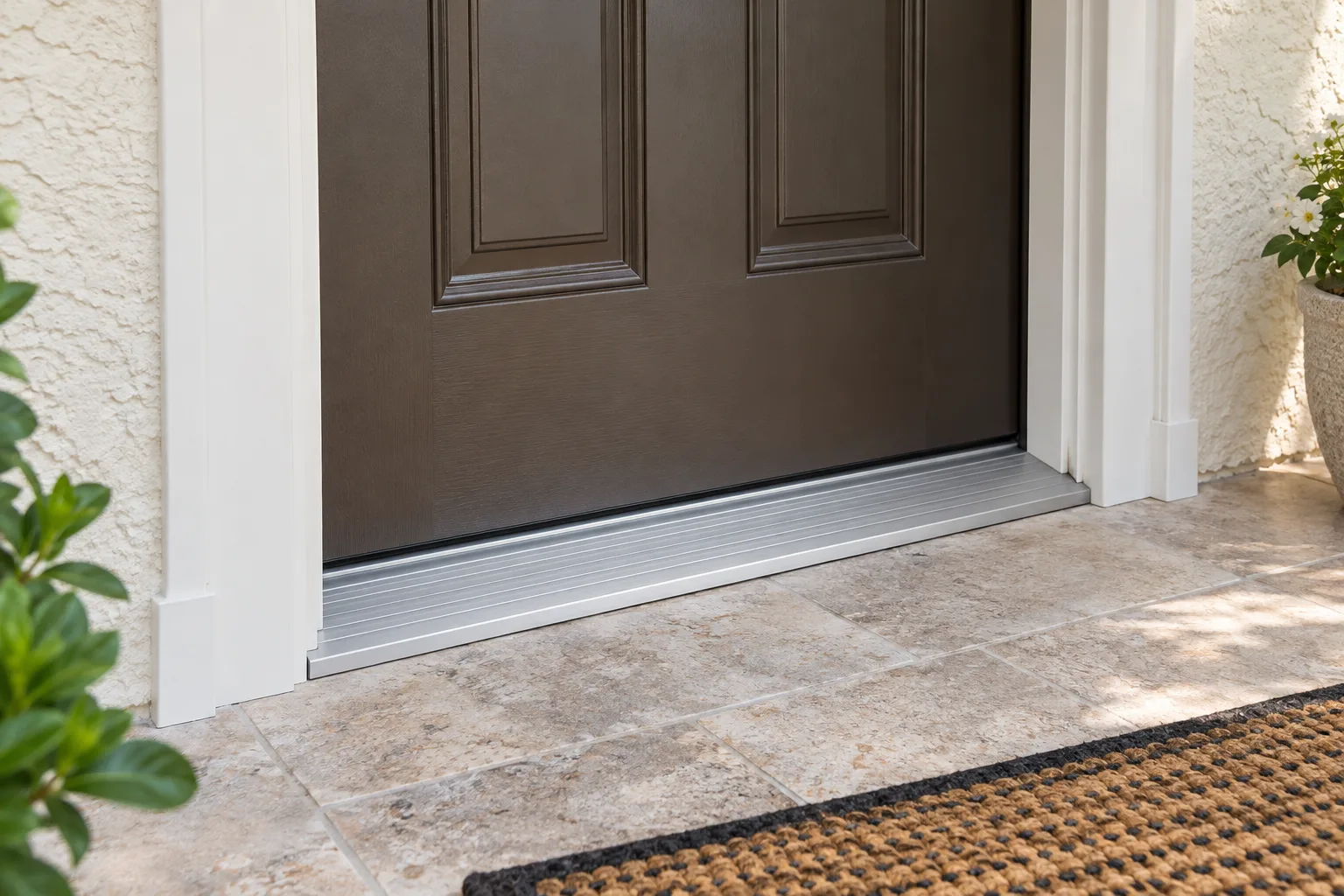
Also consider how the door seals at the bottom. Fine Homebuilding describes thresholds with a rubber insert as an option for doors without a weather-sealing sweep, while its author prefers a separate sweep for adjustment. The useful comparison is whether the threshold and door-bottom seal work together, not whether one design suits every entry. A low, smooth profile can also ease the transition and reduce catching feet or debris, according to Fine Homebuilding.
Door Threshold Replacement Options
These common choices differ in fit, sealing approach, and how much of the doorway they address.
| Choice | Best fit | What to check |
|---|---|---|
| Matching threshold | Existing profile and sound support | Jamb fit and door seal |
| Threshold with insert | Door has no bottom sweep | Insert contacts door evenly |
| Threshold with separate sweep | Sweep can be adjusted | Clearance and even contact |
| Broader sill repair | Underlying wood is damaged | Support and water management |
The table is a starting point; the doorway’s condition determines which choice makes sense. A matching replacement suits a sound opening. Soft wood below it means the support needs repair too. A threshold with an insert is designed for a door without a weather-sealing sweep along its bottom edge. Ask to see how the proposed profile meets the jambs and door bottom. A close-looking match can still leave a gap.
The table narrows the options, but the opening’s condition should guide the choice. A matching threshold fits when the opening is sound. Soft wood beneath it signals that the supporting material also needs repair. Fine Homebuilding says an insert is designed for a door without a weather-sealing sweep along its bottom edge. Check whether the existing sweep meets the sill evenly before choosing a seal. Compare how the proposed profile meets both jambs and the door bottom; a small mismatch can leave a gap.
What the Repair Should Address Beneath the Threshold
A careful replacement accounts for the condition of the opening, not only the visible board. This Old House notes that removing a threshold can reveal a rotten subsill or damaged joist ends that expand the scope of the repair. That is why a sound installation plan includes inspection beneath the old piece before the replacement is finalized.
Water management also matters when the work involves a new door unit or disturbed sill area. Therma-Tru recommends a sill pan and flexible flashing for its new-construction installation guidance, and says these materials may be required by local code in some areas. Its instructions also describe overlapping flashing from the bottom upward and sealing the sill-pan joints. Those details apply to that manufacturer’s new-construction guidance; a threshold-only repair may have a different scope.
For example, if water staining appears beside a threshold, compare plans by asking what inspection will establish whether the sill or framing is sound. Then check that the explanation distinguishes replacing the threshold from repairing hidden wood or rebuilding the door opening. This makes the scope easier to understand before work begins.
FAQs
How do I know if my door threshold needs replacement?
Replace it when the threshold is worn, loose, rotted, or no longer seals evenly against the door. A compromised exterior threshold can weaken the weather seal, and visible damage may not reveal decay in the wood below. If you see staining or soft wood, include an inspection of the subsill and framing in the repair discussion.
Can I replace only the threshold, or does the whole door need replacement?
A threshold-only replacement can suit a sound door and opening when the new piece can match the jambs and seal properly. However, decay beneath the threshold or a poor fit at the opening can call for additional repair. Have the support and surrounding door parts checked before deciding that the threshold alone is enough.
Should a replacement threshold have a rubber insert?
Choose based on how the door seals at the bottom and whether the insert can meet the door evenly. Fine Homebuilding notes that an insert is designed for a door without a weather-sealing sweep, while its author favors a separate sweep that can be adjusted. The threshold and sweep should work together to close the gap without making the door difficult to operate.
Conclusion
Choose a threshold that fits the jambs, works with the door’s seal, and rests on sound support. For a home in Lakeland, Florida, call Windows and Doors by Martin Toro to ask about your own project and discuss what the doorway needs.
Call Windows and Doors by Martin Toro and ask about entry doors