Window & door planning
Exterior Door With Blinds in Glass: Oviedo, Florida Options
Compare a new door, replacement glass and add-on blinds in Oviedo, Florida, then verify fit, control operation and product-specific support before choosing.
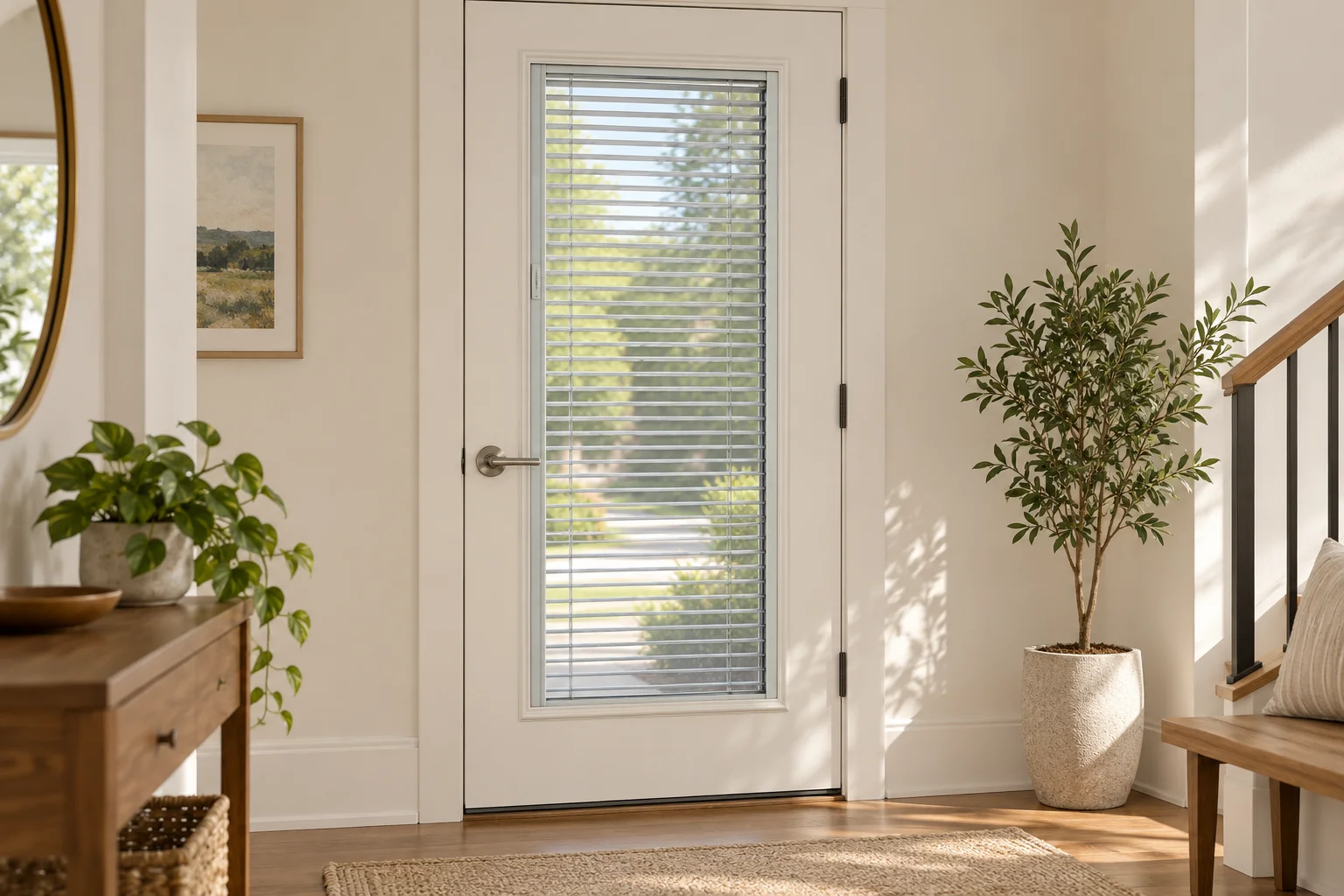
An exterior door with blinds in the glass can offer adjustable light and privacy without exposed slats to dust. The important choice is not simply whether you want blinds; it is which product configuration fits the door and how its controls operate. For homeowners comparing options in Oviedo, Florida, the choices may include buying a new door with internal blinds, replacing compatible doorglass, or adding a blind frame over existing glass. These are different products, with different fit questions, so one option should not be assumed to fit every door.
This guide explains how enclosed blinds work, compares what each configuration changes, and outlines what to verify about measurements, controls and support before deciding. Manufacturer instructions matter, especially when considering an add-on or a problem with an existing operator.
Key Takeaways
- Internal door blinds are slats between glass panes, adjusted by an external operator to change light and privacy.
- A new door, replacement doorglass insert and add-on blind frame change different parts of the existing setup.
- Add-on fit depends on the specific frame and product; check measurement instructions, lever clearance and exclusions.
- Before choosing, test the controls and get the exact product, compatibility and support details in writing.
What Are Internal Blinds in Door Glass?
Internal blinds are slats sealed between panes of door glass and adjusted with an operator outside the glass to raise, lower or tilt them. These controls let you adjust light and privacy, but they do not promise blackout conditions.
With the slats enclosed, you can clean the accessible glass without dusting the blinds themselves. The enclosed mechanism and its controls can still need attention, and products from different manufacturers may operate differently.
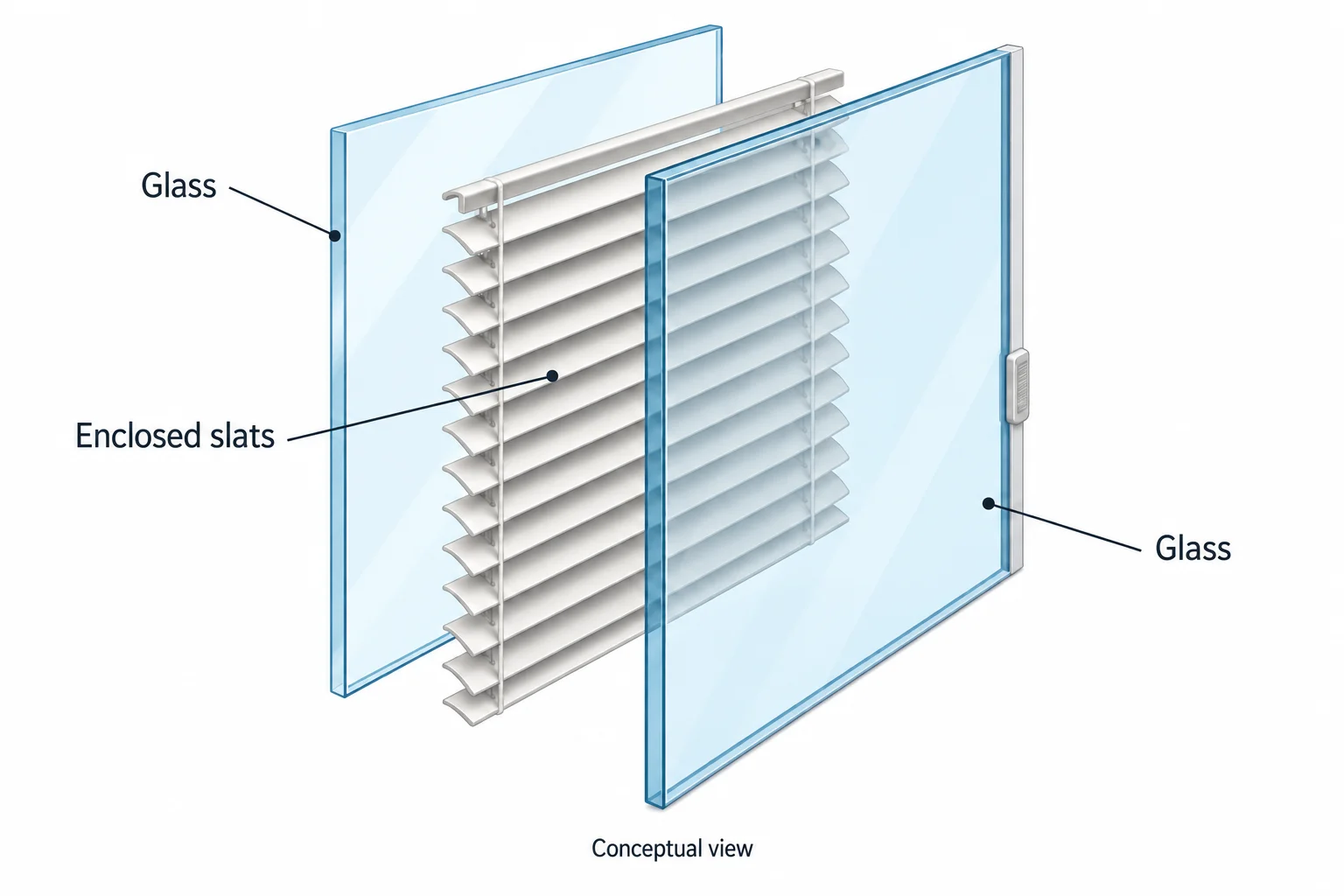
For example, ProVia describes fingertip slides for moving its internal blinds, while ODL offers a cordless operator on a replacement doorglass product. Those are manufacturer examples, not a claim that every model uses the same control. The glass is the window; the operator is the way you adjust the view.
Compare a New Door, Replacement Glass and Add-On Blinds
The three choices differ in how much of the existing door they change. A replacement insert is not necessarily a whole-door replacement, and an add-on frame has product-specific fit requirements. Compare the scope and questions before requesting a quote.
| Option | What changes | Questions to verify |
|---|---|---|
| New door with internal blinds | The door unit is replaced with a selected door-and-blind configuration. | Which door style, glass size, blind color and control are available together? Confirm the exact combination. |
| Replacement doorglass insert | The glass unit is replaced, if the existing door and selected insert are compatible. | Which insert dimensions and frame options match this door? Is this glass-only work, or does the proposal include a door? |
| Add-on blind frame | A separate blind frame fits over existing doorglass if the product guide permits that frame. | Is the frame raised or flush, what measurement reference applies, and will the handle clear it? |
For example, ODL’s add-on selection guide calls for measuring outside frame dimensions for raised frames and visible glass for flush frames. It also says its product does not fit aluminum doorglass frames or frames designed for impact-rated building codes. Treat those as this guide’s restrictions—not universal rules or Florida code advice—and verify current instructions, availability and compatibility for the exact model. ProVia’s internal-blind options likewise vary by door style, blind color and sidelights; manufacturer listings do not establish local inventory.
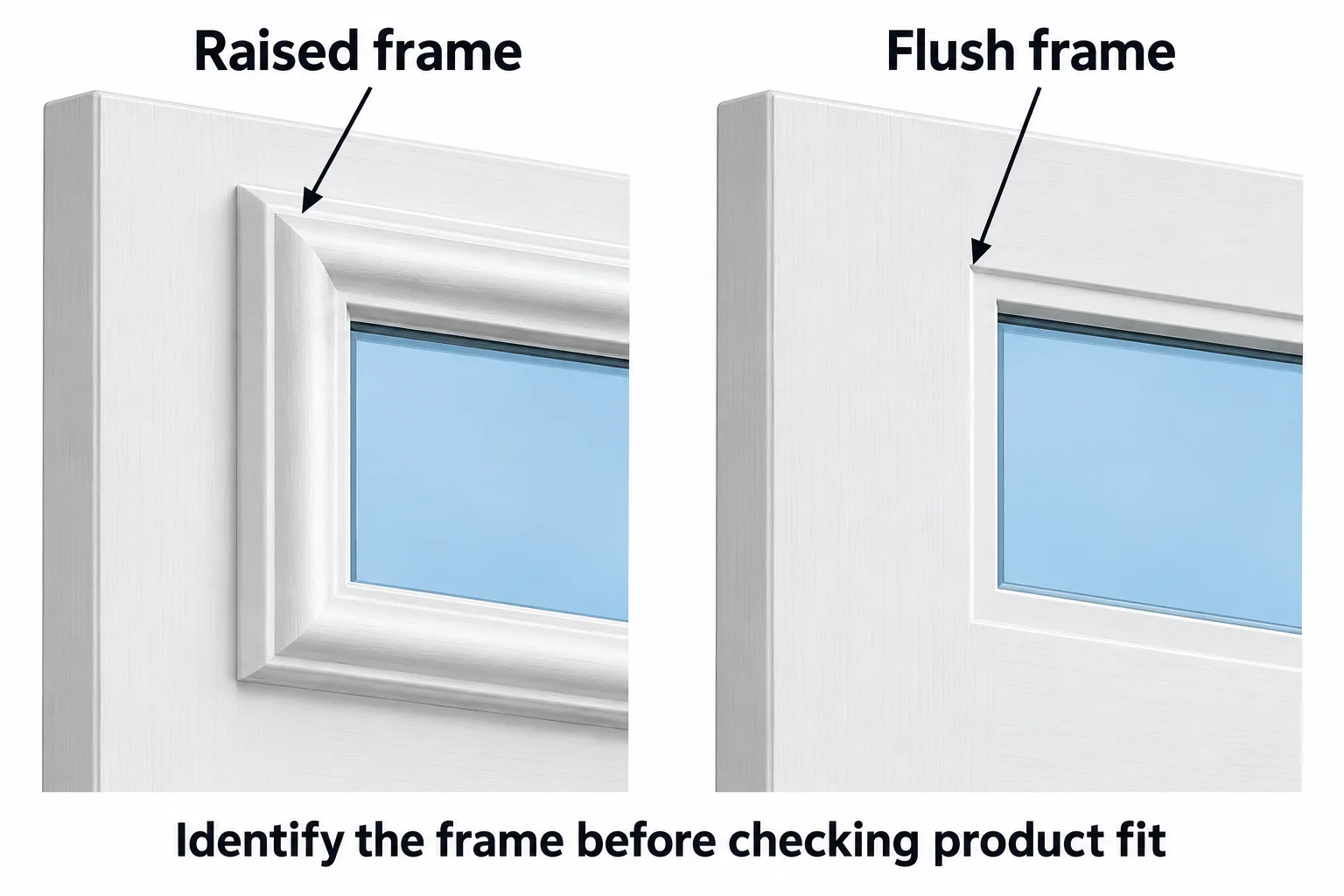
First identify what you have and what you want changed. Ask the manufacturer or installer to confirm the specific fit rather than assuming a product category alone guarantees compatibility.
Check Operation and Document the Exact Product
The operator is part of the decision, not a minor detail. A manufacturer’s model may let you tilt, raise and lower the slats, but controls and options vary. Before committing, try the control on the exact model or a representative sample and confirm you can reach and use it comfortably.
A reduced need to dust enclosed slats does not mean the mechanism can never need attention. Therma-Tru’s support information describes model-specific issues such as uneven blinds, track-magnet alignment and a disengaged operator. Its guidance points owners to product-specific checks and support if an issue persists; it does not establish one repair procedure for every brand or door.
Use this planning checklist when comparing proposals:
1. Photograph the full door, glass and any visible product labels so the existing configuration can be identified. 2. Ask which exact door, insert or add-on model is proposed, and have the provider confirm compatibility with the existing frame and handle. 3. Test raising, lowering and tilting on the chosen model; confirm which of those functions its control provides. 4. Request the product’s care and support instructions, including whom to contact if a control stops working.
Write down the product model and proposed scope. If an existing control stops working, identify the product and follow its own instructions or contact its support channel. Do not pry into the sealed glass assembly or assume the entire door must be replaced. These checks help keep product choice, fit and future support clear.
FAQs
What Are Blinds Between Door Glass?
Internal blinds are slats sealed between panes of door glass, adjusted by an operator outside the glass. Depending on the product, the control can raise, lower or tilt the slats to adjust light and privacy.
Can You Add Blinds to Existing Door Glass?
It depends on the existing door and the exact product. An add-on frame may fit over existing glass, but compatibility varies by model and frame. Check the manufacturer’s current instructions and confirm the specific product fits your door before choosing.
Conclusion
Before choosing, identify whether you need a complete door, compatible replacement glass or an add-on frame. Ask for the exact product configuration, fit requirements and support path in writing. That gives you a practical basis for comparing options without assuming every enclosed-blind product works with every door. Call Windows and Doors by Martin Toro and ask about your project.