Window & door planning
Custom Size Storm Door Planning in Clermont, Florida
Compare your opening with a storm door model’s size chart, then check mounting trim, hardware clearance and hinge swing before asking about custom sizing.
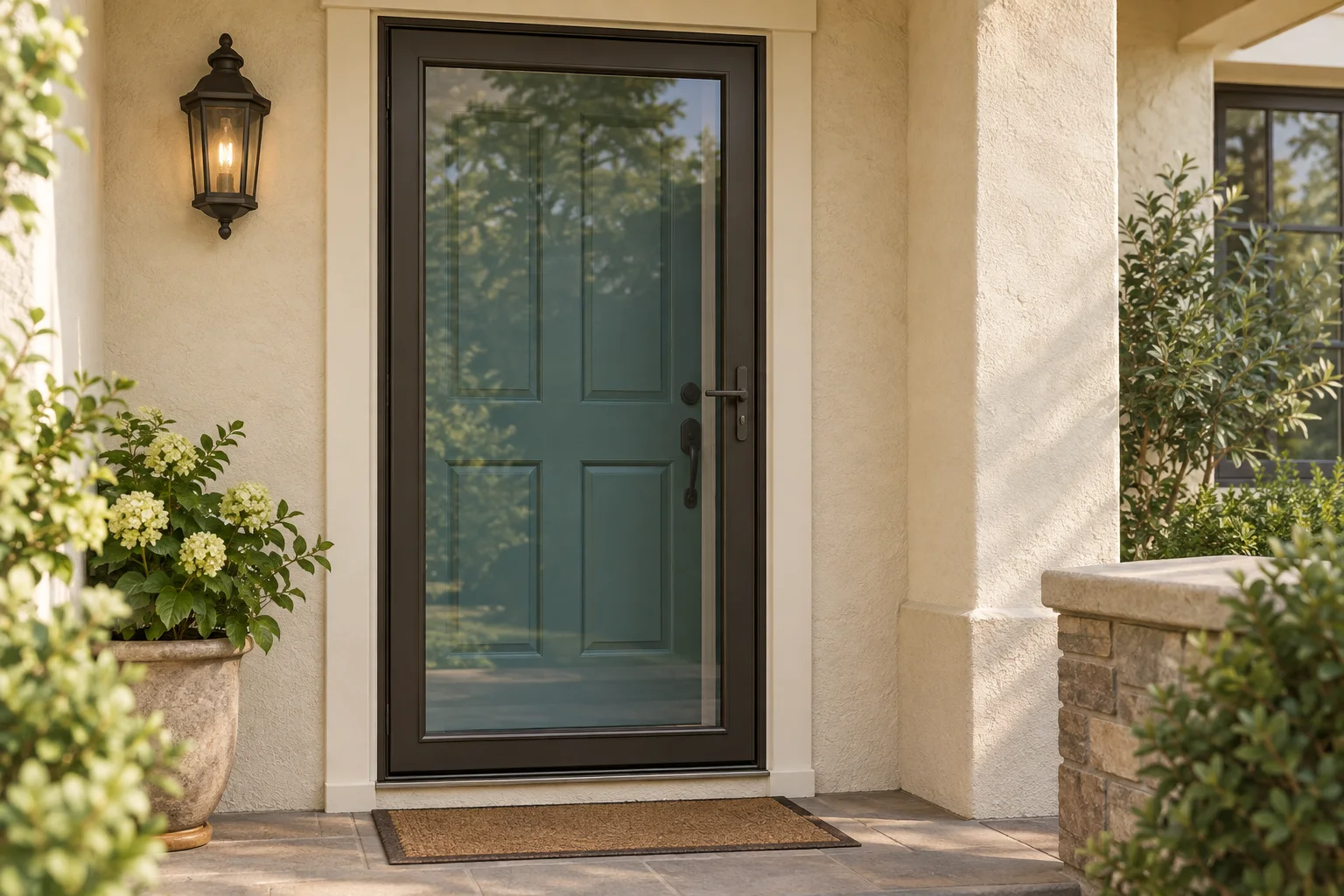
If the measurements for a storm door do not match the size you expected, that does not automatically mean you need a custom order. In Clermont, Florida, the practical question is whether your opening fits a standard model’s stated range—and whether the door can mount and swing clear of nearby hardware and obstacles.
Measure before deciding, but use the chart for the specific model you plan to buy. Manufacturers define standard sizes differently, and an opening measurement is not always the same as a door’s nominal size. Correct width and height also cannot answer every fit question: exterior trim, mounting depth and handle clearance matter too.
This guide explains how to compare your measurements with a model’s size range, check the mounting opening and clearance, and choose a hinge direction. You will finish with the information to gather before asking a supplier about fit or custom availability.
Key Takeaways
- Storm-door sizing compares an exterior opening with a selected model’s stated range, not just a nominal door size.
- Three width readings and an opening-height measurement help you compare your opening with the chosen model’s chart.
- Flat mounting trim, trim depth and entry-door hardware clearance can affect fit even when dimensions appear suitable.
- Hinge direction, nearby obstacles and product-specific preparation are worth confirming before you place an order.
What Is a Custom-Size Storm Door?
A custom-size storm door is an exterior door sized for an opening that does not fit the standard dimensions offered for a selected model. A storm door mounts outside an entry door, so its fit depends on the exterior mounting opening and the product’s size chart.
Compare measured opening dimensions with the chosen model’s chart. A nominal door size is not necessarily the exact opening measurement: manufacturer charts can pair a nominal size with a range of opening widths and heights. For example, one Larson chart matches a 36-inch model to an opening-width range of 35 7/8 to 36 3/8 inches and a height range of 80 to 81 inches. That example applies to that chart, not every brand or model.
| What you find | What to do next |
|---|---|
| Your opening falls within the selected model’s stated range | Check mounting and clearance instructions before ordering. |
| A measurement falls outside that model’s range | Ask whether another standard size or a custom option is available. |
| Dimensions appear to fit, but trim or hardware clearance is uncertain | Confirm installation requirements for that exact model first. |
An odd measurement alone does not establish that custom sizing is necessary; model-specific charts and mounting conditions help determine the next step.
Measure the Mounting Opening and Clearance
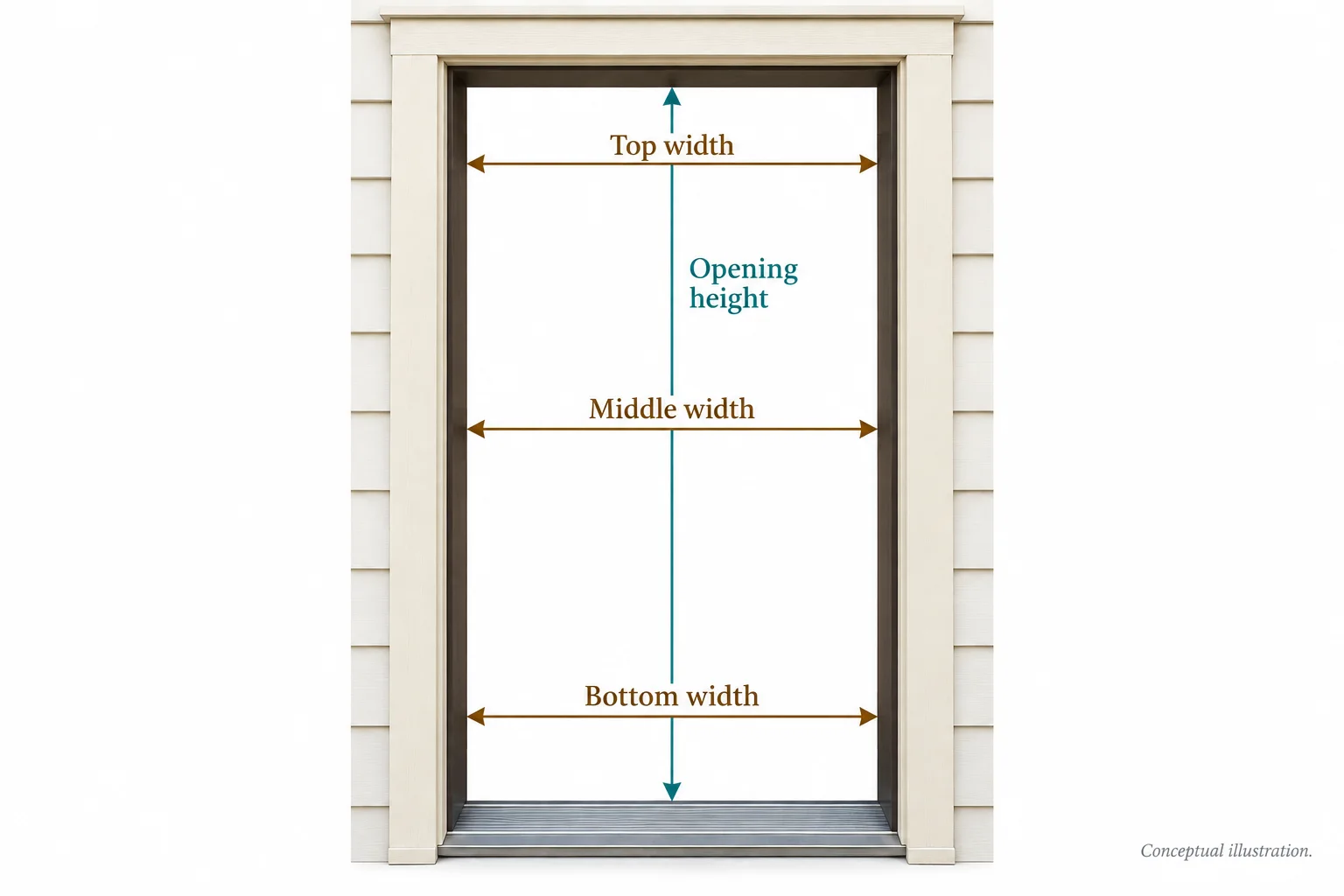
Measure the mounting opening before deciding whether a custom size is needed. Andersen and Larson advise taking width measurements at the top, middle and bottom of the opening; use the smallest reading for comparison with the selected model’s instructions. Measure height from the sill to the top trim.
Record all three widths, not just the smallest. If the opening is uneven, the other readings help you describe it when checking fit. Use a tape measure carefully; manufacturer instructions may specify how to read fractional marks and where to place the tape.
Dimensions are only part of the check. Andersen’s guidance calls for flat exterior mounting trim, adequate trim depth and clearance for entry-door hardware. These are product-fit requirements, not universal dimensions, so compare the opening and hardware with the instructions for the model you want. Do not assume a door will mount properly just because its width and height appear to match.
Confirm Hinge Choice and Ordering Details
Choose the hinge side by standing outside and looking at the door. Before deciding, consider whether the swing would meet a wall, railing, landscaping, walkway or the main entry-door handle. A swing that clears the opening may still interfere with something nearby.
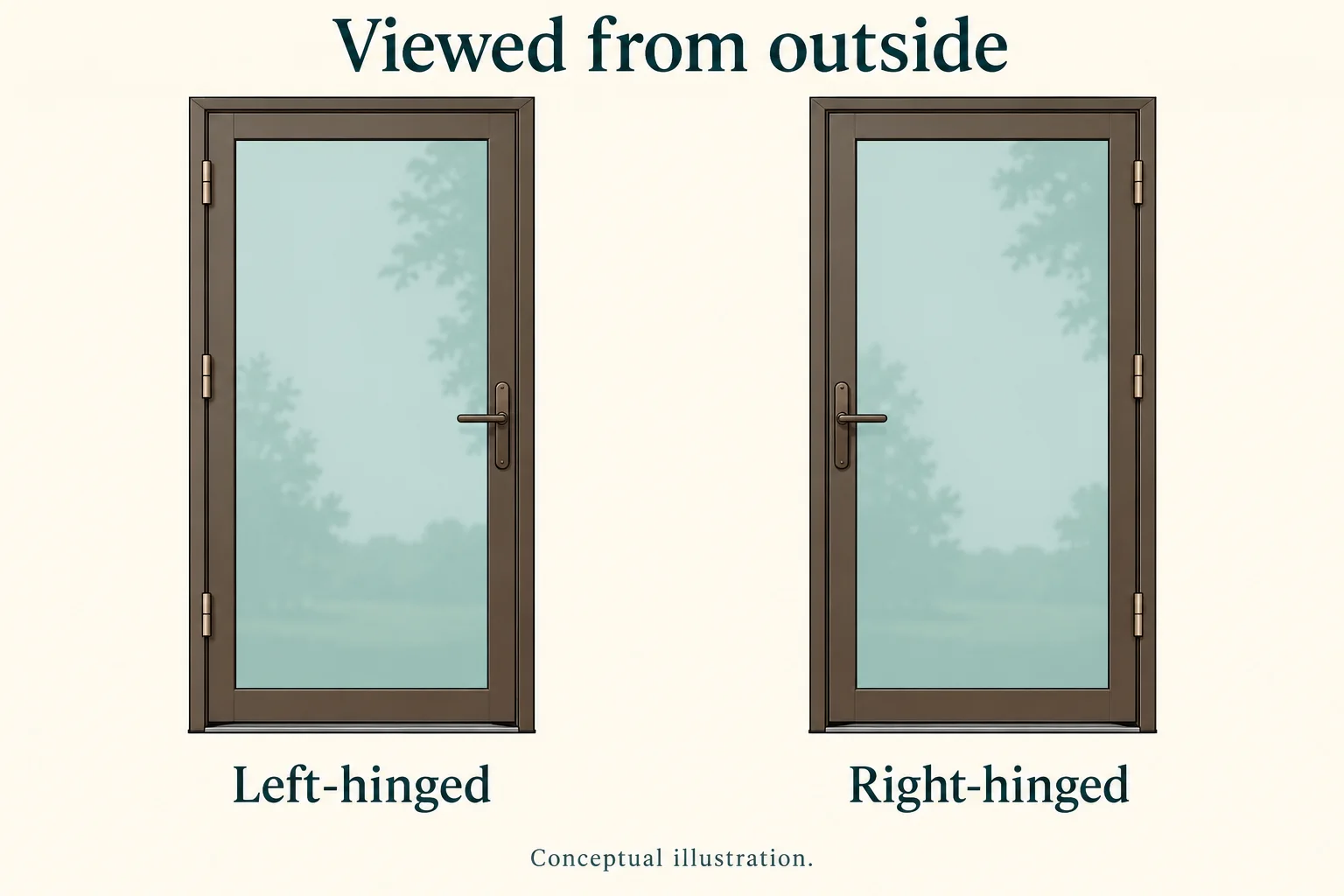
Hinge options and preparation depend on the product. Larson describes universal-hinge models that allow the installer to choose left or right during installation, while fixed prehinged models do not offer that choice. Its prehinged models have some preparation completed, while universal versions require additional assembly and drilling with a supplied template. Do not assume another manufacturer’s package includes the same parts or preparation.
Before ordering, assemble your measurements, photos of the exterior trim and entry-door hardware, the exact model, and your preferred hinge direction. Ask the supplier to confirm whether the opening falls within the model’s range, what preparation or hardware is included, and whether custom sizing is available for that model. If the entry door itself needs assessment, a door-service inquiry can address that separate question.
FAQs
Do I need a custom-size storm door for an unusual opening?
Not necessarily. Compare your measured opening with the specific model’s size chart first. Charts can list an acceptable opening range for a nominal door size, so a measurement that differs from the nominal size may still fit a standard model. If your opening is outside the stated range, ask whether that model or another offers a suitable custom size.
How do I measure for a storm door?
Measure the opening width inside the exterior trim or brickmold at the top, middle and bottom, and keep all three readings. Use the smallest width when comparing with the selected model’s chart. Measure height from the sill to the top trim. Then check the manufacturer’s requirements for mounting trim, depth and entry-door hardware clearance.
Conclusion
A custom-size storm door may be worth exploring when a standard model’s size range does not match the measured opening, but an unusual reading alone does not prove you need one. Fit also depends on mounting trim, clearance and swing.
For a useful next step, gather the three width readings, opening height, photos of the trim and entry hardware, and the exact model you are considering. Compare those details with the model’s instructions or ask a supplier to confirm fit and custom availability before ordering. Call Windows and Doors by Martin Toro and ask about your project.