Window & door planning
What Are Window Grids? A Winter Park, Florida Guide
Learn how window grids differ in construction, pattern and cleaning access, and what to verify on the exact product before choosing.
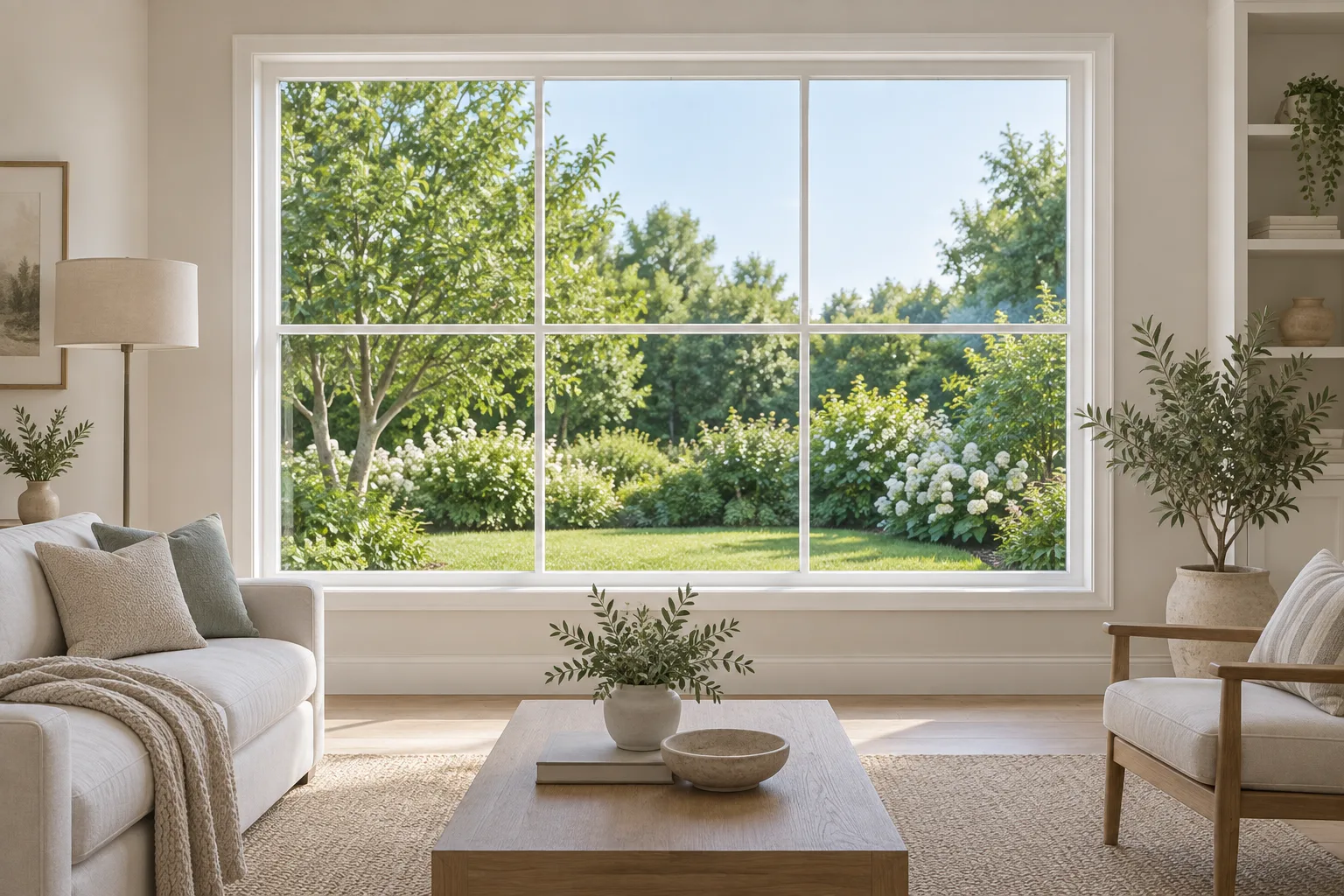
Window grids change the look of a window, but their appearance alone doesn’t tell you how they’re built or cleaned. If you’re comparing window grids for a home in Winter Park, Florida, first separate two decisions: where the bars sit and what pattern they create. Some divide individual panes, some attach to a larger glass surface, and some sit between panes. Those differences can affect whether glass surfaces are easy to reach and whether a grille can be removed. The pattern is a separate choice, from equal divisions to an open center or no bars at all. This guide explains the main construction options, shows how common layouts differ, and outlines what to verify on the exact product before ordering or cleaning it.
Key Takeaways
- Window grids, or grilles, visually divide glass; their construction and pattern are separate choices.
- Between-glass grilles leave exposed glass smooth, while removable and fixed applied bars have different cleaning access.
- Colonial, prairie, top-row and cross layouts differ in where they place lines, not in how bars are made.
- Check the exact window’s grille location, removability, profile, pattern and colors before choosing or cleaning it.
What Are Window Grids?
Window grids, also called grilles, are bars or lines that visually divide a window’s glass into smaller sections. Their pattern describes the layout; their construction describes where the bars sit and whether they separate panes or attach to a larger sheet of glass.
In a true divided-light window, muntins separate individual panes. Modern grilles can create a similar look over one larger glass sheet, or sit between panes. Think of pattern as the design you see and construction as how that design is made.
Separate Grille Construction From Pattern
Construction tells you where the bars sit; pattern tells you how they divide the view. True divided lights use muntins between separate panes. Modern grilles can imitate that look without dividing the glass into individual pieces. Product names and options vary, so use the table as a comparison—not as a promise that every style is offered for every window.
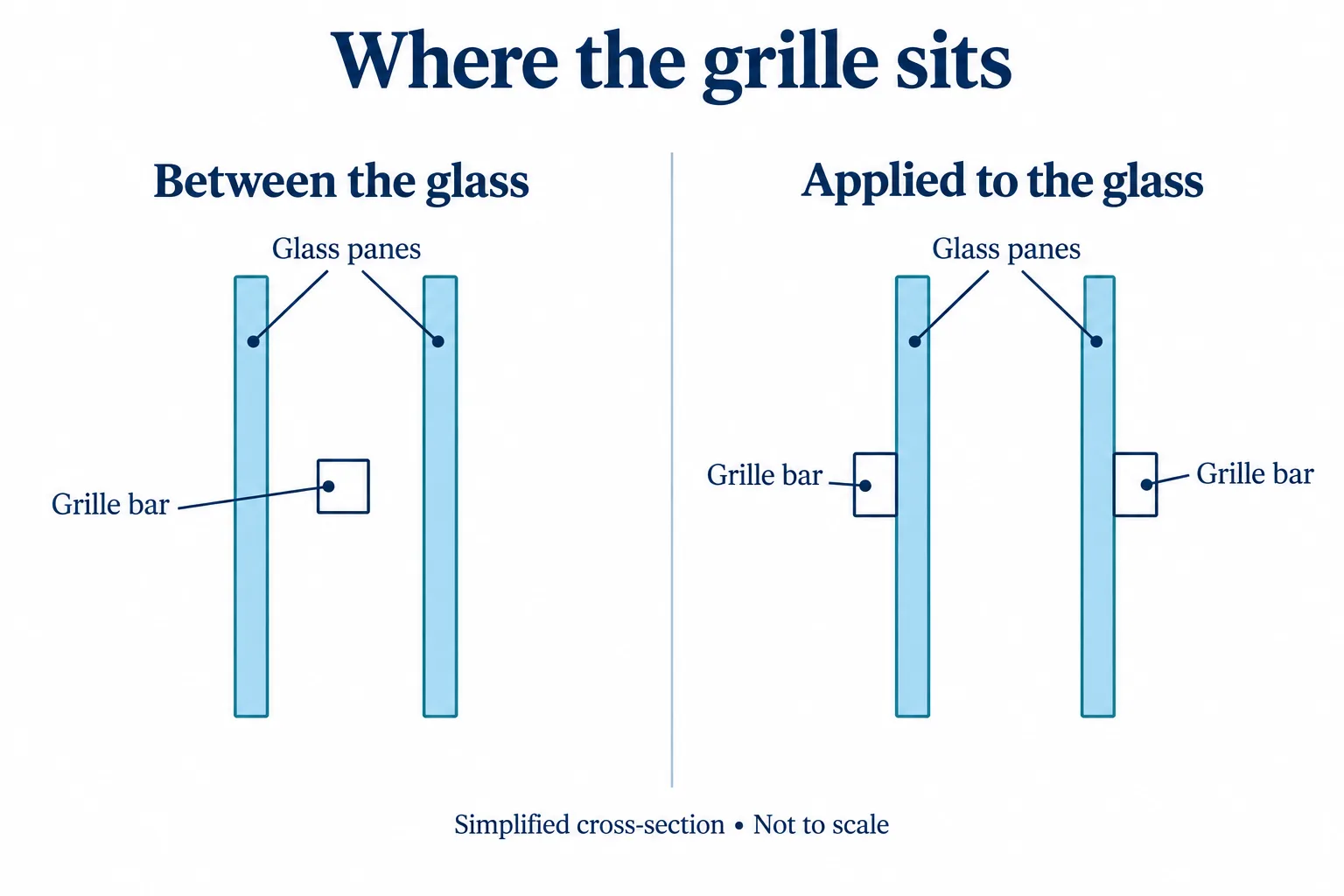
| Construction | Where the bars sit | What that means for glass access |
|---|---|---|
| Between-glass grille | Between panes of glass | Exposed glass faces remain smooth and accessible. |
| Removable interior grille | On the room side, held by clips or fasteners on some products | It may be removed for cleaning if the exact product allows it. |
| Simulated divided light without spacer | Applied to the exterior, with interior bars that may be fixed or removable | Check whether interior bars come off; there is no spacer between separate panes. |
| Full divided light with spacer | Permanently applied interior and exterior grilles, with an aluminum spacer between the glass | Interior and exterior bars remain exposed; cleaning access depends on the exact window design. |
For example, Andersen describes removable interior grilles that attach with clips or fasteners, while its between-glass grilles are installed during manufacturing. These are product-specific examples, not universal terms or options. An exterior grille can also be combined with a between-glass grille, so smooth interior glass does not necessarily mean there are no exposed bars outside. Identify the construction before assuming how you’ll clean it.
Compare Patterns And The View
A grille pattern describes the arrangement of lines, not their construction. Colonial patterns divide the glass into equal sections. Prairie patterns frame a larger open center with small corner squares. Top-row patterns place lines only across the upper part, while a cross uses one vertical and one horizontal line.
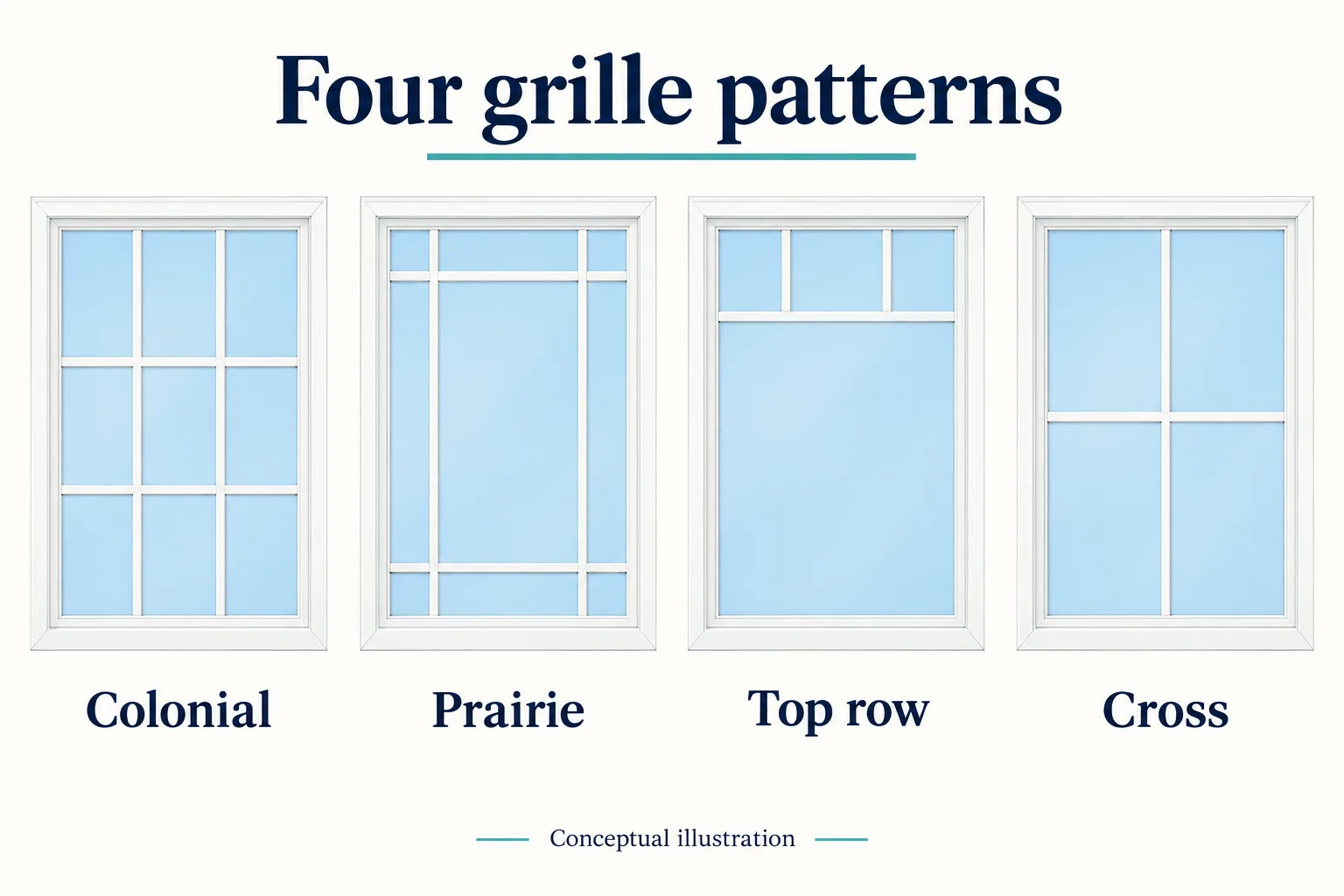
The bar’s profile is another decision: a flat profile looks simpler, while a contoured profile has grooves. Compare the view from inside and the whole window elevation, since a pattern that suits one perspective may feel different across a row of windows. A sample can help you judge line spacing, profile and color against the glass and surrounding trim.
There is no universally correct pattern, and an unobstructed view may suit a window without grids. Compare the same window with and without a pattern before settling on one. Keep layout and profile separate as you review options; changing one does not necessarily change the other.
Check The Exact Product Before Choosing
Verify the exact window before choosing a grille or trying to remove one. An existing pattern does not prove the bars are removable, and a replacement grille may not match the product. Manufacturer availability, colors and profiles differ. Some options must be selected when the window is made; for example, Andersen says its Finelight between-glass grille is ordered with the unit and cannot be added later.
When comparing samples or product details, record four items separately: pattern, bar profile, inside and outside colors, and construction. Then confirm which bars, if any, are removable and follow the product’s cleaning instructions. This is more precise than asking only for a “grid style,” which could refer to layout or construction.
FAQs
What are window grids?
Window grids are decorative lines that create divisions across the glass. The pattern alone doesn’t show how the bars are made, attached, or whether they can be removed; check the exact product.
Are window grids removable for cleaning?
Some grille bars can be removed, but others are fixed or sealed between panes. Check the manufacturer’s instructions for the exact window before cleaning; the pattern alone doesn’t tell you whether bars come off.
How do I choose a window grid pattern?
Compare the layout, bar profile and construction separately. Colonial grids divide the glass into equal sections, while prairie grids leave a large center area open. A flat profile has a simpler shape than a contoured one with grooves. Also compare the view from inside with the full window elevation; no grids are an option, too.
Conclusion
Window grids combine a visible pattern with a construction method, and the two choices affect appearance and access for cleaning. Before deciding, identify the window and compare its pattern, profile, colors and grille location. Call Windows and Doors by Martin Toro and ask about your project.
Explore custom window options while comparing grille patterns and construction.