Window & door planning
Stucco Window Molding in Lake Mary, Florida: A Homeowner’s Guide
Learn how stucco window molding differs from other exterior trim, what foam options to consider, and how to assess fit, finish, and upkeep for your home.

Stucco window molding frames a Lake Mary, Florida home and adds depth. It also covers the joint between the window and wall. Smooth, modern stucco suits simple, flat profiles with clean lines. Traditional homes suit wider trim with more projection. Choose the shape and material together. Then compare how each option meets the wall, handles weather, and fits the home’s architecture.
Key Takeaways
- Flat, low projection trim often suits smooth stucco and modern architecture, while traditional homes can support wider, deeper profiles.
- Exterior trim covers the window-to-wall joint, protects vulnerable edges, and changes the depth and character of the facade.
- Polyurethane is one exterior trim material option, but material choice should account for moisture, temperature changes, and sun exposure.
- Ask to see how the proposed trim meets the stucco and window, including corners, sill, head, and any existing cracks.
What Is Stucco Window Molding?
Window molding is the visible trim around a window, sometimes called casing or exterior window trim. It frames the opening and covers the joint where the window meets the wall, while helping protect exposed edges. On stucco, that frame can add a clean border to a broad, textured surface or make a window stand out with stronger shadow lines.
Window molding does not replace the window’s weather seals or repair a failing wall joint. ASTM describes sealants and other materials as part of building assemblies that include walls and windows. So the trim’s fit matters. The condition of the surface behind it matters too. Before choosing a profile, inspect the stucco around the opening. Look for loose material, visible gaps, or signs that water has reached the wall. Address those conditions before new molding covers the area.
How Do You Choose a Trim Profile for Your Home?
Start with the home’s architecture and the texture of its stucco. Mouldex says roof shape, cladding, and symmetry guide trim choice. Smooth stucco and modern lines pair well with narrow, flat trim that projects little. A projecting profile creates a deeper shadow and a more noticeable frame. It can suit traditional proportions or a focal window. For example, a broad decorative surround may overpower a small, simple window. A narrow border can disappear on a large front elevation.
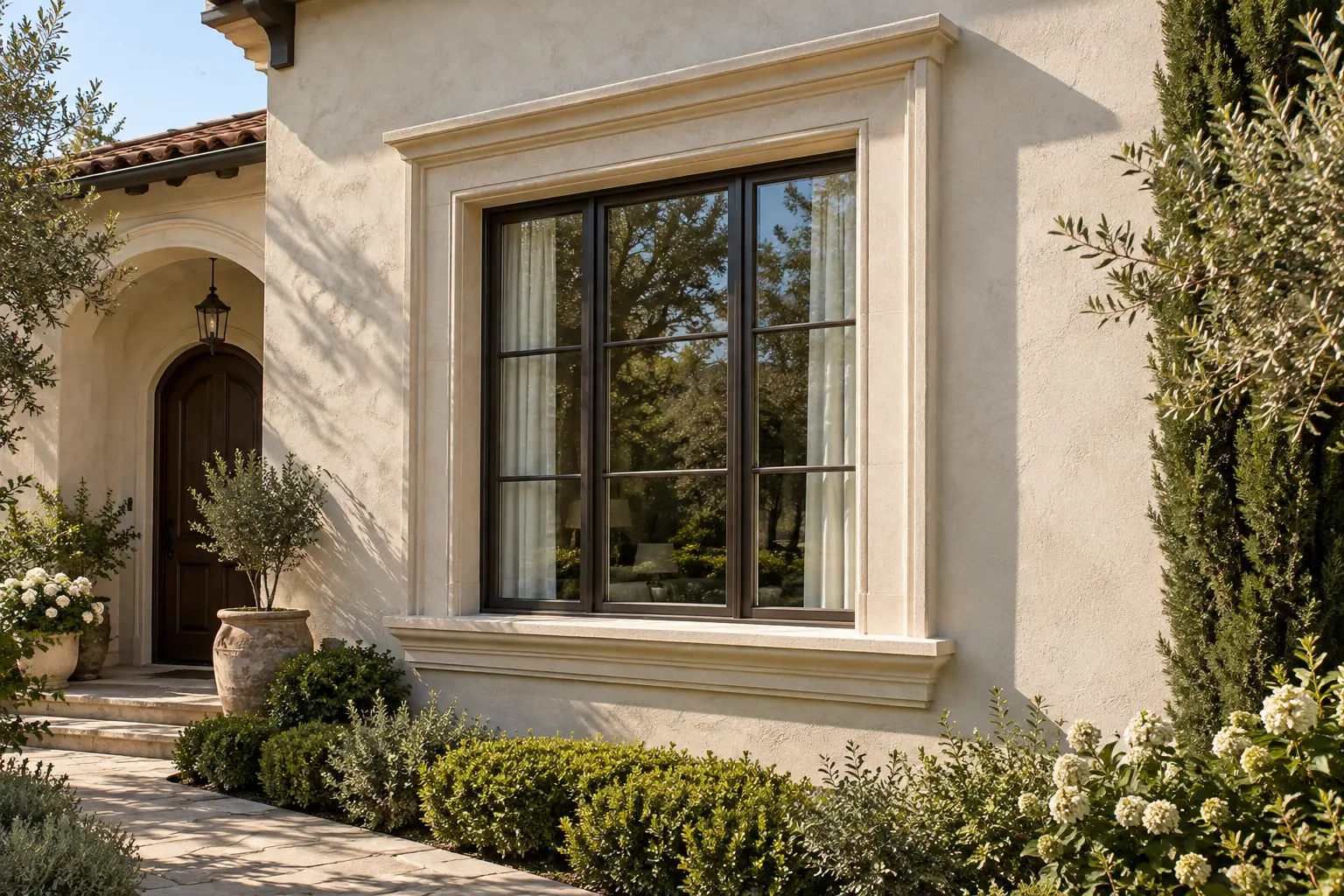
Color and consistency shape the result as much as profile. Trim that matches the stucco puts attention on its outline and shadow; a contrasting color makes the opening more prominent. Repeat the same general treatment across the front of the house so one window does not look unrelated to its neighbors. A small sample or scale mock-up can help you judge the width and projection against the wall before committing.
Which Exterior Trim Materials Suit Stucco?
Exterior trim must withstand moisture, temperature swings, and ultraviolet exposure. So material durability matters alongside appearance. Materials used for exterior trim include wood, PVC, fiber cement, polyurethane, precast, and cement-coated composite. A material intended for interior use may not suit outdoor exposure. The label “foam trim” alone does not explain how a product is made. Check its instructions for attachment and finishing details.
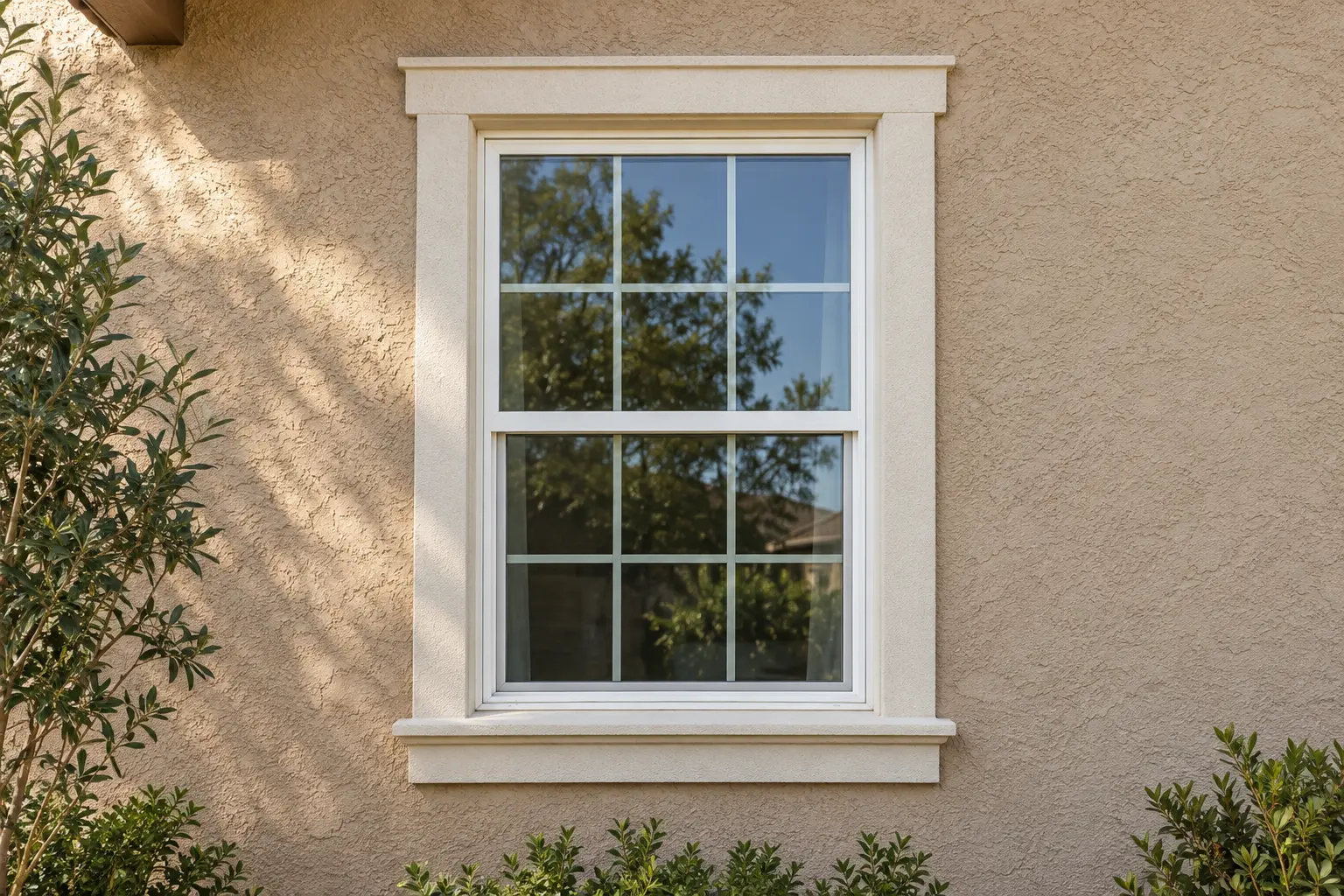
Material matters because trim must stay sound at corners and joints and meet the stucco cleanly. ASTM says building standards help specify and test material performance. ASTM also says these standards guide proper fabrication and installation procedures. Ask for the product’s installation instructions and the planned attachment and joint details. That helps distinguish products that may look similar but need different installation approaches. Also ask how the finish will be maintained and what preparation the stucco surface needs.
Compare complete trim options by looking at the profile, material, and how the installer plans to handle the perimeter joints. A proposal that names only “foam trim” leaves important questions unanswered, including which profile is included and how the edges will meet the wall.
How Can You Compare Window Trim Options?
| Option | Typical look | Decision point |
|---|---|---|
| Flat, narrow | Quiet, modern frame | Fits smooth stucco |
| Stepped profile | Deeper shadow | Adds emphasis |
| Wide, projecting | More traditional | Needs visual balance |
| Polyurethane trim | Painted profile | Review product instructions |
| Wood or fiber cement | Material-specific finish | Check exposure suitability |
The first three choices describe shape; the last two describe material. They are separate decisions, so you can pair a profile with a suitable material. For example, you can choose a restrained, flat outline and still compare materials for Lake Mary, Florida's exposure. Choose the visual treatment first. Then review the product details and joint plan to see how that treatment can be finished cleanly on stucco.
FAQs
What is stucco window molding?
Stucco window molding is exterior trim that frames a window on a stucco wall and covers the joint between the window and wall. It can also protect vulnerable edges and change the facade’s appearance through its width, profile, color, and projection. The molding should complement the opening and wall rather than conceal a damaged joint that needs repair.
Is foam trim suitable for exterior windows on stucco?
Some foam-like products, including polyurethane trim, are used for exterior window trim, but suitability depends on the specific product and its installation requirements. Exterior materials must handle moisture, temperature changes, and sun exposure. Ask for the product instructions and a clear explanation of how the trim will attach and how its edges will meet the stucco.
Which window trim profile looks best on a stucco house?
Flat, simple profiles usually suit smooth, modern stucco, while wider or more projecting trim can suit traditional architecture. Color also changes the effect: matching trim emphasizes shadow lines, while contrast makes windows stand out. Compare the profile against the whole elevation, since the right choice depends on window size, spacing, and the home’s overall proportions.
Conclusion
For a Lake Mary, Florida home, start with a profile that fits its architecture. Then compare materials and the planned joints between the window and stucco. A clear explanation should cover the corners, sill, head, attachment, and surface preparation. It should do more than show a sample piece. Call Windows and Doors by Martin Toro about your project. Discuss the choices that fit your home.
Call Windows and Doors by Martin Toro and ask about trim and millwork