Window & door planning
Baseboard Alternatives in Apopka, Florida: Compare Your Options
Explore baseboard alternatives and learn how material, profile, moisture resistance, and room style can guide your choice for an Apopka, Florida home.
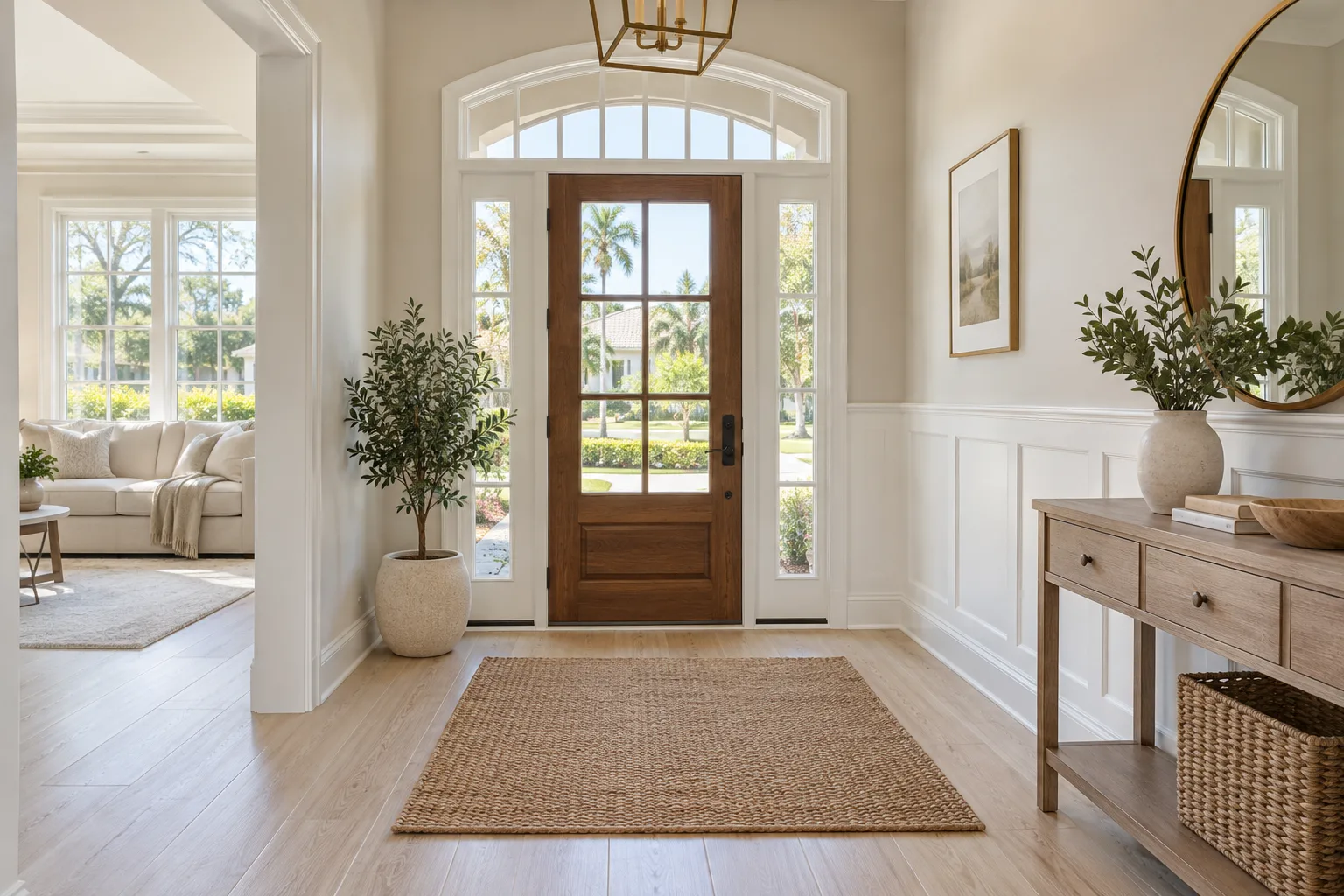
Baseboard alternatives include shoe molding, which can cover gaps where flooring meets the wall. Wainscoting adds panels to the lower wall and can help guard it from scuffs. Choose based on whether you need to cover a floor gap, protect a wall, or change a room’s style. In an Apopka, Florida home, first identify the job your baseboard performs. Then compare each option’s visual effect and upkeep.
Key Takeaways
- Use shoe molding when a narrow, flexible strip can cover an uneven gap at the floor.
- Choose wainscoting when wall protection and a larger design change matter more than a minimal trim profile.
- Beadboard and flat panels create different looks, so match the pattern and material to the room.
- Before replacing trim, identify whether you need to conceal a gap, protect the wall, or simply simplify the finish.
Baseboard alternatives: identify the job your trim needs to do
First, separate a baseboard’s two jobs. Baseboards cover the joint where a wall meets the floor, and they protect the wall from scuffs while giving the room a finished edge, according to This Old House. If the current trim mainly looks dated, a lower-profile replacement may be enough. If it hides a floor gap or takes repeated knocks, choose a solution that addresses that specific problem.
Also, decide how much change you want to see. A simple strip at the floor keeps attention on the wall and furnishings, while panels or boards extend the visual treatment upward. That distinction matters in an open plan: a dramatic treatment in one room can feel disconnected from simpler adjoining spaces. Look at door casings, flooring, and nearby rooms before choosing a profile or finish.
When can shoe molding cover a floor gap?
Shoe molding is a narrow strip fitted where flooring meets a wall or cabinetry, often beside baseboards. This Old House says it covers gaps where flooring meets walls or cabinetry, especially when flooring was installed after the trim. Its flexibility lets it follow dips or curves along uneven floors more closely. So it can solve a floor-line gap when the baseboard is still in good condition.
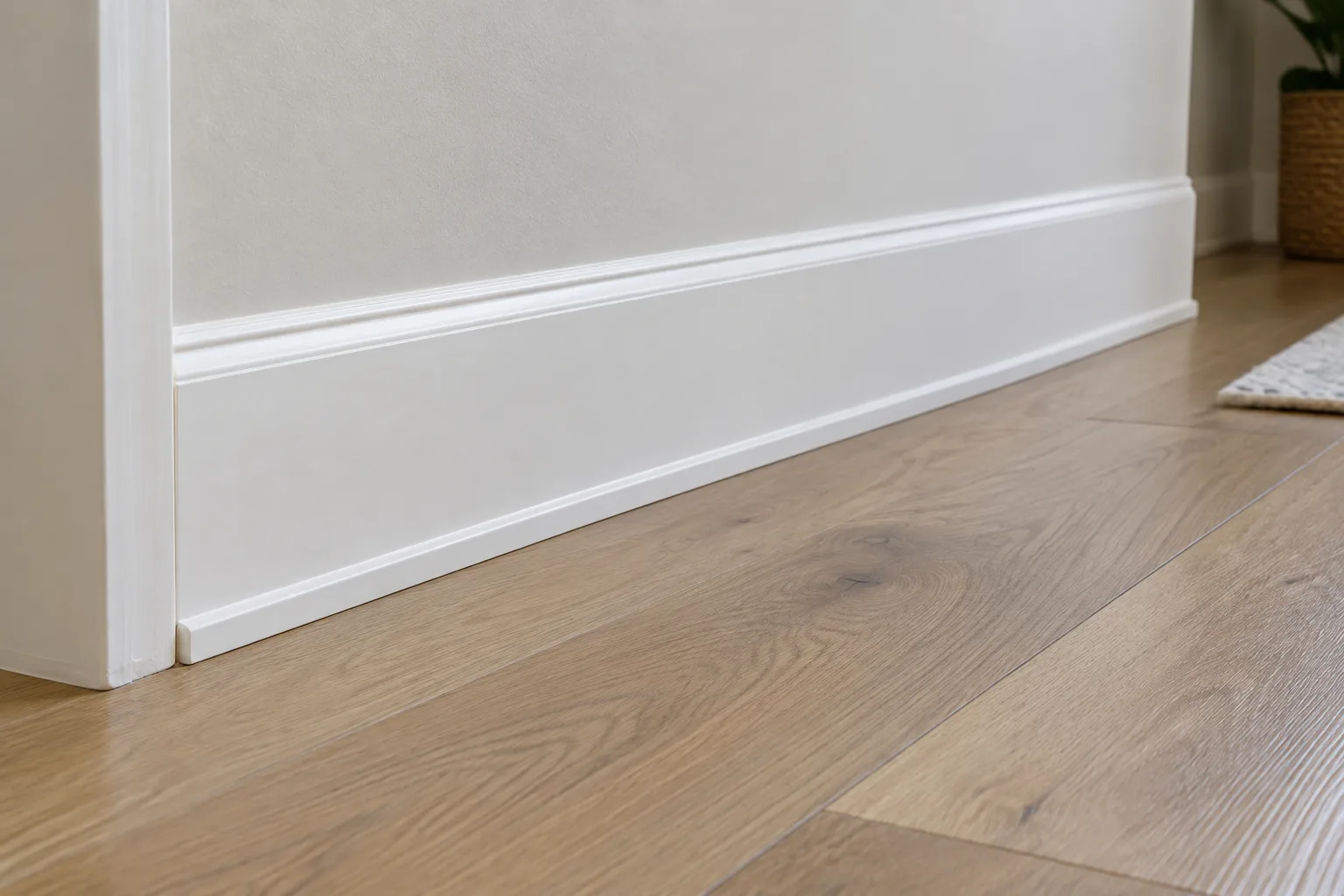
However, shoe molding does not replace a baseboard's wall protection. It also cannot repair a damaged board. Its small profile may preserve the layered look you wanted to remove. A bedroom with intact baseboards and a thin floor gap can use shoe molding to address the edge. That avoids changing the whole wall. If the baseboard is missing, consider broader trim or a wall treatment instead.
| Option | Best fit | Visual effect |
|---|---|---|
| Shoe molding | Narrow floor gaps | Small added edge |
| Standard or speed base | A finished wall-to-floor joint | Simple or shaped profile |
| Beadboard | Texture and lower-wall coverage | Repeated vertical lines |
| Flat-panel wainscoting | Wall protection with a formal look | Broad framed panels |
The table highlights the main choice: shoe molding covers a gap, while wainscoting changes and protects more of the wall. Standard baseboard is flat and can pair with a decorative cap. Speed base keeps the profile in one piece. This Old House describes it as having a milled or routed decorative profile. To compare options, mark the affected area’s height and width, then hold sample profiles against the flooring and door trim. This quick check can help you decide whether a small repair or a room-wide design change fits better.
When does wainscoting make sense for wall protection?
Wainscoting replaces a narrow floor-level detail with boards or panels that cover part of the wall. This Old House notes that wainscoting can guard against scuffs in mudrooms, kitchens, hallways, and stairways, where walls take frequent wear. Beadboard is one option: narrow boards have a bead-like groove along their edges. Flat panels offer a quieter, more formal surface, while beadboard’s repeated lines add texture in close quarters.
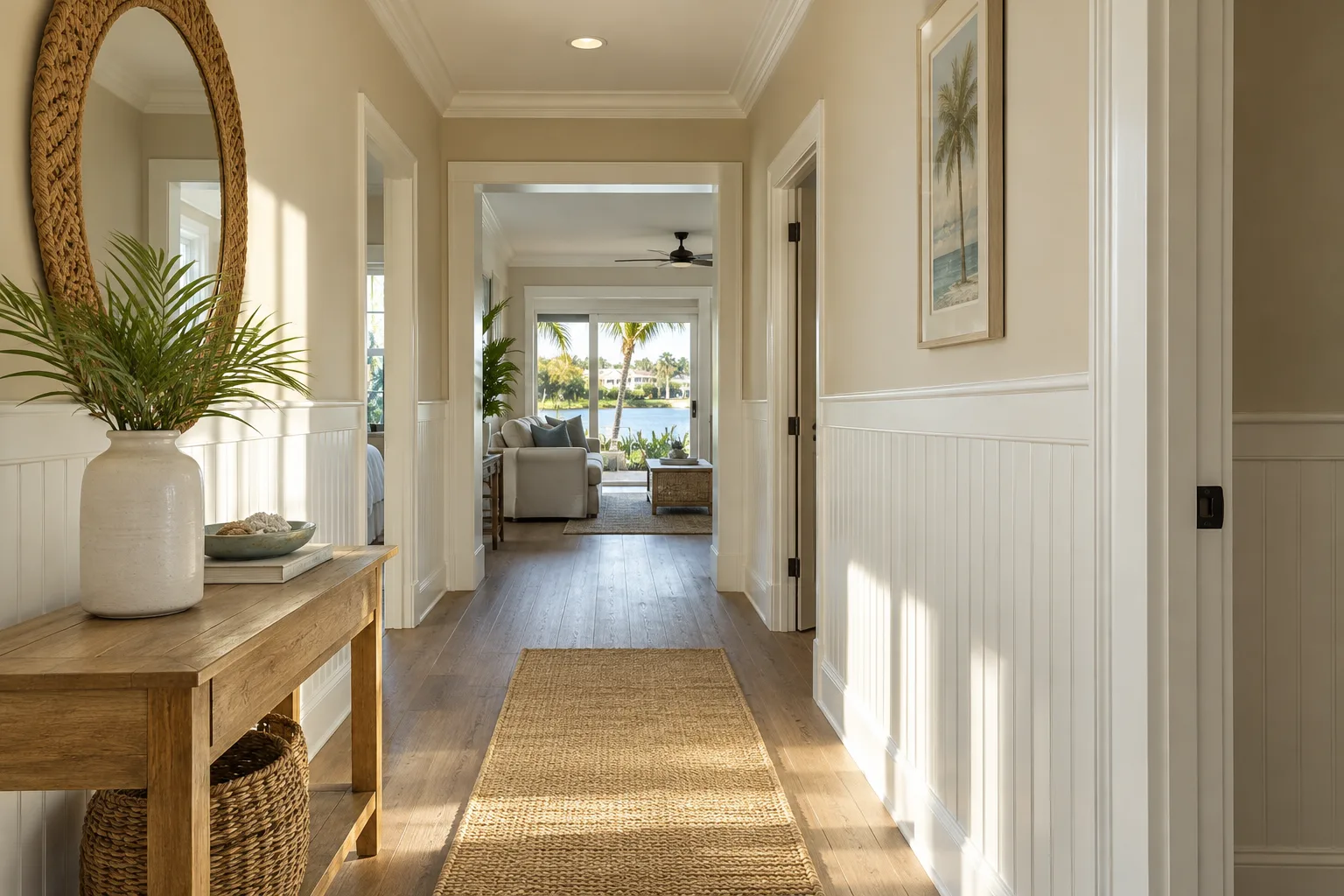
Choose wainscoting when you want wall protection to shape the room’s design. It makes a stronger visual statement than simple baseboard trim. Panel height and the top rail also change how the wall looks. In a busy entry, a wipeable lower wall can protect more surface than a thin strip of trim. In a small room, simpler trim may feel less crowded.
Which beadboard material suits a damp room?
Wood beadboard can expand and contract with moisture and temperature changes over time. MDF beadboard is more stable and less prone to warping, but may not suit high-humidity areas. PVC beadboard resists moisture and is easy to clean. However, some homeowners may prefer the more authentic look of wood or MDF.
In a bathroom or laundry area, find the source of dampness first. Don't rely on trim to solve it. The U.S. Environmental Protection Agency says controlling indoor moisture can prevent or control mold growth. Then compare the finish you prefer with the room's conditions. Paintable material lets you choose the color. This Old House says PVC beadboard comes prefinished, so it needs no painting, though it may look less authentic than wood or MDF. Check the details for the specific board you are considering.
FAQs
Can I use shoe molding instead of baseboards?
Shoe molding can cover a narrow gap at the floor, but it usually works alongside an existing baseboard rather than replacing one. This Old House describes it as a thin trim used between baseboards or cabinetry and the floor. If your wall needs a protective or finished edge, choose a baseboard or wall treatment that covers more of the wall.
What can I use instead of baseboards in a bathroom?
Beadboard or other wall paneling can create a broader lower-wall finish, but choose material with the room’s moisture exposure in mind. This Old House identifies polyvinyl chloride beadboard as moisture resistant and suitable for damp areas. Also address leaks or persistent dampness; the Environmental Protection Agency says mold control depends on moisture control.
Does wainscoting replace baseboards?
Wainscoting can replace the baseboard when its bottom rail forms the wall’s lower edge; the baseboard can also be built from several molding pieces, according to This Old House. It suits a unified wall treatment, but its panels and cap rail make a bigger design change than replacing a narrow strip.
Conclusion
Choose shoe molding for a narrow floor gap. Choose a larger wall treatment when you want more protection and a different style. For a trim change in Apopka, Florida, call Windows and Doors by Martin Toro about your project.
Call Windows and Doors by Martin Toro and ask about trim and millwork