Window & door planning
Awning Windows: A Winter Park, Florida Planning Guide
Learn how awning windows open and what to check for exterior space, control reach, screens and maintenance when planning a replacement in Winter Park, Florida.
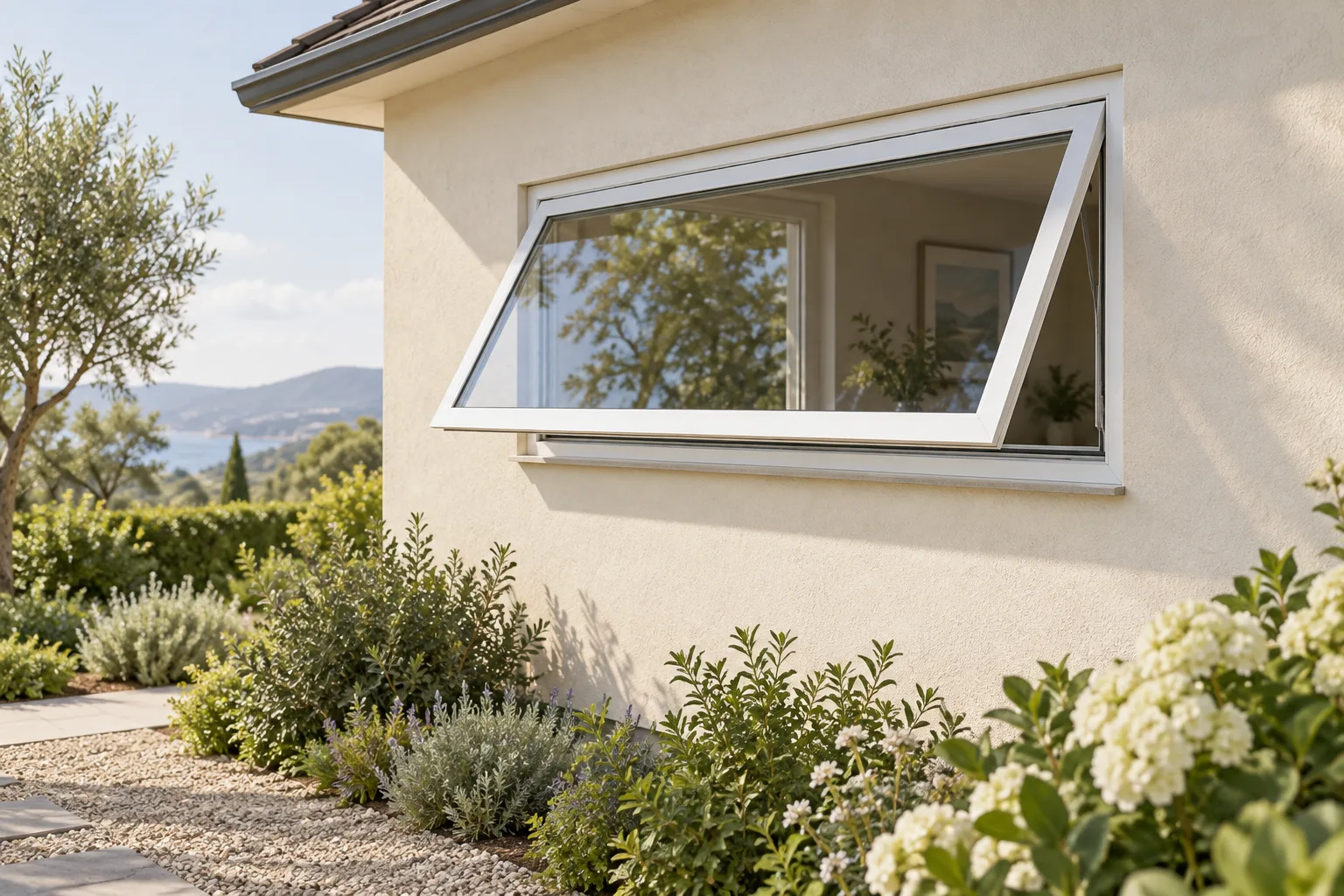
How do awning windows open, and what should you check before choosing one? Their lower edge swings outward, so the sash’s path matters as much as the opening itself. In Winter Park, Florida, a walkway, patio or kitchen counter may affect how you plan the window. Check three distinct things: where the open sash projects, whether the person using it can reach the controls, and how the screen and exterior glass will be accessed. This guide explains the opening motion and helps you prepare questions for an installer. It includes two hypothetical room-planning examples and a decision table. Hardware and options vary by product, so base the discussion on the proposed unit and the room rather than assuming every awning window works the same way.
Key Takeaways
- Awning windows hinge at the top and open outward from the lower edge, commonly with a crank; they are not exterior shade awnings.
- An outward-opening sash may affect a walkway or patio route, so check its open position in the actual space.
- A crank does not establish convenient reach; test the proposed controls in the room with the intended user.
- Plan screen and exterior-glass access separately from operating the window, especially for a high placement.
What Are Awning Windows?
An awning window is hinged at the top and opens outward from its lower edge, often using a crank. Unlike a side-hinged casement, it does not swing out from one side. It is also different from a fabric or metal awning installed above a window: the window’s sash itself opens.
Check the Space Outside the Window
The sash’s outward movement makes the exterior surroundings part of the selection. Andersen notes that an open sash can be unsuitable beside walkways or outdoor living areas. That is a placement consideration, not a universal clearance rule; the setting and proposed product matter.
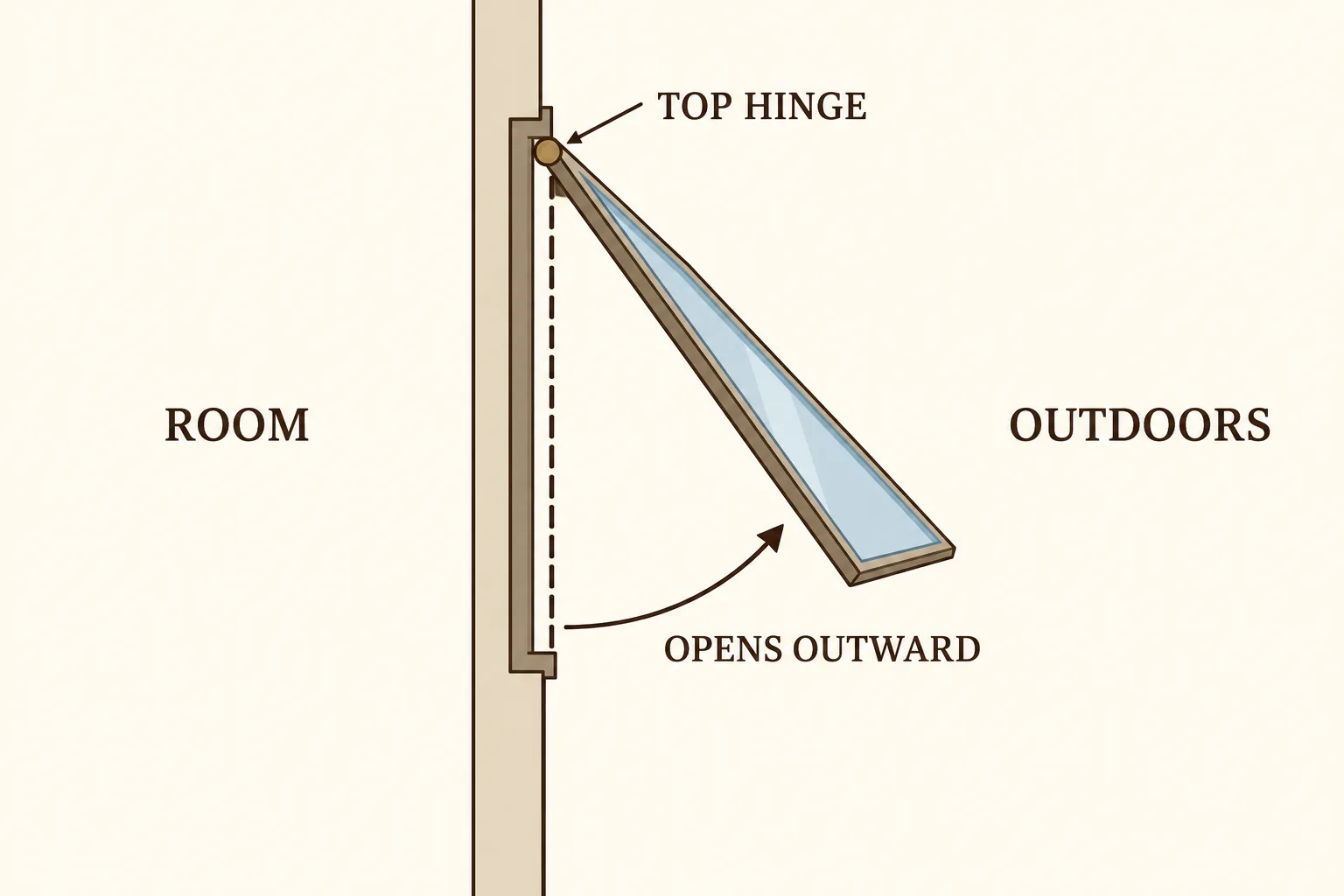
Imagine a window beside a patio route. Ask the installer to show the proposed sash open with the usual route and furniture present. Consider where people walk or sit and whether furniture could occupy the opening area. Seeing the proposed position in context is more useful than relying on a generic distance.
| Condition | Check before choosing |
|---|---|
| Exterior walkway | See the open sash in relation to the route. |
| Patio or outdoor living area | Consider where people sit and whether furniture could meet the sash. |
| High wall | Discuss control reach and exterior-glass access separately. |
Use the table to organize questions, not as a code or clearance guide. Ask about the particular opening and proposed unit.
Match the Controls to the Room
A crank describes one way to operate a window; it does not tell you whether the control is reachable in a particular room. Some product lines offer powered operators, but availability depends on the product. Confirm the options for the unit being considered.
In a hypothetical kitchen, a crank above a counter may still require the user to reach around the counter edge or faucet. Ask the installer to demonstrate the proposed control position. Have them show unlocking, opening, closing and locking, rather than judging reach from a drawing alone.
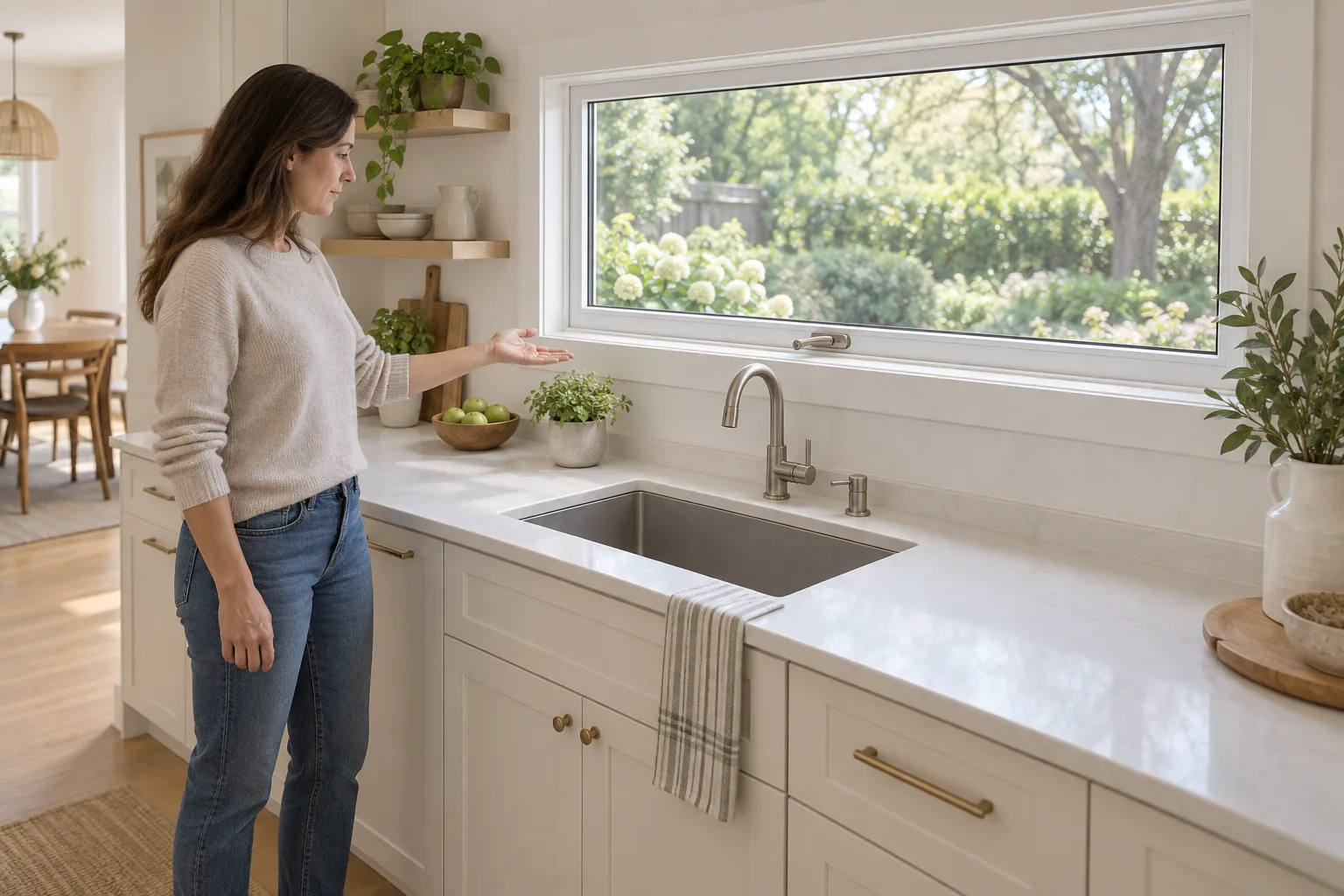
When trying the controls, have the intended user stand where they would normally approach and operate the window.
Plan Screen and Exterior-Glass Access
Operating a window and maintaining it are separate tasks. A reachable crank does not establish whether a screen can be removed or how the exterior glass will be accessed. Ask about the screen option and its manufacturer’s removal instructions before settling on a high placement.
Andersen says its awning exterior glass is not designed for inside cleaning and must be accessed outdoors. This applies to Andersen’s products; do not assume it describes every manufacturer’s window. Confirm maintenance instructions for the exact unit, especially if it will sit high on a wall.
Ask the installer to identify the screen option, explain the manufacturer’s removal instructions, and discuss exterior-glass access. Before comparing proposals, note the opening location, nearby routes or seating, intended user, control, screen option and maintenance plan. Ask for a demonstration and product-specific instructions so you can compare what is actually proposed.
FAQs
How do awning windows open?
An awning window is hinged at the top and opens outward from its lower edge. Many use a crank, though controls and available options vary by product. Because the sash projects outside as it opens, check the exterior space as well as the controls inside.
Are awning windows suitable for a high wall or above a counter?
They may work above a counter or on a high wall, but placement alone does not establish that operation or maintenance will be convenient. Check whether the intended user can reach the actual controls, then separately plan access to the exterior glass. Both depend on the room and selected product.
Can you clean an awning window from inside?
Not necessarily. Screen options and removal methods vary, and exterior-glass access is separate from reaching the operating hardware. Andersen says its awning exterior glass is not designed to be cleaned from inside and must be accessed outdoors. Confirm the selected product’s instructions and maintenance needs before choosing a high placement.
Conclusion
Awning windows hinge at the top and open outward from the lower edge. Before choosing one, consider the space outside, who will operate the controls, and how the screen and exterior glass will be accessed.
For a replacement, note the opening, nearby routes or seating, control position, screen option, and maintenance access. Ask the installer to demonstrate the proposed unit and explain its product-specific instructions. You can also review the company’s replacement-window service as you plan the project.