Window & door planning
Fiberglass Windows: Frame Choices in Lakeland, Florida
Learn how fiberglass windows differ by interior and exterior materials, finishes, ratings and care, and gather details to compare exact products for your home.
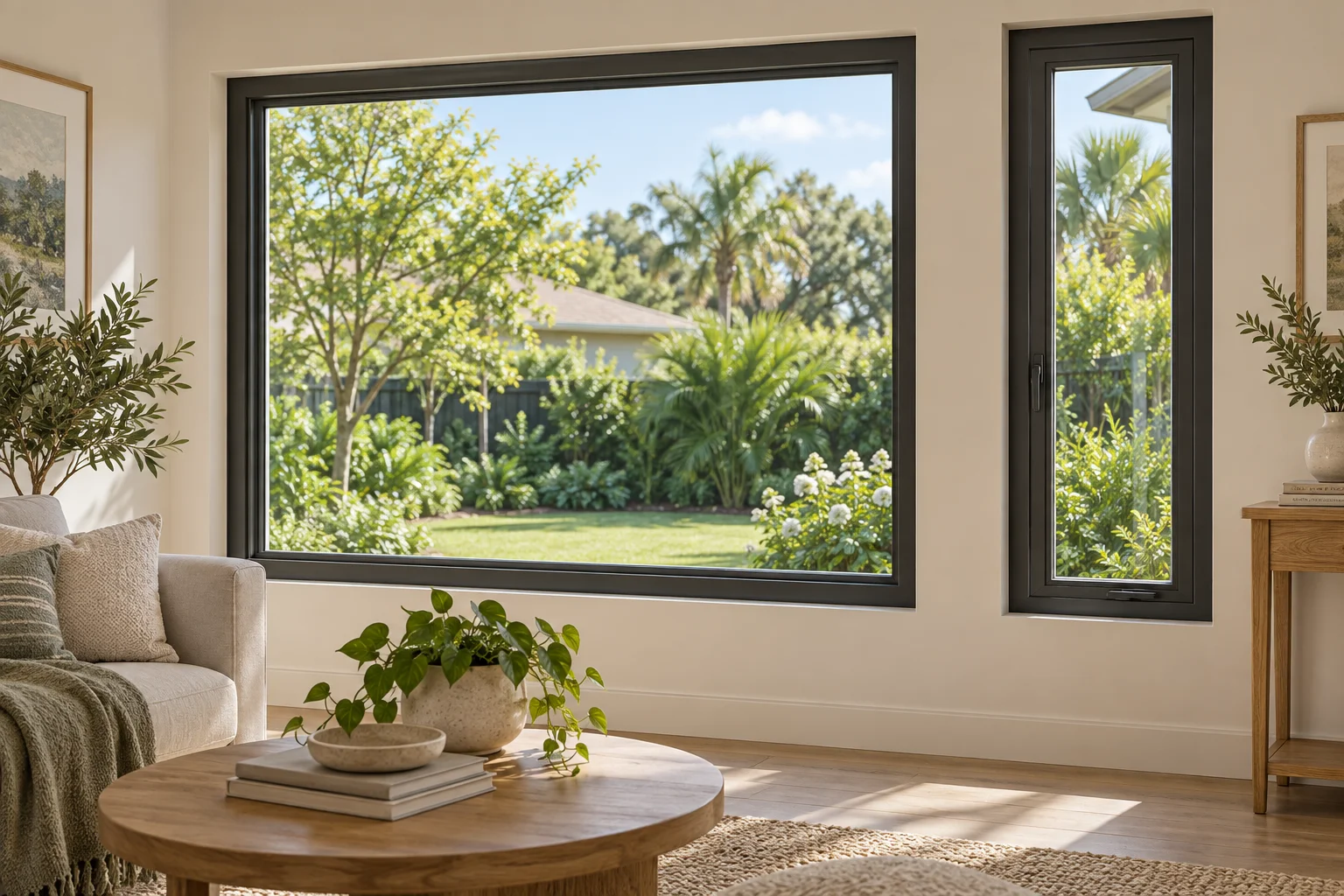
Choosing fiberglass windows in Lakeland, Florida, starts with a detail a frame label can hide: the inside and outside may use different materials. One product can have a fiberglass exterior and wood interior, while another uses fiberglass on both faces. That difference affects the finish you see and the care instructions to follow.
To compare actual options, look beyond broad material claims. Check the exact series, interior and exterior finishes, profile choices and ratings for the complete window, including its glass. Then review the manufacturer’s care directions for those materials. This guide explains how to identify each construction, compare profiles and finishes, interpret key ratings, and gather useful product details before discussing your project in Lakeland, Florida. A little product-specific checking can make comparisons clearer and help you prepare focused questions.
Key Takeaways
- Fiberglass window frames use a glass-fiber composite, but interior and exterior materials can differ by product.
- Compare the exact series, profile and finish rather than assuming every fiberglass window offers the same choices.
- Use the complete window’s U-factor, SHGC and VT ratings to compare heat transfer, solar gain and daylight.
- Care depends on exposed materials and manufacturer instructions, including any wood interior finish.
What Are Fiberglass Windows?
Fiberglass windows have frames made from a glass-fiber composite, but the materials on the interior and exterior may differ. The complete window’s performance also depends on its configuration, including its glass.
Marvin’s Essential line is an example of fiberglass inside and out; its Elevate line pairs a fiberglass exterior with a wood interior. These examples illustrate different constructions, not local availability. Check the exact series and finish before comparing.
Identify the Materials on Both Sides
Fiberglass is a composite material made with glass fibers and thermoset plastic. Manufacturers form it into frame components, while construction and available options vary by product line.
Before comparing products, identify the material on both faces. Marvin’s Essential line is described as fiberglass inside and out. Its Elevate line combines a fiberglass exterior with a wood interior. A fiberglass label alone therefore does not tell you what the room-side surface is. These examples clarify construction only; they do not establish availability in Lakeland, Florida.
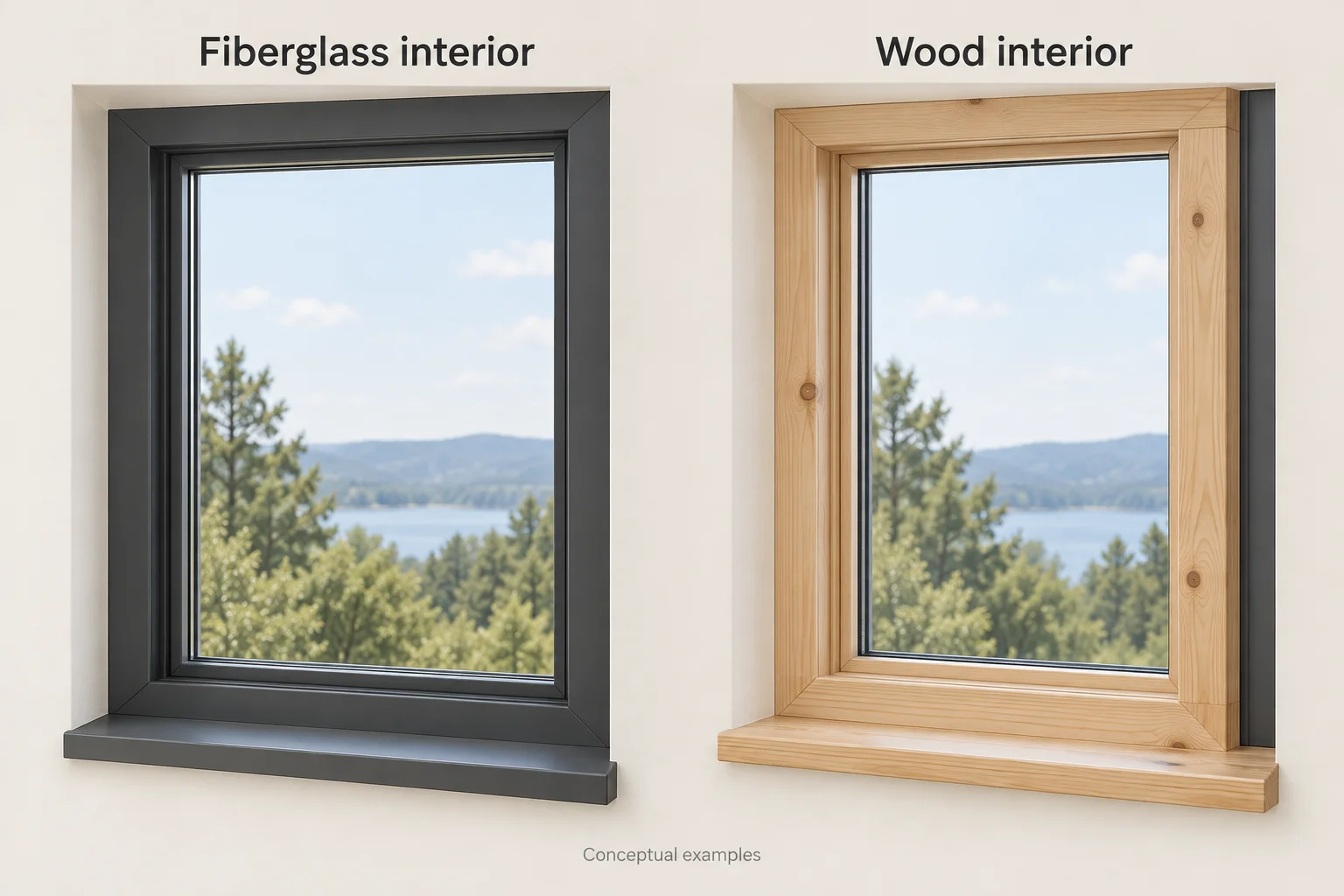
Write down the manufacturer, series, exterior material and interior material. Confirm whether the interior is bare, coated or painted wood, or fiberglass. This helps you compare like with like and understand which finish instructions apply.
Compare Profiles and Finish Choices
Frame strength can support narrow profiles, but sightlines, dimensions and finish options depend on the specific series. Do not assume the material name guarantees larger glass, any color, or a finish that can be changed later.
Use this checklist to compare actual products:
| Product detail | What to check | Why it helps |
|---|---|---|
| Frame profile | Visible frame width and available dimensions | Shows the actual sightlines for that series |
| Interior face | Material and factory finish | Identifies room-side appearance and care needs |
| Exterior face | Material and finish options | Clarifies what is exposed outdoors |
| Operating style | Available configurations and sizes | Keeps comparisons relevant to the window you need |
Check samples or product documentation for the precise series and finish, not a generic material description. Record your preferred operating style too, so you compare configurations with the same practical purpose.
Check the Complete Window Ratings
Compare ratings for the complete window, not just its frame material. The National Fenestration Rating Council (NFRC) explains three useful measures: U-factor, solar heat gain coefficient (SHGC) and visible transmittance (VT).
A lower U-factor means less heat transfers through the window. A lower SHGC means less solar heat gain, while a higher VT means more visible daylight passes through. These measures describe different effects, so no single number answers every comparison.
Check the rating label or documentation for the exact product and glass configuration. Glass options affect heat and light performance, and fiberglass by itself does not establish a rating, energy savings or suitability for a particular home. Keep ratings with the series and finish details so you compare complete products rather than broad material categories.
Plan Care and Collect Product Details
Low-maintenance does not mean no care. Windows still have glass, weatherstrip, hardware and tracks to inspect, and a wood interior may need different finish care from a fiberglass surface.
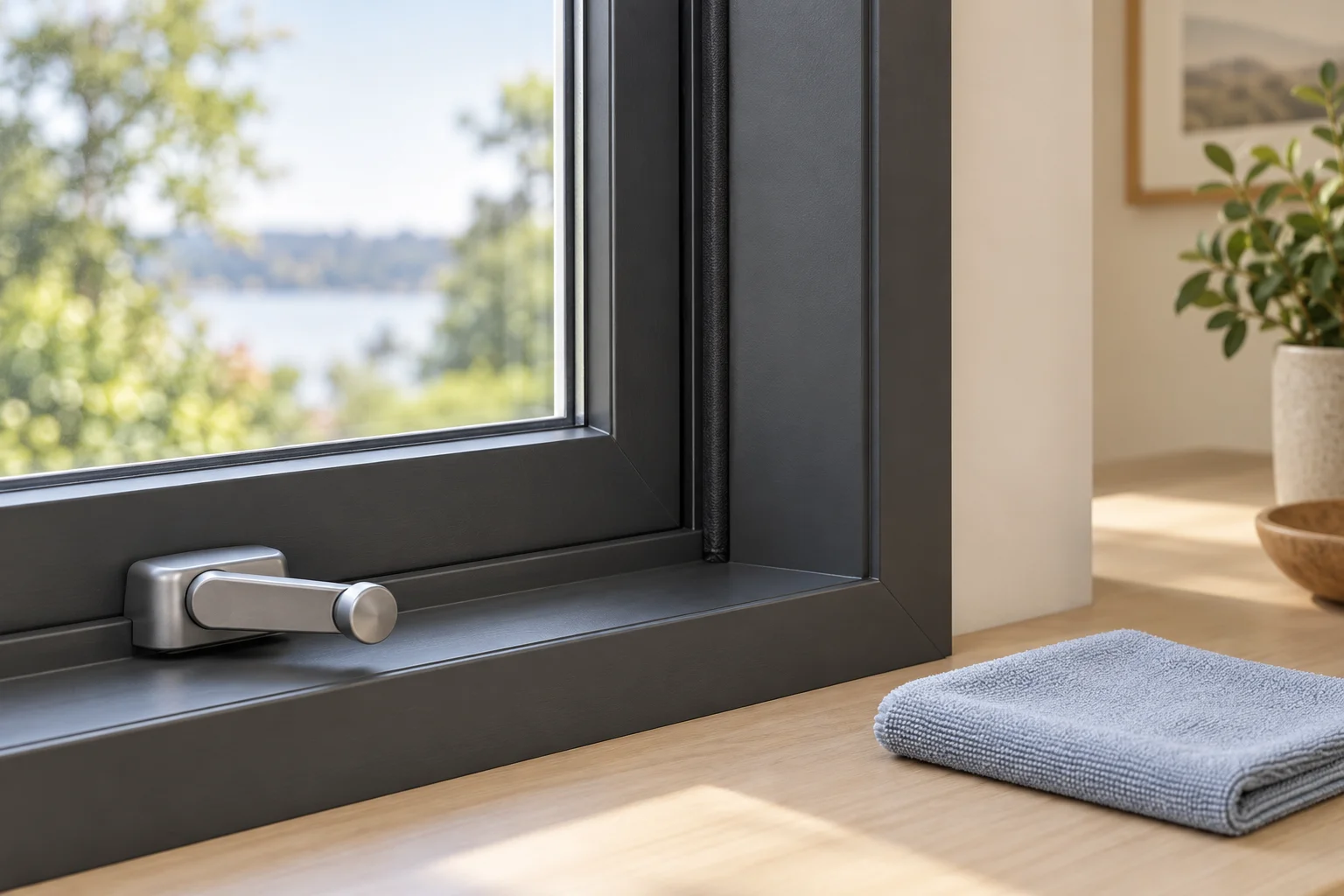
Marvin’s general care guidance recommends checking weatherstrip and finishes and cleaning dirt from hinges, sills and tracks. Follow the exact manufacturer’s cleaning and finishing directions; keep paint, stain and solvents away from weatherstrip. Marvin also warns against directing a pressure washer at a window or door. These are observation and care points, not instructions to disassemble components.
Before a project conversation, collect the manufacturer and series, materials on both faces, interior finish, operating style and available glass ratings. These details help you discuss the specific window you are considering in Lakeland, Florida.
FAQs
Are all fiberglass windows fiberglass inside and out?
No. Fiberglass describes the frame material, but some products combine a fiberglass exterior with a wood interior. Marvin’s Essential and Elevate lines illustrate these different constructions. Check the exact series and finish to determine what material you will see and which care instructions apply.
Are fiberglass windows more energy-efficient?
Compare the exact product configuration, including its U-factor, SHGC and VT ratings. U-factor indicates heat transfer, SHGC indicates solar heat gain, and VT indicates visible daylight. A frame material alone does not establish how an entire window performs, so review ratings for the specific product and glass options.
What care do fiberglass windows need?
Check the manufacturer’s care instructions for the exact series and finishes. Inspect weatherstrip, finishes and tracks, and clean components as directed. If the interior is wood, its finish needs may differ from those of a fiberglass face. Avoid pressure-washing a window, and keep cleaning products away from weatherstrip unless the manufacturer permits them.
Conclusion
Fiberglass windows can differ in construction, finishes, ratings and care, even when they share a frame label. Use the exact series and configuration—not the material name alone—to guide your comparison.
Gather the manufacturer and series, materials on both faces, finish, operating style and glass ratings. Then call Windows and Doors by Martin Toro to ask about your project.